


Svetlana
Author
Lvl 5. 🏛️ Discoverer
23/25
23Posts
6Likes
6Followers
8Following
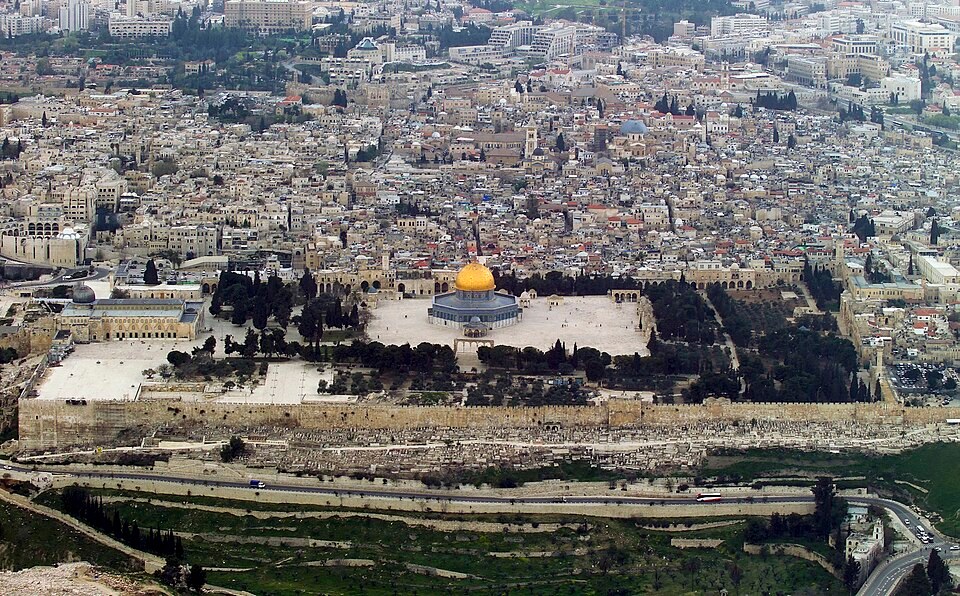
A place that has remained in my memory forever.
There are trips that leave beautiful photos, restaurant names, and a few funny stories that are pleasant to tell friends over a cup of tea. And there are trips after which you return home a little different person, because what you see makes you think about life, time and your own feelings. For me, Israel became such a journey, and the place that will forever remain in my memory is Jerusalem, a city where ancient history literally coexists with ordinary everyday life, and around one corner you can discover a place that you have previously read about only in books. I had the idea of going a long time ago, but I kept postponing it for various reasons: sometimes the dates didn't fit, sometimes there were other destinations, and sometimes it seemed to me that I needed to prepare more thoroughly for such a trip. In the end, I decided that if I waited for the perfect moment, I risked growing old over the list of saved attractions without going anywhere. I bought tickets, booked accommodation, made up an approximate itinerary and, with a feeling of deep satisfaction, ticked off the first items of my plan, completely unaware that the real adventures would begin after arrival. Israel greeted me with bright lights, noisy streets, and an amazing mix of familiar and unfamiliar, which I especially love when traveling. Here you can walk along a modern street, look at shop windows and coffee shops, and after a while find yourself among ancient stone walls, where each alley seems to keep its own history. I tried to absorb everything around me, but at the same time I solved the usual tourist tasks: where to buy water, how to get to the hotel, and why a suitcase that seemed quite compact at home suddenly acquired the size of a small refrigerator on Israeli streets. The first acquaintance with Jerusalem I went to Jerusalem with great curiosity, because this city cannot be perceived as an ordinary point on a tourist map. The stories and traditions of different nations are intertwined here, and shrines and monuments remind of events that have influenced the lives of millions of people over the centuries. I had read a lot of materials about the Old Town in advance, but I quickly realized that no articles could fully convey the feeling that arises when you see the old walls with your own eyes, walk through the narrow streets and hear a lot of different voices around. The National Library of Israel Most of all, I was surprised by the very atmosphere of the city, in which antiquity does not look like something remote and museum-like. I was surprised how beautiful libraries can be. It must be interesting to work in this place. As a traveler, I was surprised at everything, and people were rushing about their business, merchants were laying out goods, the small shops smelled of spices and fresh pastries, and tourists were trying to figure out the directions, while photographing everything that caught their eye. I was no exception either, and several times I stopped in the middle of the street to take a picture, until I noticed that I was standing exactly where someone needed to pass, and stepped aside with a guilty smile. Old Town District I especially remember the walk through the Old Town, where new details were revealed at every turn: stone arches, small courtyards, stairs, souvenir shops and doors that seemed to have seen more human stories than could be retold in a lifetime. I walked without much haste, trying not to limit myself to famous sights, and gradually began to understand why some cities leave such a strong impression. They don't just show off their beauty, but make you look more closely at the world around you and feel like you're part of something much bigger than another trip with a camera in your hands. The Wailing Wall: a meeting I remember One of the most important moments of my trip was a visit to the Western Wall in Jerusalem. Before the trip, I had seen her in photographs many times and read about the significance of this place for Judaism, but I still could not fully imagine how I would feel when I was there in person. As I approached the square in front of the ancient stones, I was struck not only by the wall itself and its history, but also by the special atmosphere created by the people who came here to pray, reflect and address their most intimate requests to God. View of the Western Wall and the square I stopped for a while, watching what was happening around me, and tried to put down my phone so as not to turn this moment into another series of photos. Some people were quietly reciting prayers, others were standing by the stones with their heads bowed, and someone was carefully placing a small note in the gap between the ancient blocks. There was something very personal about these simple actions, and I suddenly felt how differently people express their hopes, worries, and gratitude, even if their life stories are completely different from each other. I also thought in advance about what I would like to ask for myself and my loved ones, although I usually don't consider myself a person who knows how to formulate desires correctly. In everyday life, we often ask fate for very specific things: so that everything works out at work, so that money does not run out before a month, and so that troubles avoid us, preferably without even looking in our direction. But here, for some reason, I wanted to think not about small worries, but about the health of loved ones, inner peace and the opportunity to notice good things more often while they are happening, and not after a few years, when only memories remain. I will not claim that some extraordinary miracle happened to me at that moment, because it was a very personal encounter with a place whose significance cannot be measured equally for everyone. Rather, I felt that sometimes it's useful for a person to stop, put aside the usual hustle and bustle, and at least be alone with their thoughts for a while. I remember the Wailing Wall for this feeling of silence inside, which is especially amazing to feel in a big city, where someone is constantly walking, talking and hurrying around. Before visiting, I tried to learn about the rules of behavior and chose modest clothes, because I understood that I was in a place sacred to many people. I wanted to show respect for other people's traditions and not act as if I had come to an ordinary observation deck. Later, I learned another important detail: on Shabbat and Jewish holidays, there are restrictions on the use of electronic devices, photographing and writing on the Wailing Wall Square, so travelers should familiarize themselves with the rules of visiting the official Wailing Wall website in advance. A walk through the markets and small discoveries After such a rich experience, I wanted to switch a little and go for a walk along the streets, where life went on as usual. I looked into small shops, looked at souvenirs, tasted local treats and watched with interest how the city was changing from one quarter to another. The aromas of spices, coffee and pastries mixed in the air, merchants communicated with customers, and I gradually turned into the very tourist who was going to buy only water, but half an hour later he leaves the store with a bag of completely unnecessary things. I was especially attracted to the small shops that sold ceramics, jewelry, and handmade items. I could look at the same thing for a long time, convincing myself that it would definitely find a use at home, although my life experience suggested that most of these purchases then lie in the closet for years. In the end, I did get a small souvenir that I really liked, and decided to consider it not a waste, but a tangible proof that sometimes I can make decisions faster than forty minutes. At some point, I realized that I was much more tired than I expected, and decided to find a place where I could sit quietly and drink coffee. It turned out to be not as easy as I imagined in the morning, because I had already managed to walk a decent distance, take a wrong turn several times and spend too much time photographing beautiful doors. When I finally settled down at a table, put a bottle of water next to it and looked at the map, I discovered that I had walked much more in half a day than I had intended, and my legs clearly did not share the excitement about the cultural program. But it's these little things that make traveling alive, because not only majestic monuments remain in memory, but also their own small victories over fatigue, navigation and the inexplicable desire to buy another ceramic plate. I was sitting in a cafe, watching passersby and thinking about how interesting Jerusalem is: it simultaneously makes you think about the eternal and reminds you of the most common things, like the need to eat on time and not forget to drink water on a hot day. Shabbat: when the usual transportation suddenly disappears If I were asked to name the most unexpected everyday lesson of this trip, I would not hesitate to tell you about Shabbat and public transport. Before the trip, of course, I heard that Israel has special travel arrangements on this day, but, as often happens, I read the information, nodded and decided that I would definitely provide for everything. I had a simple plan in my head: to take a walk, see the sights, and then calmly take a bus or train and go wherever I needed to go, because public transport in my mind was something so familiar that I hardly thought about its schedule. Church of the Holy Sepulchre On Friday, I got carried away walking around Jerusalem, saw the Church of the Holy Sepulchre and completely lost track of time, because there were always new streets, interesting places and reasons to stay for a few more minutes. I decided that I would have time to return to the hotel, rest for a while and then continue my adventures, but towards evening I discovered that the usual routes were no longer working as I expected. In Israel, most regular bus and train routes stop operating before the start of Shabbat and resume after it ends on Saturday evening, although the specific schedule depends on the city, route, and time of year. I opened the routes app and updated the search several times, as if more buses were suddenly going to appear on the screen. The application remained completely calm, and I gradually realized that my carefully planned plan was not so carefully drawn up, because it lacked one small but extremely important point – checking the schedule on the eve of the Sabbath. It was probably at this moment that, for the first time during my trip, I felt not like an experienced independent traveler, but like a person who came to another country and decided that the transport system must work according to the rules he was used to at home. At first, I was a little confused, then I started looking for alternatives, and finally I remembered that when traveling there is an amazing tool called "ask people". I asked the hotel employee what transportation options were available at that time, and began to consider taking a taxi or walking part of the way. Depending on the city and route, separate private carriers, fixed-route taxis, or special weekend routes may operate on Shabbat, but you should not rely on them without first checking, especially if you need to get to another city. The funny thing is that after the first minutes of anxiety, I gradually calmed down and decided not to turn the transport problem into an international tragedy. After all, I came to Israel not to set a record for the number of transfers, but to see the country, feel its atmosphere and learn something new, including about the daily life of local residents. As a result, I had to adjust my plans, spend more time on the road and admit that sometimes it's better to study the local rules in advance than to stand with a phone in the middle of the street and hope for a transport miracle. This incident taught me an important thing: traveling to another country requires not only an interest in the sights, but also respect for local traditions and the rhythm of life. Shabbat is not just a day when it becomes more difficult for tourists to get from one point to another, but an important part of religious and social life that affects the work of many institutions and transport systems. If you are planning a trip to Israel, especially with travel between cities, it is better to check the schedule for Friday and Saturday in advance, leave a reserve of time and do not build a route as if buses are required to wait for you. The evening that made me slow down After all the adventures, I decided to devote the evening to a quiet walk, not trying to accommodate a few more attractions in the remaining time. I just wanted to walk through the streets, look at the city in the evening light and reflect a little on what I've seen in recent days. Jerusalem was surprisingly conducive to such reflections: it is impossible to completely forget about history here, but at the same time life goes on in the most ordinary ways – people meet with friends, buy food, return home and discuss their plans for tomorrow. I stopped in a quiet place, where I could see the old stone buildings, and looked at them for a long time, trying to imagine how many generations of people had passed through these streets long before my arrival. It seemed amazing to me that I could come here from another country, spend a few days among unfamiliar streets and still find moments that would be understandable to almost everyone, regardless of their origin. The desire to be close to loved ones, the hope for the best, the need for peace and the desire to find our place in the world do not depend on what language we speak and which route we take home. That evening, for the first time in a long time, I stopped constantly checking the time and messages, and instead just watched the world around me. I thought about the Wailing Wall, about the people I saw at the ancient stones, and about my own experiences, which suddenly turned out to be much more important than the list of planned attractions. I wanted to remember this state, because in everyday life we rarely allow ourselves to calmly stop and think about what really matters. Why Israel has remained in my memory forever When I returned home, the photos gradually went into folders, the souvenirs took their places, and my usual life was once again filled with things that somehow know how to appear faster than free time. But Israel kept coming back into my thoughts, sometimes quite unexpectedly: it was worth seeing a photo of the ancient walls, hearing a conversation about travel, or remembering my own attempts to figure out the transport schedule before Shabbat. I realized that this trip was memorable to me not only because of the historical sites, but also because it forced me to get out of the usual rhythm and look at many things a little differently. The Wailing Wall Most of all, I remember the Wailing Wall, where I felt a special atmosphere of respect, silence and personal reflection. It was a place where I stopped thinking about how much more I would have time to see in a day, and for the first time in a long time I allowed myself to just be alone with my thoughts. But no less important was the completely mundane lesson with public transport, because it is precisely such situations that remind us that even the most experienced traveler cannot foresee everything, and the ability to calmly change plans is sometimes more important than the ideal route. I don't want to claim that my life was turned upside down after this trip, or that I suddenly found answers to all the questions I've ever asked myself. Rather, Israel gave me a few moments that I think back to when I want to stop, look at my own life from the outside and remember how big and diverse the world is outside of the usual streets. And, perhaps, it is precisely such trips that are most valuable: they do not promise instant revelations, but leave small discoveries inside that gradually make sense. A journey that I want to repeat I do not know when I will be in Israel again, but now I know for sure that I will prepare for the next trip a little differently. I will check the bus and train schedules in advance, especially before the Sabbath, leave free time on the route and will not expect any transport to operate as usual, regardless of the day of the week. And, of course, I want to return to Jerusalem again, walk through the old streets, take a closer look at familiar places and once again feel that special atmosphere that impressed me so much. Light-rail tram If someone asks me why Israel has remained in my memory forever, I probably won't be able to answer in one sentence. These are the ancient stones of Jerusalem, and the Western Wall, and rail trams, and noisy markets, and small cafes, and my own mistakes, which I now smile at, remembering the trip. This is a country where I simultaneously felt like a small part of a huge story and an ordinary traveler trying to get to the hotel on time before her plans changed again. And now I know that the best trips don't necessarily go perfectly, without delays, unexpected turns, and everyday setbacks. Sometimes it's the moments that make us nervous at first that turn into our favorite stories after a while, and the places where we once stopped to think about life will forever remain a part of our memory. For me, Jerusalem became such a place – a city where I saw not only ancient history, but also a reminder of how important it is sometimes to slow down, listen to yourself and allow the journey to leave something more in your heart than beautiful photos.
0
0
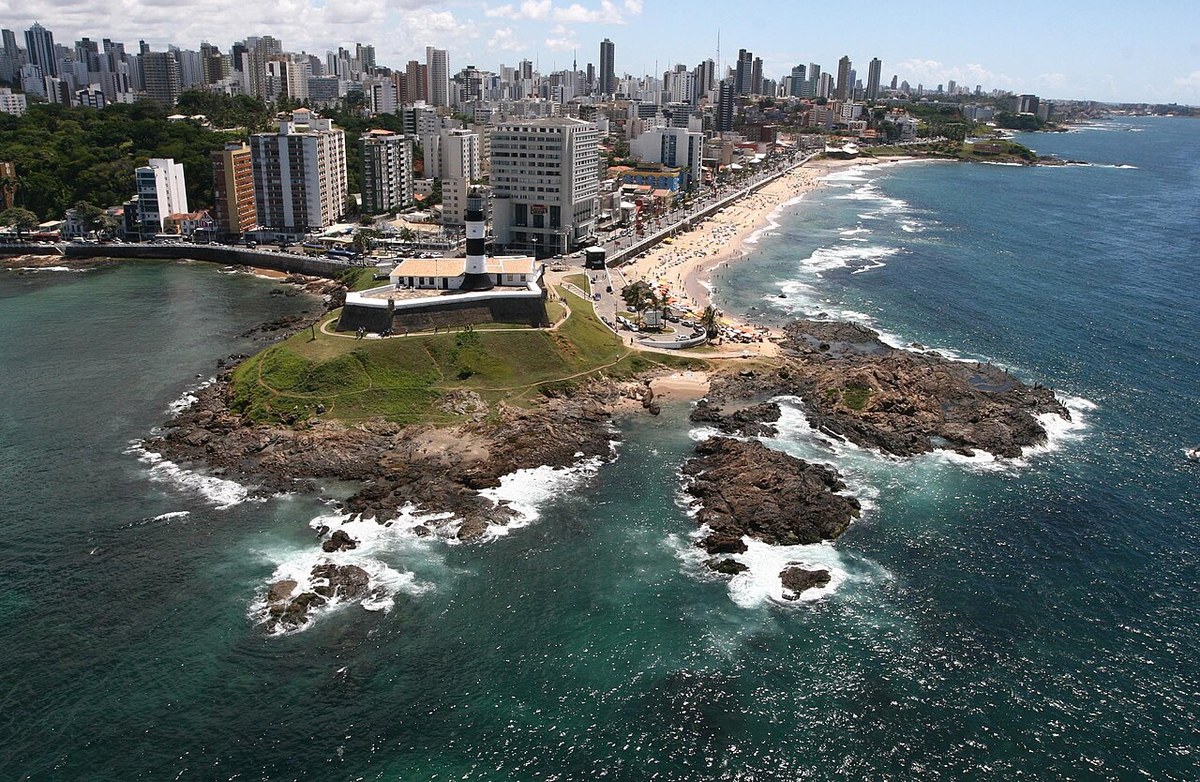
A trip to Brazil, after which I changed my attitude to life
For a long time I lived with the feeling that I had to sort out all the cases first, help my loved ones, fulfill promises, solve accumulated issues, and only then think about myself. Moreover, this "later" was constantly pushed back, because life was surprisingly able to throw up new tasks just when it seemed to me that I could finally exhale a little. I could spend weeks planning weekends, and then spend them doing household chores, refusing to meet with a friend for another urgent job, and postponing the purchase of tickets, because now doesn't seem to be the right time to travel. From the outside, everything looked quite reasonable: I was a responsible person, I tried not to let anyone down, and I was used to relying primarily on my own strength. But sometimes in the evenings, when everything was finally over, I felt a strange emptiness and couldn't explain why I wanted to go somewhere so much, even though nothing bad seemed to be happening in my life. I didn't want to run away from my family, my job, or my familiar city, I was just tired of constantly being the person who organizes everything, remembers everything, and takes care of everything, leaving my own desires at the very end of the list. One day I opened the world map and, quite by chance, I stayed in Brazil, saw Salvador. At first, I was surprised that he was in Brazil, but then I decided to figure it out. I found out that, it turns out, there is a city of Salvador, the capital of the state of Bahia, and there is a state of the same name in Central America. And there is a big difference between them, I realized that I want to go to Brazil. It was an unusual decision, because I knew almost nothing about this place, but for some reason I immediately imagined walking down an unfamiliar street without any purpose, and ahead of me there was a whole day that did not need to be organized for anyone. A few weeks later, I had tickets, accommodation reservations, and a pretty serious worry about the trip, which initially seemed almost impossible. I didn't know what exactly I was taking away from Brazil, but I already felt it.: I need to get out of the usual circle for a while, in which I stopped noticing myself a long time ago. Salvador greeted me in a completely different way than I expected. When I arrived in Salvador, the full name of which sounds like San Salvador da Bahia de Toduz us Santos, the first impression turned out to be quite contradictory. On the one hand, the city immediately captivated me with its colors, noise, music and the feeling of proximity to the ocean, but on the other, I was tired after the road, did not navigate well in unfamiliar streets and constantly checked my phone so as not to miss the right turn. I imagined how beautiful it would be to walk around Brazil, enjoy the atmosphere and take photos, but the first hours were more like trying to figure out a complex board game, the rules of which no one explained. I was especially surprised by how quickly I switched back on the usual control mode. As soon as I left my things in my apartment, I already opened the list of saved places, started checking the distances and calculating how many sights I could see before the evening. It seems that I came here precisely to take a break from the endless race, but as soon as I found myself in a new city, I immediately organized another race for myself, only now with a tropical climate and a lot more reasons to sweat. The historical center of the city That day, I managed to stroll through the historic Pelourinho district, where the famous colorful colonial buildings stand, look into several shops and take photos, which I was quite pleased with. However, when I returned to my room in the evening, I found that I hardly remembered my own feelings of the day again. I remembered which streets I'd walked through and what I'd photographed, but I could hardly remember the last time I'd just enjoyed what was happening without thinking about the next destination. And then I decided that the next day I would try to do everything completely differently. A day in which there was not a single mandatory item I woke up in the morning without an alarm clock, although usually even on vacation I managed to set it at a fairly early time so as not to lose a single precious minute. The first thing I did was reach for my phone, but I stopped in time and left it on the bedside table, deciding to at least have breakfast without checking messages, news and weather. It turned out to be surprisingly difficult, because my hand reached for the screen on its own, as if without it I risked missing some global event. The Barr Lighthouse After breakfast, I went outside and decided to go wherever I wanted and accidentally stumbled upon the Barr Lighthouse. It is located in the Barra district, at the entrance to the Bay of All Saints, where the waters of the Atlantic Ocean meet. I don't know how long I've been here, but I've enjoyed not keeping track of time. According to my inner feelings, I admired this beauty for 20 minutes, maybe longer. Next, I wasn't going to specifically look for hidden sights or make up another route, but just wanted to see the city through the eyes of a person who doesn't have to do absolutely everything. At one point, I stopped near a bright house, then paused at a small storefront, and then saw a cafe where several people were quietly having breakfast at tables on the street. I ordered coffee and some local pastries, which I pronounced with such care, as if my fate depended on the right emphasis. Fortunately, they understood me, the order arrived, and I was able to do the most important thing – to eat and look around. People were talking around me, cars were passing, music was playing somewhere, and I was sitting there and suddenly realized that I absolutely did not need to turn this morning into an achievement. Probably, nothing special happened from the outside. An ordinary woman was sitting in a cafe in an unfamiliar city, drinking coffee and looking at passers-by, but for me it was almost a small discovery. I've been living in a regime for so many years where any free time should be put to good use that I've already forgotten how pleasant it is to just exist without constantly trying to improve myself and my own life. I saw how much I had been saving for later. Pelourinho Later, I went for a walk around Pelourinho, the historic center of Salvador, which is known for its colonial buildings, churches and cobbled streets. I walked slowly between the colorful facades, looked at the balconies and doors, listened to the music coming from the neighboring streets, and from time to time stopped to take a photo. But the most important thing was not happening around me, but in my head, because I suddenly began to remember all the things that I had promised myself for years to do when I had free time. I wanted to learn how to draw, but I always had more important things to do. I wanted to go to the seaside more often, but then work projects, household issues and other reasons to stay at home began. I wanted to walk more, read books, not just before going to bed, when my eyes were already closing by themselves, and sometimes buy myself something beautiful just because I like it, and not because it was a special holiday. I suddenly realized that it's not necessary to give up your own desires in order to be a good person. You can take care of your loved ones and at the same time remember yourself, you can perform duties and at the same time leave time for pleasure, or you can just admit that some things are as important to me as all other tasks. For some reason, it used to seem to me that taking care of yourself should begin only after everyone around you is happy, but now this idea looked completely ridiculous. At one point, I stopped near a beautiful building, looked at it, and suddenly smiled. Not because I found some special attraction, but because for the first time in a long time I stopped perceiving my own desires as something optional. I came to Brazil not only to see another country, but also to remember that I also have a life that I want to enjoy. A little nuisance that made me laugh Of course, it would be too beautiful if, after such a discovery, I started moving around the city exceptionally easily and confidently. In practice, everything turned out to be much more prosaic: at some point I took a wrong turn, lost my bearings, and spent quite a long time trying to figure out how to return to a familiar street. The map on my phone stubbornly suggested a route that I could not immediately compare with the surrounding buildings, and the heat finally convinced me that my plans for a quiet walk needed a little revision. Previously, I probably would have started to get annoyed, worry about lost time, and berate myself for not preparing carefully enough. But this time I found a place to sit down, bought water, and decided to rest first before figuring out the route. The world didn't collapse, the sights didn't disappear, and I suddenly discovered that I could calmly deal with situations that previously seemed like a small personal disaster to me. The funny thing is that in the end I still found a way, and with it a small place where I could have a snack. I wasn't going to go there, I didn't save it on my phone, and I didn't even know in advance that it existed, but it was there that I spent a pleasant hour relaxing after a walk. It turned out that the day, which I deliberately decided not to plan, gave me much more peace of mind than all my carefully organized routes. I thought about how much effort I spend trying to figure out every little thing, even though life is constantly making its own adjustments anyway. And, perhaps, for the first time, I wanted not to fight it, but just to leave a little room for surprises. An evening by the ocean that I didn't want to end In the late afternoon, I went to the coast because I wanted to look at the ocean and relax a little after a walk. I settled down in a convenient place where I could see the water, and watched for a long time how the light changed, how people walked along the shore, and how evening gradually fell. There were plenty of sounds, movement, and life around, but at the same time, for the first time in a long time, I felt a calmness inside me that needed no explanation. I remembered how I often told myself that I would start living differently when I solved all the problems, completed a complex project, or finally achieved some stability. But life never becomes completely free of worries, and if you wait for the moment when everything will be perfect, you can never wait. There will always be some business that needs to be completed, an issue that needs to be resolved, or a circumstance that will require a change of plans. The Atlantic Ocean continued to be an ocean, no matter how many tasks I had left at home. People were walking nearby, talking, laughing, someone was photographing the sunset, and someone was just sitting and looking at the water. I also sat and thought that happiness might not require me to become better, more successful, or more productive every minute, but sometimes it starts with allowing myself to just be here and now. I didn't make any big decisions that night, and I didn't promise myself to start a new life on Monday. I just felt that I no longer wanted to constantly put myself off for later, because that "later" could be infinitely far away, and the ordinary days that make up life are passing right now. What changed when I returned home After returning, of course, I was greeted by the familiar reality. There were messages on my phone, letters waiting in the mail, there were things at home that I had left before the trip, and work tasks were absolutely not going to be solved on their own just because I spent a few days in Brazil. For the first few days, I started rushing again, trying to do everything at once, and even found myself getting annoyed with the usual queue at the store. But at least now I noticed what was going on. I remembered the morning in Salvador, when I was sitting at a table with a cup of coffee and was in no hurry, and I tried at least sometimes to regain this feeling in everyday life. I began to go out for walks more often without a specific goal, stopped filling the whole weekend with activities and began to allow myself to relax without coming up with a convincing excuse for this. Gradually, I realized that I didn't need to completely change my circumstances in order to change my attitude to life. I couldn't cancel all my obligations, give up work, or stop caring for my loved ones, and I didn't want to do that. But I could stop considering my own desires as something secondary, which is remembered only after everything else is done. I signed up for classes that I had been putting off for a long time, started meeting my friends more often, and finally stopped waiting for a special reason to buy flowers. Sometimes I still find myself wanting to postpone something pleasant until better times, but now I try to ask myself a simple question: if it's really important to me, why do I leave it for later again? The journey that taught me to choose myself Salvador did not solve all the problems of life for me, did not relieve my worries and did not turn me into a person who always knows what he wants. I can still get tired, worry about the future, and sometimes try to control things that cannot be foreseen in advance. But this trip gave me the opportunity to see my own life from the outside and realize that for too long I have been trying to be comfortable, responsible and correct, forgetting that I also want something more than just to successfully cope with everything. I went to Brazil, thinking that I needed a break from my usual life, but I came back thinking that I no longer wanted to live as if real life would begin after I finally managed everything. I don't have to wait for the perfect moment to enjoy myself, I don't have to deserve every little holiday, and I don't have to turn all my free hours into a useful activity. Sometimes it's enough to go outside, buy coffee, call a loved one, go for a walk, or afford a day without a strict schedule. I see travel differently now. For me, this is not only an opportunity to see new countries and bring home beautiful photos, but also a chance to stop for a while, notice my own habits and remember what really matters. I still dream of new trips, building routes and keeping interesting places on the map, but I no longer want to wait for the next vacation to start treating myself with the same care that I used to treat others. Sometimes I open the photos from Salvador again and linger on one shot, where there is nothing particularly impressive: just the ocean, evening light and a piece of shore. For me, this photo was a reminder that on that day, for the first time in a long time, I stopped thinking about what I should do next and just allowed myself to feel good. This trip changed my attitude to life, not because I found the secret of happiness in Brazil, but because I finally understood.: I don't have to take care of the whole world first to get the right to take care of myself. And now, when I start putting off my own desires for later, I remember Salvador, the ocean, and the amazing tranquility I felt in an unfamiliar city. I can't always change circumstances, not everything depends on me, and not every day is easy, but I can at least stop making my own life the last item on my to-do list. After all, one day I may discover that I have been preparing so diligently for a happy future that I almost did not notice how the years passed. And I want not only to make plans for life, but also to really live – with all its surprises, imperfections, small joys and moments that do not need to be deserved.
0
0
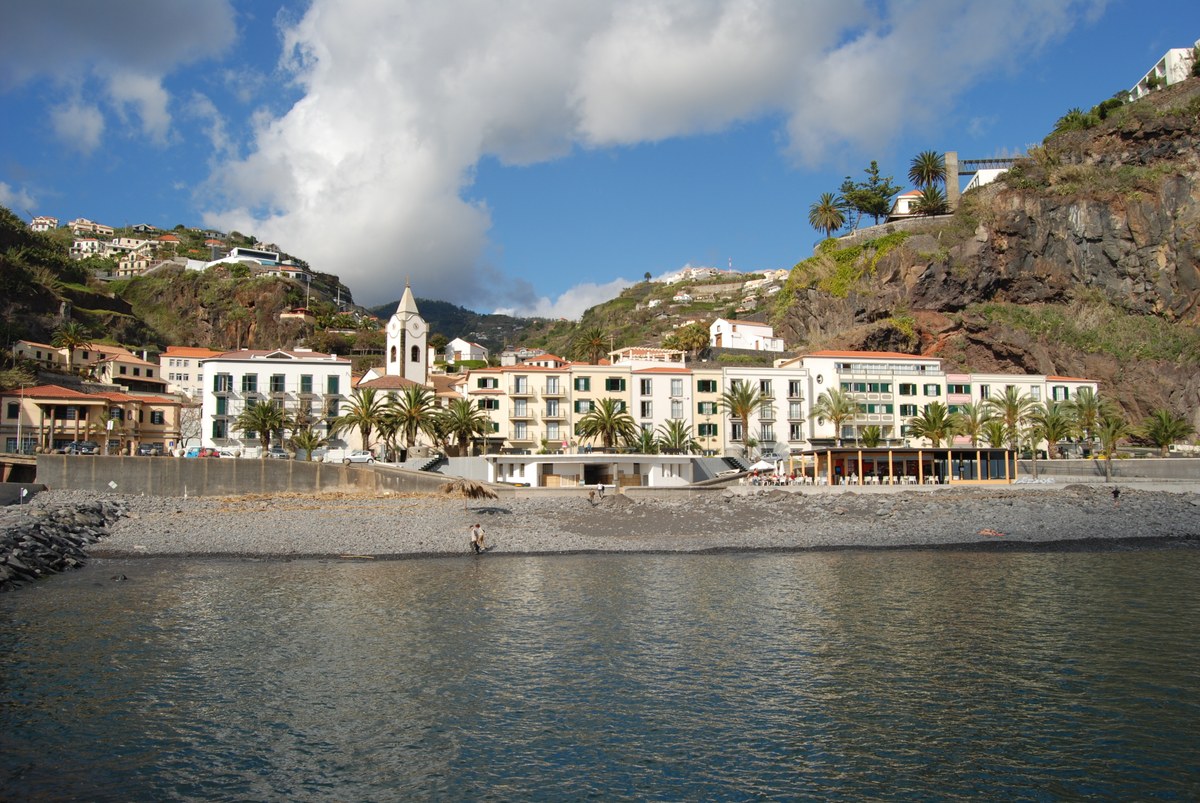
Madeira Island Trip
I've wanted to visit Madeira for a long time, but for some reason I've treated this island like a beautiful picture from the Internet for a long time. Green mountains, the ocean, waterfalls, roads over cliffs, small houses among the slopes – it all looked so perfect that I was even a little afraid to be disappointed when I met. In my head, Madeira existed somewhere between a postcard and an advertisement for an expensive hotel, and I know perfectly well that real travel is usually arranged quite differently: it's raining somewhere, you're wet somewhere, you've taken a wrong turn somewhere, and your hair after a trip looks like you've spent several hours in fighting the hurricane. But Madeira surprised me almost immediately, I came to the island without the desire to make some grandiose list of attractions and decided to just give myself time to feel this place. I wanted to look at the ocean, walk among the greenery, drive along mountain roads, stop where it's beautiful, and not worry if the next point of the route suddenly has to be canceled. And, as it turned out, this approach turned out to be the most correct one for Madeira, because this island absolutely does not want to go through the points. The first acquaintance with Madeira Madeira Airport The first thing that really struck me was the relief of the island. I'm used to the fact that islands are usually associated with beaches, palm trees, and a fairly understandable logic of relaxation: the sea, a sunbed, a cafe, and the sea again. In Madeira, everything is completely different, because here in just a few minutes you can find yourself among mountains, fog and dense greenery, and then see the ocean again. I was driving along the road and kept turning my head in different directions because I couldn't choose where to look. There are mountains on the left, the ocean on the right, another bend ahead, and suddenly a completely different landscape opens up behind it, which you want to photograph immediately. At one point, I even asked to stop, although just five minutes ago I myself said that we would no longer stop every five minutes, but Madeira was clearly not going to make my life easier. Each new turn looked like the island was specifically testing how quickly I could change my plans. The ocean, which is constantly nearby It seems to me that the ocean has become the main feeling of my trip. In Madeira, it is not perceived as a separate part of the holiday, which you need to specifically go to, because it is constantly present somewhere nearby: it is visible between houses, appears around a bend, makes noise below the road and suddenly opens up with a huge blue stripe between the green slopes. I could just sit on the shore and look at the water, even if I had a completely different route planned. On a normal trip, I probably would have started to get nervous about the lost time, but here I gradually stopped looking at the clock. I liked that feeling. In Madeira, for the first time in a long time, I did not feel the need to constantly rush somewhere. I just sat and looked at the ocean, and he went about his business quite calmly, not caring about my schedule. The Green Madeira But most of all I was surprised by the greenery, I expected to see a beautiful island, but I had no idea how saturated it would be in color. Everything here seems to grow in several directions at once: plants hang from the slopes, moss covers the rocks, the trees are so dense that sometimes it seems as if the road passes through a real green tunnel. I especially liked the feeling of humidity after the rain. Small drops may remain on clothes, the road becomes shiny, the leaves look even brighter, and a light fog appears around. And that's when I finally realized that Madeira doesn't look like a classic sunny island at all. The weather can change here in just a few minutes, and at first it's a little annoying, especially when you've just done your hair and gone out to take pictures. Then you get used to it and begin to perceive the rain as part of the local character. After all, if Madeira was always perfectly sunny, where would all this incredible greenery come from? Mountain roads and my little adventure I decided to take a car and explore the island on my own, although later I wondered several times why it seemed like a good idea at all. The roads in Madeira are very beautiful, but some of them make you pay more attention not only to the landscape, but also to where exactly you are going. The ascents, descents, turns, narrow sections and slopes around me periodically forced me to hold the steering wheel tighter and treat local drivers with great respect. The funniest thing happened was when I saw an incredibly beautiful view and realized that I couldn't stop right there. That is, the brain said, "What a beauty, you need to take pictures," and common sense replied, "Very beautiful beauty, but first let's get to a place where we can park properly." As a result, I drove past stunning landscapes several times, then turned around and tried to find a suitable place to stop. And, of course, that's when the beautiful light disappeared. Travel in general has an amazing ability to turn on the perfect sunlight exactly at the moment when you are not where you were going to take pictures. Waterfalls and the feeling of real nature Waterfalls became one of the most pleasant discoveries. I've seen photos of Madeira waterfalls before the trip, but they feel completely different in person. Especially when you walk along a wet path, water is rushing around, streams are falling from the mountain, and there are dense greenery nearby. At such moments, Madeira seems very far from the usual Europe. As I walked along, I thought that if I had been brought here with my eyes closed and asked to guess the country, I would most likely have named something completely different. I liked that feeling of surprise. It's like you're on a European trip, and after a while you start to feel like you're somewhere in a tropical forest. The most beautiful thing here is not the sights After a few days, I realized one simple thing: the main attraction of Madeira for me is Madeira itself. It sounds a bit corny, but I can't explain my impressions any other way. I liked not only specific waterfalls, roads or viewing platforms, but the combination of the ocean, mountains, greenery, fog and small houses, which was constantly changing before my eyes. You can drive along a completely ordinary road and suddenly see the ocean far below. You can stop at a small cafe and discover a stunning view behind it. You can go outside in the morning after the rain and realize that the air smells completely different. It was from such little things that I got the feeling of Madeira. A small setback Of course, my traditional travel failure wasn't complete either. One day I decided to go out for a walk, looked up at the sky and thought that it definitely wasn't going to rain. After a while, the cloud literally came to meet me, and I got such a small shower that after a few minutes I looked like I had specifically decided to check the water resistance of my own clothes. The funny thing was that people in jackets were passing by, and I immediately realized which of us had really studied the climate of Madeira before the trip. I hid under a small canopy and laughed at myself, because literally in the morning I told how important it is to be prepared for changeable weather. Madeira just decided to put my knowledge to the test. And I don't think I passed the exam. Evening on the island I especially enjoyed going back to the ocean in the evening. After a whole day of driving, walking and constant stops, I would sit down somewhere by the water and just watch the light gradually change. The ocean was getting darker, the mountains were turning into silhouettes, and the first lights were coming on on the coast. At such moments, I absolutely did not want to open the card and think about the next day. I just sat there and remembered everything I had seen. And the more I remembered, the more I realized that the highlights were completely unplanned. The very turn where I happened to see the ocean. The road through the green mountains. The rain that caught me completely unprepared. Coffee after a long walk. The sound of waves, the fog that suddenly covered the mountainside. And the feeling that there is a place around me that is not trying to please the tourist at all, but that's why I like it even more. Why do I want to go back When it was time to leave, I suddenly felt that I wasn't ready to say goodbye to the island at all. Although I saw a lot of beautiful things, I didn't feel like I had "closed" Madeira and now I could safely tick off this trip. On the contrary, it seemed to me that I was just beginning to understand her. Perhaps this is the peculiarity of such places. You arrive with certain expectations, and then the island gradually shows you a completely different side of itself. I didn't like Madeira because you can make a perfect collection of photos here. I liked it because you always want to stop here, look around and forget a little about the fact that you actually have a route. I left with the feeling that I would definitely come back. And next time, I want to do everything a little differently: plan less, stop more often, sit by the ocean longer and not get upset because of the rain. Although, to be honest, I know myself. Most likely, I'll make up a detailed route again, take a car, put a few points on the map, and then I'll see another beautiful turn and say: "Okay, let's stop here too." Because Madeira is just like that.: she seems to be alone – a small island in the middle of the Atlantic, but every time you look in the other direction, it seems that you have a completely new place in front of you. And that's probably why I still remember this trip not as a sightseeing trip, but as an introduction to one big, incredibly green and slightly unpredictable place that one day just took over and I liked it.
1
0
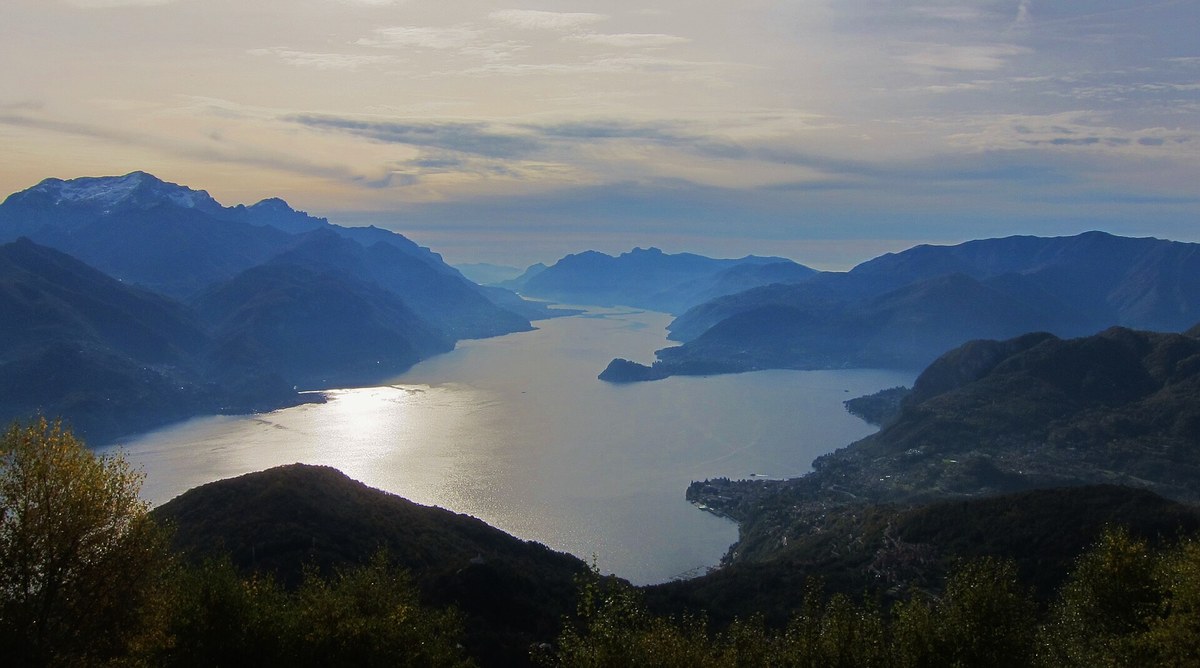
One day at Lake Como
I have long wanted to see Lake Como, which is also sometimes called Lario, but for some reason I kept postponing this trip. It seemed that you had to come here for at least a few days, choose a beautiful hotel with a view of the water, have a quiet breakfast on the terrace and generally take your time. But one day I had only one free day, and I decided: okay, let it be one day, but I will try to feel Como, and not just put a check mark in front of this place on the map. Lake Como I arrived in the city of Como in the morning and immediately realized that the day would not be easy for my plan. Because when you have such a lake in front of you, it's very difficult to tell yourself: "So, we have eight hours, let's go further down the list." I want to stop, look at the water, take pictures of the mountains and pretend that I have an infinite amount of time. Morning in Como I started the morning with a walk around the city itself. I wanted to see Como first, not from the water, but from the inside, so I walked through the historical center, looked at the Cathedral and went out to the embankment. The Cathedral I liked the city for its calm atmosphere. There is no feeling that you have come to a huge tourist center, although there are certainly enough people. Narrow streets, old facades, small cafes and shops are gradually replaced by an open space by the lake, and there a completely different story begins. I reached the embankment and literally stopped in the middle of a walk. In front of me was a lake surrounded by mountains, boats were passing through the water, and on the other shore there were houses and green slopes. I took out my phone, took a few photos, then a few more, and then realized that I was photographing about the same place from different angles. At some point, I put my phone away and just started watching. It was probably then that I felt the real Como for the first time. Coffee with lake view After the walk, I decided to find a small cafe by the water. In general, Italian coffee is a separate part of any trip for me, but coffee with a view of Lake Como automatically becomes a particularly important event. I sat down at a table outside, ordered coffee and something sweet, and spent about twenty minutes just watching what was happening around me. People were walking along the lake, some were getting into boats, some were taking pictures, some were in a hurry about their business. And I was sitting there thinking that for some reason in everyday life I always feel like I'm late for something. Here, this feeling gradually disappeared. However, then I looked at my watch and realized that I was already starting to be late myself. So I had to come back to reality. Lake Como Boat Trip The most important thing I wanted to do that day was to see Como from the water. It seems to me that this is an obligatory part of exploring the lake. It's beautiful from the shore, but when the boat departs from the city, everything around it seems to get bigger. Como is gradually left behind, and in front of you opens a huge expanse of water, mountains and shores with beautiful villas and gardens. And the most interesting thing is not to look at any one landmark, but just at the whole picture. I sat on the open part of the boat and tried to take pictures at first. Then the wind started. And on the shore it seemed to me that the weather was completely calm, but on the water it turned out that nature had decided to bring me to my senses a little. My hair instantly ceased to exist in any decent form, and photos began to appear with my face as a man who had been caught off guard, but I still didn't want to go inside the boat. Because the views were too beautiful. We passed by old villas, small marinas, green slopes and cozy houses right by the water. Sometimes the boat would slow down near some particularly beautiful spot, and all the passengers would take out their phones at the same time. I also got annoyed, because it's completely useless to fight the collective tourist instinct. Como Villas – beauty without too much pathos I was most impressed by the villas that stand right on the shore of the lake. Some of them are surrounded by huge gardens, others are almost hidden behind trees, and only a small piece of the facade can be seen from the water. I like the kind of beauty that doesn't try to shout about itself. You just float by, see an old house, a terrace, a staircase leading to the water, several cypresses – and it all looks so natural, as if it had always been like this. I tried several times to imagine what it would be like to wake up in the morning, open the window and see a Como in front of me. Then I remembered the cost of some of the villas and decided that I could still enjoy the view from the boat. Mountains around the lake A separate love is mountains. They create the feeling of a natural amphitheater around Como. It seems that the lake is in a huge bowl, and the green slopes gradually go up. When you look at them from the water, the feeling of the city disappears completely. All that remains is the lake, the mountains, the boat, and the sky. I sat and thought that it was for such moments that we were going somewhere far away. Not for the sake of putting a check mark near another landmark, but for the sake of a feeling that then cannot be properly explained in words. Brunata Funicular After walking along the lake, I decided to climb higher and look at Como from above. To do this, I went to the funicular that connects the city with Brunate. This is where my inner child woke up again. I generally love funiculars, cable cars, and any other way to climb somewhere without having to climb a mountain on my own. Especially after walking all day. Como Brunate Funicular The funicular rises quite quickly, and the views along the way are becoming more interesting. The city gradually appears below, the lake opens up before your eyes, and the mountains no longer seem so huge. Upstairs, I was just walking and looking at the panorama. And she took pictures again.Yes, I know that I promised myself not to take one hundred identical photos. But when Lake Como is in front of you, all promises temporarily lose their validity. Como from above View of the city and Lake Como from Monte Croce mountain From above, I finally saw the full scale of the place I walked through in the morning. The city seemed very small, the lake stretched far into the distance, and the mountains surrounded it from all sides. It was interesting to look at the boats, which looked like small white dots on the water from a height. I stood at the observation deck for a long time and didn't want to go back down at all. But the day was already approaching evening. And I also wanted to see the lake at sunset. Evening by the water When I returned to Como, I went to the embankment again. By this time, the city looked completely different. Everything was bright and lively during the day, and it became quieter in the evening. The sun gradually sank behind the mountains, the water changed color, and lights came on on the shore. Sunset on Como I just decided to sit down and admire nature. I would like time to stop at least for a while. As a result, I was left without a route and phone, without the desire to go somewhere. After a whole day of walking, boating, mountains, and photography, it suddenly became clear to me that I didn't need to look at anything else. I just sat by the lake and watched the sky gradually darken. And it was this moment that I remember the most. Is one day enough? To be honest, one day on Lake Como is not enough. Very little. It is impossible to explore all the beautiful places in one day, visit numerous villas, take a walk in the mountains and still have time to relax properly. But if there's no more time, I'd go anyway, because even one day here makes it feel like you've entered a completely different world for a while. My day turned out like this: morning walk in Como – coffee by the lake – boat ride – views of villas and mountains – funicular climb in Brunata – panorama from above – evening walk by the water . And it seems to me that this is quite enough for a first acquaintance. Of course, I didn't get to see everything. But to be honest, I didn't want to. I liked the fact that there was time between the sights to just look around. Sometimes I stopped by the water, sometimes I sat in a cafe for longer than I intended, sometimes I photographed the same landscape for the tenth time. And I've never regretted it, because Lake Como is not a place that you want to go through point by point. He wants to live at least one day. I'd like to go back. When I left the lake in the evening, I was a little sorry that my day was over. I came in the morning thinking, "I'll see Como in one day," and in the evening I realized that there was no "I'll see" here at all. You can only come, take a walk, sit by the water, take a boat ride, climb to the mountains and try to remember all this. On the way back, I was already thinking about my next trip. And, of course, I told myself the classic phrase: "Next time, I'll come at least for a few days." I'm really going to do it this time. Because one day on Lake Como turned out to be too short. But on the other hand, sometimes one day is enough to fall in love with a place and realize that you will definitely come back here.
0
0
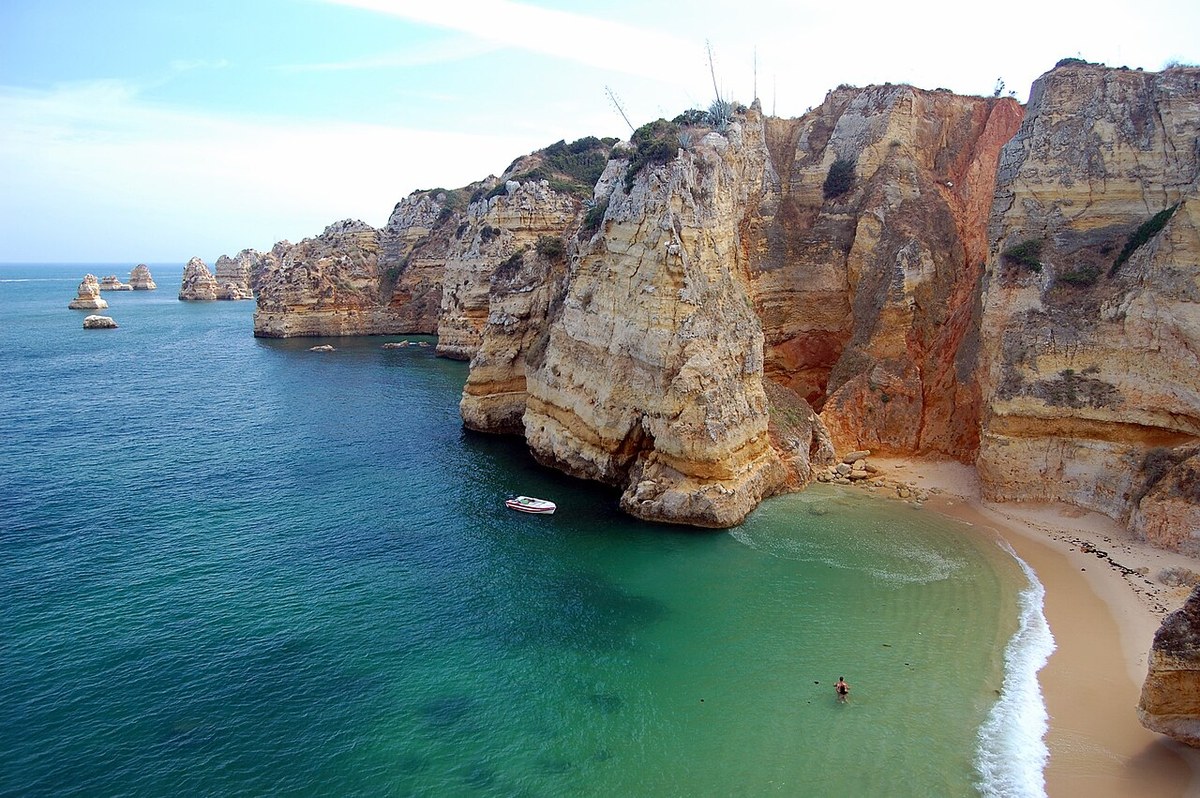
Day 9. Algarve – final with the ocean
The closer I got to the Algarve, the more my mood changed. There is more sun, more ocean, rocky shores, small beaches and the very views that sometimes make photographs of Portugal seem too beautiful to be real. I drove along the coast, turned off several times to beaches and observation decks, and once again disrupted my own schedule. However, by this point, I had already completely realized that the graph exists solely in order to beautifully lie in the notes of the phone. In the evening, I sat by the ocean and watched the sunset. And for the first time in the whole trip, I didn't want to go anywhere else, although before that I was constantly thinking about the next point. What I realized after a trip all over Portugal When I was planning this trip, it seemed to me that the main goal was to see as much as possible. In the end, it turned out a little differently: I saw a lot, but it turned out to be much more important that I learned not to rush between these places. Portugal is perfect for car travel precisely because it is not only the major cities and famous sights that are interesting here. Sometimes the most beautiful place turns out to be where you weren't going to stay at all, and the most pleasant evening happens in a small town whose name you first saw on a road sign in the morning. During this trip, I drove thousands of kilometers, made mistakes on the road several times, took too many photos, got tired, got back behind the wheel, and each time I found a new reason to say, "Okay, let's stop here for another five minutes." Of course, those five minutes were almost never five minutes, but they were exactly what made up my journey. And if you ask me if it was worth driving across Portugal, I won't even think about it. It was worth it. Because Lisbon and Porto can be viewed separately, the Algarve can be seen in a few days, but it's much easier to feel the whole country – from the green north to the ocean south – when you have a car, a free road and at least a small amount of time. The rocky coast of the Algarve And now I know one thing for sure: if I ever find myself in Portugal again, I won't say to myself, "Well, we definitely won't stop here." Because after this trip, I know perfectly well how such a phrase ends.
1
0
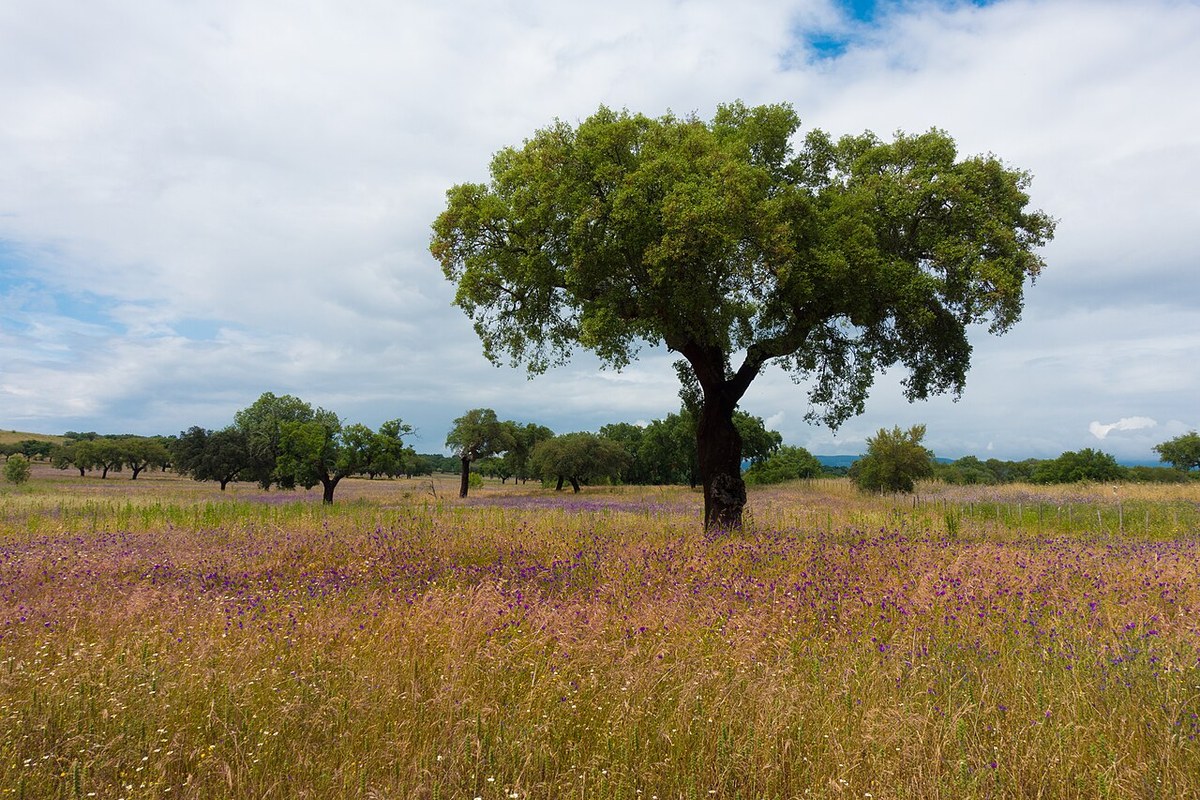
Day 8. Alentejo – Portugal without haste
Cork oaks After Lisbon, I decided to go south through the Alentejo. Portugal seemed very different to me here: spacious, calm, a little sleepy and very beautiful. The roads became freer, fields, small settlements and endless landscapes appeared around, which one wanted to look at not through glass, but somewhere from a terrace with a cup of coffee. It was the first time I saw a cork oak, and at that moment I regretted that I couldn't paint. There was a desire to draw an evergreen tree. Later I read that it grows in Europe and Africa, it can grow without watering. I didn't overload this day's trip with the sights on purpose, I wanted to admire nature. Sometimes, during a trip, there comes a moment when you realize that what you most want is not to "see another place", but just to go and take your time. Lonely tree on Ribeira de Odivelache I stopped in a small town on the way, took a walk, had lunch, and got back in the car. And that's when I got the feeling of a real journey: when you no longer count the kilometers and don't think about how many points are left before the end of the day.
0
0
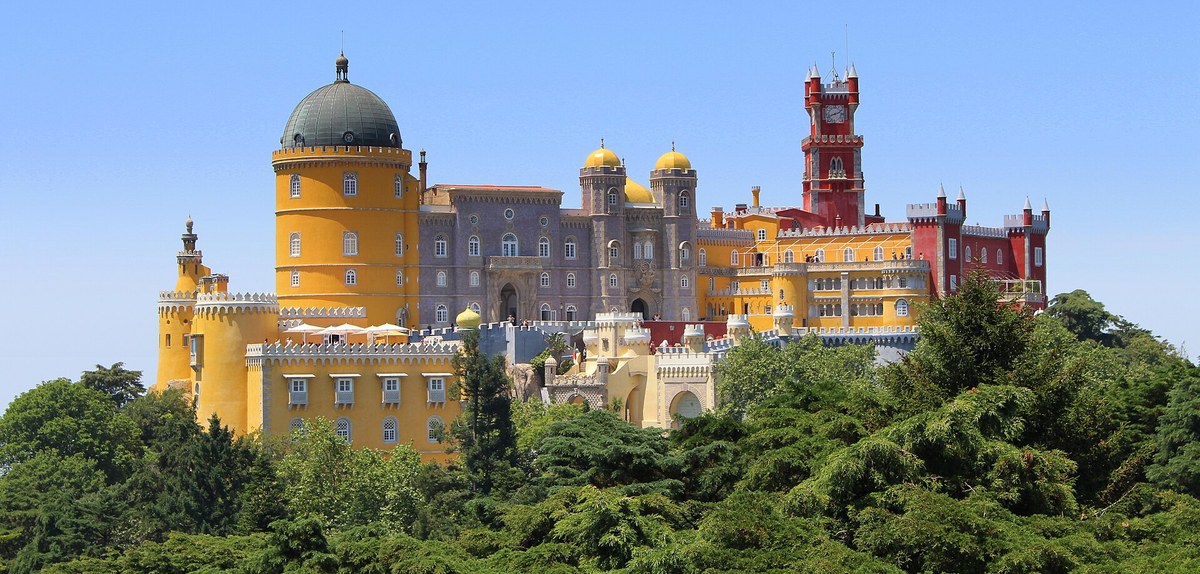
Day 7. Sintra – a fabulous day and the usual tiredness
Pena Palace From Lisbon, I went to Sintra, a picturesque city that captivates literally at first sight. If I'd been told in advance that you could say "wow" so many times in one day, I wouldn't have believed it. Palaces, gardens, old walls, forest roads, and the feeling of suddenly being trapped in a European fairy tale. Sintra Palace However, by the evening I realized that fairy-tale heroines, apparently, do not wear comfortable shoes for nothing. After several hours of walking in the hills, I no longer dreamed of palaces, but of a chair, preferably one from which I would not need to be lifted. Mourache Sintra Castle But Sintra was definitely worth the fatigue. This place became one of those places where I constantly caught myself thinking: "It's good that I came here after all." To be honest, I didn't think I'd really like it here. My sister got married recently, and they went on a trip. If I had known that Sintra was so beautiful, I would have insisted that the newlyweds go to Portugal. I would like everyone to come to see this magnificent country one day. I hope I'll be lucky enough to come back here more than once. Next time, I'll take a spare pair of comfortable sneakers with me.
0
0
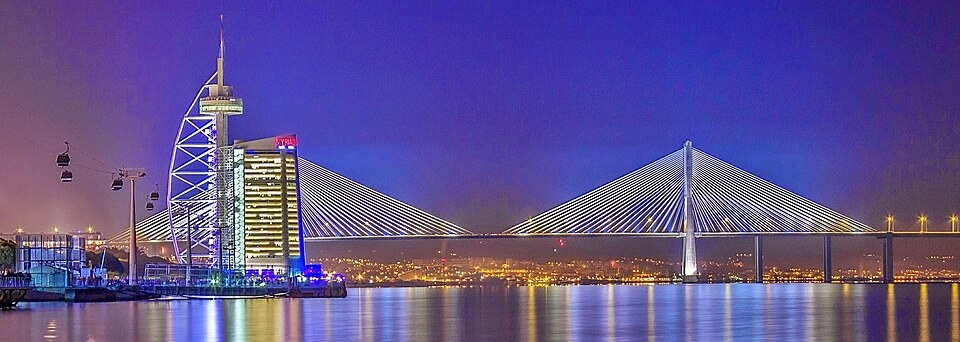
Day 6. Lisbon is the city where I became a pedestrian again
I got to Lisbon with the feeling that I had already lived a small Portuguese life. But Lisbon instantly brought me back to the big city mode: trams, people, cafes, observation decks, stairs, and an endless desire to turn off somewhere "for five minutes." I left the car again, and before going for a walk, I decided to take a ride on the tram. On public transport, you can see dozens of life stories in 10 minutes and immerse yourself in the urban atmosphere. It was the right decision, because you want to feel Lisbon, not just drive through it from point to point. I walked through the old neighborhoods, went up to the observation decks, sat in a cafe, and several times purposely walked without a route, just to see where the next street would lead me. Monument to the Discoverers Of course, it was not without failure. One day, I got so carried away with a walk that I completely lost my bearings and instead of calmly looking at the map, I walked confidently for about twenty minutes "in about the right direction." As a result, the right side turned out to be completely wrong, but I saw several streets that did not appear in the original route at all. I saw the Monument to the Discoverers, which is dedicated to Portuguese figures of the era of Great Geographical Discoveries. The landmark is located on the embankment of the Tagus River in the Belen district, the monumental ensemble is perfectly visible from afar.
0
0
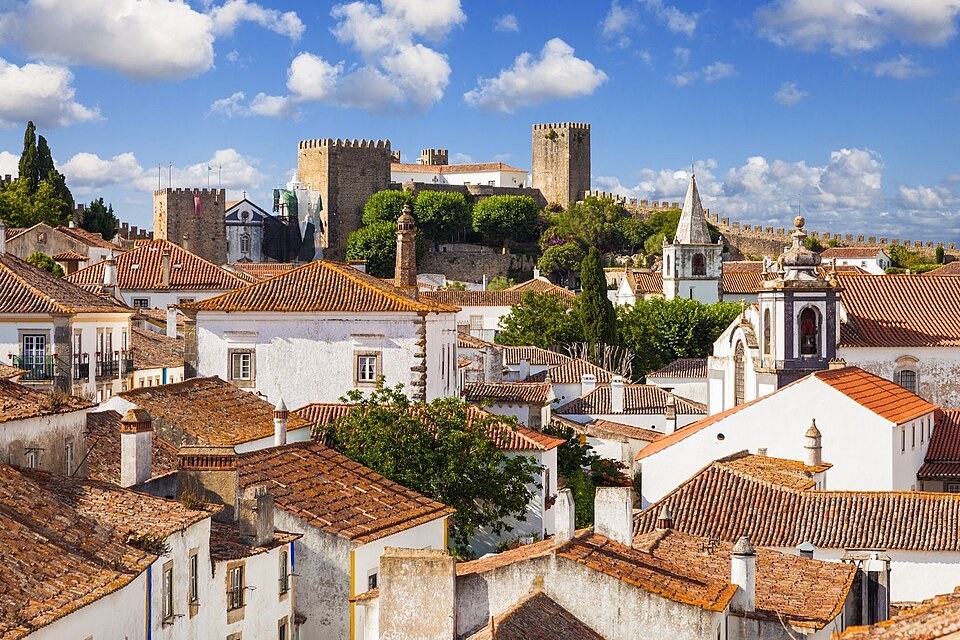
Day 5. Obidos is a small town that I fell in love with
The next stop was Obidush. After the big cities, it seemed almost toylike to me, although the word "toy" here does not mean boring at all. White houses, flowers, narrow streets, old walls and small shops did their job – I took out my phone again and started photographing everything again. The Castle of Obidush I wasn't in a hurry to get anywhere in Obidusha on purpose. This is the first time I've seen a castle in an urban-type settlement! Although many people call it a small town, and I will not be an exception. I would like to add that construction work began in the 12th century, and I am delighted that it has been preserved by now. Against his background, I think every girl imagined herself to be a princess. After standing at the landmark for a while, she continued on her way. I walked along the fortress walls, looked into the alleys, went into small shops and periodically sat down to drink coffee. It seems to me that these are the cities that best show the real Portugal, because here you do not need to make a list of ten mandatory attractions. It was on this day that I realized for the first time that traveling by car has one serious problem: the further you go, the more places you want to add to the route. I came to Portugal with one plan, and by the middle of the trip I had already started mentally building a second one, because I wanted to repeat half of what I saw by chance. Only next time, I hope that I will be fluent in Portuguese.
0
0
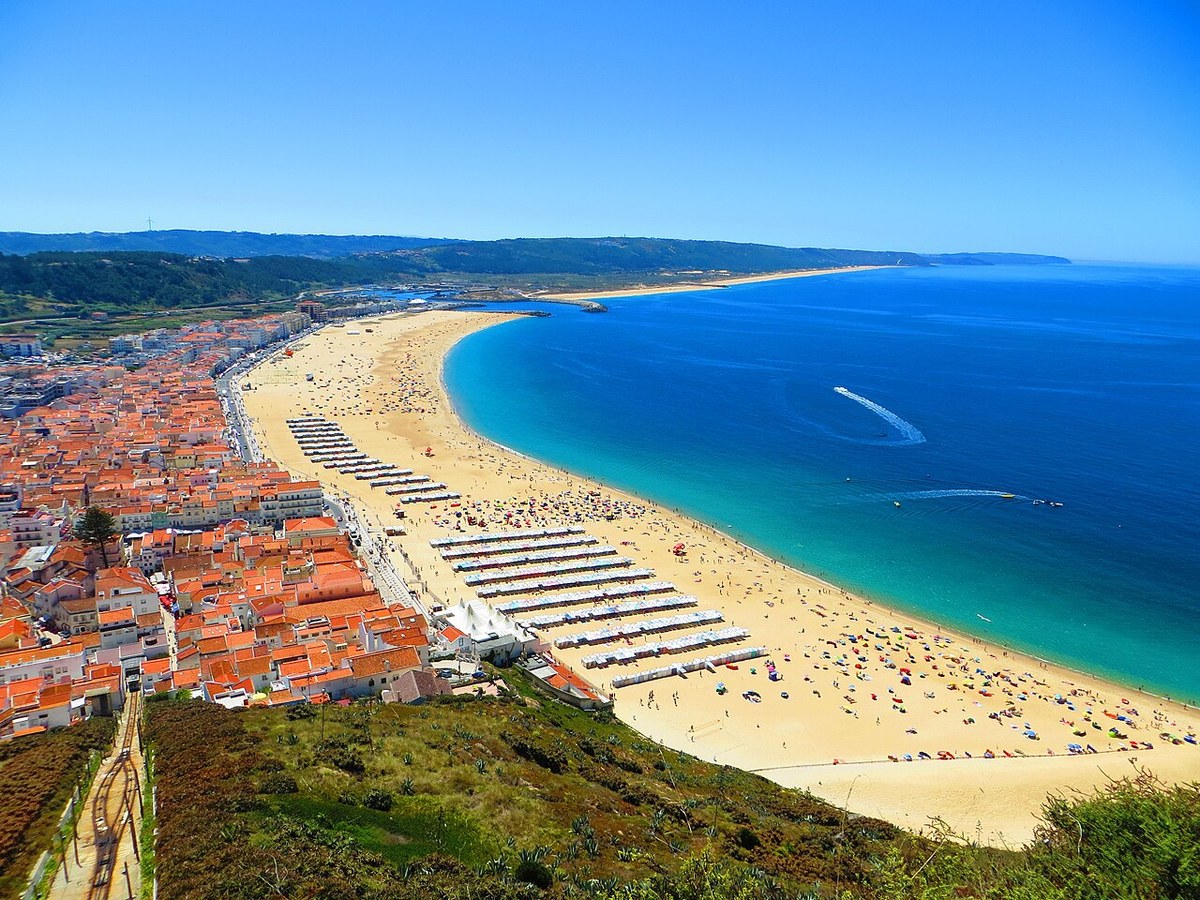
Day 4. Nazare – ocean, wind and feeling of freedom
Then I went to the Atlantic Ocean, to Nazareth. After the roads through the hills and vineyards, it was especially pleasant to see the endless water. I arrived in the late afternoon, left the car and went for a walk along the ocean, and the wind quickly explained to me that my hairstyle no longer matters that day. I liked Nazare with his atmosphere . Here you can just sit and look at the ocean without trying to see or photograph anything every minute. However, I took pictures anyway, because I'm a weak person and I lack willpower in front of a beautiful ocean. I walked along the embankment for a long time, and then climbed higher, from where I had a completely different view of the city and the coast. At that moment, I finally understood why I had arranged this car trip in the first place: for the sake of such stops that it is impossible to plan normally in the route table.
0
0
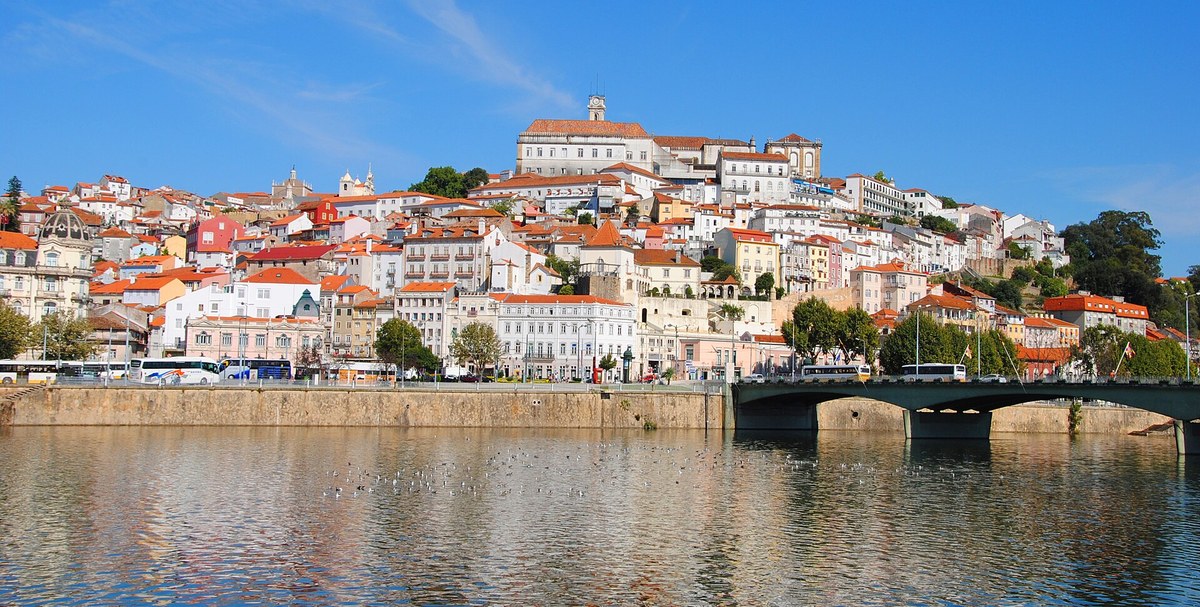
Day 3. Coimbra – a little history and a little rest
Coimbra After the Douro, I went to Coimbra. After driving for a few days, I already wanted to slow down a bit, and this city was perfect for that. Coimbra is known for its ancient university, but I enjoyed even walking through the streets, climbing and descending stairs and trying to understand why in all beautiful European cities the landmark must be somewhere at the top. I quickly discovered that Portugal is generally quite generous with lifts. At some point, I stopped looking for a convenient way and just accepted fate for what it is: if there are stairs ahead, then today I have fitness. But after the walk, you could safely sit in a cafe, drink coffee and watch the locals pass by, completely not understanding why tourists have been photographing an ordinary door for five minutes. For me, Coimbra has become a kind of pause between the north and the central part of the country. Here, for the first time, I felt that traveling stops being a race for places on the map and turns into just living in another country. How beautiful it is here in spring!
0
0
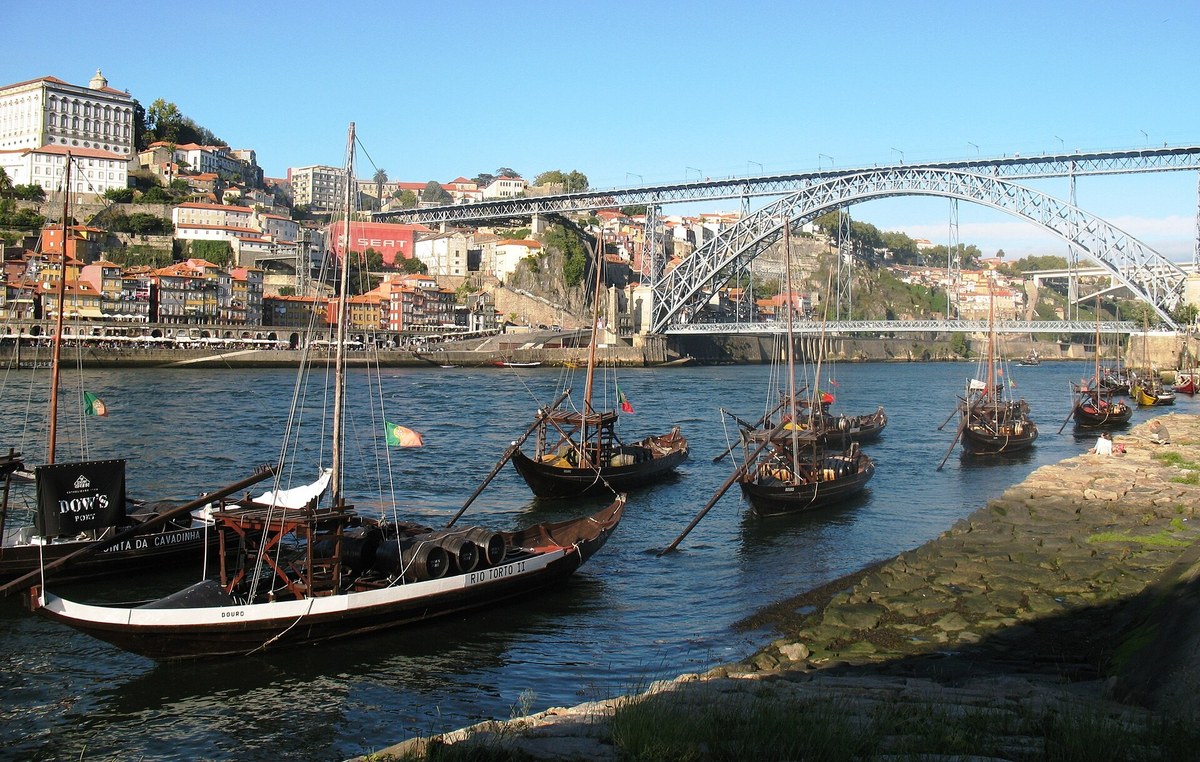
Day 2. Douro Valley – a road among vineyards
From Porto, I set off towards the Douro Valley. And here the car really turned out to be the best solution, because the road itself has become a separate part of the journey. The further away I got from Porto, the fewer cities there became, and hills, vineyards, and small villages appeared around, where life seemed to be unaware of the existence of the word "rush" at all. Dora I stopped several times simply because I couldn't get past another beautiful view. At some point, I already began to suspect that I would not get to the next point on the route today at all, because every ten minutes there was a new reason to park and get out of the car. The navigator, by the way, was completely ruthless in this regard: he continued to show the arrival time, as if he did not see that I had stopped photographing the mountains for the twentieth time. In Douro, for the first time, I felt the real scale of Portugal. It was no longer just a trip between cities, but a journey through a country where the landscape is constantly changing outside the window, and the road itself becomes part of the experience.
0
0
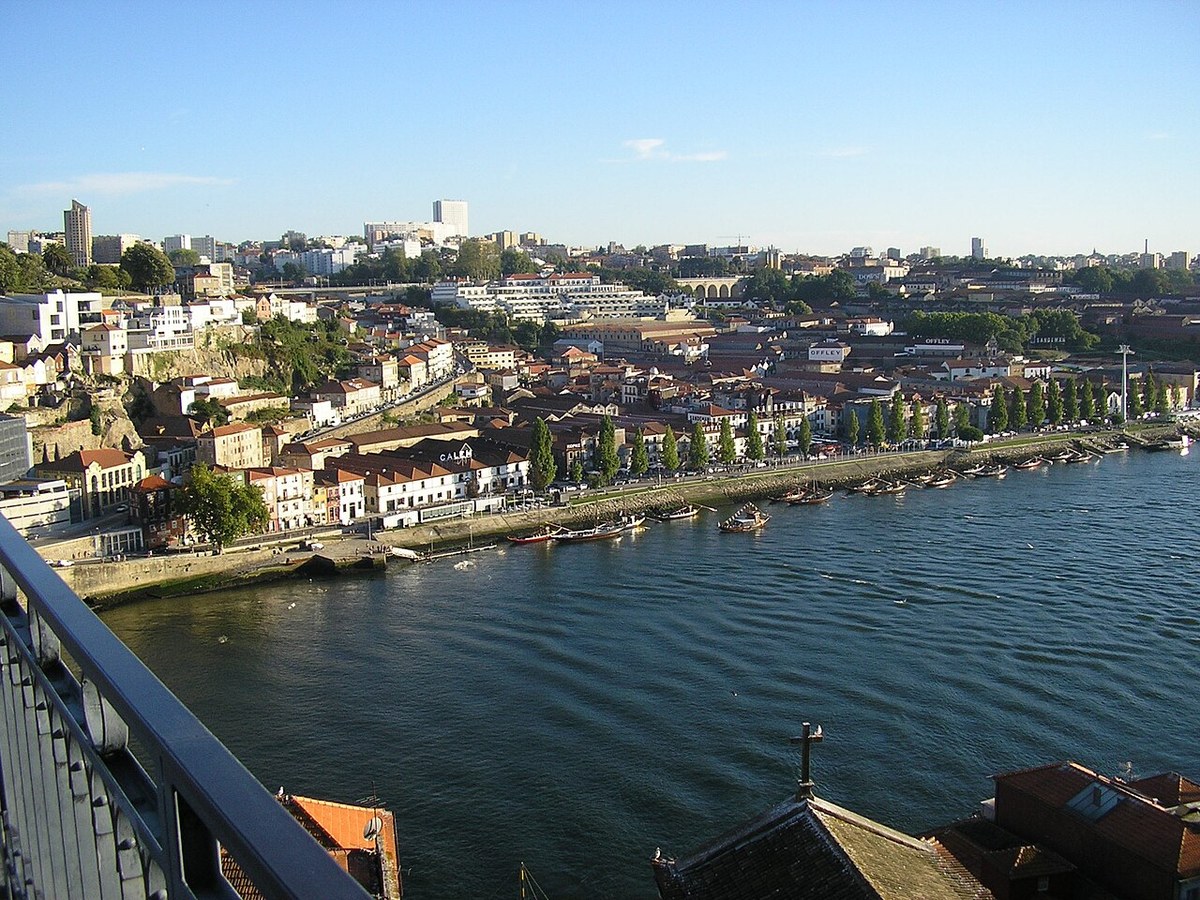
Day 1. Porto – the beginning of a big trip
I have long wanted to see Portugal not from the window of a tourist bus or along the route "Lisbon – two attractions – airport", but normally, as completely as possible in one trip. I wanted to drive along the roads, stop in small towns, turn off to the ocean, look for beautiful viewing platforms and at least sometimes pretend that I perfectly understand exactly where the next turn leads. In the end, I decided to drive through Portugal from north to south, and then take a little more ride along the coast, because after a few days in this country, I got a diagnosis: "One more turn and we'll definitely stop." The route turned out to be quite busy: Porto, the Douro Valley, Coimbra, Nazare, Obidos, Lisbon, Sintra, the Alentejo coast and further south to the Algarve. I tried not to turn the trip into a marathon, because I knew myself: if you put seven cities on the plan in two days, on the third day I would be sitting somewhere in the parking lot with coffee and looking at the navigator with the expression of a person who no longer wants to make vital decisions. Therefore, she left time for random stops between big cities, and they eventually became one of the most memorable. The port I started with Porto, and it was the case when the city was absolutely not going to get to know me gradually. He immediately gave me hills, narrow streets, colored houses, a bridge over the Douro and so many beautiful views that for the first hours I just walked with my phone in my hand and photographed everything. Even the trash can against the old wall seemed to me to be part of some kind of European art project. Ribeira District I left my car at the Port on purpose and walked a lot, because trying to drive through some streets of this city is an activity for people with strong nerves and very good reactions. Once I took a wrong turn and found myself on such a narrow street that I had to spend several minutes explaining to myself why I even decided that renting a car was a good idea. However, that's why I love traveling by car: sometimes you get not only an attraction, but also a free quest. In the evening, I went down to the river, sat on the embankment and realized that Porto was ideal for starting such a journey. There's a bit of chaos here, a bit of old Europe, a lot of ocean air, and the feeling that the city isn't trying too hard to please you, but it's doing it anyway.
0
0
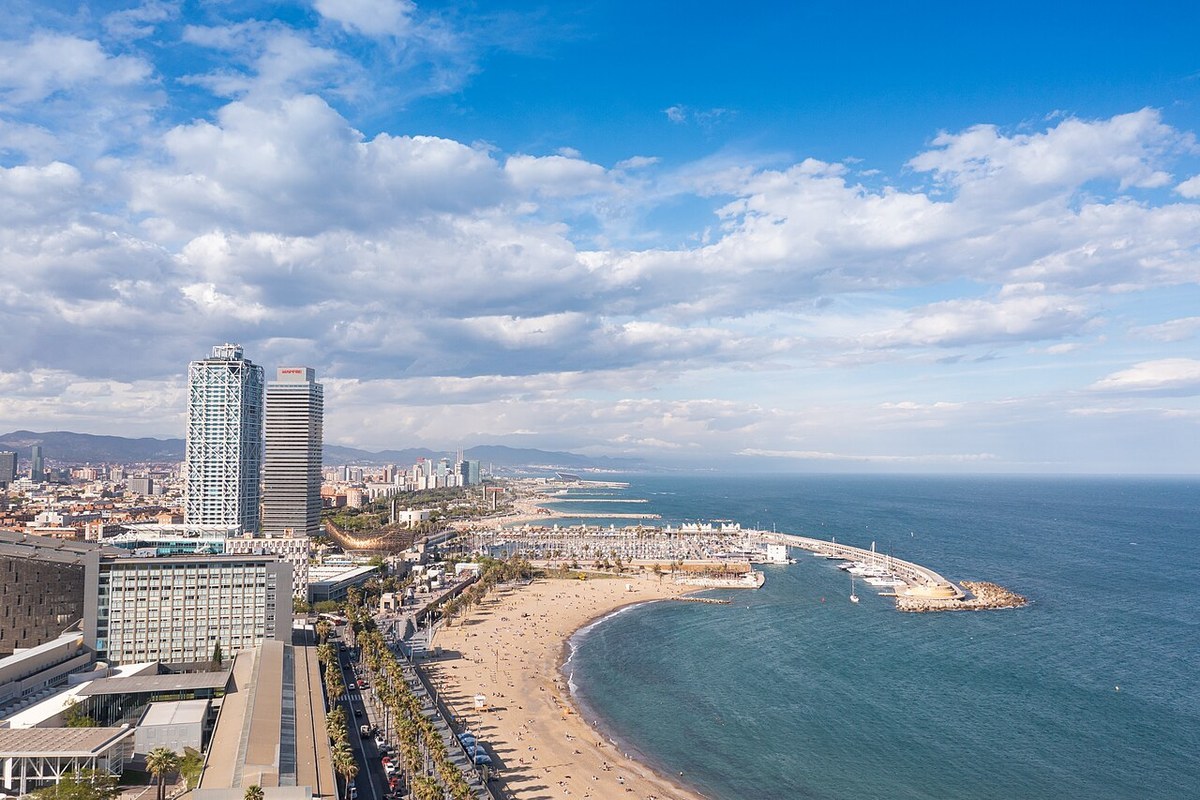
Barcelona: a long-awaited vacation to Spain
Barcelona: a long-awaited vacation to Spain I have long wanted to arrange a trip to Spain not based on the principle of "I flew to one city, saw the main sights and flew back", but rather a short trip around the country to feel the difference between the cities. In the end, I chose a route Barcelona – Valencia – Madrid , and now, remembering this trip, I think it was a very good option: first the sea, architecture and a bit of chaos, then a calm Valencia with orange trees, and finally a big, noisy and completely immodest Madrid. However, I expected that in a few days I would become a person who knows how to travel with light hand luggage, but in the end I dragged a suitcase through the Spanish streets with the expression of a person who personally quarreled with luggage. Barcelona – the beginning of the journey I arrived in Barcelona with the feeling that I had already seen the city a thousand times in photographs, so it would be difficult to surprise me. Of course, Spain decided to quickly explain to me how wrong I was. It was worth going outside, walking a few blocks and seeing the first unusual facades, balconies, palm trees and cafes, as it became clear that the photos did not convey this feeling of the city at all, which at the same time seems very familiar and completely new. I decided to spend the first day just walking, because after the road I didn't want to run a marathon around the sights. I walked around the Gothic Quarter, looked into small shops, sat in a cafe with coffee and a croissant, and periodically opened the map on my phone to figure out where I was at all. At some point, I realized that I had been going completely the wrong way for twenty minutes, but I decided not to get upset, because it is these random walks that most often become the most pleasant memories. Expectation and reality Catholic Church of Sagrada Familia Without the Redemptive Sagrada Familia (Sagrada Familia) my trip to Barcelona was not complete. I saw hundreds of photos, so I expected about the same impression that arises when viewing a beautiful postcard, but in reality the scale of the building turned out to be completely different. You stand next to it, look up and realize that Gaudi clearly did not adhere to the principle of "the main thing is not to complicate things," because there are so many details, lines and unusual shapes that the eyes literally do not know what to cling to first. I also left Park Guell on the itinerary, although before the trip I thought that maybe once would be enough. On the spot, it quickly became clear that Barcelona was not very interested in my plans to save energy at all, because after the next climb I was already talking to myself exclusively mentally and dreaming of cool water. But then, when I stopped and looked at the city from above, all my indignation disappeared, and I decided again that Spain was beautiful, and my legs would somehow survive this vacation. When things don't go according to plan The most interesting thing about traveling does not begin when everything goes according to a pre-arranged schedule, but when life slightly interferes with the route. For example, one day I got so carried away with a walk that I returned to the hotel in the evening and found that the phone was almost empty, and I safely left the charger in the room in another bag. It seems like a small thing, but when you are in an unfamiliar city and you are used to constantly checking maps, schedules and tickets, suddenly the remaining ten percent of the battery begins to be perceived as a national treasure. In the evening, I just decided to put my phone away and go for a walk without it, because Barcelona will not disappear from this. I went outside again, found a small cafe, ordered dinner, and for the first time that day I stopped thinking about how many kilometers I had already walked. It was probably then that I finally realized that traveling is not a competition in terms of the number of attractions, but an opportunity to at least sometimes take my time.
0
0
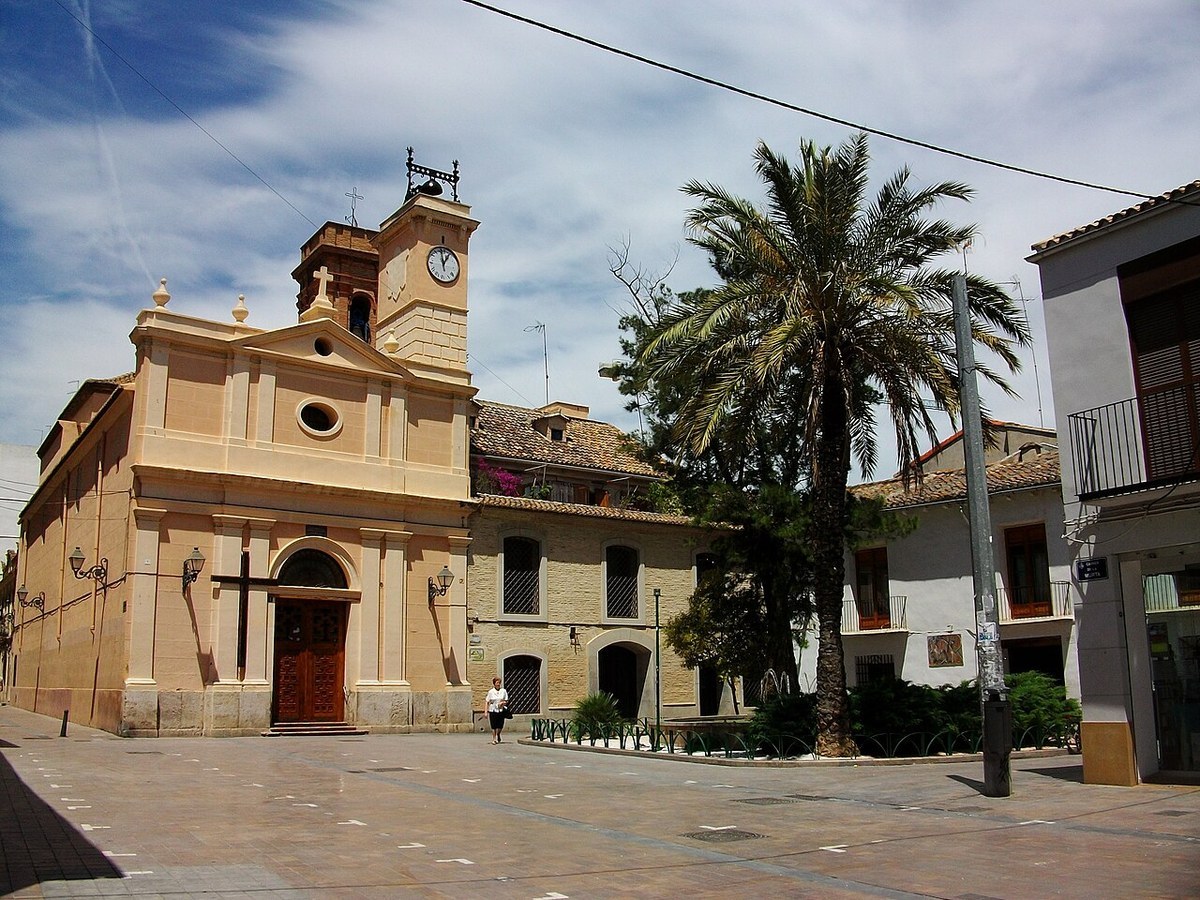
Barcelona to Valencia
After a few days in Barcelona, I went to Valencia. I especially liked this move, because after the hustle and bustle of Barcelona, Valencia feels a little calmer, although you can't exactly call it sleepy. In general, it seemed to me that the cities of Spain are very different in mood, and that's why the route with several stops turned out to be much more interesting than just a week in one place. The Gates of Valencia In Valencia, the first thing I did was go to the Barrio del Carmen quarter to see the Gates that were built in Valencia in the 14th-15th centuries. I felt so small against their background, but I didn't care, I was admiring the attraction in person, not in a picture from some blogger. It's funny, it turns out that I'm the blogger now. Then I walked without a specific goal, and along the way I constantly came across beautiful, in my opinion, streets, old buildings, small cafes and those same orange trees that for some reason make you stop every five minutes and take pictures of the street. I also liked the City of Arts and Sciences. After the old architecture of the center of Valencia, this place looks like someone decided to move a piece of the future right in the middle of the city. I walked around these white buildings for a long time, photographing reflections in the water and trying to make that perfect frame that I could then show my friends. City of Arts and Sciences Of course, the perfect shot didn't work out the first time. First, a random passerby got into the lens, then I somehow managed to press the wrong button myself, and then I discovered that I was standing on the wrong side from where I wanted to take pictures. As a result, there were a lot of photos, but the real victory was that among them there was one where everything finally looked like I had planned it that way on purpose. Valencia is a city where you want to slow down If Barcelona was associated with constant traffic, then Valencia seemed like a city where you want to slow down a little. Here, I allowed myself to sit in a cafe longer, didn't try to mark a new attraction on the map every hour, and could easily spend half the day just walking. And, of course, you can't talk about Valencia and not remember paella. I decided in advance that I would definitely try it here, because I wanted to compare real Valencian paella with what is usually offered in tourist places. In the end, I chose a restaurant, studied the menu for a long time, confidently ordered a dish, and then sat and thought about why the portion was designed for about a small Spanish football team. But these are the moments I love most when traveling. You can create a detailed route in advance, save dozens of places on the map and schedule every day by the hour, but then it's a random dinner, a lost street or an unexpected stop that turns out to be what you remember months later.
0
0
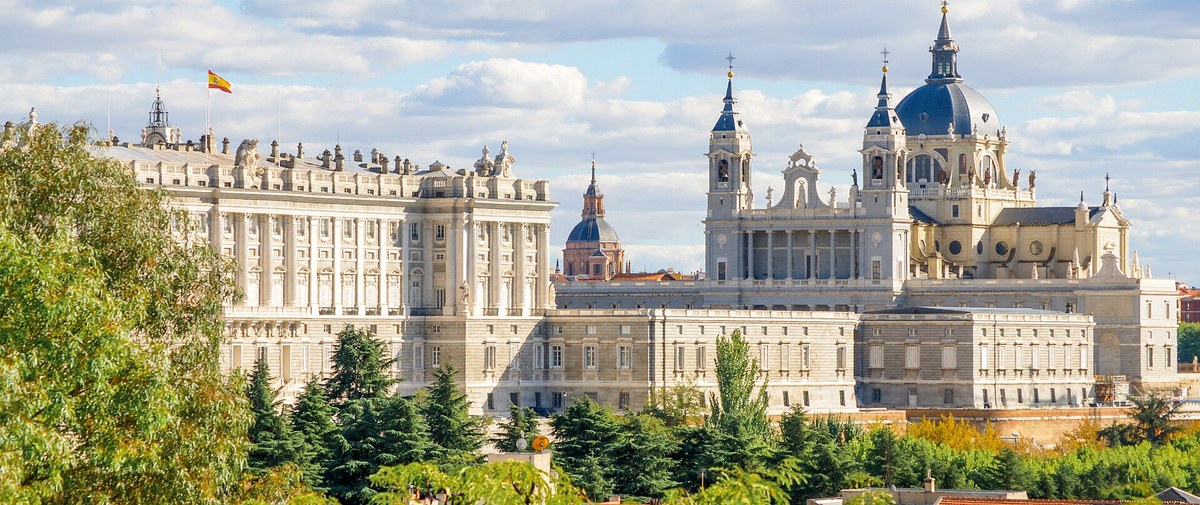
Madrid is the finale of my route
From Valencia, I went to Madrid, and here the mood of the trip changed again. After the more relaxed Valencia, Madrid seemed to me huge, energetic and very lively, and in a good way: people are going somewhere, cafes are full, some kind of life is constantly happening on the streets, and in the evening the city seems to decide that no one is going to sleep tonight. The Royal Palace I started exploring Madrid by walking through the center and gradually reached the Puerta del Sol, Plaza Mayor and the Royal Palace. I liked that many places here can be combined into one big walk, so I didn't feel like a person who runs all day between points on the map. Although, of course, the kilometers imperceptibly turned into kilometers again, and by evening my legs clearly wanted to apply for dismissal. I left a separate day for museums, because it would be strange to come to Madrid and not get to know its artistic side at least a little. After a few hours in the museum, I realized that the human brain also has a certain limit to art perception, so I decided to just walk around the streets and look for a place to have dinner. Catalan cream And here Madrid proved to be very convincing again. In the evening, I sat in a small cafe and ate Catalan cream. I liked the delicate Spanish dessert. People were talking around, someone was laughing, someone was having dinner with friends, tourists were passing by, and at that moment I didn't want to rush anywhere at all. I found myself thinking that it was for the sake of such evenings that we carry suitcases through train stations, look for the right platforms, get confused in maps and sometimes completely do not understand where the navigator has led us once again. Barcelona, Valencia and Madrid – three different moods After this trip, I especially liked how different the three cities turned out to be. Barcelona has remained for me a city of architecture, the sea, walking and a constant feeling that there will be something interesting around the next corner. Valencia is remembered for its calmer rhythm, old center, orange trees and the feeling that there is no need to rush somewhere. Madrid turned out to be completely different – big, energetic, noisy and very evening, when after sunset the city seems to be just beginning to really wake up. And that's why I liked putting it at the last point of the route: after the sea and the more relaxed Valencia, I ended the trip on a maximum urban note. How many days should I set aside for this route? If I were planning this trip again, I would have planned for about 9-10 days : four days for Barcelona, two or three for Valencia and three days for Madrid. Of course, you can do everything faster, especially if you just want to tick the boxes in front of the main attractions, but I don't really like this format anymore, because at some point the journey turns into running with a camera. Puerta del Sol It's much more pleasant for me to leave some free time between required places. That's when you can accidentally turn onto a beautiful street, linger in a cafe, go to a small store, buy something completely unnecessary, and then spend half the evening explaining to yourself why I definitely couldn't return home without this thing. What I took away from Spain This trip turned out exactly the way I like to remember traveling: with beautiful places, delicious food, long walks, small everyday failures and periodic moments of "so, where am I anyway?". Route Barcelona – Valencia – Madrid is good because it allows you to see completely different Spain in one trip and not get stuck in the same mood for the whole week. And I also once again became convinced that there is no such thing as an ideal trip, and there is no need. You can forget to charge, confuse the exit from the subway, get tired after another walk, accidentally order a huge portion of food and discover that the navigator sent you to the wrong place, but it is from such small things that the real memory of the trip develops. And if after a few months you remember not only Sagrada Familia, the City of Arts and Sciences and the Royal Palace, but also that very evening when you were sitting in a cafe and thought "how nice it is here", then the trip definitely turned out.
0
0
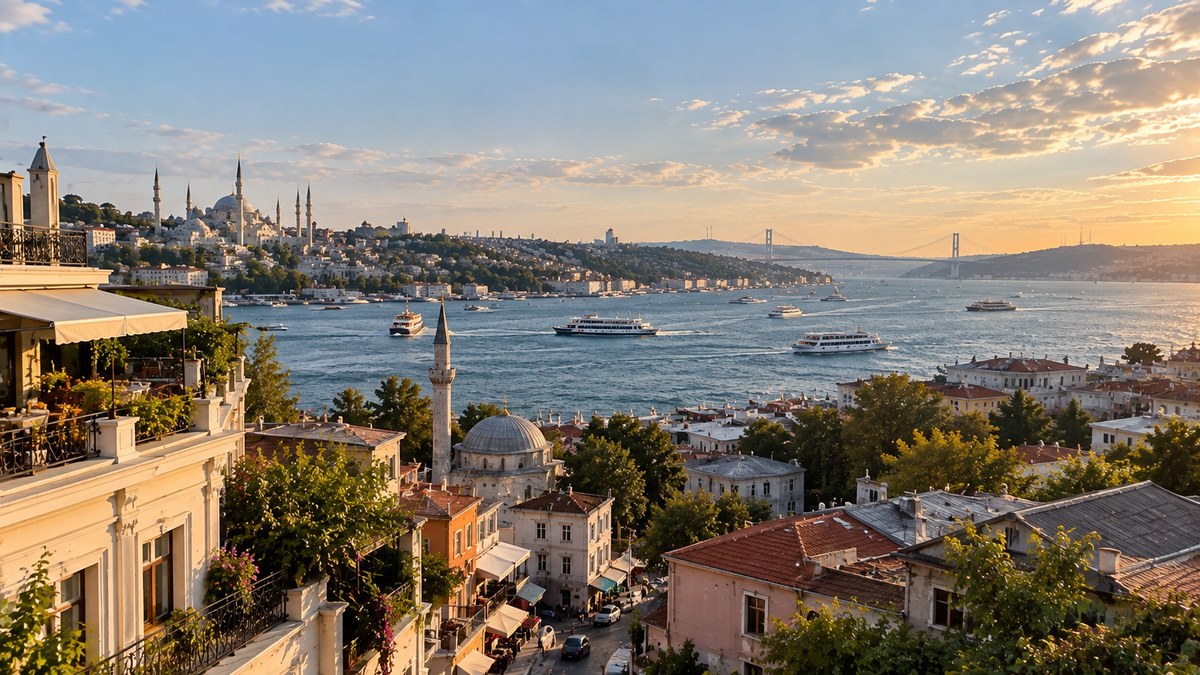
How to choose a hotel in Istanbul: my experience and mistakes
When I first started looking for a hotel in Istanbul, it seemed to me that the most difficult thing was to choose between a beautiful view of the Bosphorus, a cozy room and a good price. Naive as I was, I didn't realize at the time that Istanbul had a separate quest called "figure out exactly where this beautiful hotel is located, which in the photos looks like you can walk to all the sights in five minutes." View of the Bosphorus As a result, I quickly found out that in this city, the location of a hotel is sometimes much more important than the room itself, because you can settle in a beautiful place, and then heroically conquer hills, stairs and roads every day, cursing your own choice. I choose the area first, and only then the hotel. My main conclusion after my trip to Istanbul turned out to be very simple: first you need to decide on the area where you want to live, and only then open the list of hotels. When I did the opposite, my eyes wandered away from the beautiful interiors, terraces with views and photos of breakfasts, and the map was quietly ignored somewhere, although it should be the main person in your company in Istanbul. Hagia Sophia If you want to be closer to the main historical sights, I would look at Sultanahmet district, where Hagia Sophia, Blue Mosque, Topkapi Palace and many other famous places are located. It is convenient to start walking there directly from the hotel, especially if the trip is short and you want to see as much as possible without spending half a day on the road. At the same time, Sultanahmet will not seem to everyone to be an ideal place to stay, because in the evening some streets become quite calm, and the tourist atmosphere is felt literally at every step. For example, I like it when, after a busy day, you can leave the hotel and just take a walk among the ordinary city life, so I would not limit myself to this area only. Beyoglu – when you want to not only see Istanbul, but also feel it If you want a more lively area, I would look at options in Beyoglu, especially near Istiklal and Taksim Square. The atmosphere here is completely different: there are many cafes, shops, people, old houses, small alleys and the very places where you can accidentally turn around the corner and discover a nice cafe that was not in my plan at all. However, there is also a small trap here, which I did not immediately find out about. Istanbul generally does not respect the concept of a "flat road" very much, so a beautiful hotel, which on the map seems to be located very close to a subway or a landmark, in reality may be at the bottom or at the top of such a rise that after walking with a suitcase you start thinking about buying real estate right on the sidewalk. Levent station on the M6 line Therefore, now I definitely look not only at the distance to the subway, but also at guest reviews, where people write about ascents, stairs and the condition of the road. If several people independently complain that they have to get to the hotel by stairs with a suitcase, I take this as very useful information, even if the hotel itself looks great. Galata is a beautiful option, but we still open the map. Another area that I like to live in is Galata. There is the very Istanbul atmosphere that many people come to the city for: old buildings, narrow streets, cafes, small shops and the constant feeling that you are inside a beautiful movie, but for some reason you are always late. Galata, the Golden Horn in the foreground But when choosing a hotel here, I pay special attention to the exact location. It's one thing to live next to the Galata Tower and walk around the neighborhood in peace, but it's quite another to drag shopping and tired legs through steep streets every evening. The relief of Istanbul is usually not very noticeable in photographs, but the legs remember it very well after the first day of the tour. A hotel near the metro is really important Previously, I could choose a hotel just because I liked the interior, and then figure out how to get to it. Now I first look at transport accessibility, especially if I plan to travel a lot around the city. Line 7 station platform It is convenient in Istanbul when there is a metro, tram or other public transport nearby, because the city is large and the sights are scattered in different areas. This is especially true when you want to go not only to the historical center, but also to see other parts of the city, cross the Bosphorus, or simply not spend your entire vacation in one area. At the same time, the phrase "10 minutes to the subway" now needs to be deciphered for me. Ten minutes on foot on a flat road and ten minutes on foot up a hill are completely different ten minutes, and Istanbul is very good at proving this. I'm not just fooled by the beautiful photos of the room When I choose a hotel, I like the beautiful photos of the room, of course, but now I try not to trust them too much. Especially if the picture shows a huge bed, a marble bathroom, a panoramic window and some kind of cup of coffee, which was obviously placed there specifically for the photo. I always read the latest reviews and look at photos of the guests themselves. That's where the most interesting things usually turn out: is the room really that spacious, how well it's cleaned, is there hot water, is it convenient to use the shower, can you hear the neighbors, and does reality match the photos of the hotel. I'm looking at the comments about noise insulation separately. After a day of walking, I don't want to listen to someone talking on the phone behind the wall, but calmly take a shower, drink water and go to bed. This is especially true in Istanbul, because the city is quite noisy and lively, so I don't need any extra noise inside the hotel. Breakfast: is it needed at all? I used to perceive breakfast at the hotel as a mandatory part of the reservation, but in Istanbul I began to treat it much more calmly. A Turkish breakfast is, of course, a separate pleasure, but sometimes it's much more interesting for me to go outside in the morning and find a small cafe where I can have a quiet coffee and try something local. That's why I wouldn't overpay just for a beautiful breakfast photo. If breakfast is included in the price and it looks fine, fine, but if it makes the room significantly more expensive, I would first look at what is around the hotel. Besides, I like to start the day not according to the schedule of the hotel restaurant, but when I woke up myself. On vacation, I generally try not to turn myself into a person who runs to breakfast at 7:30 a.m. solely because it will be closed later. But I would be more careful with the view of the Bosphorus. The view of the Bosphorus is wonderful, I will not argue here at all. But when the description of the hotel says something like "partial view of the Bosphorus", I already open the map and carefully study the photos, because sometimes this partial view means that there is a neighboring house, roof, air conditioning and a few more architectural surprises between you and the Bosphorus. If the view is really important, I would look at photos of a specific room or room category, not just general photos of the hotel. Because the hotel may actually be located next to the water, but this does not mean at all that the very picture you imagined will open from your window. What else do I look at before booking Before making a final choice, I check a few things that I used to consider small things for some reason. It is important for me to understand if there is an elevator, especially if I am traveling with a large suitcase, how easy it is to get to the hotel from a bus stop or station, whether there are shops and cafes nearby, and how far away are the main places I am going to visit. I also look at the cancellation policy and carefully check if everything I need is included in the indicated price. Sometimes an attractive price at the first viewing turns into a completely different amount after adding taxes or additional conditions, and this is where my love for profitable offers usually ends. And I always read the latest reviews, not just the overall rating. The average rating may look great, but the latest reviews will tell you much more, especially if the hotel has recently changed its owner, repairs have begun or some problems have appeared. My little formula of choice Now I would choose a hotel in Istanbul according to the following scheme: first the area, then the transport, then the reviews, after that the room, breakfast and a beautiful view from the window. Because a good interior can please me for the first ten minutes after checking in, and the convenient location will please me every day when I return to the hotel after another walk. And I also try not to choose a hotel just because it looks luxurious in the photos. When traveling, it is much more important for me to wake up in the morning, calmly go outside, quickly get to where I want to go, return in the evening without incident with a suitcase and feel that I am really resting, and not passing a daily orientation exam. In general, my advice is simple: in Istanbul, choose not the most beautiful hotel, but the one in which it will be convenient for you to live along your route. And if you manage to combine a convenient area, a good price, a beautiful room and a view of the Bosphorus, take it before someone else does it before you, because Istanbul knows how to fall in love with itself even when you just left the hotel for water and accidentally returned three hours later with a bag of sweets, a magnet and I felt like I was lost again, but I found an amazing place.
0
0
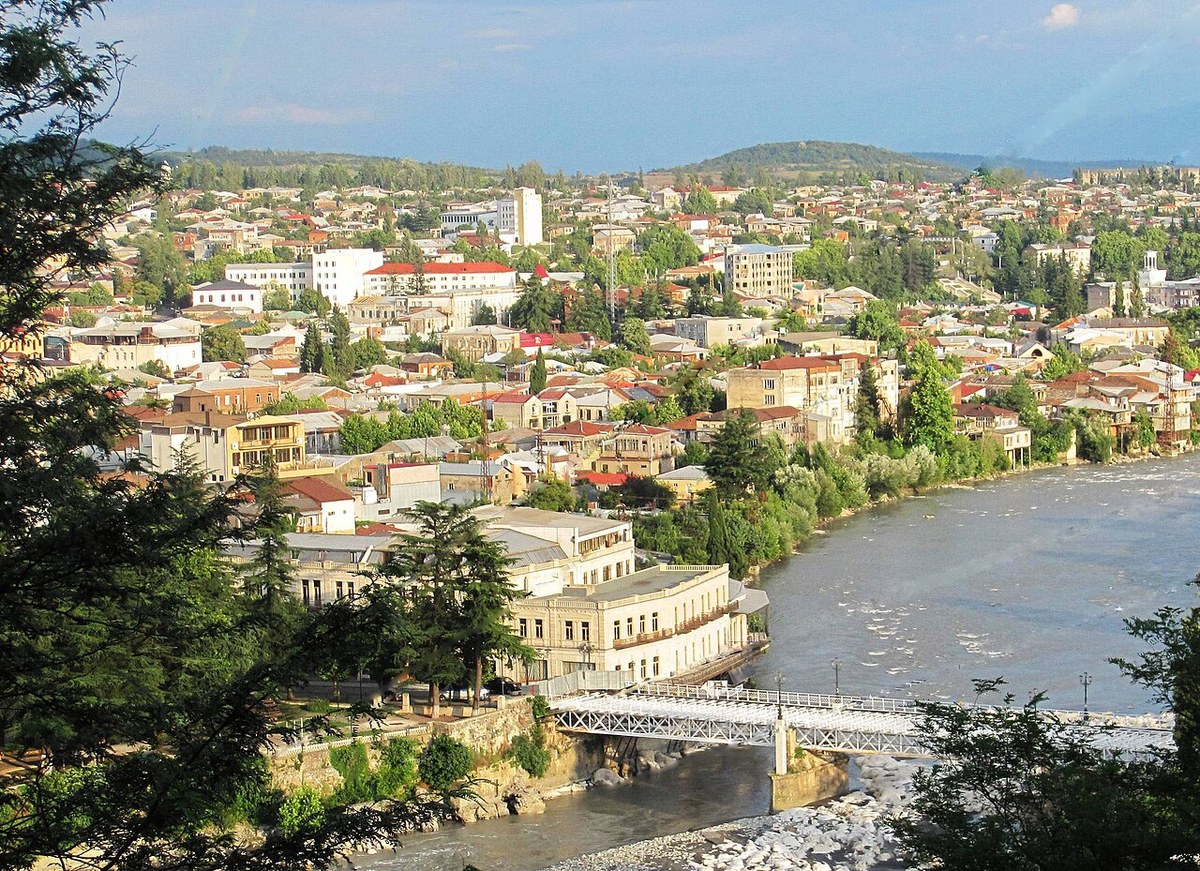
Kutaisi: a place I didn't know anything about before the trip
If someone had told me a few years ago that one day I would end up in Georgia thanks to a friend's bachelorette party and would accidentally fall in love with Kutaisi, I would probably have just laughed. I knew about Tbilisi, I had heard about Batumi, I imagined Georgian mountains, wine, khachapuri and feasts, but Kutaisi was practically absent from my tourist dictionary. So when a friend wrote to our shared chat one day: "Girls, I've thought of everything, we're going to Georgia for a bachelorette party," I immediately imagined a beautiful hotel, glasses of wine, photos in dresses, and an obligatory table that would look like we hadn't come for three days, but decided to feed the whole area. To the question "Where exactly?" My friend replied quite calmly: "In Kutaisi." I honestly started looking for it on the map right away, because I didn't want to pretend once again that I knew the geography perfectly well, and then it turned out that I couldn't tell anything about it except the name of the city. However, it didn't upset me at all at the time, because I had a feeling that the main thing in a bachelorette party was company, and the place could be opened on the spot. Kutaisi turned out to be completely different from how I imagined it. The first impression was very pleasant, but I still waited for some time for that Georgia of my expectations to begin, with endless feasts, noisy streets and the feeling that now someone would definitely invite us to drink wine. Kutaisi turned out to be much calmer than I imagined, and that's what surprised me a little at first. There was no sense of a large tourist city, where every second person was in a hurry, and every first person was trying to sell you a magnet with a local landmark. We walked through the streets, talked about everything, took pictures literally near every beautiful building and periodically stopped to eat, because in Georgia it is generally difficult to pretend that you are not hungry. At some point, I realized that while we were talking, I had completely stopped looking at my phone and checking what was interesting nearby, because the city itself turned out to be interesting enough to just walk wherever my eyes looked. However, after a while it became clear that "where your eyes are looking" is not always the best way to navigate, especially when your eyes are busy photographing. The bachelorette party almost turned into an excursion The next day, we decided that one city wasn't enough for us, and we started discussing where we could go. The friend who organized all this had already found several places in advance, and we all pretended to be listening attentively, although each of us was thinking mainly about breakfast at that moment. As a result, the conversation ended with the fact that we decided to see the surroundings of Kutaisi, and I still believe that it was then that our usual bachelorette party finally turned into a small trip. We saw a completely different Georgia – green, mountainous, a little wild and very photogenic, and so much so that the phone gradually began to turn into the main participant in our company. We stopped every now and then to take pictures, then returned because "the view was even more beautiful there," and then got back in the car and promised ourselves that we would definitely make the next stop the last. Of course, she has never been the last one. I finally understood why it's worth coming here. What surprised me the most was that before this trip I did not perceive Kutaisi as an independent tourist destination at all. In my head, it was just some kind of Georgian city that exists on the map and is probably needed by someone, but why exactly to go there, I did not understand at all. And then I found myself there myself, and suddenly I found myself thinking that I liked the lack of a sense of a "mandatory program." I liked walking through the streets without a clear plan, looking into small cafes, sitting at a table with my friends and discussing everything in the world, and then suddenly discovering a beautiful old house or a cozy courtyard nearby. In Kutaisi, for the first time in a long time, I felt that a trip does not necessarily have to consist of ten sights a day to be remembered, sometimes just good company, a beautiful city and the feeling that you are not in a hurry are enough. And, of course, there was a small failure. Our bachelorette party wouldn't be our bachelorette party if at least once things didn't go a little wrong. One evening, we decided to walk to the right place on our own, because, of course, why would we need a taxi if we have legs, a phone and the collective mind of four women. The collective mind lasted for 15 minutes, after which it turned out that each of us was sure that someone else knew the way. We walked for quite a long time around the Chain Bridge spanning the river Rioni. By the way, we found out later that archaeologists found the remains of a 5th-century stone bridge in this area. Chain Bridge We took a few wrong turns, then started arguing with the map, and then we just stopped and started laughing, because it was too late to go back, and no one could explain exactly how we managed to get lost on a fairly simple street. As a result, we were saved by a local woman, who seemed to understand from our confused appearance that tourist navigation had officially failed today, and showed the way. I left Kutaisi with an unexpected thought. When it was time to return home, I caught myself in a completely unexpected feeling.: I was a little sorry to leave. I was on my way to Georgia for a bachelorette party, thinking mostly about my friends, beautiful photos, delicious food and a few fun evenings, but in the end I took with me the memories of a city that I didn't know much about until recently. It's probably these trips that you remember the most, because you don't have time to figure out in advance what the place should be. Kutaisi didn't have to meet my expectations, because I had almost no expectations, and perhaps that's why he surprised me so easily. The Rioni River Now, if someone asks me what I know about Kutaisi, I won't silently open the map like the first time. I'll tell you about our endless walks, Georgian food, green surroundings, the Rioni River and our attempts to navigate on the phone, and the very bachelorette party that was supposed to be just a fun trip with friends, but in the end introduced me to a place that I had hardly thought about before. And, perhaps, this is one of the best things that can happen on a trip: to arrive there, which you know nothing about, and leave with the feeling that you have found a small piece of the world, which now for some reason has become yours.
2
0
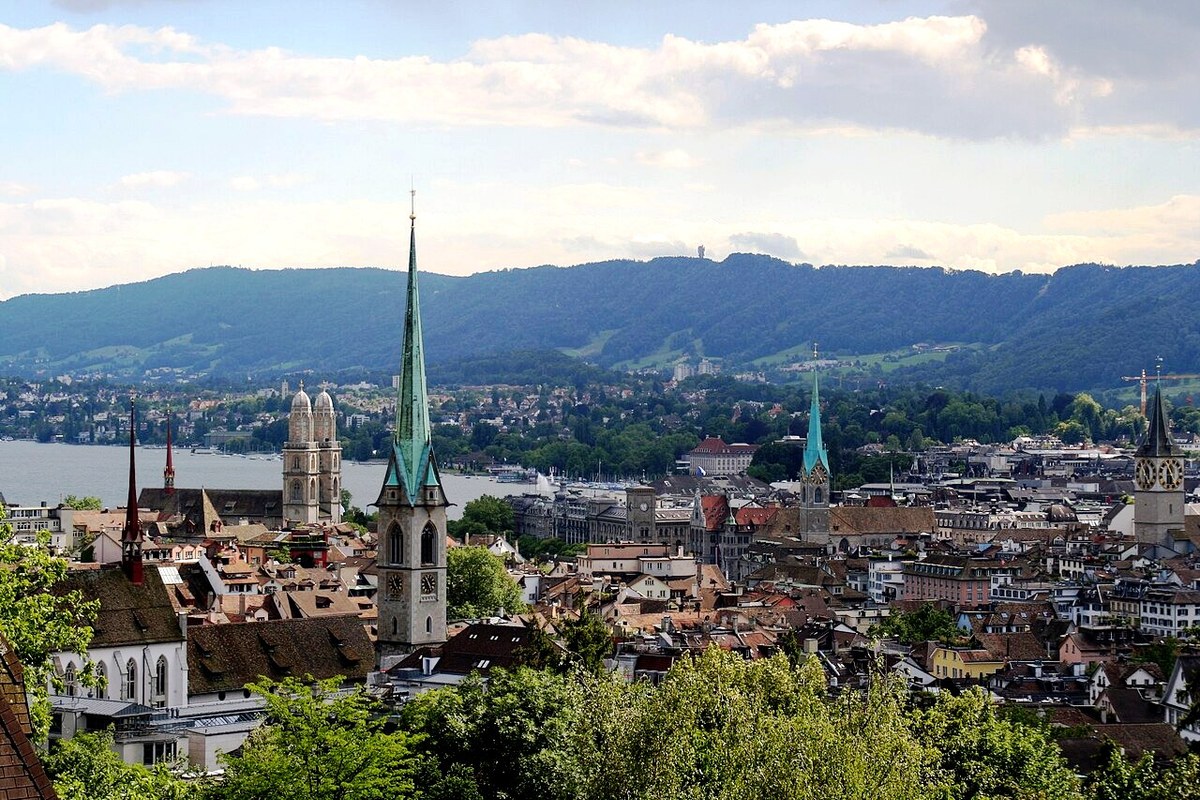
The most beautiful places I've seen in Switzerland
For me, Switzerland turned out to be the country where at some point you stop understanding exactly where to look, because literally everything around you seems beautiful. I went there with the usual tourist spirit: to see several famous places, take photos, walk around the cities, taste the local chocolate and finally see the very Alps that I have come across so many times in photographs. But in reality, it turned out that the photos did not convey the main thing at all – scale, silence, air and some absolutely incredible feeling, as if you accidentally got inside a very expensive screensaver on your computer. Zurich – the first acquaintance with Switzerland The first place that made a strong impression on me was Zurich, although for some reason I thought in advance that it would just be a beautiful and tidy city, without any special surprises. As a result, I walked around the Old Town for a long time, looked at the colorful facades, looked into the small streets and constantly stopped by the Limmat River, because each new turn opened up another beautiful view. I especially liked the Grossmunster and Fraumunster towers, and when I saw Lake Zurich, I finally realized that my plan to "quickly see the city and drive on" could safely be thrown away. Lucerne is a city that you want to photograph endlessly But my real feeling of Switzerland began in Lucerne, and here I was just walking around with my phone, like a person who urgently needed to fix absolutely every corner. The city itself is incredibly picturesque, and the famous wooden Kapellbrücke Clock Bridge over the Reuss River looks like it was specially built for tourist postcards, although it is completely real and has existed for many centuries. There is a water tower nearby, and mountains rise outside the city, so sometimes I found myself thinking that it would be impossible to come up with a more beautiful setting for a walk, even if I tried very hard. Mount Pilatus – when you want to see everything at once From Lucerne, I went to Mount Pilatus, and it was one of those trips when the road itself becomes part of the attraction. I was driving up, looking out the window and trying to figure out how people can live peacefully next to such landscapes and not take pictures of the mountains every five minutes. At the top, there are stunning views of Lake Lucerne and the Alps, and the weather in the mountains, as I've seen, can change my mood faster than I can get my phone out of my bag. Riga – "Queen of the Mountains" Another place I've wanted to see for a long time was Mount Riga, which is called the "Queen of Mountains." I especially liked the fact that you can climb there on a cogwheel railway, and the trip itself turns into a small adventure with constantly changing views outside the window. Upstairs, I found myself in a situation where I seemed to have come to see one particular landscape, but in the end I just stood and looked around, because the Alps were absolutely not going to fit into the frame of my phone screen. Interlaken – Alps, lakes and the feeling of being in a postcard ""After Lucerne, I went to Interlaken, and here Switzerland finally moved from the category of "very beautiful" to the category of "is it even legal to look like this?". Interlaken is located between the Thun and Brienz lakes, and the Alps rise around it, so wherever I went, there was always a mountain, lake or another valley on the horizon, which I immediately wanted to take a closer look at. The funny thing is that at some point I stopped understanding exactly where to go, because each subsequent view seemed better than the previous one, and the tourist route turned into an endless "oh, let's turn here again." Lauterbrunnen is a valley that cannot be forgotten A special place in my heart was occupied by the village of Lauterbrunnen, which looks so perfect that at first I even suspected some kind of tourist deception. Huge cliffs surround the valley, and waterfalls fall down from the slopes, among which the Staubach Waterfall is especially famous, which has become one of the region's business cards. I walked through the valley and tried to photograph the mountains, waterfall, green meadows and small houses at the same time, but I quickly realized that the camera still would not convey the feeling that arises when you really stand in the middle of this valley. Zermatt and Matterhorn – the very view from the advertisement And then there was Zermatt, a place for which I was ready to forgive Switzerland almost everything, including the prices, after which I wanted to look at my bank account and cry quietly. The main reason for coming here was obvious to me: the Matterhorn, one of the most recognizable mountains in the world, which I had seen countless times before in photographs. But when I saw it live, I realized why people come here again and again, because this mountain really makes a very special impression. I also really liked Zermatt itself, especially its wooden houses, narrow streets and a very special atmosphere of a mountain resort. However, I quickly realized that beautiful photos are suspiciously easy to take here, because no matter where you turn, there's already an Alpine peak behind you, and there's bound to be a pretty house with flowers in front of you. I even tried to just walk down the street calmly, but after a few minutes I took out my phone again because my brain was talking every time.: "Wait, we need to take a picture of this." Gornergrat – mountains in all their glory One of the most beautiful experiences was a trip to the Gornergrat, which offers a famous panorama of the Matterhorn and surrounding peaks. The road up is incredibly scenic in itself, and at the top there is a feeling that you are somewhere very far from the familiar world. I was standing there, looking at the mountains, and for the first time during the trip I was in no hurry at all, because in such places you don't even want to take pictures right away, but first just stand and see it all with your own eyes. St. Moritz and Engadine are a completely different Switzerland Another place that I would definitely include in the list of the most beautiful is the Engadine Valley and St. Moritz. Nature looks a little different here: high-altitude lakes, coniferous forests, mountains and very clean air create a very special atmosphere, and St. Moritz itself looks as if it was carefully placed among the Alps and asked not to spoil anything. I walked along Lake St. Moritz, looked at the mountains and thought that Switzerland is generally a master at creating places where you want to live, relax and for some reason immediately start drinking coffee with a view of the mountains. Glacier Express – when the road itself becomes an attraction One of the most vivid impressions was a trip along the Glacier Express route, which passes through incredibly picturesque Alpine landscapes between Zermatt and St. Moritz. You don't even need to look for a separate attraction here, because the road itself turns into a journey worth coming to Switzerland for: bridges, gorges, mountain villages, snow-capped peaks and endless landscapes outside the window replace each other while you sit in the carriage and try to decide whether to take pictures or just watch. Of course, I did both, and then I discovered that half of the photos were taken through glass with some completely mysterious reflection of my face. Geneva is a beauty of a completely different nature I couldn't miss Geneva either, especially the area around Lake Geneva and the famous Jet d'Eau fountain. After the mountain villages and alpine valleys, the city is perceived quite differently: there is more urban elegance, wide embankments, beautiful architecture and that very European atmosphere when you can just walk around without a specific goal and feel like a man from a good movie. I walked along the lake for a long time and looked at the water, the mountains in the distance and the huge fountain jet that soars high above the lake, and I thought that Switzerland knows how to be completely different and at the same time remain equally beautiful. Bern – medieval Switzerland But in Bern, I was captivated by a completely different kind of beauty. The historic city center is a UNESCO World Heritage Site, and its medieval streets, arcades, fountains and the famous Zittlogge Tower make me feel like I was inside an old European postcard for a few hours. I especially liked walking without a route, when you can just turn onto the next street, look at the facades of houses and suddenly come out to the Aare River, which offers a beautiful view of the city. Rhine Falls – when nature is not going to be quiet If we talk about places that I remember specifically by nature, then the Rhine Waterfall near Schaffhausen deserves special mention. It does not look at all like quiet Alpine lakes and green valleys, because here the water passes through the rocks with great force and creates a real natural spectacle. I got closer and realized pretty quickly that it's beautiful to be photographed near a waterfall, but it's advisable to think in advance about where to put wet hair and clothes later, because nature isn't particularly interested in your styling. What did I take with me from Switzerland? In Switzerland, I saw a huge number of beautiful places, but what struck me most was not even any particular lake, mountain or city, but how harmoniously everything here connects to each other. You can walk through the medieval streets of Bern in the morning, then drive through the mountains, find yourself by the lake in the evening, and the next day look at the Matterhorn and think that after such a journey, the usual landscape outside the car window already seems a little boring. I left Switzerland with the feeling that I had not seen everything, because this country is designed as an endless collection of beautiful places, where for some reason there is another reason to stop at every turn of the road. And that's probably why I can't name one of the most beautiful places in Switzerland that I liked the most. The Matterhorn impressed with its power, Lauterbrunnen with its incredible nature, Lucerne with its atmosphere, Bern with its architecture, and the Alpine roads just made me constantly grab my phone and say, "Well, this is definitely the last shot." Of course, it was never the last one, because after five minutes a new view appeared, which seemed even more beautiful, and I took out my phone again, forgetting that I had actually come to relax, and not to work as a personal photographer of the Swiss Alps.
1
0
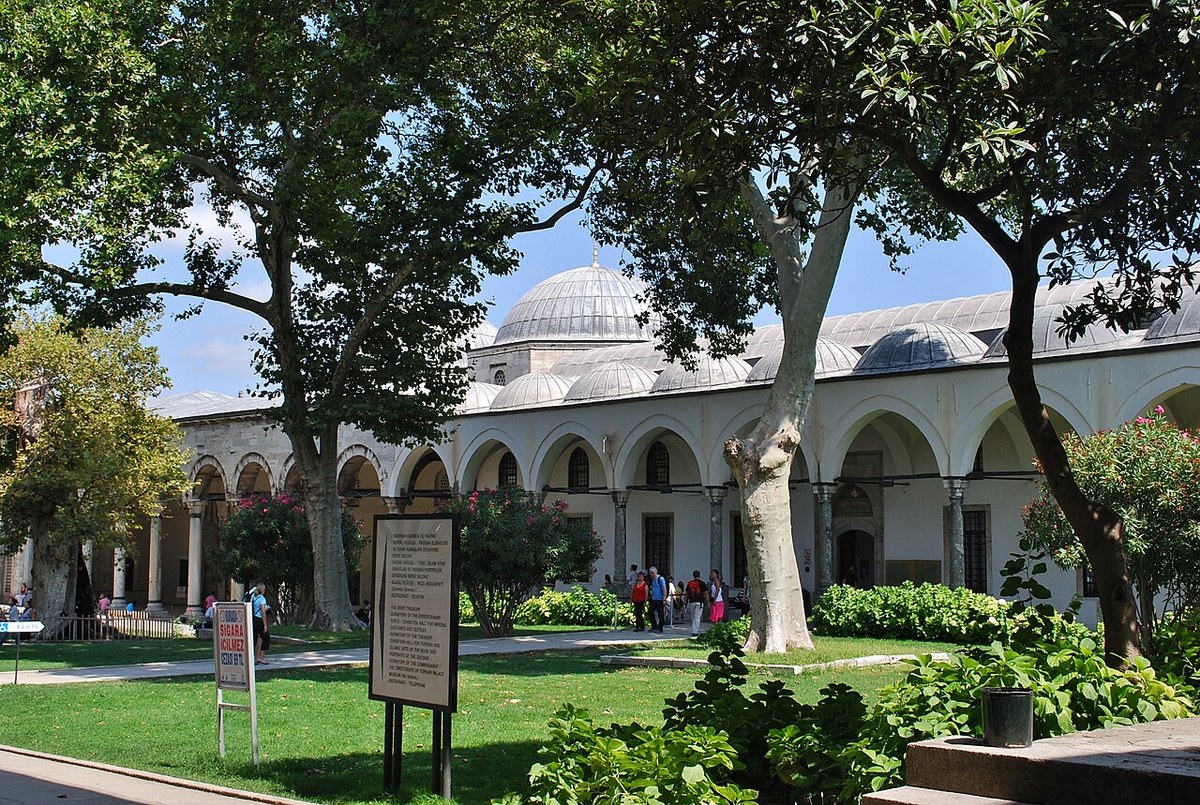
My trip to Istanbul: what's worth seeing
I've always associated Istanbul with a city where you can visit several worlds in one day.: in the morning, drink Turkish coffee on the European side, swim across the Bosphorus in the afternoon, and look at the lights of the Asian coast in the evening. So when I finally got ready to go there, I decided not to run a marathon around the sights, but just to live in this city for a few days and see what it would surprise me with. However, it became clear at the airport that Istanbul would do everything in its own way, and I would just have to keep up with it. The first acquaintance with the city I started the first morning with a walk through the historical center, because this is where Istanbul literally falls on you all at once: mosques, trams, the smell of fresh bread, the noise of the streets and a huge number of people who are walking very confidently somewhere. At first, I also tried to look like a person who knows the city perfectly, although in fact I checked the map every five minutes and pretended that I was just admiring the architecture. At some point, I realized that I had been standing in one place for about ten minutes and trying to figure out why the street I needed on the map was completely different from where it was in reality. But that's exactly what I liked about Istanbul: I don't want to keep following the route all the time. You can turn into an alley, see a small coffee shop, hear music from an open window, notice a beautiful balcony and completely forget where you were going to go at all. As a result, I realized that sometimes the best way to get to know Istanbul is just to put your phone in your bag and let the city show you the way. Hagia Sophia and the Blue Mosque The first big point of my walk was Hagia Sophia, and I thought in advance that after the photos on the Internet it would be difficult to surprise me with something. It turned out that the photos did not convey the feeling of this place at all: when you stand next to a huge building and see its dome, minarets and facade details with your own eyes, it becomes clear why people from all over the world come here. I just walked around inside for a long time, looking at everything around me, and trying to imagine how many stories these walls had seen. The Blue Mosque is very close by, and I really liked how these two places, which are completely different in mood, exist literally across the street from each other. It was especially beautiful to look at them in the evening, when the lanterns lit up around them, and the sky gradually turned dark blue. Of course, I also took a million photos, although later it turned out that most of them either had someone walking right in front of the camera, or I was looking at something completely wrong. Topkapi Palace and a bit of Oriental luxury After the noisy streets, I wanted some peace, so I went to Topkapi Palace. Here I felt like the heroine of a historical film, only without luxurious outfits and with a phone in my hand, because a modern woman of the 21st century, even in the sultan's palace, has to check how many steps she has already walked in a day. I was most impressed by the courtyards, ornate rooms and views of the Bosphorus. You can walk around the territory for a long time and always find some new details: tiles, ornaments, carved elements, antique objects. And there are places with such views of the water that you just want to sit down and not go anywhere else. Grand Bazaar: the place where my budget started to get nervous Of course, I couldn't come to Istanbul and not visit the Grand Bazaar. I told myself in advance that I would not buy anything, because I came only to see the city and enjoy the atmosphere. After a while, I was already holding in my hands some beautiful thing that I had absolutely no plans to buy, and I convinced myself that this was not a purchase, but a "small memory of Istanbul." It's easy to lose track of time in the bazaar, because everything happens here at the same time: vendors offer tea, spices are lying around, lamps are lit, carpets are hanging, leather and coffee smell, and from the next row comes another "madam, just look." I went in several times just to look, and each time I came out with the thought that next time I would definitely come with an empty suitcase. The Bosphorus: The Istanbul I wanted to see. If I were asked to name the moment of the trip that I remember the most, I would probably choose a walk along the Bosphorus. There is something amazing about sitting on a boat, looking at the water and realizing that Europe is on one side and Asia is on the other. At the same time, the city continues to live a completely ordinary life around you: other ships pass through the water, houses, mosques and modern buildings stand on the shore, and seagulls fly over all this. I sat on the deck for a long time and photographed literally everything in a row, until I realized that half of the photos would consist of water, sky and my own hand. But at that moment, I didn't care at all, because I just wanted to watch. It was probably on the Bosphorus that I finally understood why Istanbul is called the city of two continents: here it feels not like a beautiful phrase from a guidebook, but as a completely real part of urban life. Karakei and Galata Tower Tour The next point on my route was the Karakey area, which turned out to be a completely different mood. There are old facades, modern coffee shops, small shops, street art and endless staircases nearby, which at first you walk cheerfully, and then you start to wonder why you decided to walk at all. From here I went to the Galata Tower. I decided to go up there with complete confidence, because I had not yet known how much my body would protest after several days of walking through hilly Istanbul. But the view from above was worth all the effort: the roofs of the city, the Bosphorus, minarets, bridges and a huge number of houses that go far beyond the horizon. After that, I decided to have a well-deserved dinner and chose a restaurant where I ordered dishes whose names I almost did not understand. As a result, there was a huge tray of food in front of me, and I looked at it with the expression of a person who had just accidentally ordered dinner for the whole family. But everything was so delicious that that evening I finally decided that calories don't count in Istanbul. Eminem, fish sandwiches and tea A special pleasure for me is just walking around the Eminenyu area, especially near the Galata Bridge. Istanbul feels very alive here.: fishermen are standing along the bridge, ships are constantly crossing the bay, people are in a hurry about their business, and there is a smell of fish, spices and fresh pastries. I wanted to try everything, so I decided to start with the fish sandwich, which is often recommended to tourists. To be honest, I couldn't eat it beautifully at all. At first I tried to keep it neat, then the fish started to fall out, the sauce turned out to be completely different from where I expected, but in the end I just stopped fighting for dignity and ate everything as it turned out. But after that there was Turkish tea, and now I was drinking it quite calmly, watching the Bosphorus and thinking that such moments are sometimes much more pleasant than perfectly organized excursions. Balat: colored houses and a completely different Istanbul Another area that I wanted to see was Balat. The mood here is completely different: colorful houses, narrow streets, old buildings, small cafes and stairs that look like they were specially designed for photographs. I stopped several times simply because I saw a beautiful door or window, and then I discovered that I had walked much more than I had intended. In Balata, I particularly liked the lack of feeling that I had to get somewhere. You can just walk, look into the yards, drink coffee and look at the houses. However, one day I got so carried away photographing a beautiful building that I almost walked completely in the wrong direction, and then for another twenty minutes I tried to figure out where my street was. Apparently, Istanbul decided to remind me that the navigator was not invented in vain. Istanbul evening and my favorite moments In the evening, the city becomes even more beautiful, especially if you find yourself somewhere near the water. Lights are coming on, mosques are illuminated, light from ships is reflected on the Bosphorus, and there are gradually more and more people in cafes. At such moments, I didn't want to take pictures, check the route, or even think about how many sights I'd already seen, but just sit and look at the city. One day I bought coffee, found an empty place on the embankment and watched what was happening around for almost an hour. Someone was talking nearby, children were feeding seagulls nearby, ships were passing through the water, and the sky was slowly darkening over the city. And I thought that it was probably for the sake of such completely simple evenings that we were traveling. What I would definitely watch in Istanbul If I were re-planning my route, I would definitely leave time for Hagia Sophia, Blue Mosque, Topkapi Palace, Grand Bazaar, Galata Tower, Bosphorus, Karakey, Eminenyu and Balata. But I wouldn't try to see everything in one day, because Istanbul is a city where no less interesting things happen between the sights than inside the sights themselves. It seems to me that the main mistake is to come here with a huge list of places and turn the trip into a competition with yourself. At some point, I just stopped counting how many points were left and started paying attention to details: the smell of coffee in a small coffee shop, the sound of ferries, the old doors, the seagulls, the conversations at the next table and how the city was changing in the evening. My Istanbul Istanbul turned out to be a city for me that it is impossible to see in one visit, because it is too big, too different and too lively. You can come here for the famous mosques and palaces, and fall in love with a completely random street, a small coffee shop or a view of the Bosphorus, which was not planned in the itinerary at all. I left feeling like I'd seen a lot, but I still gave myself a reason to come back. Because Istanbul is like a good TV series: you seem to have finished one season, but you already realize that you want the next one. And if one day I find myself in this city again, the first thing I will do is just go outside, buy coffee and go wherever my eyes look – now with at least a little understanding of where they can lead me.
1
0
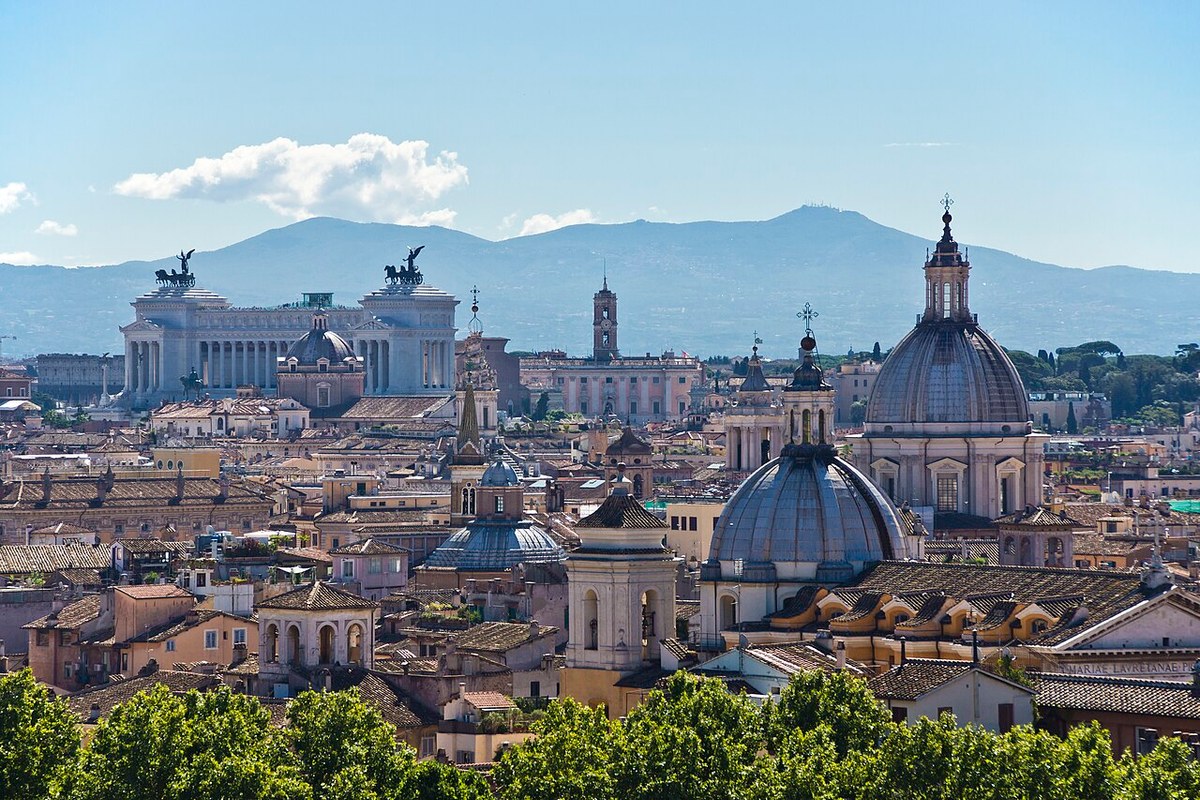
What to see in Rome in 3 days
Rome has long been on my list of cities that I really wanted to see, but before the trip I was a little worried.: how do you even manage to see Rome in three days and not turn the trip into a marathon with a pedometer? There are so many attractions here that you can create a route for several weeks and still find something new every day. Therefore, I decided not to try to embrace the immensity, but to choose the most interesting places and build a route so that between them there was time just to walk along the streets, drink coffee and sometimes sit shamelessly in the square, watching people. I must say right away that three days is not much for Rome, but it is quite enough for a first acquaintance if you plan the route in advance. I tried to combine places that are close to each other, so as not to spend half the trip on public transport and not look for legs all over the city in the evening. As a result, I had three rather eventful days, after which I realized that Rome could either be viewed, photographed, or eaten – I couldn't physically do all this at the same time. Day One: Colosseum, Roman Forum and the atmosphere of Ancient Rome I decided to start the first day with the most obvious place, the Colosseum . It seems to me that coming to Rome and not seeing it would be about as strange as coming to Paris and pretending that you are not interested in the Eiffel Tower at all. When I first saw the Colosseum live, it turned out to be much more impressive than in photographs, especially when you realize how many events have happened here over the centuries. Nearby is The Roman Forum , so I immediately included it in the itinerary. You can't just quickly check the list of attractions here: you want to look at the ruins, columns, old roads and try to imagine what this area looked like two thousand years ago. However, after a while I realized that my brain had stopped distinguishing one ancient column from another, and my legs began to hint quite transparently that it was time to sit down. After the forum, I went to the Palatine , which offers beautiful views of the ancient part of Rome. It was here that I first felt that the city cannot be perceived only as a set of individual attractions, because history is literally underfoot, around houses and even in the middle of ordinary streets. However, I took so many photos that in the evening I had to free up my phone's memory, deleting some old screenshots that for some reason I had carefully stored for the last two years. After such a walk, it was time to slow down a little and go for lunch. I didn't specifically look for a restaurant with a lot of reviews on the Internet, but just turned onto a small street and chose a place where locals and several tourists were sitting. I ordered pasta, coffee, and dessert, and then I sat for another twenty minutes and watched people pass by, because in Rome, even an ordinary lunch somehow turns into part of a trip. In the evening, I went for a walk in Piazza Venezia and looked at the monument to Victor Emmanuel II. After that, you can just walk wherever your eyes look, because in the center of Rome it is almost impossible to walk several blocks without bumping into a beautiful building, fountain, small church or square that you want to photograph. It was these aimless walks that eventually turned out to be one of my favorite moments of the trip. Day Two: The Vatican, the Pantheon and the Trevi Fountain I decided to dedicate the second day to the Vatican, so in the morning I went to St. Peter's Cathedral . Even if you're not particularly interested in architecture or art, it's worth coming here at least for the sheer scale of this place, because the photos don't convey the feeling of standing inside and trying to look at everything around you. After the cathedral, I went to The Vatican Museums , where, of course, I quickly realized that it was impossible to see absolutely everything in one visit. There are so many halls, paintings, sculptures and details that after a while I just followed the stream of people and hoped that I hadn't missed something particularly important. But The Sistine Chapel really became one of those places that I remembered for a long time, although I couldn't take pictures there, so I had to remember it with my eyes. After the Vatican, I decided to walk a little towards the center. On the way, I stopped for coffee and suddenly discovered that in Rome, even an ordinary cup of espresso can become a separate event, especially if you drink it at a small bar where people come in for a few minutes, greet the barista and disappear back into the city. As a real tourist, I sat the longest and tried to understand why locals drink coffee in two minutes, but it took me almost half an hour. The next stop was The Pantheon . It looks very impressive from the outside, but it is especially interesting to go inside and look at the huge dome with a round hole in the center through which daylight enters. At that moment, I finally realized that in Rome, you can just raise your head and get a little historical shock again. After the Pantheon, I went to Piazza Navona . Here you can relax a little, sit by the fountain and just watch the life of the square, which remains quite lively even in the evening. I especially liked that after a busy first half of the day there is no need to rush anywhere, you can just walk along the neighboring streets and gradually move to the next point. And the next point was, of course, the Trevi Fountain . I got there in the evening, and even though there were a lot of people, the atmosphere was still incredible: the lighting, the sound of water, the old buildings around, and a huge number of people trying to take the same photo at the same time. I was no exception either, and for a while I tried to capture the moment when there would be at least five seconds without someone's head in the frame. Before returning to the hotel, I made sure to throw a coin into the fountain. I don't know if it really works, but I didn't take any chances – in case Rome decides that I haven't formulated my wish well enough, and there won't be a second trip. Day three: Spanish Steps, Villa Borghese and Trastevere I decided to make the third day a little calmer, because after the first two days, my legs had officially stopped supporting the idea of a cultural marathon. In the morning, I went to the Spanish Steps , which turned out to be exactly as I imagined it from the photos, only there were significantly more people around. Of course, it wasn't possible to sit on the steps, but there are many beautiful streets, shops and cafes nearby, so the walk turned out to be very pleasant. Then I headed towards Villa Borghese . After the dense urban development, the huge green park has become a real salvation, because here you can finally exhale a little, hide from the noise and just walk among the trees. If you still have the strength and desire to see art, you can visit the Borghese Gallery, but it is better to plan tickets there in advance. After the park, I headed towards the center again and decided not to build too strict a route. At some point, I just turned onto a small street, saw a nice cafe, had coffee with dessert, and realized that it was for the sake of such moments that I generally like to travel on my own. When you don't have a tour group that leaves for the next attraction in three minutes, you can sit quietly and look at the city for as long as you want. I left it for dessert last night. Trastevere . This area with its narrow streets, ancient houses, small squares and cozy restaurants seemed to me to be one of the most atmospheric places in Rome, especially when it starts to get dark and the lanterns come on. Here I completely stopped looking at the clock and just walked around, went into small shops, looked at the windows and chose a place for the last Roman dinner. Of course, I couldn't leave without pasta and tiramisu. I told myself that this would be the last dinner, and therefore I could relax a little with a budget, but then I discovered that in Rome the word "a little" has its own meaning, completely separate from mathematics. However, I didn't regret it, because after dinner I walked through the evening streets for a long time and thought that three days had passed much faster than I would have liked. How much time does it take to visit the main attractions? If you're only going to Rome for three days, I wouldn't try to schedule every hour by the minute, because the city is completely unsuitable for this approach. It is better to choose several main places for each day in advance, and leave free time between them so that you can safely eat, drink coffee, go to the store or just turn off the route. Otherwise, there is a risk of returning home with a huge number of photos and the feeling that you have hardly seen Rome itself. At the same time, it is better to plan some popular places in advance, especially if the trip falls during the high season. I would check the time of visiting the Colosseum, the Vatican Museums and the Borghese Gallery separately, and leave the rest of the walks more free. This is especially convenient in Rome, because there are always small squares, churches, fountains and streets between the main attractions, which did not exist at all in your original plan. What did you manage to see in three days? During these three days, I managed to see the Colosseum, the Roman Forum, the Palatine, the Vatican, St. Peter's Cathedral, the Sistine Chapel, the Pantheon, Piazza Navona, the Trevi Fountain, the Spanish Steps, Villa Borghese and Trastevere. At the same time, I managed to leave enough time for the usual walks, coffee, pasta, ice cream and those very random turns, thanks to which the journey ceases to be just a list of attractions. Of course, it's impossible to get to know Rome completely in three days, and I didn't even try. This city generally seems like one that needs to be viewed gradually: today there are ancient ruins, tomorrow there is a small street, the day after tomorrow there is a random coffee shop that you did not plan to visit at all. And that's probably why, after three days, I didn't feel like I'd ticked off Rome, but on the contrary, I left with the feeling that now I just needed to come back someday. The most difficult thing in Rome was not even to make a route and not to figure out the transport, but to force yourself to stop in the evening and go to the hotel. Because every time it seemed: well, one more street, one more fountain, one more turn – and there will definitely be something beautiful. As a result, I walked so many kilometers in three days that my phone thought I was preparing for the Olympics, and I was finally convinced.: Rome is best viewed in comfortable shoes, with a good appetite and with plenty of free time.
0
0
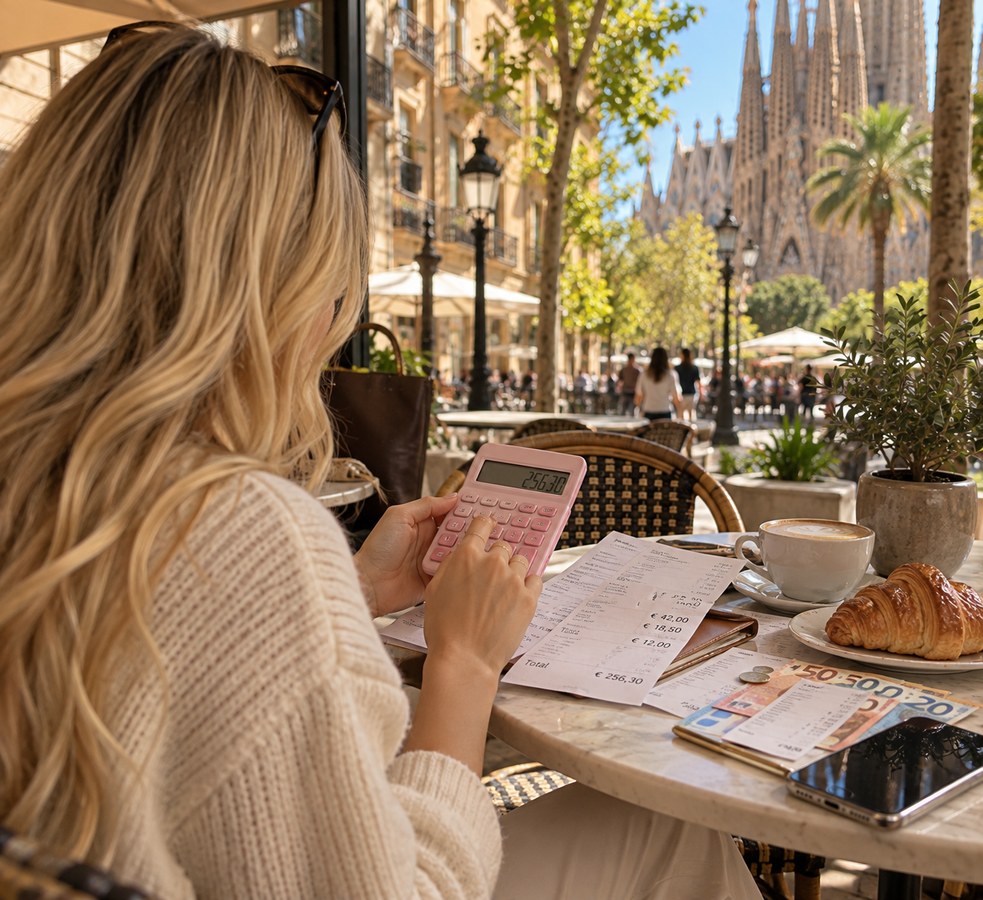
My budget for a week in Barcelona
I've wanted to go to Barcelona for a long time, but before the trip, I was most interested in one question: how much money do I really need for a week?I found completely different figures on the Internet – someone promised to meet almost a penny, and someone talked about such expenses, as if he was going not to Barcelona, but to buy an apartment with a sea view there. I wanted to find a middle ground: travel normally, eat delicious food, visit interesting places and at the same time not check the card balance after each glass of sangria. That's why I decided to plan my budget at home. I must say right away: I did not set myself the task of traveling as cheaply as possible, because then I would have to look at the Sagrada Familia through the bus window and eat only sandwiches from the supermarket. I wanted to save money for the small pleasures that make the trip real: coffee in the morning, a nice dinner, ice cream during a walk, and some completely unnecessary souvenir that would remind me at home that I again don't know how to pass by tourist shops. Flight is the first item of expenditure I started looking for tickets in advance and first opened several websites at the same time. Ten minutes later, I already had so many tabs that I no longer understood where exactly I found a good option, and where I just looked at a ticket for a completely obscene amount. As a result, I chose a flight that was suitable for the price and immediately wrote it into the budget, so that later there would be no feeling that Barcelona began with a financial crime. I have invested a small amount for the flight. Of course, the price strongly depends on dates, baggage, and how much to buy tickets in advance, so it's better to count this part of the budget separately and not focus on one specific amount. Housing – I had to think a little bit here It was more interesting with an apartment or a hotel. I didn't want to live somewhere on the edge of the city, so that I could spend half my time and energy on the road every evening, but I didn't want to overpay just for a beautiful photo of a balcony. That's why I looked not only at the price, but also at the location, transportation, reviews, and distance to the main places I was going to visit. As a result, I got about 3,000 euros for seven nights. And here I finally realized one simple thing: sometimes a slightly more expensive apartment turns out to be more profitable if, thanks to its location, you can walk most of the week and not spend money on transportation. Food is the very point where my budget started to get nervous. At first, I wanted to put a very modest amount on the food, but then I remembered that I wasn't actually going to Barcelona to eat oatmeal in the room. In the morning there was coffee and something small, in the afternoon I could have a snack in a cafe or grab something at the market, and in the evening I already wanted to have a good dinner and try the local cuisine. On average, I spent about 500 euros a day, although some days turned out to be cheaper, and some suddenly turned into a gastronomic holiday. The most dangerous phrase was "let's just have coffee," because after coffee there was usually a croissant, dessert, ice cream, and sometimes even dinner, which was not included in the original plan at all. Transport I decided not to complicate my life with transportation and looked in advance at which option would be more convenient for the week. In Barcelona, it is quite realistic to walk some of the routes, especially if you want not just to get from point A to point B, but to explore the city on the way. I spent about 40 euros a week on the metro and other public transport. Sometimes I walked on purpose, even if the navigator showed a rather impressive distance, because it is during such walks that you can accidentally find a small square, a beautiful house or a cafe that was not on my route at all. Museums, attractions, and small desires This is where I decided not to skimp on everything. If I came to Barcelona, I wanted to see its famous places not only in photographs, so I allocated a separate amount in advance for entrance tickets and excursions. I spent about 300 euros on the sights. Moreover, I planned part of the expenses in advance, and part appeared already on the spot according to the principle "when will I be here again?", which is a real enemy of any tourist budget. And, of course, shopping I honestly wasn't going to buy anything special. I had a very beautiful plan: to come, see the city, take photos and return home with the same amount of money that I left with. The plan lasted until about the first pretty shop. As a result, I left about 150 euros for souvenirs and small purchases. Nothing grandiose, but it's these little things that lie at home and suddenly bring you back on a journey, even after a few months. How much did my week in Barcelona cost in the end If you add up the flight, accommodation, food, transportation, attractions and small purchases, my budget for the week turned out to be about 3,000 euros per person. At the same time, I did not try to live as economically as possible, but I also did not allow myself to have dinner every night in a restaurant overlooking the sea just for the sake of a beautiful photo. The most important thing is that I have determined in advance the amount that I am ready to spend, and I have left a small reserve for unforeseen expenses. And this decision turned out to be very useful, because there is always something completely unexpected when traveling: a lost ticket, a sudden taxi, rain, which makes you have to buy an umbrella, or the dessert that you "just wanted to try." As a result, I realized that a week in Barcelona is quite possible to organize for a different budget. You can significantly save on housing, eat easier, walk more and choose free entertainment, or you can add restaurants, excursions and beautiful places – and the amount will grow quite quickly. For me, the ideal option turned out to be when I knew my financial limit, but at the same time I did not feel like a person who came to Spain solely to count euros. And do you know what the best part is? At the end of the week, I looked at my expenses and realized that Barcelona had not ruined me. But she left behind photos, the smell of coffee in the morning, evening walks, several completely unnecessary purchases and a very persistent desire to come back one day and tell herself again: "This time I will definitely save money."
0
0
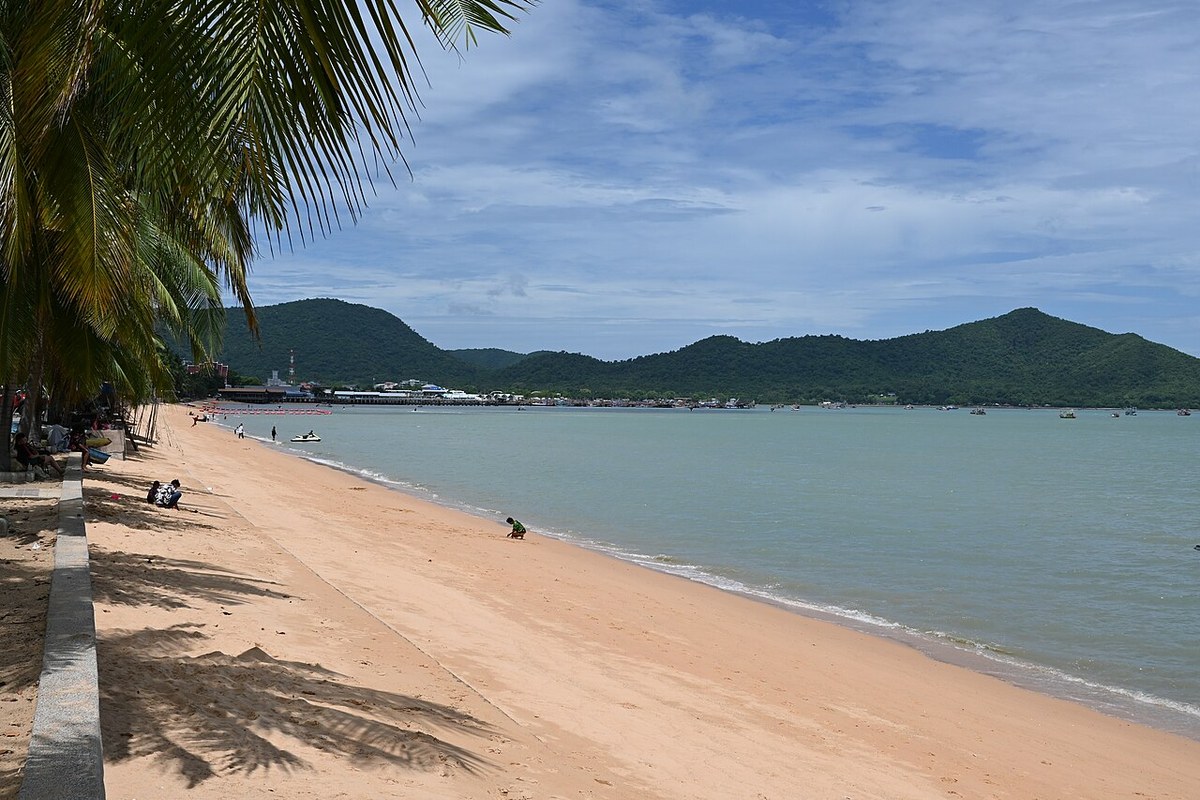
What you need to know before your first trip to Thailand
The thought that Thailand is always warm bothered me. I knew that sooner or later I would go to this country. My dream came true, but the expectations were not met the first time. Before the trip, I knew that the sea was warming up to +27 °C and above, and it seemed to me that the rest was not important. I am sharing tips after 3 trips to Tai that I would like to read before the trip. The first thing that greets you is the heat I like walking in the clouds while flying on an airplane. I felt comfortable, but there was no trace of comfort on the streets of Bangkok. Literally 5 minutes later, I was sweating profusely and felt like a wet dumpling. The hair has become unrealistically porous. Moreover, according to the forecast it was only about +32, but in fact +39. "So what," I thought at first. "We have such temperatures in summer too, even more." No. It doesn't happen, because here you come out of an air-conditioned room and immediately get the feeling that someone has covered you with an incredibly warm blanket. Comfortable clothes are not a recommendation, but practically a matter of survival. And you don't have to take half of your wardrobe with you "just in case." In Thailand, you'll still wear about the same thing: a light T-shirt or a white shirt, shorts, comfortable shoes, and something that you can quickly throw on at the temple. Because temples are a separate story. You can't come to a temple like you can to a beach I knew that, of course. I found out almost immediately that my shorts and T-shirt are great for breakfast, walking, and even boat trips, but they are completely unsuitable for some temples. And here I am standing at the entrance, looking at the sign, looking at myself, the sign is looking at me. We both understand that it's better to have a light shirt or cape in your backpack before traveling. And clothes that cover your shoulders and knees, especially if you're going to visit temples. You also often need to take off your shoes before entering. By the way, this is very convenient until you discover that you arrived in Thailand in shoes that cannot be removed quickly. You stand like this in front of the temple, unlace it, while a small queue of people forms behind you, who have already managed to take off their shoes in order to gain enlightenment and, it seems, start a new life. Don't try to eat all Thai on the first day. This is where I showed real courage. I saw a small outdoor cafe, it smelled like something incredible. I'm asking: "Is it spicy?" They answered me: – No (No spicy). I believed it, and that was my first mistake, because "not spicy" in Thailand is a very philosophical concept. After 5 minutes, I was sitting with a red face, trying to smile and pretend that everything was fine with me. I washed everything down with water, which, of course, did not help at all. But then I realized the main thing: if you don't eat spicy food, talk about it several times and as convincingly as possible. And it is better to learn the phrase mai phet – "not sharp". Although you know, sometimes even after that you can still have a pepper. Water is always with you. Not "if you get thirsty," but always. You can leave the hotel for 10 minutes and come back looking like you just ran a marathon. A bottle of water in a backpack quickly becomes the main travel accessory. Also, I wouldn't experiment with tap water. It's easier to buy bottled water for drinking. But the shops here are a separate joy. Especially the 7-Eleven. If this is your first time in Thailand and you still don't know what to do in the evening, just go to the nearest 7-Eleven. I'm serious. Sometimes it seems that any life problem can be solved there. Except, perhaps, the problem of "where did the money go after two days in Bangkok". It's better not to argue with a taxi In Bangkok, I first tried to deal with taxis as if they were negotiations at an international summit. –How much?" - 500 baht. – No, it's expensive. – 400. — no. – 300. - OK. And then, after driving for a couple of minutes, I realized that it was possible to call a car through the app and not participate in this performance at all. So install the taxi app in advance and use it whenever it's more convenient. And if you take a regular taxi, make sure that the driver turns on the meter, if this is provided for the trip. And don't be surprised by traffic jams, believe me, Bangkok knows how to stand. Very beautiful and very long. Sometimes you sit in the car, look at the skyscrapers, listen to the air conditioner and think, "Well, at least I'm not late." But no, then you remember that you have a tour in 20 minutes. At such moments, I begin to involuntarily philosophize about life. And then the sea appears And this is where Thailand finally captivates. After Bangkok, you arrive on an island or by the sea, go outside in the morning and realize why you came all this way in the first place. The sea, palm trees, boats, the smell of fruits, warm air. It seems like you were going to get up early and go out, and then you sit on the terrace with coffee. You look at the sea and decide: "I'm not going anywhere today. I've been traveling enough." After an hour, you go anyway, because Thailand is too beautiful to stay in a hotel. But don't try to see the whole of Thailand in one trip. This is probably my main conclusion after the first trip. Bangkok is one mood, Phuket is another, Koh Samui is a third, the north of the country is generally a separate story. And if you try to cram all this into one week, you won't get a trip, but a suitcase packing competition. Today is the temple. Tomorrow is the island. Flight the day after tomorrow. Then the suitcase again. Then the transfer. Then you sit on the beach and don't remember where you are at all. It's better to choose a few places and leave some time just to live. Because the most interesting thing in Thailand often happens not when you go to point number 7 of your route, but when you take a wrong turn. And one last thing Don't expect Thailand to look like a postcard every minute. There will be heat, traffic jams, and strange smells. Be prepared to encounter insects that look like they have undergone military training. There will be food that you will not be able to identify even after explaining, there will be rain that starts suddenly and ends just as suddenly. And there will definitely come a moment when you just stop in the middle of the street, look around and think.: "Wow. I'm really in Thailand." It's worth going on a trip for this moment. The first trip to Thailand is not so much about the ideal route, but about how you first try to control everything, and then gradually realize that it is much more pleasant to just live here according to circumstances.
0
0
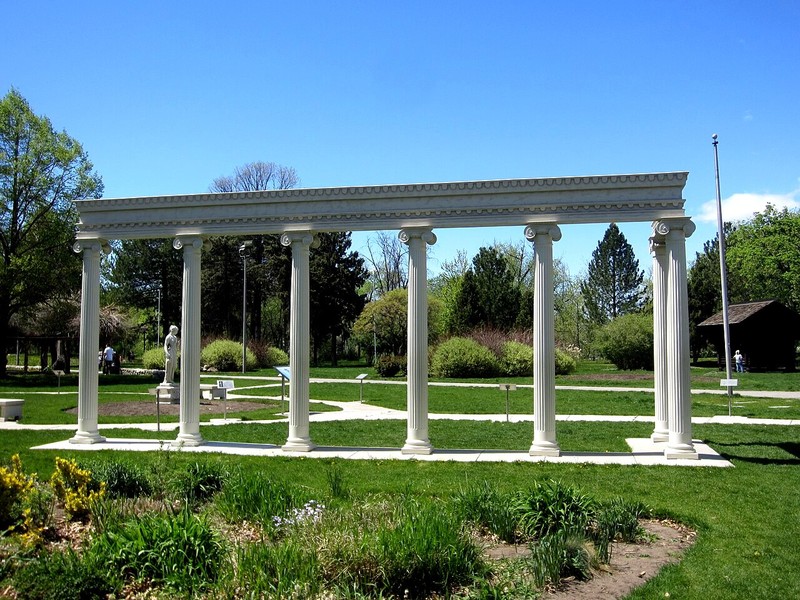
Salt Lake City Peace Garden
This is the first time I've heard of such a thing. It turns out that there is a Garden of Peace between countries. If I'm in the States, I'll come there.
Nothing saved yet
No trips yet
No scheduled stories
