


Vlad
Author
Lvl 5. 🏛️ Discoverer
17/25
17Posts
8Likes
5Followers
5Following
I spent less than I expected: my experience
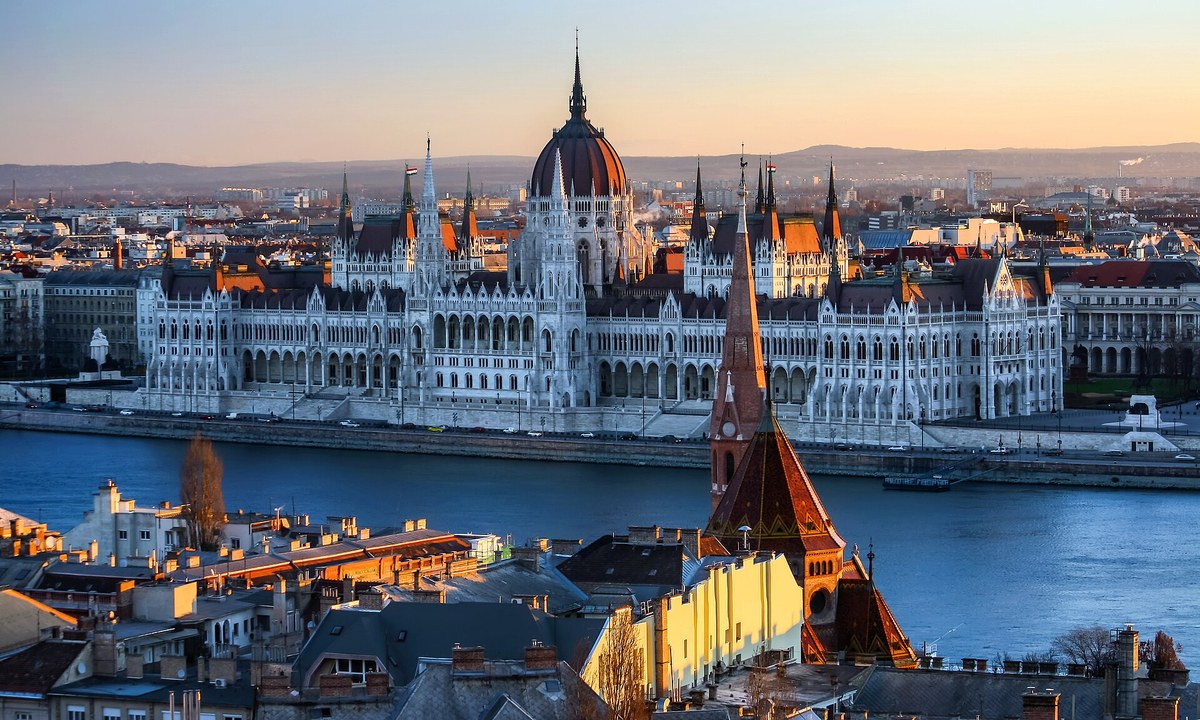
When I was going to Budapest, I was sure that after returning home I would need another short trip to the nearest bank to apologize to my own account. I have long wanted to see the Hungarian capital, walk along the Danube, look at the famous parliament building, taste the local cuisine and, of course, get to the thermal baths, which look so beautiful in the photos. But the more I studied the prices of housing, restaurants and entertainment, the stronger the feeling became that five days in a European city could cost much more than I expected. As a result, I made a budget with such a margin, as if I was going not just to see Budapest, but to buy an apartment there and leave money for its maintenance. Budapest At the same time, I didn't want to turn my vacation into an endless hunt for the cheapest deals, because I perfectly imagined the pleasure of a trip in which every cup of coffee had to be mentally coordinated with the financial department of my own head. I wanted to have a quiet breakfast in a cafe, try unfamiliar dishes, go to interesting places and indulge in everything just for the sake of a beautiful number in a banking application. Therefore, I decided to determine the main expenses in advance, find a comfortable place to live and sort out transportation, and already see on the spot how much money is really needed. I expected to save a little on some small things, but I didn't even suspect that the main savings would begin when I stopped trying to arrange the perfect vacation for myself based on other people's recommendations. The first day. Budapest didn't meet me according to plan When I first saw Budapest, I almost immediately forgot about my calculations, because the city turned out to be amazingly beautiful even without special training and a good angle for photography. I went outside, saw the old buildings, heard the noise of trams, and felt that I had finally arrived where I had long wanted to go, and not just transferred my work worries to another country. However, the romantic mood soured a little when I decided to deal with public transport and discovered that the Hungarian names of stops look like someone dropped a whole bag of consonant letters on the keyboard. I stared at the phone screen for a few minutes, then at the stop sign, and then back at the phone, gradually coming to the conclusion that for a successful trip I would need at least a basic education in Hungarian dispatching. Fortunately, it turned out that public transport in the city is quite convenient if you sort out the tickets a little and don't try to buy them at random at the last moment. I installed the travel app, studied the travel options and realized that when actively using transport, it is more profitable to compare the cost of individual tickets and travel tickets for several days in advance. According to the official BKK fare, a regular one–time ticket costs 500 HUF, and a 72-hour pass costs 5750 HUF, so the choice depends on the number of trips and the length of stay in the city. I decided to take the subway, trolleybus and tram, and where the distance allowed, just walk, and on the first day I noticed that this not only helps to save money, but also allows you to see a lot more interesting streets. The Danube In the evening, I went for a walk to the Danube, hoping to take some photos and return to the hotel earlier, but I stayed much longer than planned. When the lights came on and the parliament building was reflected in the water, I stood on the embankment for a long time and watched the passing ships, forgetting even to check how many steps I managed to walk in a day. I didn't pay a single forint for this walk, but I got one of the most intense impressions of the whole trip. It was then that I first realized that perhaps the best moments of a vacation don't necessarily require buying tickets, booking tables, and a pre-arranged schedule. Day two. Where did I find a delicious lunch and not go broke On the second day, I decided to start with local food, because getting to know the country through the cuisine seems to me much more pleasant than getting to know it exclusively through museum plaques. Before the trip, I saw enough photos of beautiful restaurants and mentally prepared for the fact that every meal would cost a decent amount, especially if you choose places near popular attractions. However, it quickly became clear that for a delicious lunch you don't have to look for a restaurant with white tablecloths, a waiter in a vest and a menu that looks like a small financial statement. I started looking into small cafes and bakeries, looking at prices before ordering, and paying attention to the places where the townspeople themselves dine. Bograchgulyash One day, I ordered goulash, which I had wanted to try for a long time, and watched with interest as a plate of hot soup with a rich paprika flavor appeared in front of me. The dish is called Bograchgulyash, another name sounds like Bograch. The thick meat soup with vegetables and paprika turned out to be satisfying, and the portion was such that after lunch I wanted not to continue the excursion program, but to sit for a while and think about the meaning of life, preferably in a horizontal position. I paid less for lunch than I expected, and realized that I could get to know the national cuisine without having to choose the most expensive restaurant every time. However, I did not completely abandon restaurants, because one good dinner in a pleasant place can also become an important part of the trip, especially if you understand in advance what you are going there for. Breakfast turned out to be a separate story, too, because at home I used to eat pretty quickly, and on vacation I suddenly found that I could spend half an hour on coffee and fresh pastries, watching passersby. Sometimes I bought breakfast at a small bakery, sometimes I chose a cafe, and some days I just bought groceries at the store and ate before going out if I was going to walk a lot. I didn't try to repeat the same scenario every day, but chose what suited my mood and plans. As a result, my food expenses were more moderate, but I didn't feel like I was giving up my pleasures for the sake of saving money. Day three. Thermal baths and my struggle with the towel Of course, I couldn't come to Budapest without visiting the thermal baths, because this part of the trip seemed particularly attractive to me. I looked at the ticket prices in advance and realized that visiting the famous baths of Sechenia could not be called free entertainment, so I decided to allocate a separate amount for it, rather than trying to fit everything into the rest of the budget at the last moment. According to the official price list for 2026, a regular adult ticket with locker access costs 13,200 HUF on a weekday, and 14,800 HUF on Fridays and weekends; the specific price depends on the date and the selected ticket. I chose a convenient day, prepared everything I needed in advance, and promised myself that for at least a few hours I would not think about money, routes, or how many other attractions I could see. Sechenyi Swimming Pool In practice, it all started with the fact that I spent a long time trying to figure out where I put the towel, even though I had carefully put it in my bag just ten minutes ago. Then I found that I spent more time studying the signs and finding the right entrance than preparing for the rest itself, and at some point I seriously wondered why a regular trip to the baths required so much organizational skills from me. But as soon as I was in warm water and looked at the beautiful architecture around me, all these little troubles stopped mattering. I spent a few hours there, relaxed, and for the first time in a long time felt like I was really relaxing, rather than trying to make the most of every day of my vacation. City Park After visiting Budapest's largest sauna complex, I went for a walk in the city park and did not add a few more paid events to the schedule just because the evening turned out to be free. I bought myself a drink, sat on a bench for a while, and watched people walking with their children, playing sports, or just relaxing after a day at work. That evening, I realized that sometimes one really pleasant event is enough to make a successful day, and it's not necessary to supplement it with three more ticket purchases. The money that I did not spend on additional entertainment remained in the budget, and the impressions of the baths did not disappear anywhere. Day four. When I stopped buying everything By the fourth day, I had already settled into the city and noticed that I began to feel much more relaxed about the tourist offers, which previously made me want to immediately get a bank card. Souvenir shops, excursions, boat trips and various offers that promised to make the trip unforgettable were constantly found near popular attractions. I don't think it's not worth the money, but I realized that buying every service just for fear of missing something is a pretty questionable strategy. If I really wanted to go on an excursion or a river trip, I compared the options and chose the right one, and if the offer did not arouse much interest, I calmly passed by. One day, I did go into a souvenir shop, intending to buy a small gift home, and after a few minutes I found in my hands a magnet, a postcard, a keychain, and some kind of wooden figurine, the purpose of which I could not explain even under threat of losing my tourist status. I was about to pay when I wondered if I really needed all this, and in the end I left only one souvenir that I really liked. It may look like a small thing from the outside, but it is from such small decisions that reasonable savings are made. I stopped buying things solely because I was on vacation, and started choosing things that I really wanted to keep as a keepsake. On this day, I also walked a lot along the old streets, entered the courtyards, looked at the facades and looked for places where I could just sit and relax. Sometimes I stopped by a beautiful building and read information about it on my phone, sometimes I just watched the city life without trying to turn every minute into a guided tour. At some point, I realized that I hadn't checked my expenses for a long time and hadn't even thought about the initial fear of spending too much. I knew that the main purchases had already been made, that the accommodation had been paid for, and that I had enough stock for the remaining days, so I could afford to enjoy the trip without a constant internal accounting report. Day five. How much did I really spend I decided to spend my last morning in Budapest without haste, because I already realized that trying to accommodate in the remaining hours all the sights that I had not yet seen would only spoil the impression of the trip. I had breakfast, walked along the familiar streets, looked at the Danube once more, and on the way to the hotel I bought a small souvenir that I really wanted to bring home. For the first time on the entire trip, I didn't try to mentally count every expense and didn't worry that I might have spent less somewhere. I was pleased to realize that in five days I managed to see the city, taste the local cuisine, visit the baths and at the same time did not turn my vacation into a constant competition with my own budget. When I opened the banking application in the evening and compiled the expenses into one table, it turned out that the trip cost me less than I expected. It is important to make a reservation: below is the approximate budget of one traveler for five days, and not the universal cost of a trip for any tourist. I conditionally set moderate expenses for housing, food and transport, and I consider the cost of the flight separately, since it strongly depends on the city of departure, the season and how much tickets are purchased in advance. Expenses for 5 days: accommodation for 4 nights – 120 euros, food and drinks – 100 euros, public transport – 18 euros, ticket to the thermal baths – 35 euros, other entertainment and museums – 25 euros, coffee, souvenirs and small purchases – 22 euros. In total, the trip cost 320 euros without a flight. These amounts are my conditional scenario for the article, and not the confirmed average fare for the city: the real budget may turn out to be noticeably higher or lower depending on the season, the chosen accommodation and the habits of the traveler. In particular, the cost of bathing and transportation should be checked on official websites before traveling, and it is better to count accommodation and flights on specific dates. It was important for me to show the principle itself: you can determine the main expenses in advance, not overpay for unnecessary services and still afford interesting experiences. If I had chosen a more expensive hotel in the center, dined daily in tourist restaurants and bought excursions without comparing prices, the total amount could have increased quite significantly. But I wasn't trying to save on everything, I was just more attentive to my choices and didn't pay for things that weren't particularly valuable to me. The most pleasant discovery was not even the fact that the money was left in the account, but the fact that I never felt deprived. At the end of the trip, I didn't want to return home and immediately start saving on everything, but to plan my next trip, because now I knew that a good vacation might well be more affordable than it seemed at the preparation stage. What I realized after this trip Previously, it seemed to me that an economical trip necessarily requires constant restrictions, endless price comparisons and a willingness to give up everything that is not on the list of the most necessary expenses. In Budapest, I realized that reasonable savings work differently: it helps you choose what is really important and not spend money on things that you buy out of habit or under the influence of beautiful advertising. I'm still willing to pay for an interesting tour, a good dinner, or a visit to the famous baths, if that's what I want from the trip. But I no longer believe that for a full-fledged vacation it is necessary to buy tickets every day, order expensive food and return to the hotel with a dozen souvenirs. The most important thing that I learned from these five days was the opportunity to travel with pleasure and at the same time not go beyond a reasonable budget. Sometimes it's enough to figure out transportation in advance, choose a place with a convenient location, pay attention to small cafes and leave time in the schedule for free walks. It's also useful to remember that not every recommendation from the Internet is right for you, even if its author assures you that without this place, the trip is considered a failure. After all, travel is not a competition in which the winner is the one who has visited the most attractions and spent the most money. Now, when I think back to Budapest, I don't think about how many times I managed to refuse an extra purchase, but about the evening Danube, hot goulash, warm bathing water and walks along the streets, where I quite accidentally found something interesting. I came to Hungary prepared in advance for big expenses, and returned home with pleasant memories and the realization that I spent less than I expected, without depriving myself of the main thing. And if I used to think that a good vacation must necessarily be expensive, now I feel much more relaxed about it. After all, when traveling, it's not how much money you left in a strange city that matters, but what mood you returned home with and how many stories you brought with you.
0
0
Why I decided to leave alone: Solo trip to Kyoto
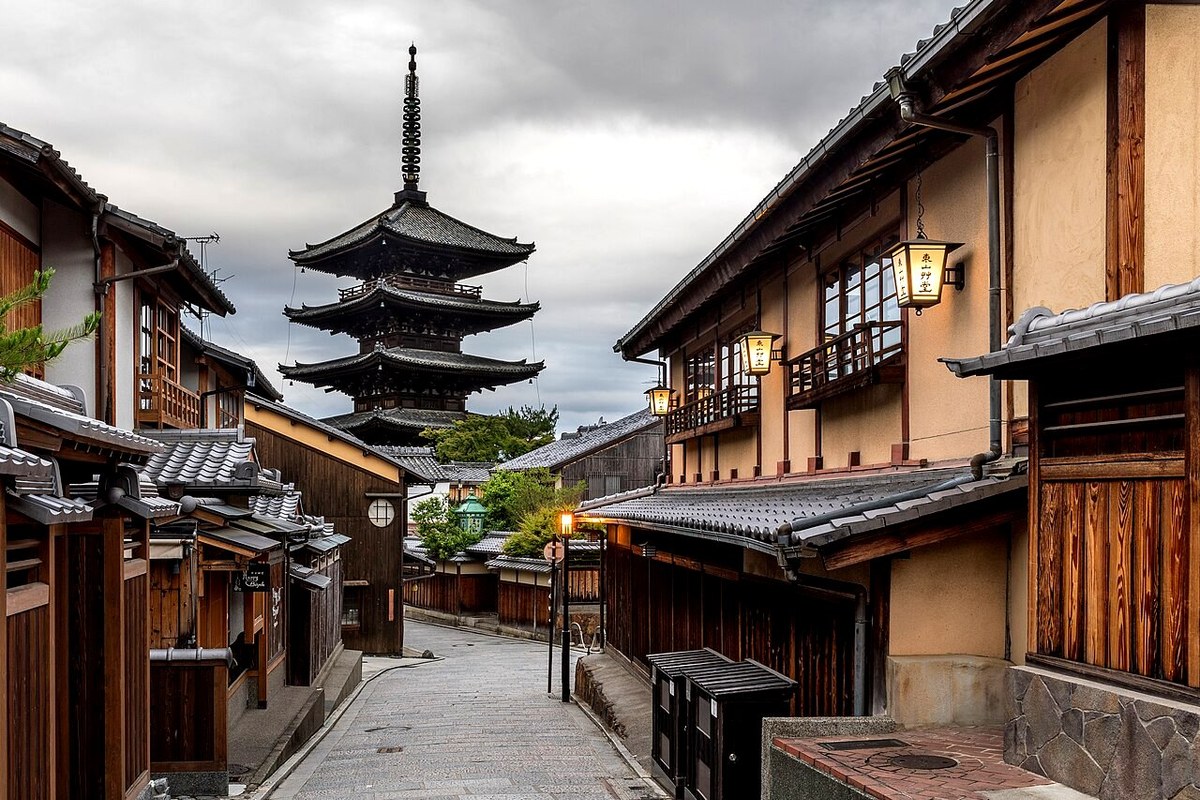
For a long time I couldn't explain to myself why one day I just opened a website with tickets and started looking for a trip that I would go on alone. There was no grandiose reason, quarrels, a desire to escape from everyone, or a sudden midlife crisis, although from the outside, it probably looked that way. At some point, it just seemed to me that I had been living in a regime for too long, where I was constantly consulting with someone, adjusting to someone, and even choosing a restaurant with an eye to what would please not only me. In the end, I chose Kyoto in Japan, why did I do that? It's hard to say now, because at that moment the choice was more emotional than logical. I looked at photos of old streets, temples, wooden houses, and gardens, and for some reason I thought: "That's where I want to go." A few days later, the ticket was bought, and with it came a new problem: now I really had to go alone. I was a little scared at first. The most interesting thing started after buying the ticket. While the trip was only in my head, everything seemed romantic: I was walking around Kyoto alone, taking pictures of beautiful places, going to small cafes, not arguing with anyone about the route and waking up when I want. And then I imagined an airport, a plane, an unfamiliar country, a different language, public transport and myself in the middle of it all with a suitcase, the romance evaporated a little. I even started coming up with reasons why the trip could be canceled. Sometimes it seemed to me that I hadn't prepared enough, sometimes I remembered that you can actually have a great vacation at home without spending money on a flight to Japan. But the ticket had already been bought, and at some point I realized that it wasn't the trip itself that scared me the most. I was afraid to be alone with myself. At the airport, I realized that there was no turning back. Kansai International Airport When I arrived at the airport, everything suddenly became very real. I was standing with my suitcase, looking at the scoreboard and thinking that a couple of days ago I was sitting at home and quietly going about my business, and now I'm going to fly to the other side of the world. It was especially fun to watch myself from the side. I seem to be an adult, independent man who can solve a lot of everyday issues, but here I checked my passport, ticket and phone several times, as if someone was going to steal my documents right out of my pocket. Before boarding, I looked at my phone again and saw messages from people I knew asking why I decided to go alone in the first place. I didn't have a pretty answer. I just wanted to give it a try. Maybe sometimes that's enough. The first hours in Kyoto When I finally got to Kyoto, at first it felt like my brain was trying to process too much information at the same time. Different signage, different architecture, unfamiliar rules, public transport, people who are completely calmly going about their business while I'm trying to figure out where to go at all. Kyoto Station I checked the route several times and still managed to get off at the wrong stop. This is especially pleasant with a suitcase, because any slight deviation from the route automatically turns into a walk with extra weight. But then a strange thing happened, I realized that I didn't need to explain to anyone why I stopped. If I wanted to look at the house, I looked. If I wanted to turn into an alley, I turned off. If I wanted to sit on a bench for ten minutes and do nothing, I just sat there. And at first it seemed unusual, but then it became very pleasant. For the first time in a long time, I don't owe anyone anything. That's probably what I felt the most. When traveling with someone, even a loved one, there are still a lot of small compromises. Someone wants to go to the museum, someone wants to go to the market. One wants to walk for another hour, the other is already dreaming of a bed. One is ready to wait for the train for twenty minutes, the other starts looking at the timetable with the expression of a man who is about to announce a transport reform. But here everything was simple: I woke up when I wanted to, left the hotel without a clear plan. I could walk all day, or I could go back to my room in the middle of the day and just lie down. And gradually I realized that this was exactly what I needed, not Japan, not Kyoto, but the opportunity to live at least for a short time exclusively in my own rhythm. One unplanned walk One morning I decided to go out early. In Kyoto at this time, the city feels very different: fewer people, quieter streets, soft light, the first cafes are opening, and there is still no usual tourist traffic near the temples. I was walking completely aimlessly and at some point stopped near a small garden. I didn't search for it specifically and didn't even remember the name right away. I just came in. I sat down and looked at the trees for a few minutes. And there something happened to me that I did not expect at all. Zen garden made of dry sand I felt good, not funny, not exciting, not "wow, how beautiful," but good, quiet and calm. I realized that I hadn't been alone with my thoughts for the last few months. Work, business, phone, messages, news, constant plans –something was happening all the time. Even rest turned into a task that needed to be done correctly. But there was no need to do anything here. Minor stress But don't think that after that I turned into an enlightened traveler who sits under a sakura tree and understands the meaning of life. I still remained myself, one day I decided to figure out the route on my own, I took the wrong train too confidently and discovered this only when I realized that the surrounding landscapes were completely different from what I expected to see. I looked at the phone, then at the scoreboard, then back at the phone. Wooden and bamboo facades of houses And I realized that a wonderful independent trip can now turn into a wonderful independent trip to a completely different city. I had to figure it out, and I realized that instead I saw wooden and bamboo facades of houses. The funny thing was that no one could say to me, "I told you so." And you know, it turned out to be unexpectedly pleasant. I made a mistake on my own, figured it out on my own, and went back to where I needed to go. It's a small thing, but for some reason it's these little things that give you confidence later. In the evening, I realized why I had come Shijo Street I spent one evening completely without a plan. I just walked through the streets of Kyoto until it started to get dark. Shops were closing somewhere, lights were turning on in the windows, people were returning home, and I was walking slowly and not in a hurry. At some point, I took out my phone to text someone and stopped. I suddenly wondered why. Not because I was lonely. On the contrary, loneliness was not perceived as something unpleasant for the first time in a long time. I was just in a place where no one expected anything from me. And it turned out to be surprisingly liberating. I realized that loneliness and being alone are not the same thing. Ninezaka Paved Pedestrian Street Before this trip, for some reason, I thought these things were almost the same. If a person travels alone, it means he must be lonely. If he's sitting alone in a cafe, it means he has no one to talk to. If he's walking alone in an unfamiliar city, it means he's waiting for someone. It turned out that everything was completely wrong. You can be alone and feel great. You can sit at a table, drink coffee, look at the people around you and not feel any urgent need to fill the silence with conversation. You can walk down an unfamiliar street and suddenly feel much calmer than in a company. For some reason, Kyoto helped me understand this. What changed after the trip I did not return from Japan as a completely different person. It would be too beautiful and improbable to write like that. I still sometimes put things off, I can still open the refrigerator and look inside for five minutes in the hope that by some miracle dinner has appeared there, and I still periodically make overly optimistic plans for the day. But something has changed. I stopped being afraid to do things on my own. The facade of the Kannon Hall Buddhist Temple If I want to go somewhere, I no longer automatically think, "I need to find a company." If I want to go to a restaurant, I go, if I want to go to a Buddhist temple, I don't need to explain why I became interested in Buddhism. If you want to see a new city, I can go alone. And most importantly, I no longer perceive time alone with myself as something that needs to be distracted from. Why did I decide to leave alone anyway? If you were to ask me now why I bought this ticket then, I probably would have answered a little differently. I didn't leave alone because I wanted to escape from someone. I left alone because I finally wanted to hear my own thoughts. I needed to take away the usual noise around me for at least a few days and check what was left when I didn't have to adjust to anyone, rush anywhere, and constantly explain something to someone. Forest of Kimonos In Kyoto, I realized that I didn't have to be busy all the time. My thoughts became clearer, and there was order, like in a Kimono. I liked it an art installation in the Arashiyama area. I finally realized that it's not necessary to talk all the time. You don't have to turn every day into a list of achievements. Sometimes you can just walk down an unfamiliar street, go to a small cafe, look at an old house, make a mistake with a train, laugh at yourself a little and continue on your way. Now I sometimes choose to be alone on purpose. After that trip, I began to look at travel a little differently. Of course, traveling with loved ones is great, and I would never give up on such trips. But now, sometimes a time appears in my calendar that belongs only to me. And if someone asks if it's boring to travel alone, I don't try to explain it for a long time. The Hall of the founder of the Higashi-Hongan-ji Temple I just remember one quiet evening in Kyoto, when I was walking down an unfamiliar street, everything was quiet, there was no plan ahead, and for the first time in a long time I didn't want to rush anywhere at all. And I will probably never forget the peace I found in the Hall of the founder of the Higashi-Hongan-ji Temple. I guess that's when I realized why I left. I was going to Japan to see Kyoto. And I came back with the understanding that sometimes it is really useful for a person to get lost for a while not in a strange city, but in his own life – in order to find himself again.
1
0
My trip to Victoria Falls
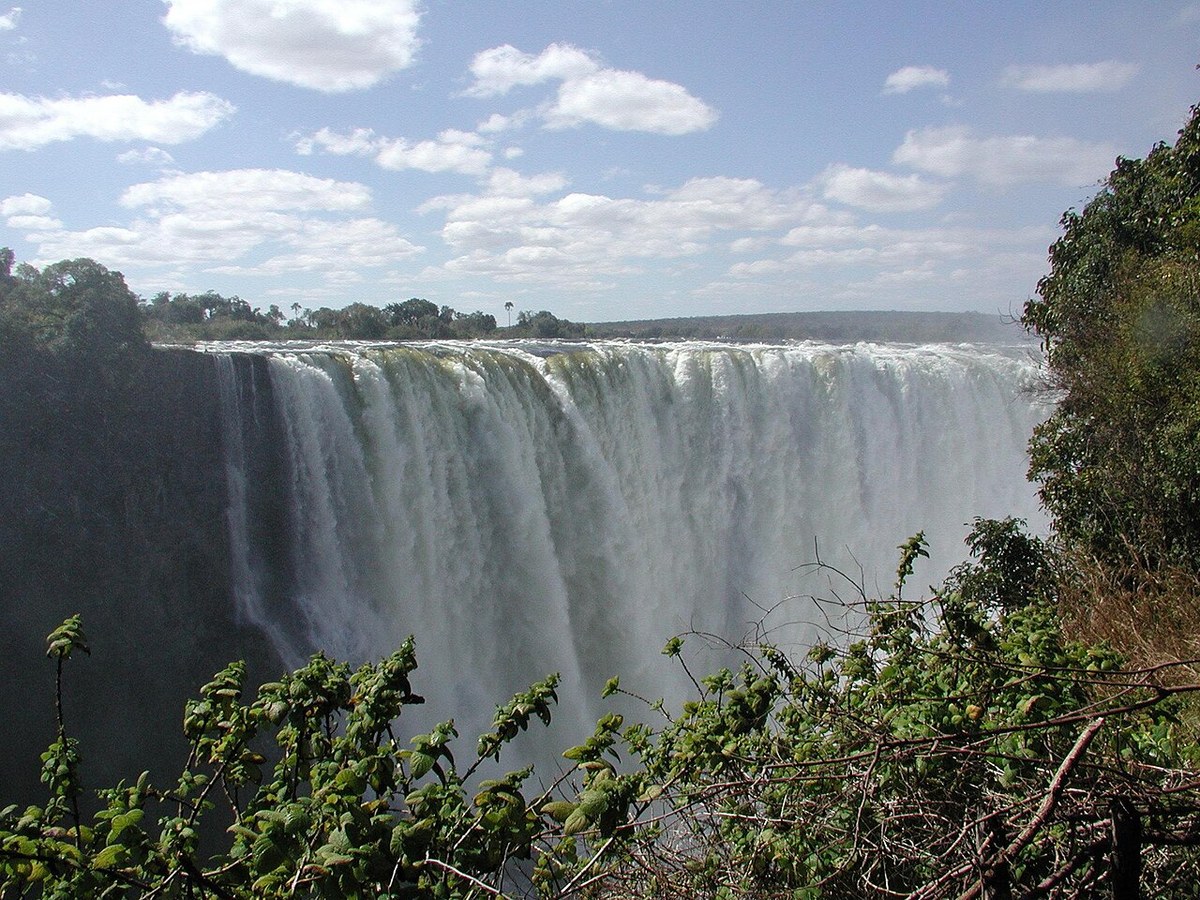
When I first decided to go to Victoria Falls, it seemed to me that I had a rough idea of what was waiting for me. I saw photos, watched videos, and read the stories of other travelers, and I was sure that after all this, it would be difficult to surprise me. As it turned out, photographs do not convey the scale of this place at all, and videos are not able to show either the humid air, the constant roar of water, or the feeling when you stand in front of one of the most impressive natural attractions in Africa and realize that no camera can properly convey what it sees. I had allocated only one day for Victoria, so I decided in advance not to try to turn the trip into an endless list of points. I wanted to see the waterfall itself in peace, walk along the main viewing platforms, look at the Zambezi and leave at least a little time just to stand and realize exactly where I am. However, the word "calm" in my case turned out to be quite conditional, because in the morning I realized that I just couldn't walk calmly in front of such a place. Morning – the road to the waterfall The morning started quite early because I wanted to get to the waterfall before it got too hot. As I drove, I kept trying to imagine what my first look at Victoria would be like, even though I was well aware that it was impossible to mentally prepare for such a place. The road gradually led me to the national park, and at first I didn't see anything particularly impressive at all. There was the usual African nature, trees, dry land, bright sun, and somewhere ahead a light fog was already beginning to appear. At first, I didn't even pay attention to it, but the closer I got, the louder the noise became. Victoria Falls Bridge That's when I realized for the first time that the waterfall was already very close, first I heard the water, and then I saw it. And that was the moment when all the photos and videos that I watched before the trip stopped mattering. A huge wall of water opened up in front of me, which collapsed with incredible force, and a cloud of water dust rose above the gorge. I just stood there and watched, trying to figure out the magnitude of what was happening, and at some point I caught myself thinking that I had forgotten to get my phone out at all. It was unusual for me, because when traveling I usually take pictures of everything, but here for a few minutes I just couldn't look away. The first viewing platforms Then I started moving along the route along the main viewing platforms. And here it became clear that one glance at the waterfall was absolutely not enough, because from each new point it looked different. Somewhere you could see the main wall of water better, somewhere you had a view of the gorge, and somewhere the water dust rose so high that it seemed as if a real tropical rain was falling in front of you. I realized pretty quickly that light clothing and Victoria Falls are a controversial combination. In some places, the spray was so strong that after a few minutes I looked like I had just stepped out of the shower, and without any prior agreement with nature. First I tried to cover the camera, then the phone, then myself, and then I just gave up. After all, if you arrived at one of the largest waterfalls in the world and came out completely dry, then you probably stayed too far away from it. The constant roar of water was especially impressive. It didn't stop for a second and gradually became part of the surrounding space, so after a while it seemed strange to imagine silence here. The Zambezi and the huge gorge In addition to the waterfall itself, I was very impressed by the Zambezi River. Before the trip, for some reason, I imagined it exclusively as a beautiful wide river, but it was only on the spot that I realized how much of a role it plays in this whole landscape. After the waterfall, the water flows with incredible force into a deep gorge, surrounded by rocks and dense greenery. I went to the viewing platforms several times and just looked down, trying not to get too carried away with photographing, because next to such a cliff, I still wanted to maintain at least a minimum concentration. The most interesting thing happened when the water dust rose up and rainbows appeared in the sunlight. Sometimes they appeared literally in front of you, and then disappeared after a few seconds when the angle of light or the direction of the spray changed. I tried to catch them with my camera several times, but I quickly realized that nature was clearly not going to work according to my schedule. Rainbow over Victoria At some point, I stopped near one of the observation decks and saw a huge rainbow over the waterfall. The double rainbow appeared so successfully that phones and cameras literally went up all around at the same time. I also started taking pictures, and I took so many shots that I couldn't figure out how they differed from each other. On one, the rainbow is slightly to the left, on the other, slightly to the right, and on the third, I accidentally took off my own hand. But it is precisely such moments that remain in the memory later. You're standing among people from all over the world, the Zambezi is rumbling around you, millions of liters of water are falling in front of you, and a rainbow appears above it all. And at this point, it doesn't matter at all how successful the photo turns out to be. A little trip with a local character At some point, I decided to move away from the main tourist routes a little and just walk around the territory. It turned out to be a good decision, because there were always new species, birds, and unusual plants around. However, I quickly remembered that I was not in a city park and that I shouldn't get too involved in photographing every animal I met. I walked quite calmly, but from time to time I looked carefully around, because after several warnings about the local nature, I was already beginning to perceive every rustle as the beginning of an adventure. Fortunately, the most serious challenge for me was the usual hot air and my own fatigue. By the middle of the day, I had already realized that the sun was not joking here at all, so I started looking for shade at every opportunity. Lunch after the waterfall After a few hours of walking, I decided to take a break and have lunch. It was that rare moment when I really wasn't thinking about the next attraction and was just enjoying a meal and a cool drink. Sitting in the shade, I looked at the photos on my phone and tried to choose at least a few of the best ones. The lesson turned out to be pointless, because almost every photo reminded me of some moment that I wanted to preserve. In the end, I left everything as it was and put the phone away. This was probably the main conclusion of my day: sometimes it's better not to try to save everything in the phone's memory, but just look around. A last look at Victoria In the afternoon, I returned to one of the viewing platforms again. The light has already changed a little, the sun has become softer, and the waterfall looked completely different than it did in the morning. I stood at the railing for a long time and looked at the water. In a few hours, I managed to walk several kilometers, get wet from splashes, dry in the sun, take a lot of photos and completely lose track of time several times. And still it seemed like I had just arrived. That's probably why I like such natural places. There is no need to constantly look for entertainment, because nature itself does all the work for you. How did I feel after this trip As I was driving back, I caught myself thinking quite simply: I was expecting to see a large waterfall, but I saw much more. Victoria turned out to be more than just a wall of water that you can photograph and tick off your travel list. These are noise, humid air, rainbows, rocks, Zambezi, water dust, the sun and the feeling of the incredible power of nature, which cannot be conveyed by one photograph. One day was enough for me to see the main thing, but it was definitely not enough for me to realize everything. Already on the way back, I began to think that next time I would like to stay here longer, see the surroundings more calmly and, perhaps, see the waterfall from the other side. But for the first acquaintance, one day turned out to be perfect. I arrived in the morning with a lot of expectations, and left in the evening with the feeling that nature was able to surprise me again. And that's probably why we go on such trips. Not to say, "I was at Victoria Falls." And in order to stand in front of this wall of water one day, hear its roar, feel small drops on your face and realize that something so big is happening in front of you that for a few minutes you just forget about everything else. And I will definitely remember this moment for a long time.
1
0
Day eight. The last road and farewell to Iceland
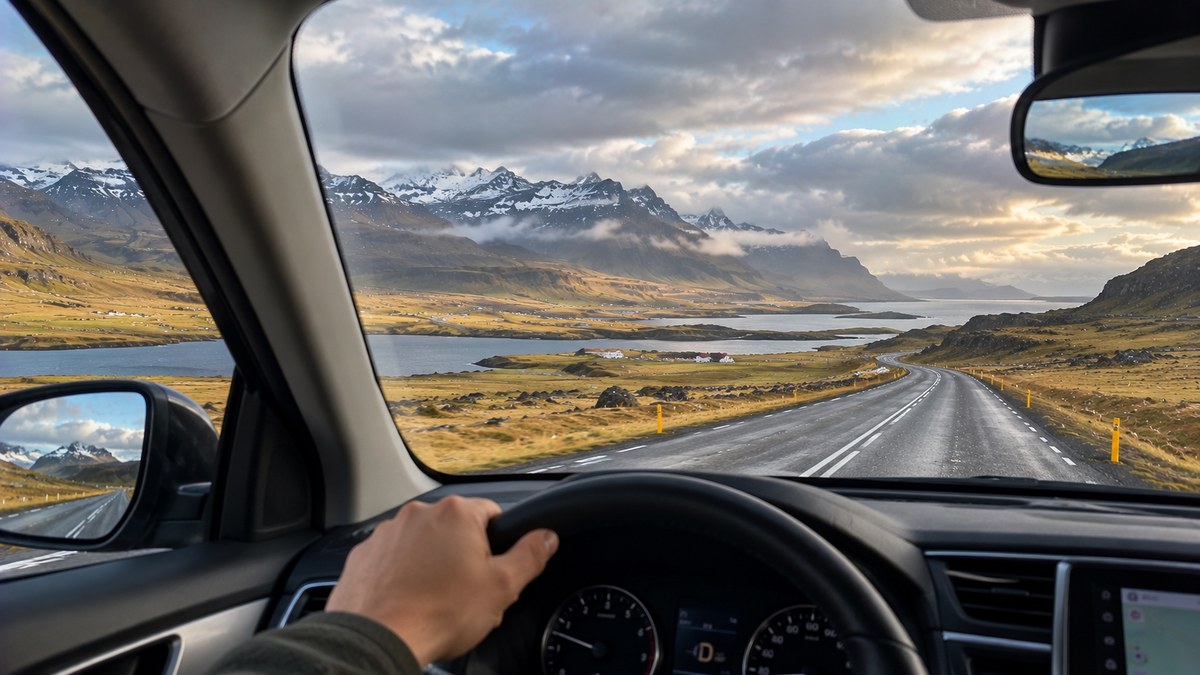
The last day turned out to be a bit strange. I was kind of tired of the road, but at the same time I didn't want to return the car and end the trip. In eight days, I've gotten used to the fact that in the morning I need to check the weather, check the route, pour coffee into a thermocup and drive to where something unexpected will appear again. I purposely left some time before the flight, so as not to turn the last day into a nervous race. On the way to the airport, I stopped a few more times, looked at the scenery and caught myself thinking that now I perceive Iceland completely differently than on the first day. When I handed over the car, it was a bit of a pity to part. During this week, it became almost a part of the trip: I listened to music, argued with the navigator, ate snacks I bought on the way, waited out the rain, and several times said out loud the phrase "well, we'll definitely stop here." What I realized after this trip Iceland by car is a journey where it is impossible to fully control the route. You can book hotels in advance, make a list of waterfalls, mark beautiful places on the map, and even roughly calculate the travel time, but then there is wind, rain, a closed road, an unexpectedly beautiful turn, or just a desire to stop and look at the mountains. I liked that feeling of freedom. I didn't try to put a check mark in front of each place, but gradually learned to leave room for accidents. Sometimes the best moment of the day didn't happen at a famous landmark, but somewhere on an ordinary road, when I stopped, got out of the car and just looked around for a few minutes. I also realized that Iceland is a country where a car really changes the travel experience. You are not tied to one city, you can change the place of your overnight stay, stay wherever you want, and build a route around the weather and your own mood. However, with freedom comes responsibility: it is especially important to be attentive to road conditions, wind and weather changes, because nature quickly explains who is in charge here. And most importantly, after this trip, I realized one simple thing: it is impossible to see Iceland properly, constantly in a hurry. You can create an ideal route and try to complete it minute by minute, but then there is a risk of passing by the most interesting. Sometimes it's better to turn onto a small road, stop at another waterfall, drink coffee from a thermocup and just stand in the wind, thinking about how it happened that I ended up in the middle of this incredible country. This is exactly how I remember my trip to Iceland: not as a list of attractions and kilometers, but as a long road with waterfalls, glaciers, black beaches, rain, wind, coffee in parking lots, a little fatigue and a lot of moments when I looked through the windshield and thought: "That's why I came here."
0
0
Seventh day. Reykjavik without haste
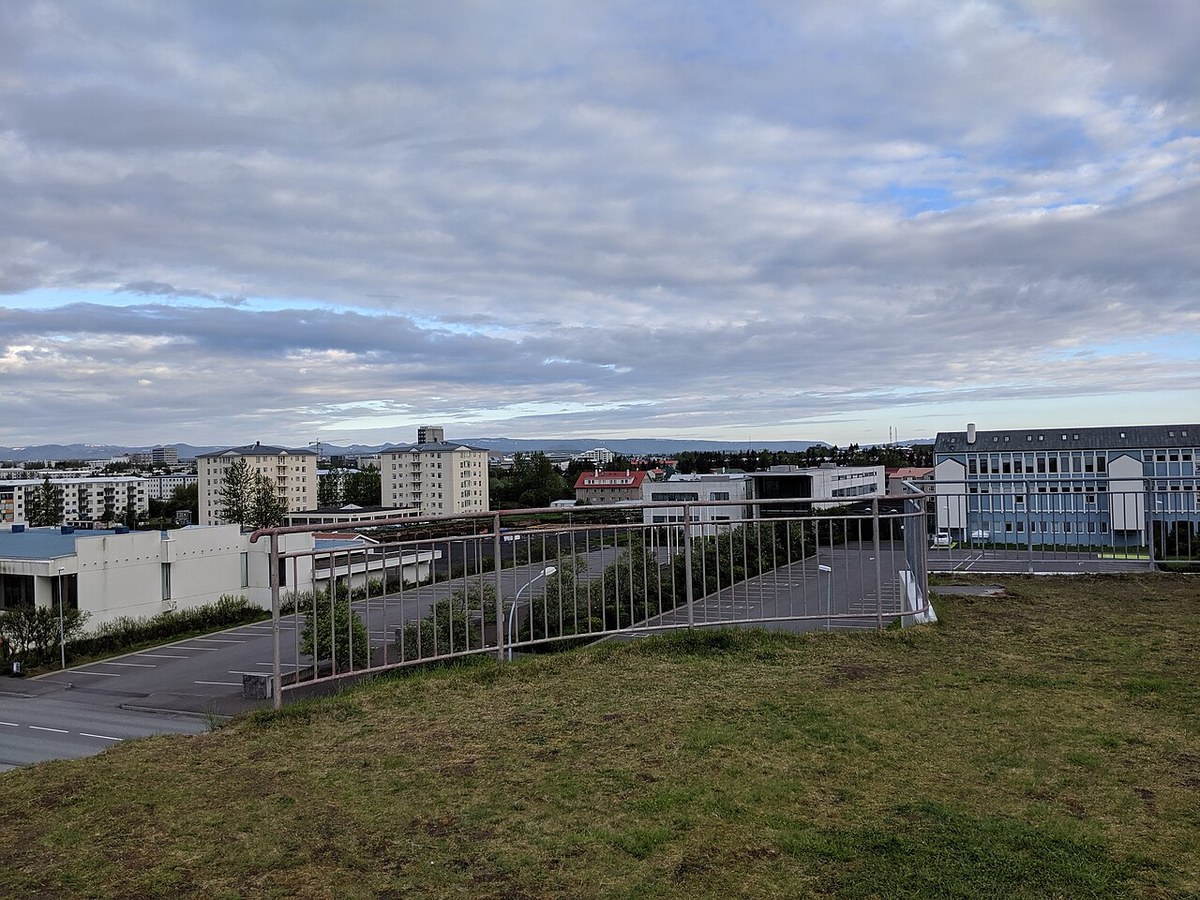
I decided to spend the seventh day practically without a car. After a few days behind the wheel, I just wanted to walk, go somewhere along the road and not look at the navigator every few minutes. I walked aimlessly around Reykjavik, looked into shops, sat in cafes and just watched the city. After the natural scenery of the previous days, it was nice to return to ordinary urban life, but even here Iceland managed to remind of itself with its unusual architecture, weather and some very special sense of space. In the evening, I started packing and discovered that I had somehow managed to accumulate a whole collection of small things in the car: bottles of water, snack packs, receipts, a card, chargers, and several other items whose purpose I no longer remembered. At that moment, I realized that the car had turned into a small version of my hotel room in a week and decided to put things in order. It wasn't that hard, but it wasn't easy either. It was worth it, as was the whole trip that was coming to an end.
0
0
Day six. Return to Reykjavik
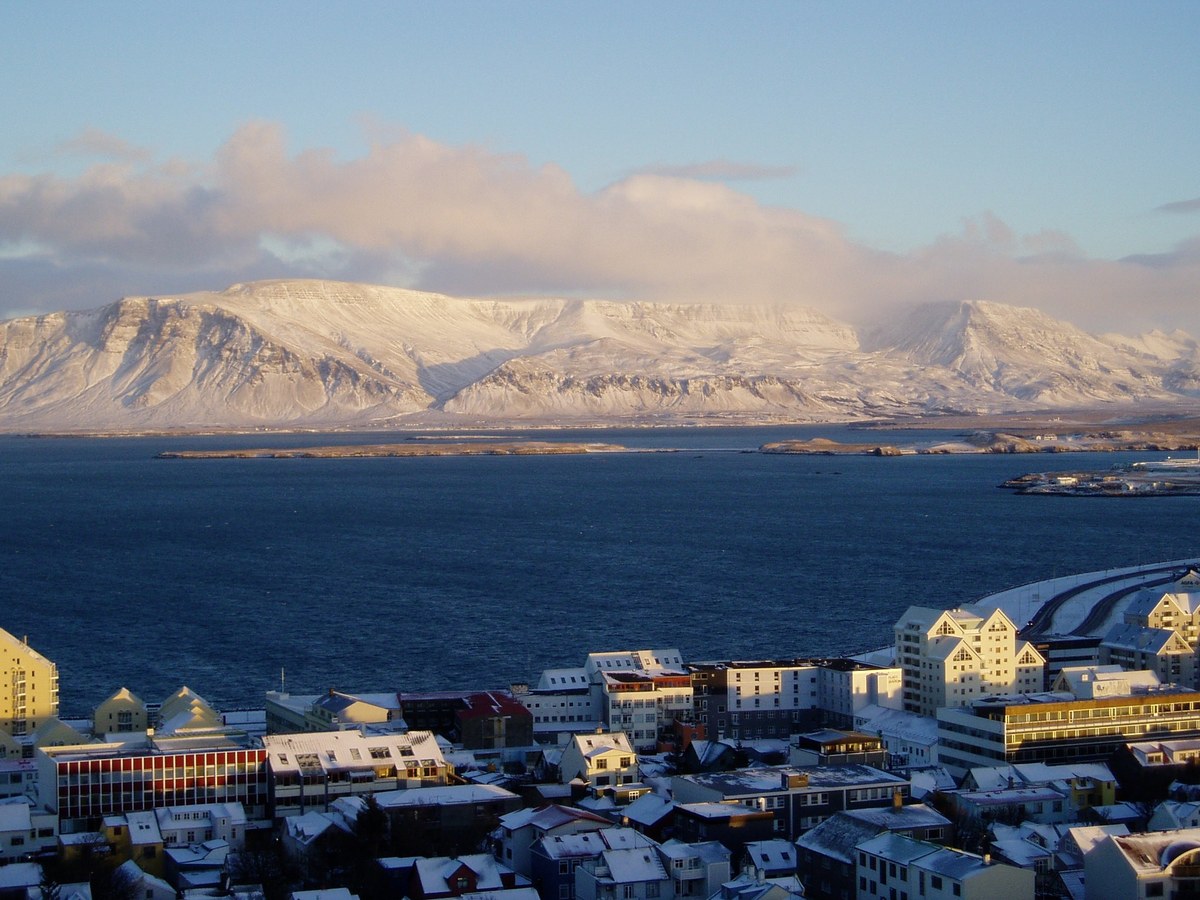
On the sixth day, I began to gradually return towards the capital. It would seem that the most interesting things are already over, but it was here that I realized that a road trip around Iceland cannot be divided into "sights" and "crossings". The crossing itself becomes part of the route, because the road is constantly changing the picture in front of your eyes. The center of Reykjavik I stopped several times just to drink coffee and look at the surrounding landscape. And at first it seemed to me that I was wasting time, but then I realized that it was for such moments that I took the car, and not just came to one city and went on excursions. Hauifoss Waterfall On the way, I stopped at several more natural spots and saw waterfalls again, which I had already stopped counting. At some point, I even caught myself thinking that I started walking past the waterfall almost as calmly as I walk past an ordinary store at home. However, he stopped after a minute anyway, because the conscience of the tourist did not allow him to just drive past. In the evening, I returned to Reykjavik. After several days of almost constant travel, the city seemed unexpectedly lively to me, although objectively it remained quite calm. I walked around the center, had dinner, and for the first time in several days, I didn't set my alarm too early.
0
0
Day five. The road, the wind, and a small setback
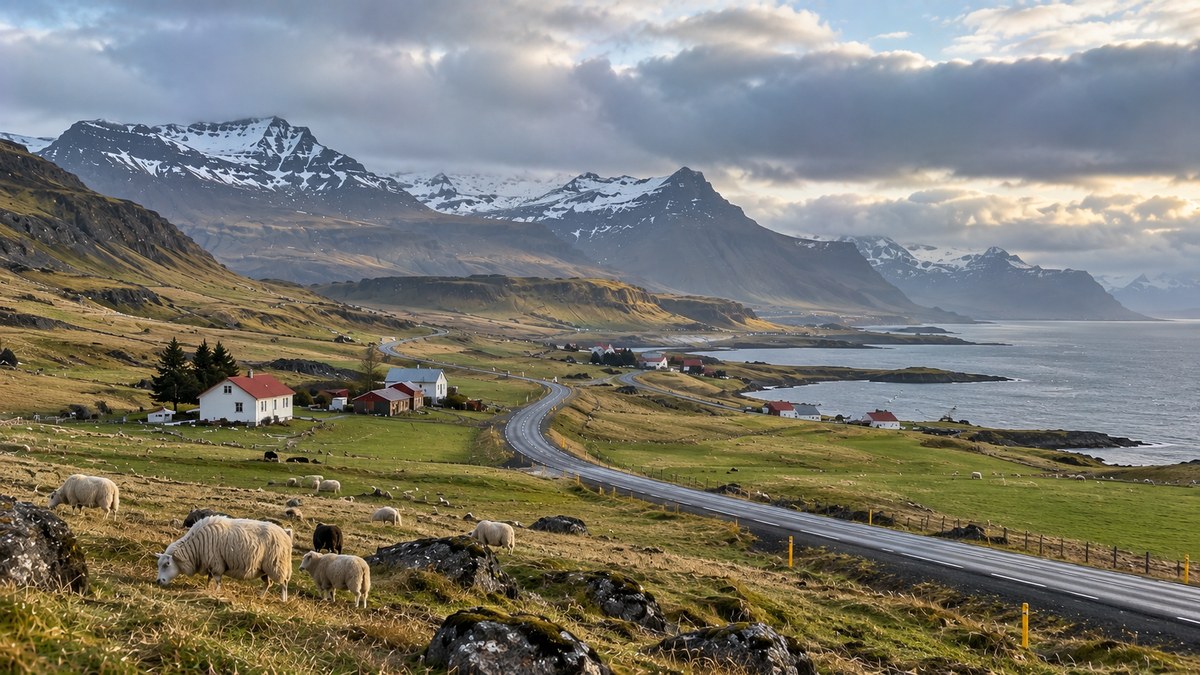
The fifth day has become the day that at first seems ordinary, and then you remember it with a smile. The weather was normal in the morning, but after a few hours the wind increased noticeably. In Iceland, the wind is not just a weather phenomenon that slightly interferes with the hairstyle, but a full–fledged participant in the journey, which sometimes makes you watch the car door very carefully. Observation deck At some point, I stopped on the observation deck, opened the door and got such a gust of wind that I immediately remembered all the recommendations to treat the car carefully. After that, I opened the door with such attention, as if it cost more than the car itself. But it was on this day that I allowed myself to deviate a little from the route and go to small places that were not the main points of the program. I liked that Iceland doesn't get any less interesting outside of the popular attractions. Small roads, farms, individual houses, sheep near the highway and mountains on the horizon sometimes make no less impression than famous places. In the evening, I stayed in a small guest house. The room was simple, but after several hours of driving, it seemed almost luxurious to me, especially when I realized that I could take off my shoes, put on the kettle and not go anywhere else today. In general, a strange value system appears in travel: an ordinary bed after a long journey suddenly becomes the main object of a tourist program.
0
0
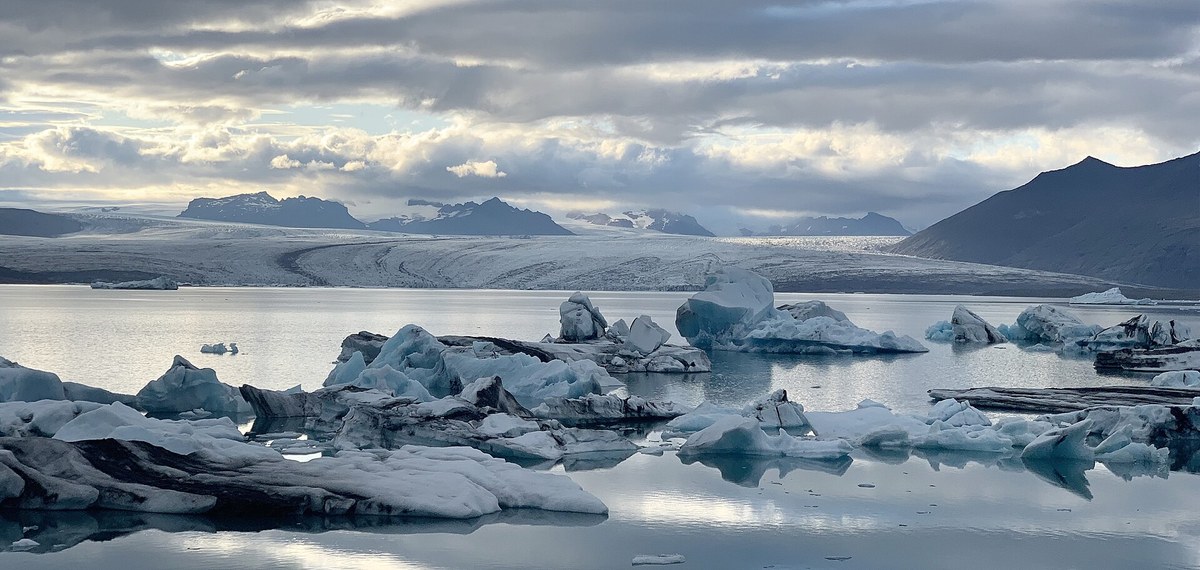
Day four. Glacier and ocean road
The fourth day started calmly, but after a while after leaving, I started stopping every few kilometers again. Iceland knows how to do a very unpleasant thing to a tourist: you think you've already seen the most beautiful scenery of the trip, and ten minutes later the next one appears, and the previous one suddenly becomes just "well, that's not bad either." Yekulsaurloon Lagoon On this day, I headed further along the southern coast towards the Yekulsaurloon glacier lagoon. The road became even more impressive, and the feeling of the real north appeared around – a lot of open space, mountains, glaciers and the ocean. I deliberately drove slower than the road allowed, because I constantly wanted to look around. When I finally saw the glacier lagoon, I just stopped the car and sat inside for a few minutes without getting out. Chunks of ice floated on the water, mountains towered around, and it all looked so unusual that it took a little time for the brain to accept what was happening as reality. Diamond Beach Then I went for a walk along the water, and after that I went to the Diamond Beach, where pieces of ice lie on the black sand. The name seems a bit touristic, but to be honest, it really suits this place in person. It was especially beautiful when the ice reflected the light, and the ocean rolled onto the shore and gradually carried small pieces back into the water. In the evening, I returned to the hotel and realized that I had barely spoken to anyone during the day except for the cafe staff and myself. But talking to myself while driving was enough, especially when I said out loud several times: "So, are we really going there?"
0
0
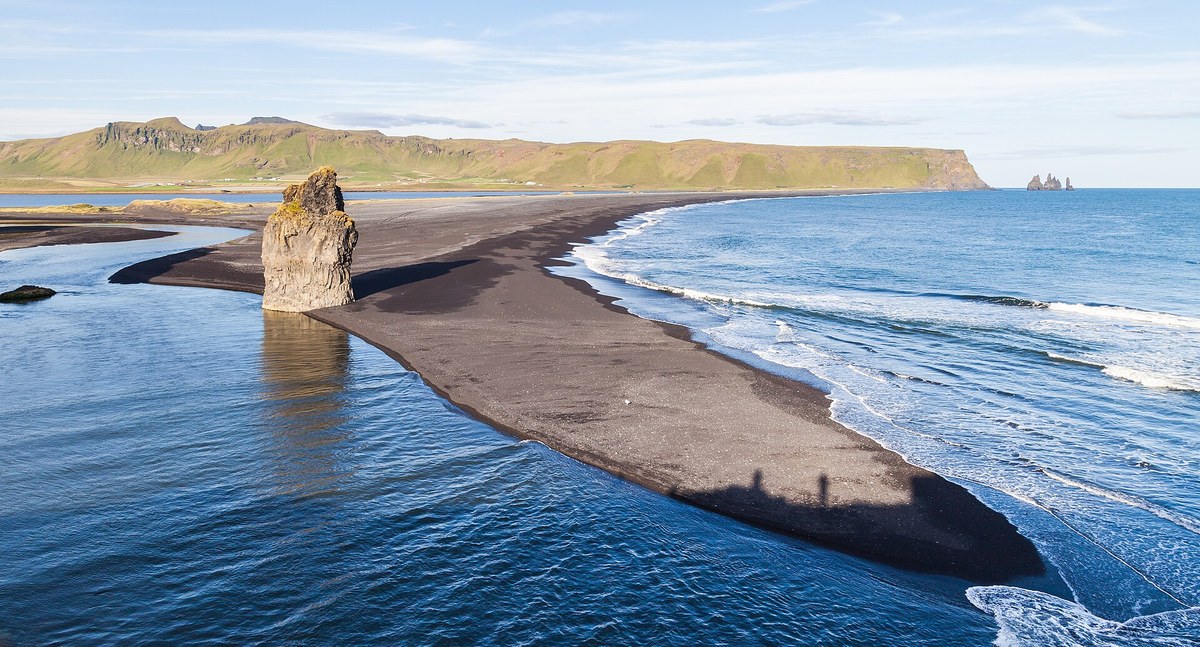
Day three. Waterfalls, black beach and Vic
On the third day, I continued south. This particular section of the route turned out to be one of the most beautiful, because the road constantly passed through landscapes that I had previously seen only in documentaries. Green fields, mountains, waterfalls, and small houses appeared outside the window, and sometimes the road went so far away from everything familiar that I wanted to stop just to realize where exactly I was. Seljalandsfoss Waterfall The first big impression was the Seljalandsfoss waterfall. You can get pretty close to it, and of course I decided that if I came here, I should walk as close to the water as possible. A few minutes later, I was already standing wet and satisfied, trying to figure out why I didn't listen to the inner voice that quite reasonably suggested staying a little further away. Skaugafoss Skogafoss was next. I've already been more careful here, but I still spent a lot more time than I intended. At some point, I just sat on a bench and looked at the water, because after driving for several hours, such stops become no less important than the sights themselves. The black beach of Reinisfjord After that, I went to the black beach of Reinisfjara near Vic. It was one of those places where photography doesn't convey the atmosphere at all. The black sand, huge waves, basalt columns, and gray sky made me feel like I was in the set of an exciting movie, except instead of the crew, I was standing next to them with a hood that the wind was trying to take off my head. Vic I arrived at the Vic in the late afternoon and realized that I would stay here for the night. At such moments, you understand the advantage of a car especially well: you don't have to return to Reykjavik every time, you can just choose a small city along the route, find accommodation and continue your journey in the morning.
0
0
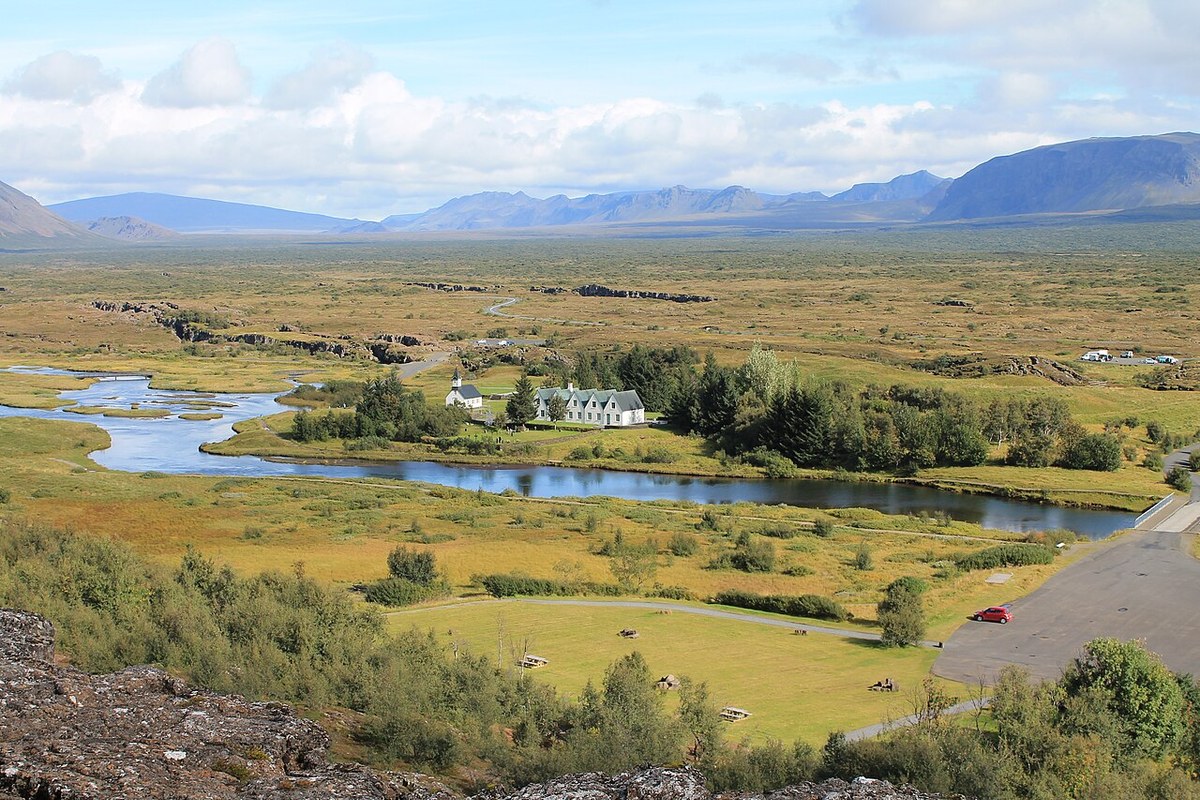
Day two. The Golden Ring and the first waterfalls
On the second day, I finally hit the road. The first big part of the route was Iceland's Golden Ring, and after some time after leaving Reykjavik, I realized why it was worth driving here. The city disappeared behind him, and mountains, fields, water, and an endless sense of space appeared around him, when it seemed that there was nothing but the road ahead. Tinguetlir National Park The first major stop was Tinguetlir. I arrived there quite early, so there weren't too many people and I could walk around the area, look at the scenery and get used to the local scale a little. In Iceland, you quickly stop being surprised that a place that looks like a small dot on the map actually turns out to be a huge space where you can walk much longer than you planned. Geyser Then I went to Geyser and Gullfoss Waterfall. Gullfoss is especially memorable because he is beautiful in the photos, but in person there is also the sound of water, wind and small splashes, which instantly explain why you should not pretend to be a man who came to Iceland solely for the perfect shot for too long. Gullfoss Waterfall By the evening, I was already a little tired and realized one important thing: it is better to think of distances in Iceland not as an ordinary trip between two points, but as a separate part of the journey. Here you can drive quite a bit on the map, but stop five times, because every time a new landscape appears outside the window, and it becomes almost impossible to say to yourself, "Okay, one more stop."
0
0
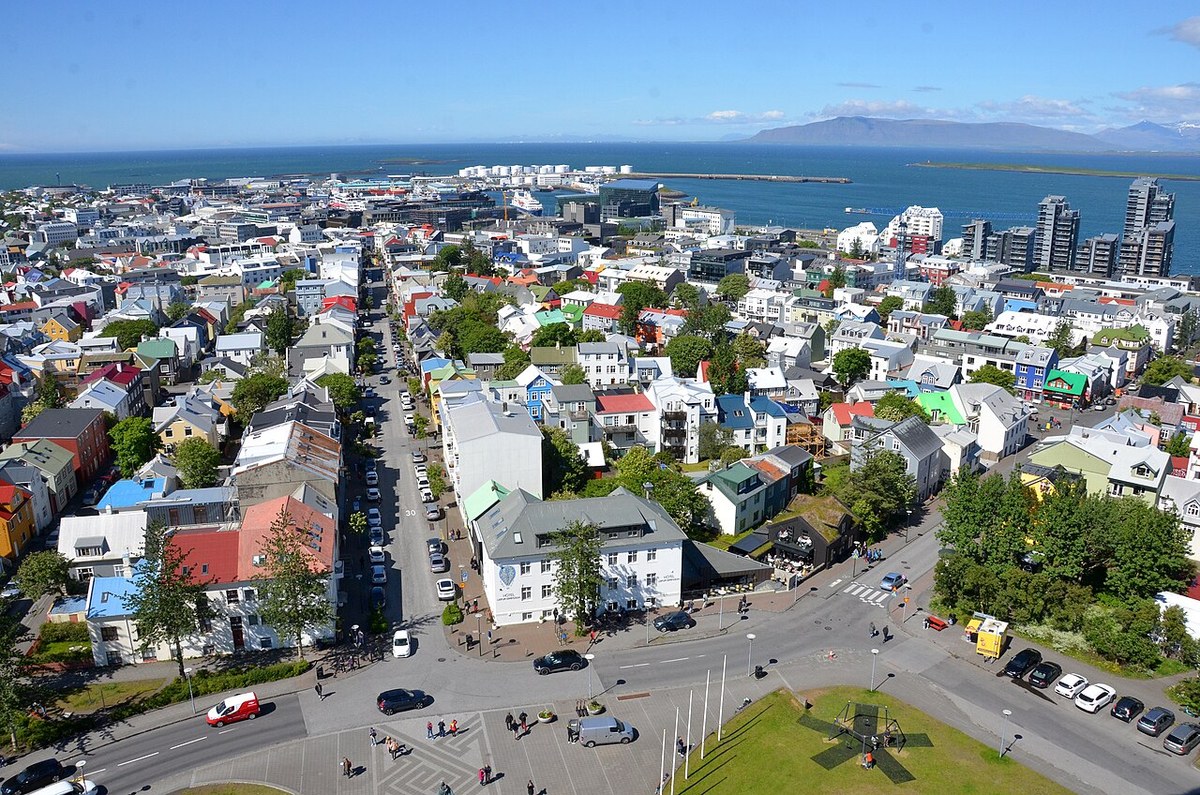
The first day. Reykjavik and getting to know the car
I've always wanted to see Iceland by car. It seemed to me that this country was created for road travel in general.: you get behind the wheel, turn on the navigator, grab a coffee and drive to where waterfalls, black beaches, mountains, sheep and some completely alien landscapes appear outside the window. Everything looked so beautiful and calm in the photos that for some reason I decided that the main challenge would be related to the roads, and not to the weather, wind and my own desire to stop at every second turn. As a result, I spent eight days in Iceland and traveled a fairly long route along the southern coast, saw famous waterfalls, glaciers, black beaches, small towns and several places that I did not know about before the trip. At the same time, almost every day something happened that was not in the original plan, but it is these moments that are now remembered best. Cars for rent Upon arrival, I picked up my rented car and just sat behind the wheel in the parking lot for a while, getting used to the idea that now this car will become my main partner for the next week. I looked at the route in advance, downloaded maps, and even checked several times exactly where to go, so I felt pretty confident. However, my confidence was slightly shaken when I saw the weather forecast and realized that the word "wind" in Iceland may mean something completely different from what I used to understand it. Laugavegur, a street in the center of Reykjavik I decided to spend the first day in Reykjavik, so as not to start the trip immediately with a long haul. The city turned out to be quite calm, compact, and not at all like the European capitals I was used to, and after a few hours of walking, I especially enjoyed just walking the streets without a specific purpose. I stopped at a cafe, strolled along the waterfront, looked at the local architecture, and gradually began to realize that Iceland would not look at all like the trip I had imagined in advance. Then I went back to the hotel and did the most important thing of the trip – I put my things so that I wouldn't have to look for anything in the morning. Of course, in the morning it turned out that I had put exactly the right thing somewhere completely illogically, so the first ten minutes of the new day were spent not among waterfalls, but in the company of an open suitcase.
0
0
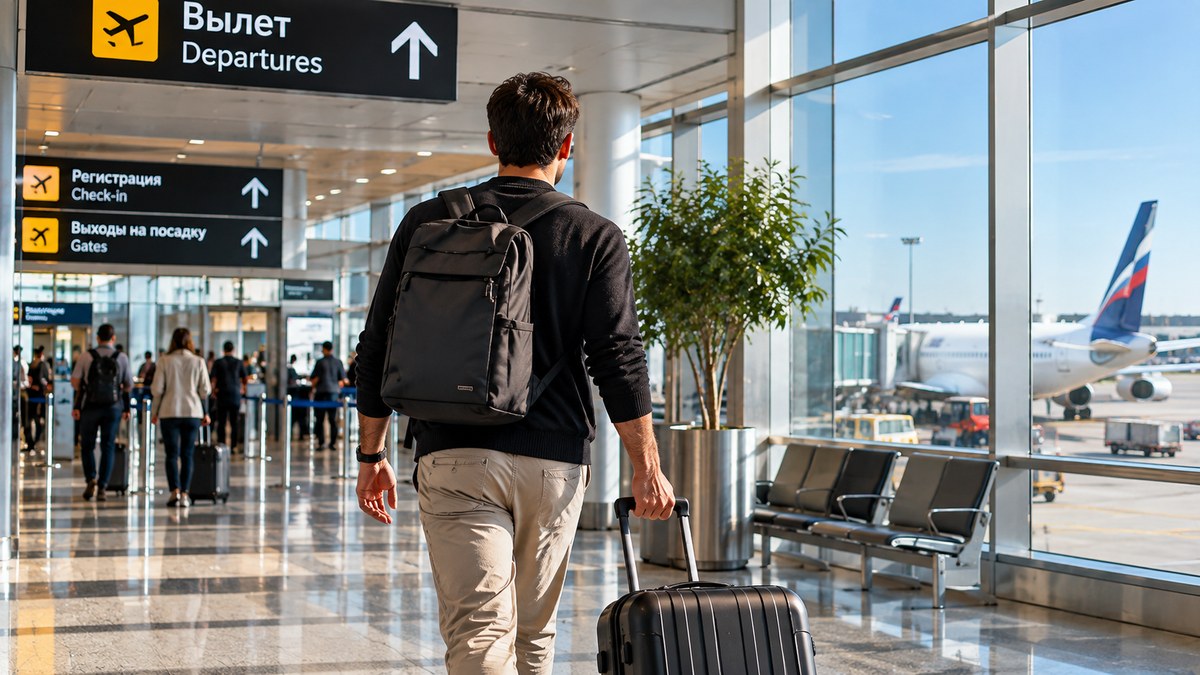
Which apps have been useful to me on my journey
Before the trip, as usual, I decided that everything would be under control. I made up a route, looked at a map, estimated my expenses roughly, and even saved a few addresses in notes, after which I felt like a man who could conquer any country on his own. However, it turned out at the airport that my heroic travel plan was based on about one percent of my phone's charge and my ability to pretend that I knew where I was going. Therefore, this time I pre-installed several applications that were really useful, and not just took up the memory in the phone. Maps are my main navigator The first thing I needed was the maps. Moreover, I did not limit myself to one application, because for some reason, when traveling, I have a strange confidence that if the phone loses the Internet, satellites, communication and any hope of salvation, then at that very moment I will need to find a hotel in some alley. Therefore, I downloaded offline maps of the required areas in advance and saved the address of the hotel. It turned out to be especially useful when I was walking around an unfamiliar area without an Internet connection. I could see where I was, find the right street, and figure out which way to go. However, sometimes the map showed that it was a five-minute walk to the right place, and ten minutes later I was still walking somewhere along stairs, courtyards and suspiciously quiet alleys. At such moments, I began to suspect that five minutes for the cards and five minutes for me were completely different units of measurement. The translator is the very person who saves the conversation. I installed the translator at home and realized very quickly that it was a great idea. Even if I know a few words in the local language, in a real situation, it suddenly turns out that for some reason the right word flew out of my head, and instead I remember the name of some dish from my childhood. It was especially convenient to use a translator with a camera when it was necessary to understand the menu, sign or instructions. You point your phone at a text, get a translation, and within seconds you feel like a person who is completely free to navigate local life. However, sometimes the translation turns out to be so strange that I have to read it several times and hope that the restaurant does not offer me "fried uncertainty with rice" for dinner. The app for transport If there are subways, buses, commuter trains or trains on the trip, I definitely install the application with public transport. It turned out to be especially useful in large cities, where at first glance it is possible to understand the routes only after obtaining a second higher education. I liked to look at the route from the hotel to the right place in advance, check transfers and approximate travel time. Thanks to this, I at least understood what I was going to do: ten minutes on foot, then the subway, then the bus and a little more on foot or ten minutes on foot, three transfers and a meeting with my own destiny. The opportunity to see the nearest stops and stations was also useful. When you leave the hotel in the morning and still don't fully understand where you are, having a phone with a normal transport schedule saves a lot of time and nerves. An application for booking accommodation I try to book accommodation in advance, but even after confirming the reservation, I keep the application with information about the hotel. There's always an address, photos, booking details, and sometimes messages from the host or the hotel. One day, I went to look for a hotel from memory so confidently that after about twenty minutes I realized that my memory was working fine, I just remembered a completely different twist. After that, I stopped being a hero and just open the app, check the address and go to the map. It turns out that you can travel without adventures, at least sometimes. Taxi app I also consider the taxi app to be almost mandatory. It allows you to see the approximate cost of the trip in advance, choose the pick-up point and not try to explain to the driver with gestures that I need to go to that building over there, and not to the neighboring building, which for some reason looks exactly the same. Besides, I feel better when the trip is processed through the app and I see the route. Especially after a long flight, when my head doesn't distinguish the airport from the mall, and my only desire is to get to bed and not talk to anyone for at least the next half hour. Payment application and banking applications I checked the banking applications several times before the trip. Not because I particularly like to look at the balance, but because when traveling, it is important to understand how much money was debited, where the payment was made, and whether anything suspicious happened. I also checked in advance whether my cards work abroad, and saved several payment methods. Because relying solely on one bank card when traveling is like taking one sock with you and hoping that the other one will somehow be found in another country. Weather At first, the weather app seemed like something optional to me. Then one morning I went out in light clothes because the app showed the sun, and an hour later I found myself in the rain, and suddenly realized the value of meteorology. Now I look not only at the temperature, but also at the probability of rain, wind, and the forecast for several hours ahead. This is especially convenient during walks, when you can figure out whether it's worth going to see the sights now or whether it's better to sit quietly in a cafe, pretending that this is exactly what was planned from the very beginning. The note-taking app The usual notes on the phone also proved to be very useful. There I saved the address of the hotel, booking numbers, important phone numbers, a list of places I wanted to visit, and all sorts of little things that are completely impossible to remember in my head. I also recorded expenses there, because after a few days of traveling, money starts disappearing at such a rate, as if they also have a ticket home. When you see all the expenses in front of your eyes, it becomes much easier to understand where the budget went and why you definitely didn't buy anything expensive yesterday, although for some reason the receipt from the store says the opposite. Currency conversion application The currency converter has been useful to me more often than I expected. Especially in the early days, when local prices had not yet had time to turn into understandable figures in my head. At first, I counted literally everything: coffee, ticket, lunch, water, and even some completely unnecessary trifle that I bought simply because it lay beautifully on the shelf. After a couple of days, I started to navigate faster, but the app was still at hand, especially when the price looked suspiciously attractive or, conversely, so high that I wanted to pretend that I couldn't count at all. What did I leave in my phone in the end In the end, I realized one simple thing: I don't need dozens of travel apps that promise to make my trip perfect. A few really useful tools are enough – maps, translator, transport, housing, taxi, bank, weather, notes and currency converter. At the same time, I try to download everything I need in advance and check what works without the Internet. Because the real test of any application does not begin when you are sitting at home with Wi-Fi and calmly pressing all the buttons, but when you are standing in the middle of an unfamiliar city with 8% charge, you do not understand where your hotel is, and for some reason it is at this moment that the application decides to update. So now, before my trip, I don't just pack my suitcase, but do a little digital preparation. I check maps, download the necessary areas, save the address of the hotel, install a translator and a transport application, and also try to have several payment options. After that, you can safely drive and pretend that I am an experienced traveler who has foreseen everything, although we both understand that I will take a wrong turn somewhere anyway.
3
0
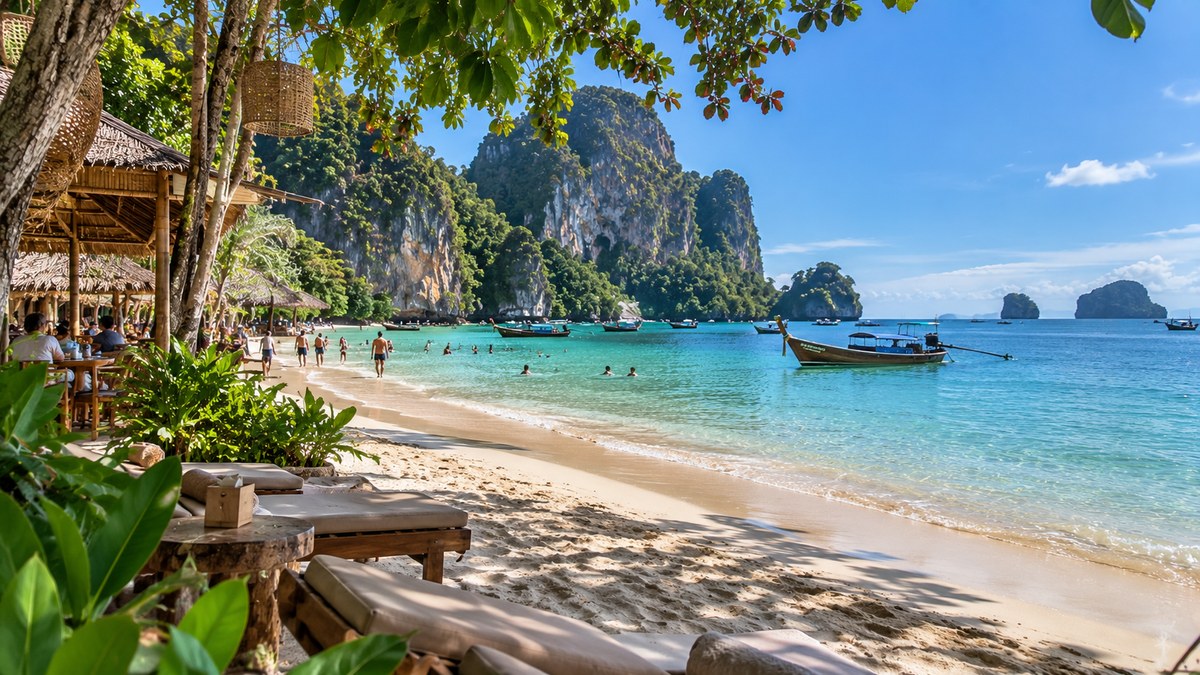
How I looked for a place to live in Thailand: my experience, mistakes and unexpected finds
When I first decided to stay in Thailand not for a couple of days in a hotel, but at least for a few weeks, I was sure that I would figure out the accommodation in one evening. I open the website, choose a beautiful apartment with a swimming pool, look at photos, read a couple of reviews and book, which is difficult here. In my head, it looked something like this: an hour later, I was sitting on the balcony, drinking coffee, looking at palm trees and feeling like a man who had finally learned how to travel properly. In practice, after a couple of hours, I realized that a photo of an Olympic-sized pool sometimes means a small pool in the courtyard, and the word "cozy studio" can very much depend on how friendly the person who wrote the ad is with a sense of humor. I reviewed so many housing options that at some point I began to distinguish Thai areas better than my own city, although I hadn't managed to get there yet. At first, I wanted to book everything in advance. My first thought was to rent a place before the trip, so that I could fly to Thailand and immediately go to my beautiful apartment. It seemed to me that this was the most relaxed option, because after a long flight, the last thing I want to do is walk around in the heat with a suitcase and look for a place to spend the night. I started looking at apartments online and pretty quickly realized that there were too many options. There are hotels, apartments, condominiums, small guest houses, and short-term apartments, as well as offers from private owners who for some reason consider a photo of a ten-year-old room to be a perfectly suitable way to introduce a future tenant to real estate. At first, I saved almost everything I liked, but after a while I had a folder of several dozen options. One was more beautiful than the other, each had a pool, some also had a gym, and in the photos the balconies looked like they were the beginning of my new luxurious life in Thailand. Then I realized that the neighborhood is more important than a beautiful apartment. This is where the most interesting part of the search began, because at first I chose housing based on the principle of "like an apartment", and then I came to a simple thought: I would have to live not inside the photo from the ad, but in the real area. I started looking at what was around the chosen house, how far away the shops were, where the nearest cafe was, how convenient it was to get to the beach, whether there was public transport nearby, and generally how comfortable it would be to return home in the evening. It quickly became clear that an apartment with a luxury swimming pool could end up in a place from where it would take so long to get to the nearest store that buying a bottle of water turned into a small sporting event. As a result, I began to choose an area first, and only then to look for specific housing. It turned out to be much more convenient for me, because a huge number of beautiful, but completely unsuitable options immediately disappeared. I decided to watch the accommodation live. At some point, I realized that I couldn't take the photos anymore, and decided to look at several options already in place. I liked the idea of coming, renting something simple for a few days, exploring the areas calmly, and only then making a decision. And this was probably one of the smartest decisions of the entire trip. Because it's one thing to see a photo of a room with a neatly made bed, a clean table and a beautiful view from the window, and it's quite another to go inside and realize that the window does not look out on palm trees, but on the wall of a neighboring building, the photographer just took a very good angle. In addition, you immediately notice things on the spot that no one writes about in the ad. For example, how noisy the house is, how the air conditioner works, whether there is normal hot water, how fast the Internet catches, and whether it is convenient to be in the apartment at all. In the photo, the outlet looks like an outlet, and when you have three phones, a laptop, a power bank, and a headphone charger, the number of outlets suddenly becomes the most important characteristic of real estate. What I checked in the apartment After several views, I had my own list of questions, which I mentally went through every time I entered a new apartment. First of all, I checked the air conditioner, because in Thailand it is not a luxury or a pleasant addition to an apartment, but a thing without which you can very quickly begin to reconsider your life decisions. Then I looked at the bed, the shower, the water, the Internet, and the kitchen, if I needed it. I paid special attention to the windows and doors, because beautiful photos sometimes do not convey the noise level at all, but I still wanted to sleep at night, and not participate in the life of the whole area until the morning. I also started asking about paying for electricity and water, because the cost of the lease itself is not always the entire amount. I wanted to know in advance how much I would actually pay per month, so that I wouldn't get a bill later that would make me think about returning to the tent. I became especially careful with the air conditioner. After one viewing, I left the apartment with the feeling that I had finally found the perfect option. A nice area, a normal room, a pleasant interior, a swimming pool in the complex, shops nearby, and the beach can be reached without any problems. I was already mentally putting things in the cupboards and imagining how I would go out for coffee in the morning. Then I asked if the air conditioner had been serviced for a long time. The man who showed me the apartment looked at me with an expression on his face, as if I had asked a philosophical question about the meaning of life. As a result, it turned out that the air conditioner was working, but it was better not to discuss its condition in too much detail. After that, I started turning on the air conditioner right while watching and listening carefully for a few minutes to exactly what he was doing there. It turned out that a good air conditioner in Thailand is capable of making so many different sounds that, if desired, it can record a separate music album. I didn't take a place just because it looks nice. This is probably the main conclusion I came to during my search. When traveling, we often choose with our eyes, especially when we look at photos on the Internet, and at first I did exactly the same thing myself. But gradually I realized that convenience is much more important to me than a perfect picture. Even if the room doesn't have the most fashionable sofa or the same interior from the magazine, the air conditioner works fine, there is a good Internet connection, a comfortable bed, a store nearby, and you don't have to spend half a day on the road every time. After all, I didn't come to Thailand to take pictures of my own bedside table. I wanted to live, walk, travel to different areas, taste local food and generally enjoy the trip, and not spend my evenings trying to figure out why I was paying more for beautiful photos in the apartment than I intended. Where did I end up looking for a place to live I used several methods at once and quickly realized that it was better not to limit myself to one site. Online search is convenient in order to understand prices and areas in advance, look at photos and get a rough idea of the market, but I tried to make a final decision only after a personal inspection. I also liked the option with condominiums, where you can view several apartments in almost one place. In some complexes, you can find different options in terms of area and price, and sometimes the apartment in the next entrance is noticeably more interesting than the one you were just going to book. I also started paying attention to ads directly in the areas where I wanted to live. Sometimes a good option can be found not among perfectly designed online ads, but through local contacts or recommendations. However, here you already need to understand the rental conditions more carefully and do not hesitate to ask questions. The biggest mistake is to rush When you come to Thailand for the first time, especially after a long flight, it's very easy to think, "Okay, I'll take this, just to put my suitcase down." I've been close to this myself several times, because after several hours of browsing, I just want to choose something and finally stop looking. But I forced myself to take my time. If you like the place, I checked the area again, the payment terms, the additional costs, and how convenient it would be to get to where I really need to go. Sometimes, after such a check, an apartment that seemed beautiful disappeared from the list in just five minutes. But when I finally found the right option, I didn't feel like I'd won the lottery and now I had to pray that everything would turn out okay. I already knew where I was going to live, how much to pay, what was nearby, and what conditions awaited me. What would I do now If I had to look for a place to live in Thailand again, I would not immediately book an apartment for the whole month, or even more so for several months. I would first choose an area, book accommodation for a few days, and then calmly look at several options on the spot. I would definitely check the air conditioner, internet, water, noise, mattress, windows, household appliances, and terms of payment for utilities. And I would check all this not out of a desire to find fault, but because then it's these little things that determine how comfortable you will feel every day. And I would also leave myself some freedom for surprises. Thailand generally teaches this principle well: you can leave home in the morning with one plan, and in the evening find yourself in a completely different area, with a bag of food in your hands and with the idea that it was for such moments that you came here. As a result, finding a place to live turned out to be a separate adventure for me, although at first I thought it would be the most boring part of the trip. I reviewed a bunch of apartments, almost made a mistake with the area several times, learned to look suspiciously at photos with a very wide–angle lens, and finally realized a simple thing: good housing is not necessarily the most beautiful and expensive, but the one in which you really feel comfortable living. And, perhaps, that is why I now feel much more relaxed about the choice of housing. First the area, then the real conditions, then the price, and only after that beautiful photos of the pool. Because the pool in the photo may look like a dream resort, but you still have to live in the very room where the air conditioner decides to play a drum solo at night.
1
0
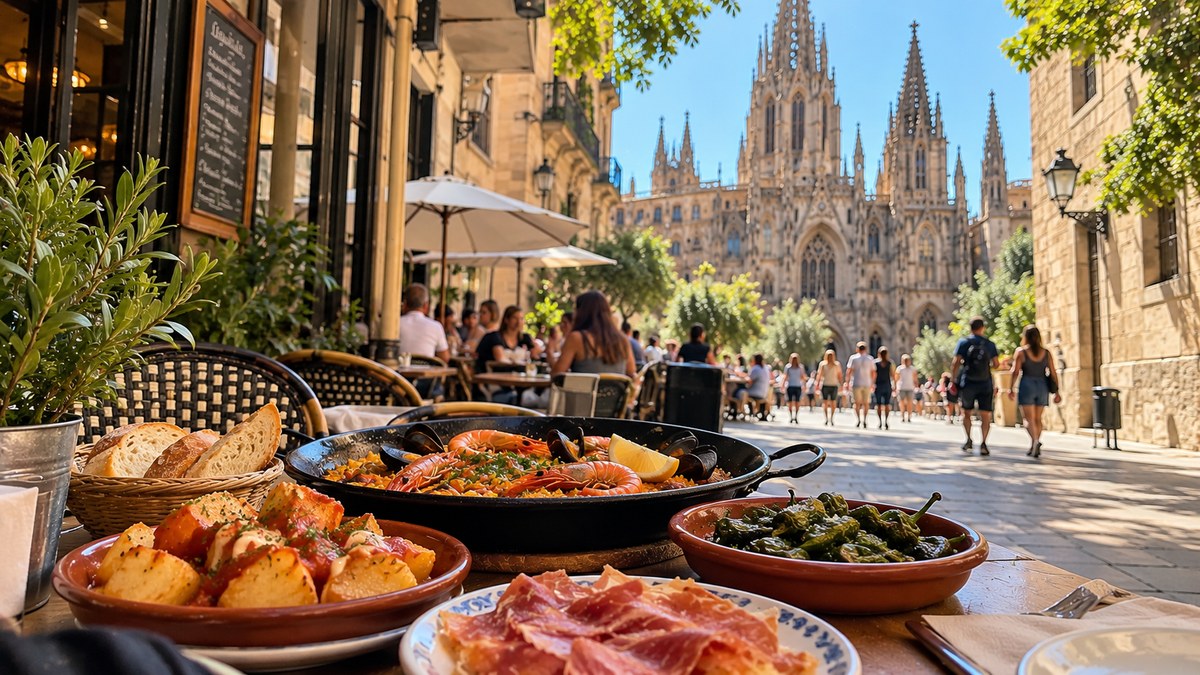
Where to eat cheap in Barcelona
When I was going to Barcelona, for some reason I was sure that the main expense item would be housing, and food would turn out to be something secondary. It's a very funny thought, especially considering that after walking around the city for a few hours, I start looking at food displays as if I hadn't eaten in the last three days. In Barcelona, this is especially dangerous: around tapas, jamon, pastries, seafood, pizza, sandwiches, markets, cafes with beautiful terraces – and all this seems to have been specially created so that my budget starts coughing nervously. So pretty quickly I decided to figure out where in Barcelona you can eat properly and not give half of your daily budget for every meal. I must say right away that I did not completely abandon restaurants, because coming to Spain and eating exclusively bars from the supermarket is already some kind of gastronomic austerity. But if you choose places wisely, eating in Barcelona is really delicious, satisfying and without the feeling that the waiter has just sold you a piece of Catalonia along with real estate. Breakfast: Coffee, pastries, and some common sense I usually started with the simplest option – a small cafe, coffee and some baked goods. In Barcelona, it is not necessary to look for a restaurant with a huge menu to have a good breakfast, because a simple coffee with a croissant or other pastries often costs significantly less than a full breakfast in a tourist establishment. Tomato toast with olive oil and coffee One day I went into a small cafe literally because I couldn't go any further without coffee. I ordered a drink and pastries, sat by the window and watched the street for twenty minutes, pretending that this was how I planned to start the day. In the end, it turned out even better than in an expensive establishment with a beautiful interior, because I had a quiet breakfast, looked at Barcelona life and did not feel like a person who came on vacation solely to pay someone else's rent. The menu of the day is my main gastronomic life hack If you want to eat normally during the day, I would definitely look at menú del día , that is, a comprehensive daily menu. This is one of those options that allow a traveler not to choose between a normal lunch and the safety of a bank card. Usually this menu includes several dishes, such as the first, second and a drink, and sometimes dessert or coffee, and the final price may be much more pleasant than if you order everything separately. The main thing is to look at the menu from the outside before sitting down, because after you have already settled at a table overlooking a beautiful street, it can be psychologically more difficult to refuse lunch for a sudden twenty–odd euros. Tapas bars: you can try a lot and not order a mountain of food Another option of mine is small tapas bars, especially if you travel alone. I like this format precisely because I don't have to order a huge portion of one dish and then sit over it with the expression on the face of a person who accidentally signed a mortgage. You can take a few small snacks and try different flavors, and with a reasonable choice, it may well be more budget-friendly than a full-fledged dinner. I usually first look at how much each position costs, and only then I start to portray a connoisseur of Spanish cuisine, because a traveler is a traveler, and arithmetic is an international thing. Markets are a great option for those who want to grab a bite on the go. In Barcelona, I would definitely visit the market, especially if you want to try something local rather than have a formal lunch. There you can find fruits, pastries, ready-made snacks, sandwiches and other products, from which it is easy to assemble a decent lunch without going to a restaurant. I generally like this format when traveling: I bought something delicious, went outside and continued walking. However, there is a small risk – at first you tell yourself that you will take only one small snack, and ten minutes later you are standing with a bag of food and trying to figure out how a person who wanted to save money managed to spend more than planned again. Pizza, burgers and other simple options Sometimes, after a whole day of walking, I didn't want to understand the local gastronomy at all. At such times, I chose a simple meal: pizza, burger, sandwich or something similar, and I tried to look not for the most popular tourist spots, but for small places where locals come. Yes, this is not the same romantic dinner with a glass of wine on the terrace, but sometimes after twenty thousand steps you do not want romance, but food. And here, an inexpensive cafe next to the subway or an ordinary residential street suddenly becomes the best restaurant in Barcelona, especially if the portion is large, the table is free, and my body has already stopped negotiating. Nobody canceled the supermarket either If the trip turns out to be long, I calmly go to a regular supermarket and buy water, fruit, yogurt, pastries, cheese, ham or anything else that I can take with me. This is especially convenient for breakfast or a snack, when you absolutely do not want to sit down in a cafe every time. One time I got so carried away with saving that I bought groceries with a reserve, and then realized that I didn't even have a proper knife in my room. I had to eat everything as civilly as possible, but with such an expression on my face, as if I was participating in some kind of gastronomic test. Since then, I've been trying to remember that saving money is great, but first it would be nice to find out exactly what you're going to open the package with. Where I wouldn't save money With all my desire to reduce costs, I would not try to make absolutely the entire trip as cheap as possible. Barcelona is a city where food is part of the journey itself, so at least a few times I would allow myself a normal dinner or good tapas, especially if I really liked the place. My principle turned out to be quite simple: save where it doesn't spoil the experience at all, and don't save where for the sake of a few euros you will later regret that you didn't try the local cuisine at all. After all, I didn't come to take the Spanish survival exam, but to travel. How much money is needed for food If you choose simple cafes, daytime menus, markets, supermarkets, and inexpensive snacks, you can keep your food budget under control. Of course, the exact amount depends on the area, the format of the institution and how strongly at a certain point you start to convince yourself that "well, since I'm in Barcelona, I have to try." I noticed a pattern behind me: the biggest expenses did not appear when I was really hungry, but when I was just passing by a beautiful place. So now I have a rule – first look at the menu and prices, then sit down. This simple action has saved my budget much more often than any complex financial strategy. My conclusion It's quite possible to eat cheap in Barcelona if you don't try to have dinner every time on the most touristy street with a beautiful view. I would alternate between small cafes, menú del día, tapas bars, markets and supermarket products, and leave money for those dishes and places that I really want to try. And perhaps the most important thing is not to turn saving into a separate sport. When traveling, it's always more pleasant to save a little on an occasional coffee or snack, and then sit down somewhere in the evening, order a good meal, look at the lights of Barcelona and think: "Well, that's why I came here."
0
0
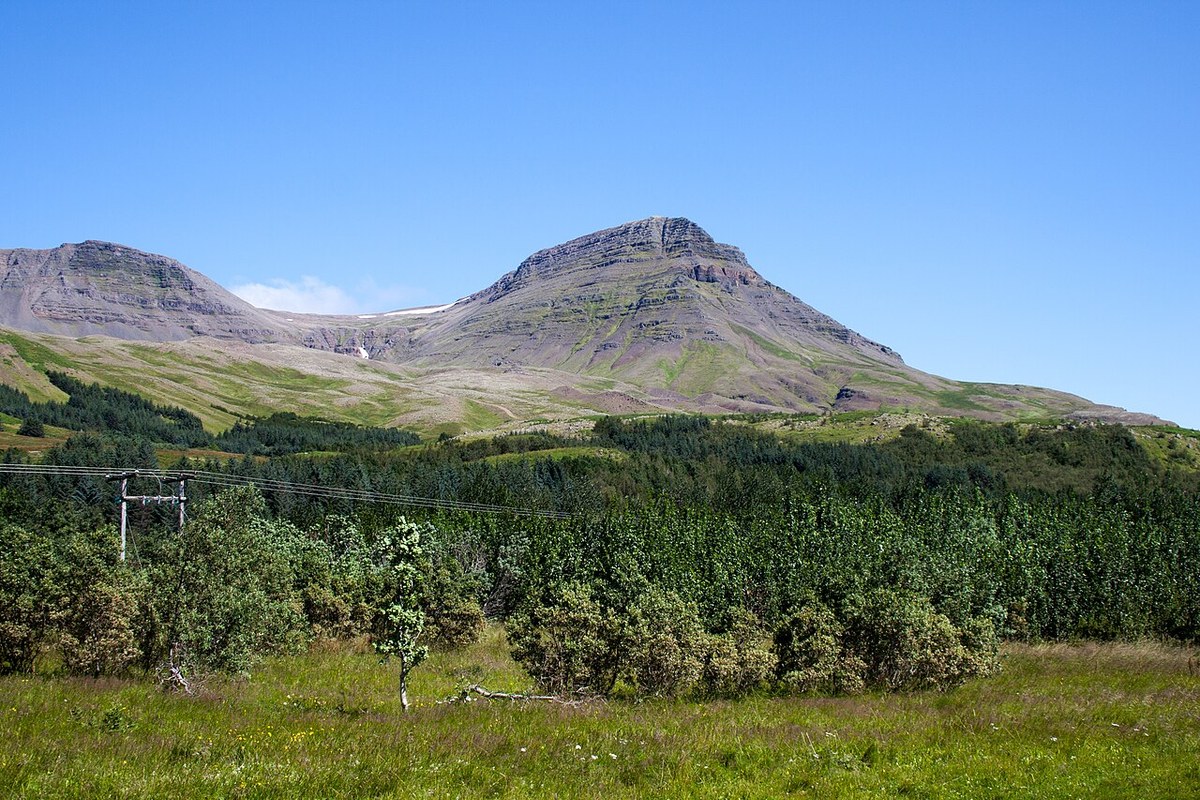
The most memorable day of my trip to Iceland
I went to Iceland for the beautiful views, waterfalls, volcanoes and the feeling that I had accidentally landed on another planet, although I bought a ticket quite officially and no one took my passport at the border. That day, we woke up quite early, had a quick breakfast and loaded into the car, because there was a long route ahead, and in Iceland the distances on the map for some reason look much more modest than they actually are. I didn't know at the time that this particular day would be the most memorable of my entire trip, and to be honest, if someone had told me that in the morning, I would have just shrugged and continued to search the navigator for the nearest gas station. View of the peak of Khvannadalshnukur From the very beginning, the weather was typically Icelandic, meaning the sun seemed to be there, the rain seemed to be there, the wind generally felt like the master of life, and you were standing in the middle of it all and trying to figure out which jacket to wear. I decided that a regular waterproof jacket would be enough, and after 20 minutes I realized that Iceland treats my decisions with some disdain. However, the mood was great, the road stretched between black lava fields, green slopes and mountains, and I photographed literally everything, including a single pillar, which, judging by the number of my photos, was supposed to be the main architectural monument of the country. I was most impressed by the view of Hvannadalshnukur Peak. I share a photo of a place where time stops, and I want to endlessly look into the distance. When did the navigator decide to add adventures After some time, the navigator suggested turning off the main road, and I, as a person who for some reason trusts technology very much, obediently turned around. The road was getting narrower, there were fewer and fewer cars around, and then there came a moment when I looked ahead and thought that the word "road" was being used quite boldly here. We drove on because it was already somehow inconvenient to return, although we had a perfectly good opportunity to turn around and pretend that nothing had happened. After a few kilometers, it started to rain, and not the kind of rain that beautifully drips onto the windshield and creates a traveling atmosphere, but a real Icelandic rain that clearly had personal complaints about my clothes. I turned on the wipers at maximum speed, tried to control the car with one hand, adjust the hood with the other, and with the third, which, unfortunately, I did not have, I just wanted to hold the coffee. It was at this moment that I finally realized that for some reason the photos from the travel booklets very rarely show this part of the trip. The waterfall that we found by chance And then the rain suddenly stopped as quickly as it had started, and the Gullfoss waterfall appeared between the mountains ahead. It wasn't Iceland's most famous waterfall, there were no buses with tourists parked near it, no one was selling magnets, and no one was trying to take a photo so as not to accidentally get into the frame of another person. We just stopped, got out of the car, and stood in silence for a few minutes, because sometimes words really get in the way. Gullfoss Waterfall I got closer and at some point realized that I was completely soaked, and it didn't matter at all whether I was wearing an expensive waterproof jacket or a supermarket bag. The wind was splashing water around, the ground was wet underfoot, my hair instantly returned to what stylists usually call "natural carelessness," and I was just laughing because I probably looked like a man who had just been fished out of the ocean. And that's when I thought for the first time that such moments remain in my memory. It's not a perfectly sunny day, not a photo of you standing beautifully and looking into the distance, but you're completely wet, the wind, the waterfall, and the feeling that there's nothing around but this vast northern nature. An Icelandic beach and a little struggle with the weather After the waterfall, we continued on our way and reached the black beach. I had seen photos of such places before, but in person everything turned out to be much bigger and more severe, especially when there was an ocean nearby, huge waves and a wind that was clearly not interested in my comfort. I decided to get closer to the water, because a traveler should take a photo near the ocean at least once in his life, even if this ocean is going to prove in a minute who is in charge here. Of course, I got too close. One wave turned out to be noticeably bolder than the others, and I had to retreat sharply across the wet sand, maintaining my dignity for about the first two seconds, and then finally losing it. It was a good thing there was almost no one around, because I didn't want to explain to strangers why an adult man was backing away from the wave with the expression of a man saving the national library. The most unexpected ending of the day In the evening, we got back in the car and decided to just keep driving until we found a place to stop and have a hot coffee. It was already getting dark outside, the rain started pounding on the glass again, and I sat looking at the endless road and suddenly realized that much more had happened in one day than I had planned to see in a few days of a regular sightseeing trip. We stopped at a small cafe, where I finally got a hot coffee, took off my wet jacket, and discovered that my phone had somehow survived the whole day better than me. I was sitting by the window, looking at the gray sky and thinking that in the morning I had absolutely no idea where exactly this road would lead us, and now for some reason I didn't want to change anything. Iceland has taught me one simple thing in general: the most memorable days rarely look perfect according to plan. Sometimes you need to take a wrong turn, get wet to your socks, lose the battle with the ocean wave, ruin your hair with the wind, and accidentally see a place that you didn't even want to remember at home. When I returned from a trip and was asked what I liked the most, for some reason I didn't name any famous waterfalls, volcanoes, or black beaches. I told you exactly about the day when we took a wrong turn, got caught in the rain, accidentally found a waterfall, got wet, almost lost to the ocean, and in the evening we drank coffee, looking out the window at the Icelandic bad weather. That's probably why this day was the most memorable of my entire trip. Because traveling is memorable not when everything goes perfectly, but when, years later, you tell a story and smile yourself even before you reach the end.
1
0
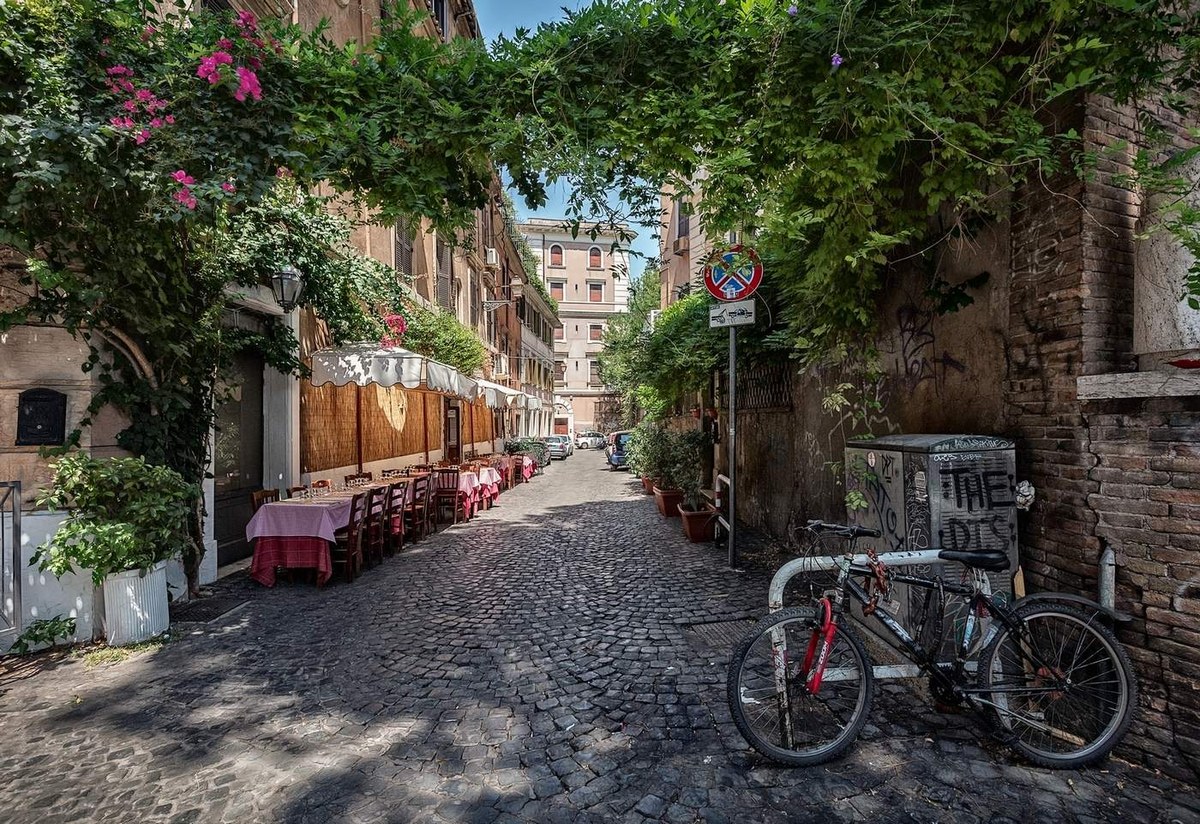
My most unusual acquaintance on a trip to Rome
I arrived in Rome with a very simple plan: get a suitcase, drive to the hotel, throw my things on the bed and go for a walk around the city. I didn't plan any adventures, new acquaintances, or stories that I would like to tell someone later, because after a long flight, the only thing I wanted was a shower, coffee, and at least half an hour to sit quietly and stare at the ceiling. But Rome, as it turned out, decided to slightly adjust my program even before I had time to see the Colosseum. The suitcase that wasn't mine At Fiumicino Airport, I quickly found the right tape and stood waiting for my luggage, watching as people one by one picked up their suitcases and disappeared towards the exit. After a while, my suitcase appeared on the tape, at least I was quite sure of it, because it looked almost the same as mine: dark, large and with a small sticker on the side. I grabbed it, put it on the floor, and was about to leave when, for some reason, I decided to check the tag. And here my first Roman adventure awaited me, although I still had no idea how useful it would be. The name on the tag was completely foreign, and at that moment I realized that I had just left the airport with great confidence with someone else's things. The funny thing is that the suitcase really looked so much like mine that I even had time to mentally imagine opening it in a hotel and finding someone else's clothes, a pair of socks and, perhaps, a very personal story of some Italian tourist. I put someone else's suitcase back and waited for mine, but the tape gradually emptied, and my luggage was still missing. At first I thought he was just delayed, then I started hoping that he would be unloaded on the next belt, and after a few minutes I was already looking at the empty baggage conveyor with such an expression on my face, as if he had personally decided to ruin my first day in Italy. The second victim of my suitcase I went to the lost baggage counter, where I tried to explain to the airport employee that my suitcase hadn't arrived, although I wasn't even completely sure if it was really lost. At that moment, a girl turned out to be nearby, who was also holding a luggage tag in her hands and looked about as confused as me. She looked at me and asked if I had accidentally seen a large gray suitcase with a red ribbon. I replied that I had seen too many suitcases and now I didn't trust anyone at all, including my own. She laughed, and it was from that moment on that our acquaintance, which began with the lost luggage, stopped being just an attempt to sort out the problem. It turned out that her suitcase hadn't arrived either. Moreover, we arrived on the same flight and, as it turned out a few minutes later, our suitcases somehow went to the wrong place altogether. We were standing at the counter, trying to make sense of what was happening, translating the words of the airport staff to each other, and at some point we were laughing more than nervous. Rome didn't start according to plan at all After a while, they explained to us that the luggage had been found and was due to be delivered later, but no one could say exactly when this would happen. I looked at my watch, then at the girl, then back at my watch, and realized that my carefully thought-out plan for my first day in Rome could safely be thrown away along with my boarding pass. We talked and found out that both had arrived in Rome for the first time, both were going to walk around the city with almost no clear route and both were hungry. The latter circumstance turned out to be the most important, because after several hours of travel and nerves, I didn't want to talk about the cultural program at all, but I really wanted to find a normal pasta. We decided to get out of the airport first and go to the city, and then figure out what to do next. To be honest, now I don't understand why I agreed to go with a complete stranger, but at that moment it seemed absolutely natural. Maybe I didn't care anymore after I lost my suitcase, or maybe sometimes traveling just starts when you stop trying to control every little thing. The first walk in Rome In Rome, we just went for a walk without any particular plan. We talked, joked about our airport disaster, and tried several times to remember exactly where we had left the right street, even though it had only been ten minutes since we saw it. Then there was a small restaurant where we ordered pasta, which, after the airport adventure, seemed to me to be almost the best meal of my life. We were sitting at a table, discussing travel, work, cities that we wanted to see, and gradually I caught myself thinking that I had completely forgotten about my suitcase. But a few hours ago, I was ready to write a statement about the loss of luggage, accuse fate of personal hostility and spend the whole evening at the hotel in one set of clothes. Now I was sitting in Rome with a man I shouldn't have met at all, and I realized that the day was shaping up to be much more interesting than any pre-planned itinerary. How did it end In the evening, we were actually informed that the luggage had been found. We went back to get our things, picked up our suitcases, and it seemed like we should have said goodbye, because the problem was solved, and the chance acquaintance had come to a logical end. But for some reason we didn't say goodbye. The next day we met again, then again, and eventually we walked around Rome together for several days, although initially everyone came here completely alone. We saw the Colosseum, walked through the Roman Forum, reached the Trevi Fountain and were completely shamelessly mistaken several times, although everyone had a map in their phone. When it was time to leave, I suddenly realized one simple thing: if my suitcase had arrived on time, I probably would never have met her. I would get out of the airport, go to the hotel, take a shower, change clothes, and go for a walk along my pre-planned route, and this meeting just wouldn't happen. Now, when I think of Rome, the first thing I think about is not the Colosseum or even the Trevi Fountain. I remember an empty luggage belt, someone else's suitcase, which I almost took, and a complete stranger, with whom we first tried to find the lost luggage, and then quite accidentally found each other. This is probably one of the main attractions of traveling. You can spend months planning a route, booking a hotel, buying tickets, and making a list of places you definitely need to see, and then one lost suitcase completely changes your plans and gives you a memory that wasn't in any guidebook.
0
0
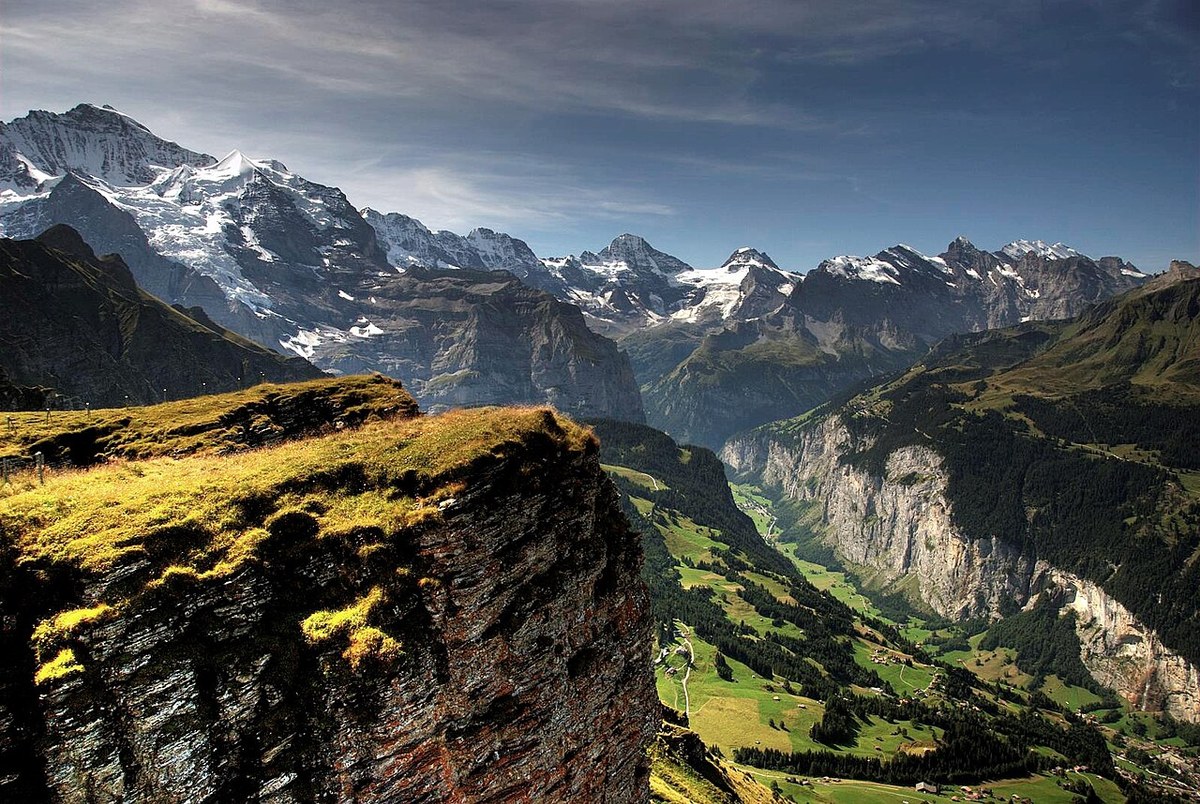
The place that turned out to be better than the photos: Lauterbrunnen Valley
There are places that I've reviewed so many photos of in advance that it felt like I'd already been there. The Lauterbrunnen Valley in Switzerland was just one of those: green meadows, neat wooden houses, huge mountains and waterfalls that fall directly from the cliffs, and in the background it all looks like someone specially painted the perfect landscape for a tourist calendar. I looked at these photos and prepared myself in advance for a little disappointment, because the camera can do a lot, especially if the photographer knows the right angle, the light and knows how to remove everything unnecessary from the frame. Therefore, I went there in a rather calm mood and mentally repeated to myself that nothing supernatural should be expected. Well, Switzerland is beautiful, of course, but I've already seen these mountains on the Internet dozens of times. As it turned out, the Internet did me a disservice in this case: it showed me beautiful photos, but it completely failed to prepare me for what I would see in reality. The first minutes in Lauterbrunnen When I first saw the valley with my own eyes, I literally had to stop in the middle of the road and just look around for a few seconds. A huge green valley opened up in front of me, surrounded by almost sheer cliffs, and waterfalls flowed down from different heights, which in the photos just seemed like beautiful white stripes. It all looked so big in person that I suddenly felt like a man who had accidentally wandered into the set of a very expensive movie and was now afraid to admit to the crew that he didn't have a pass. The funniest thing happened when I took out my phone to take the first photo. I pointed the camera, looked at the screen and found there was just a beautiful landscape, although in front of me was something completely different in feeling and scale. I took a few more shots from different angles, zoomed in, moved away, zoomed in again, and eventually realized that the problem wasn't with the phone, but with me: I was trying to cram an entire valley into a palm-sized rectangle. Waterfalls that are impossible to photograph properly One of the main impressions for me was the Staubbach waterfall, which falls from a great height directly from a cliff. It looks very impressive in the photos, but in reality its scale is perceived in a completely different way, because you stand below and see how the water from a height of about three hundred meters turns into a thin silver ribbon, and then dissolves somewhere below. At the same time, you don't just look at the waterfall, but you hear the water, feel the cool air and realize how huge the rock is in front of you. Of course, I started photographing again, because a person who came to Switzerland and did not take a photo of a waterfall will not forgive himself later. I took one shot, the second, the third, looked at the screen and realized that in the photo the waterfall looks much more modest than in real life, so I decided to just put the phone away and watch. It was probably the first time during the whole trip that I realized that sometimes the best photo is the one you didn't take at all. When nature decided to spoil my plans a little I came to Lauterbrunnen hoping for a beautiful clear sky, because I had already drawn the perfect picture in my head: a green valley, blue sky, sun, mountains, and I was somewhere in the middle of this splendor, preferably without signs of fatigue on my face. Nature apparently decided that it would not be too easy for me, and gradually began to cover the peaks with clouds. At first, I was upset because I was already mentally imagining photos with perfect light, and then I noticed how the fog was slowly starting to descend the slopes. And then the unexpected happened: the valley became even more beautiful. The clouds hid part of the mountains, the waterfalls turned almost silvery, the light became soft, and the whole valley acquired a completely different atmosphere, a little mysterious and even fabulous. I was standing under a raincoat that looked much less romantic than I had imagined before the trip, and I was thinking that nature had just explained to me quite convincingly why you shouldn't plan your perfect photo too carefully. Switzerland, where everything looks too neat I actually liked how harmonious everything looks in Lauterbrunnen. Small wooden houses, green fields, mountain roads, waterfalls and cows with bells seem to have existed here for several centuries and are not going to adapt to tourists with phones at all. Even the cows looked like they understood the local philosophy better than I did: take your time, chew grass calmly, and don't try to check every five minutes whether you look good enough in a photo. I walked through the valley and several times caught myself thinking that if I saw such a picture on the Internet, I would probably think that the photographer had overdone the processing a little. But then I turned my head and saw almost the same thing in front of me, only even more beautiful and voluminous. At some point, I even began to suspect that the Swiss had deliberately built all this so that tourists would feel like losers with their phones. The moment when I stopped taking pictures The most interesting thing happened towards the end of the walk, when I realized that I already had enough photos, but none of them conveyed the main thing. There are mountains, waterfalls, houses and green fields in the pictures, but there is no feeling of air, silence, coolness and that strange feeling when you stand in the middle of a valley and realize how huge the world around you is. A photograph can show a place, but it doesn't know how to convey how you feel in it at all. So I just put my phone in my pocket and walked for a while without taking anything off. For a man who came to such beauty with a fully charged phone and big plans for photos, it was almost an act of inner maturation. The place that turned out to be better than the photos When I went to Lauterbrunnen, I was sure that I already knew about what was waiting for me. I saw dozens of photos, knew about the famous waterfalls, imagined the valley, and even chose the places where I wanted to take pictures in advance, but the reality was still completely different. It was louder, more spacious, cooler, bigger, and for some reason much more emotional than any photo I had seen before the trip. That is why Lauterbrunnen remained in my memory not as another beautiful point on the map of Switzerland, but as a place that made me stop looking at the screen for the first time in a long time. I went there to take photos, and I left with a memory of that morning when I stood in the middle of a huge valley, looked at waterfalls and mountains and thought of only one thing.: "That's really something that photographs can't convey."
1
0
No reviews yet
Nothing saved yet
No trips yet
No scheduled stories
