Huanglong National Park
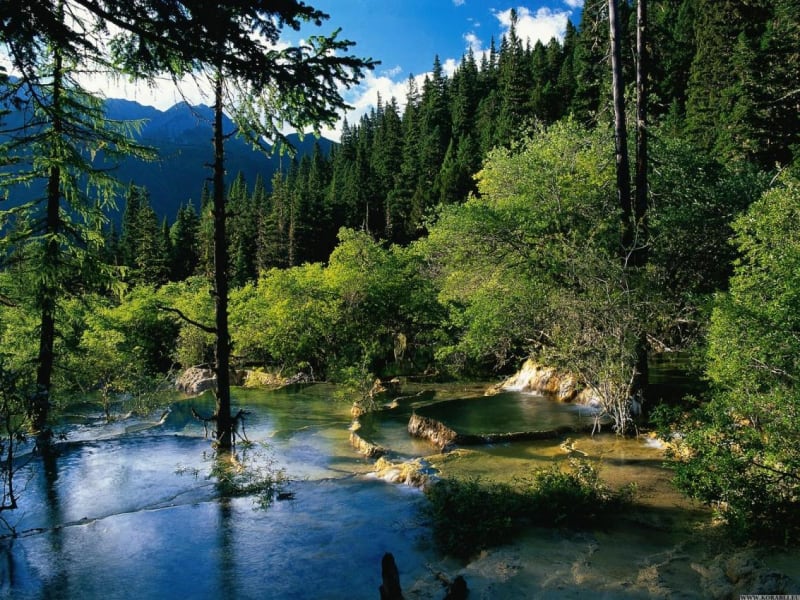
Huanglong National Park is one of the most picturesque places in the world, famous for travertine loggias and lakes of various shapes and scales. It is located in the highlands in the northwestern part of Sichuan Province. The highest point of the national park is 5,588 meters. In 1992, it was included in the list of UNESCO World Heritage Sites.
The park is home to many rare animals listed in the Red Book. Of these, visitors most often come across: Yunnan leopards, white-faced deer, bamboo bears and golden snub-nosed monkeys.
The Travertines of Huanglong Park
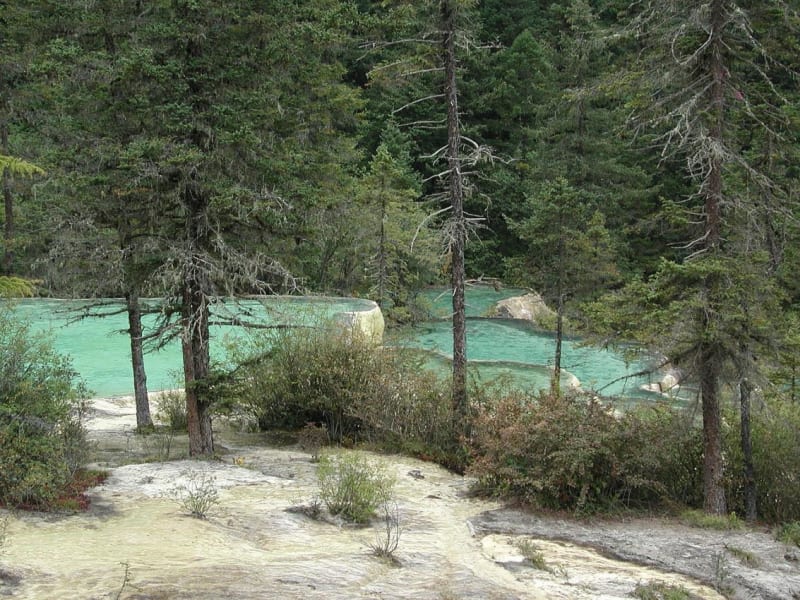
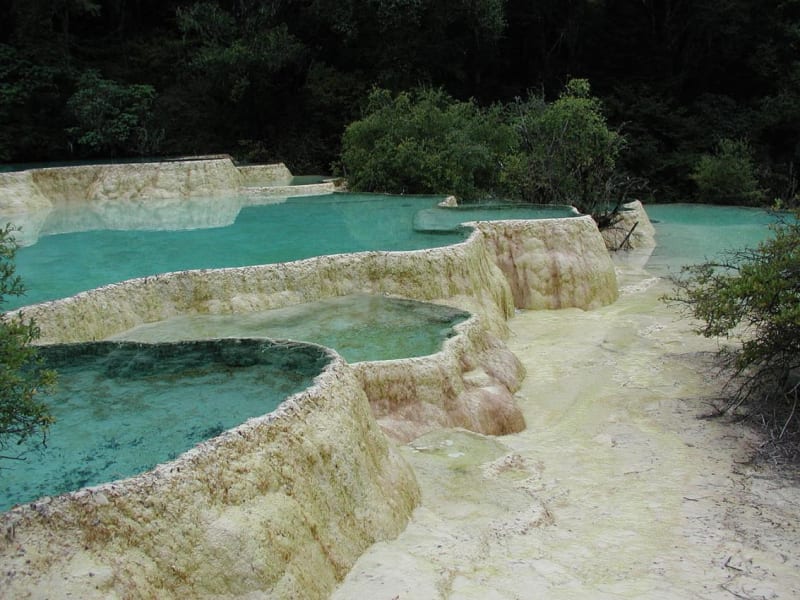
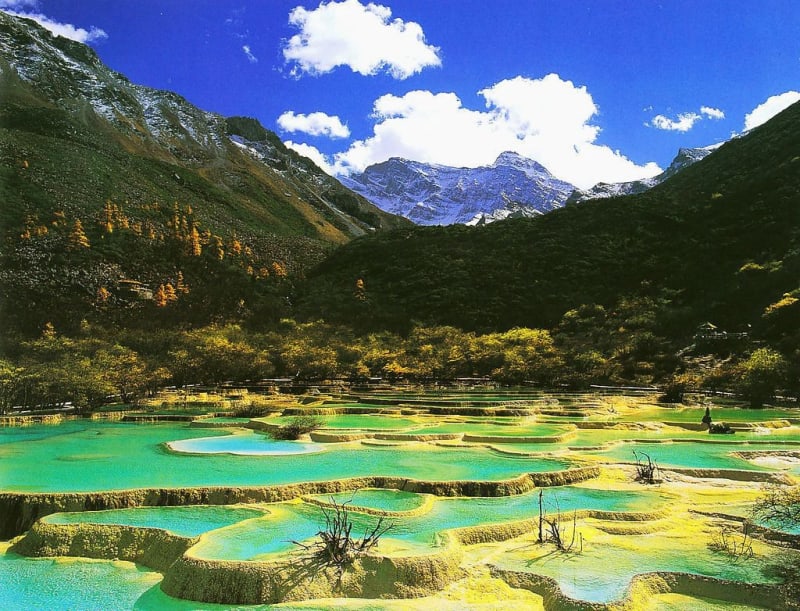
The main feature of the Huanglong National Park is not the animals that live here at all, but the travertine landscapes. They were formed over thousands of years when water flowing down from many glaciers got into the ground, destroying it and forming underground streams. The groundwater, having dissolved the ground limestone, came out. Under the influence of external factors, the calcium in the limestone crystallized again, forming wonderful reliefs. Under the influence of these processes, small reservoirs, rapids and entire waterfalls appeared. There are over 3,500 small lakes in the park. They have small depths and low shores, which is why the water drains from one lake into another. The largest number of such travertine loggias is in the Huanglonggou Gorge. A large 1300-meter-high travertine threshold has formed in this place, with a width of more than a hundred meters in some places. There are a large number of thresholds of wheat, milky white, gray and green shades. If we look at the valley from the top of the gorge, the travertine terraces resemble the scales of a dragon sparkling in the sun. Perhaps that's why they called this place Huanglong, which translates as "Yellow Dragon".
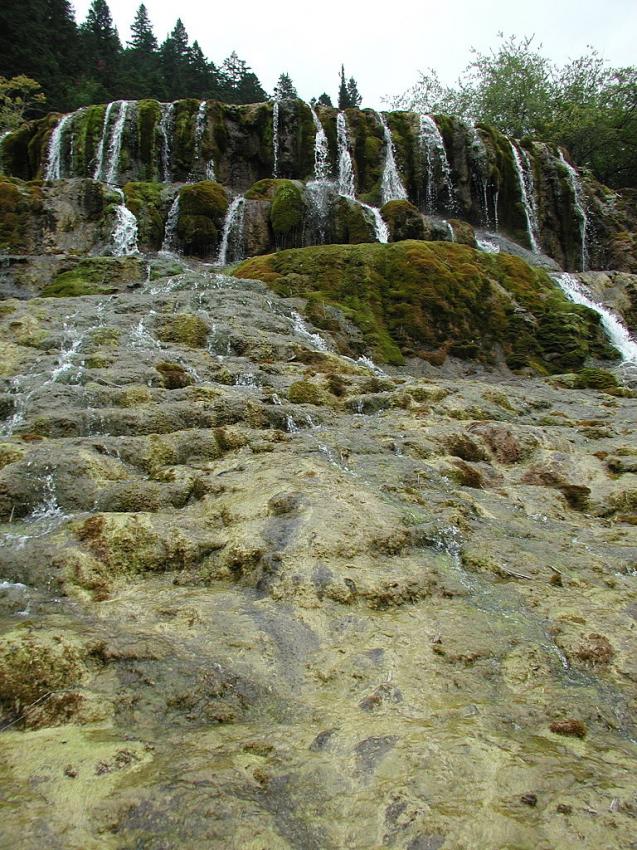
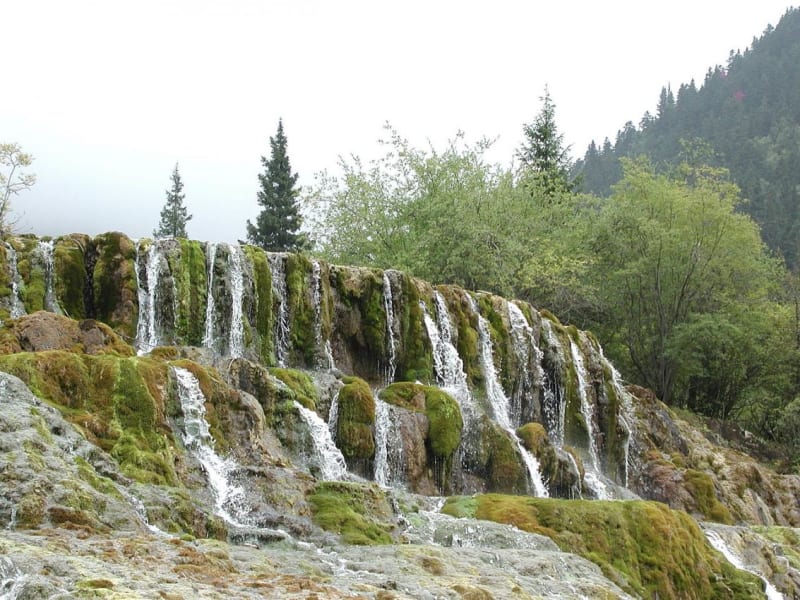
The Zhaga waterfall is located in the Mouni gorge, falling from a height of 93 m with a channel width of 40 m at the drop site. There are 2 small stone pagodas next to the Yuya Pond. During the reign of the Ming Dynasty (1368-1644), 3 temples were built in this place, which attract many believers.
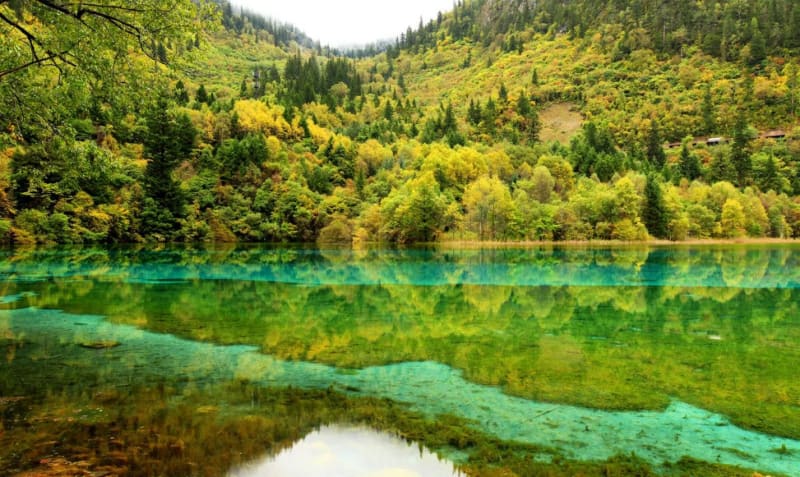
To make it easier to move around the territory, the authorities built paths, bridges and gazebos, as well as to preserve the unique karst landscape. Huanglong is especially beautiful in autumn, when warm yellow-red colors of drying foliage join the emerald lakes from the gilded rapids. In winter, the trees are covered with frost and turquoise lakes are covered with a small crust of ice, looking great. The National Park becomes the kingdom of winter.
The valley is surrounded by forests and clearings overgrown with a carpet of vegetation with colorful flowers, and the Snow Peak (5,588 meters) retains a cap of ice and snow all year round. There are even thermal springs in Huanglong, which are located in the Boiling Pearl Lake. These springs contain a large number of minerals with medicinal properties.
Park conservation
Travertines are very fragile, and any careless human step will destroy them. The Chinese authorities especially value the Huanglong Nature Reserve and carefully protect it. The main task of the management is to preserve the unique natural complex in its primitive form. For this purpose, people have been hired to ensure that travelers do not destroy the fragile ecological complex. Every year, the Chinese government closes the Huanglong Park during December and March. This is a necessary measure to preserve the nature of the national park.
How to get
It is best to travel to Huanglong from Chengdu, 387 kilometers from the national park. Almost all bus routes from Chengdu go past Jiuzhaigou National Park, located 133 kilometers from Huanglong. Special tourist buses run between Jiuzhaigou and Huanglong. You can get from Chengdu to Huanglong directly by taxi or by air.