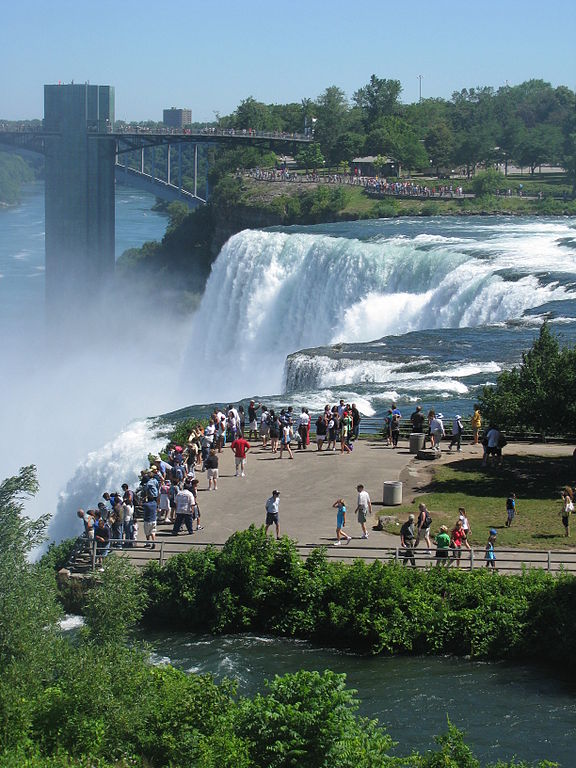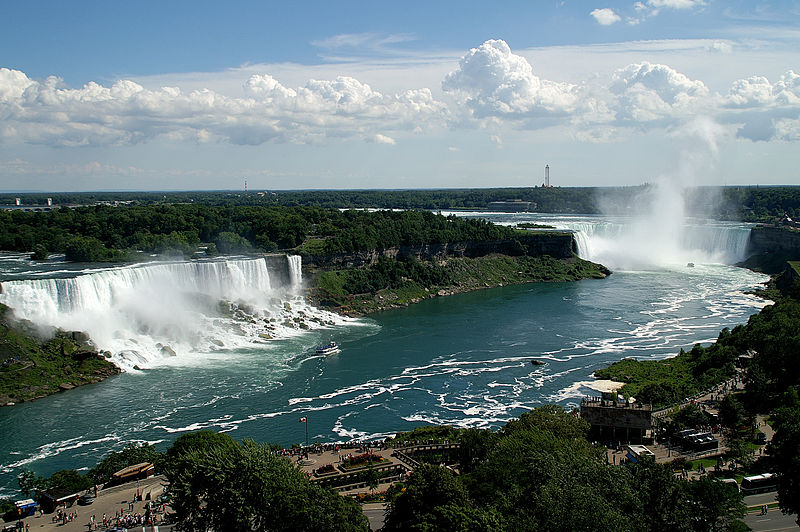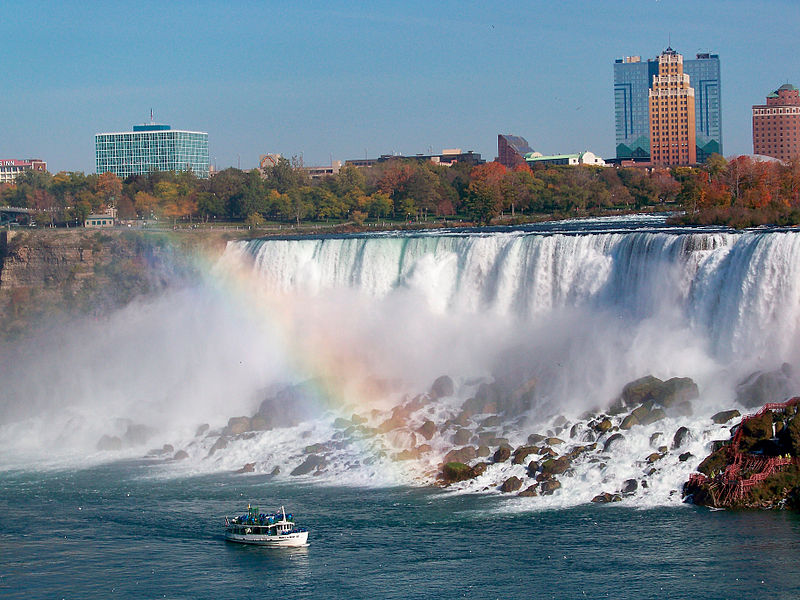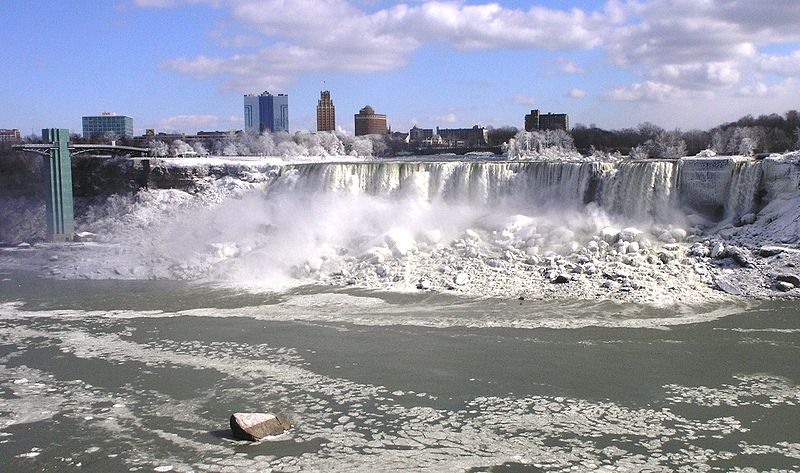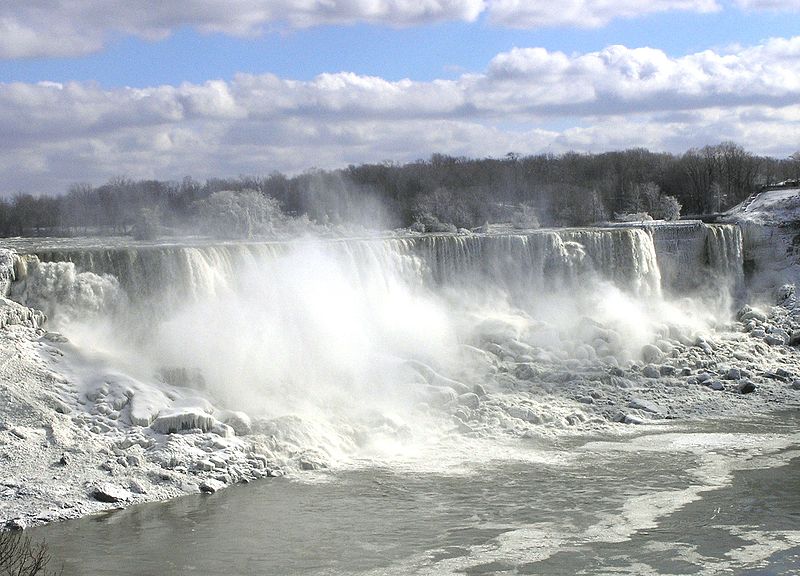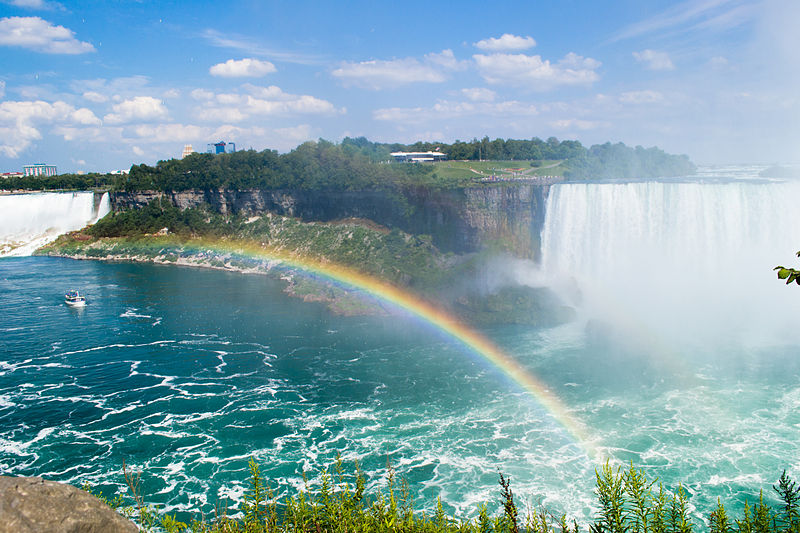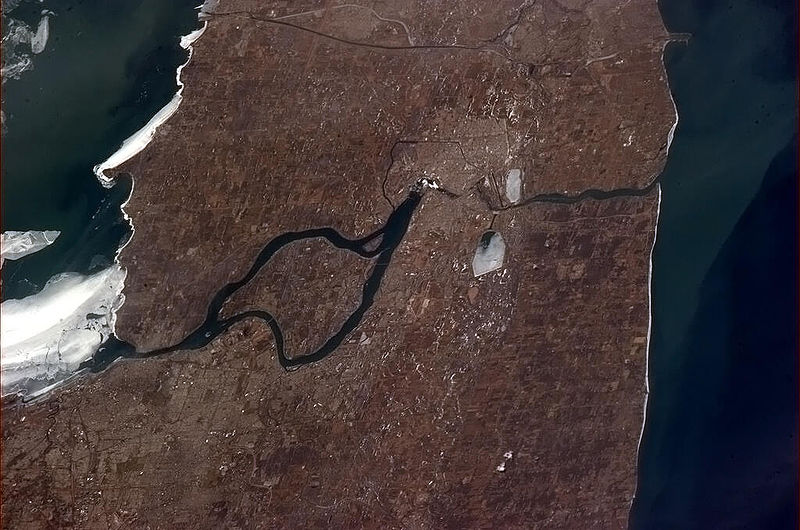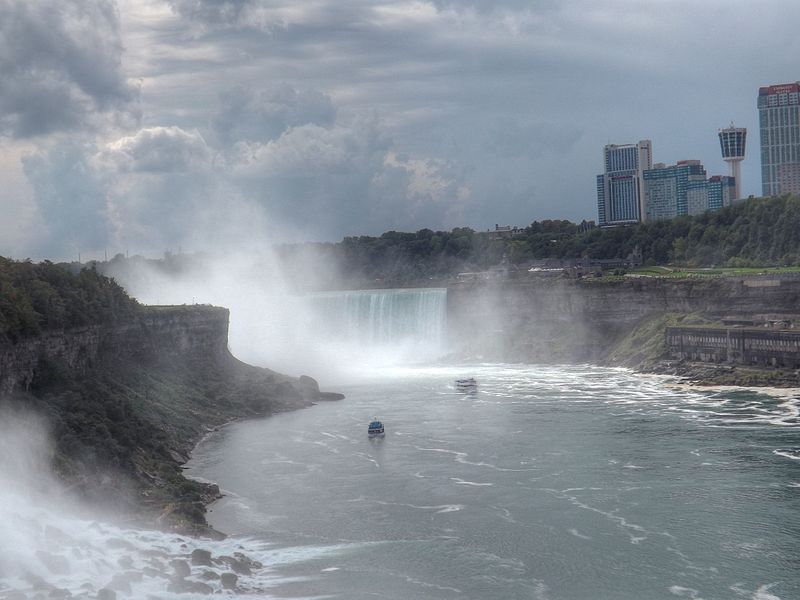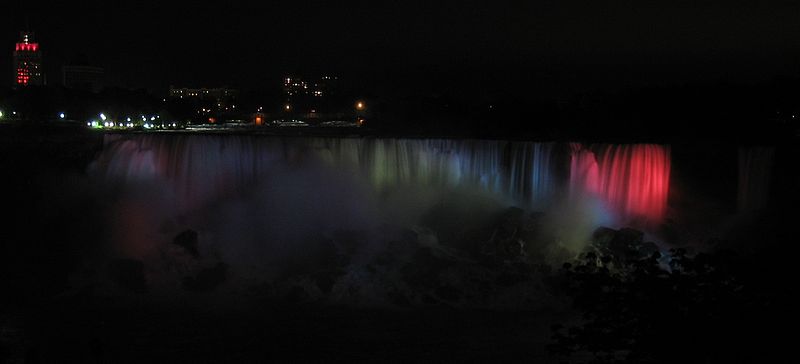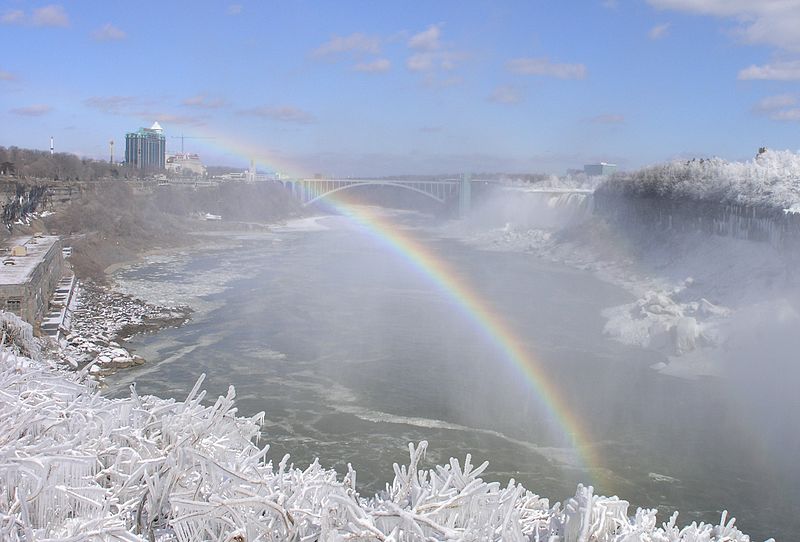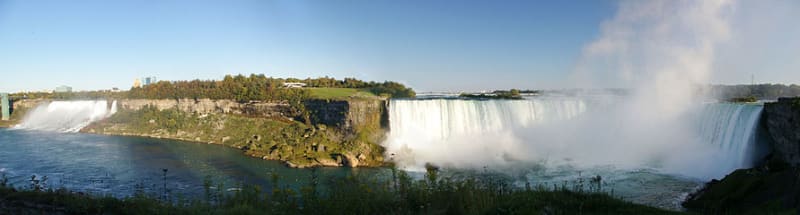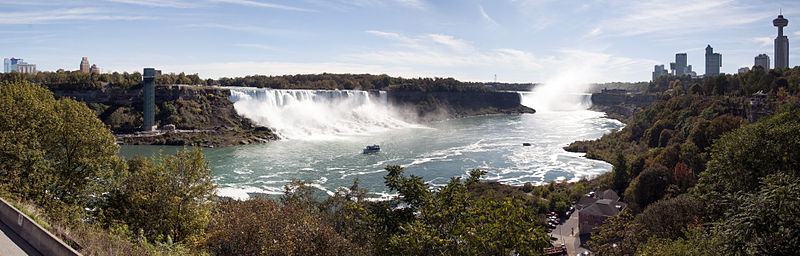

Niagara Falls is located on the Niagara River, which is the natural border between Canada and the United States. Part of the waterfall located in Canada is sometimes called the "horseshoe", and the American "veil". The waterfall is about 53 meters high and more than a kilometer wide. The waterfall attracts a lot of tourists, who contribute to the growth of the well-being of the city of Niagara Falls.
There are many versions about the origin of the waterfall's name. According to one of them, "Niagara" came from the name of the settlement of one of the Iroquois tribes - "Ongniaahra", translated as "forked land".
The Indians have a legend about the waterfall, which tells about the beautiful girl Lelavalai. Her father decided to marry her to an Indian warrior, whom she hated, and in order not to marry, she decided to offer herself as a gift to the god of thunder, He-No, who lived in a grotto under a waterfall. Lelavalae took a canoe and swam it to the waterfall, but the god of thunder Hye-No managed to grab her and they began to live together under the waterfall.
Niagara Falls originated about 6,000 years ago during the glaciation. During the movement, layers of ice broke out everything that stood in their way, due to this, new lakes and rivers appeared, and the old ones were filled in. Over time, the glacier melted and Water from the Great Lakes flowed into the Niagara River, which made its way through the soft rocks. The waterfall was formed due to the fact that its upper part consists of dolomites, which are less susceptible to erosion. The destructive rocks contribute to the movement of the waterfall upstream, but thanks to engineering work, the movement was held back. According to scientists, over the past 500 years, the speed of movement of Niagara Falls has been almost one and a half meters per year, but by diverting part of the water through the channel of an artificial embankment of boulders under the waterfall, it was possible to reduce the movement process to 30 cm per year.
After these places were settled by Europeans, the area near the waterfall was bought by private traders who took money only for the opportunity to look at the raging elements through a hole in the fence. Over time, the discontent of the people began to grow and the Free Niagara movement arose, whose activities contributed to the fact that in 1895 the state created the Niagara Conservation State Park and began to buy plots from private land owners. The Canadians did the same, forming the Queen Victoria Niagara Falls Park. The commissions of both parks monitor the use of land along the entire length of Niagara.
Almost from the very opening, the waterfall attracted extreme athletes and just plain cranks. Some, like tightrope walker Jean Francois Gravlet, passed by the very edge of the waterfall, attracting the curious. Others tried to swim through the waterfall in a barrel, but few succeeded, while the survivors were almost all heavily swayed. Those who survived were still in for another blow - they were severely fined by both the American and Canadian authorities. One of these "lucky ones" is Karel Susek, who in 1984 overcame a waterfall in a barrel and was fined $ 500 because he performed a trick without a license.
In the 19th century, tourism became fashionable and in the 50s it developed very well in this area. These places were visited by Jerome, the brother of Napoleon Bonaparte. In 1848, a simple pedestrian bridge was built, and then a suspension bridge in 1855.
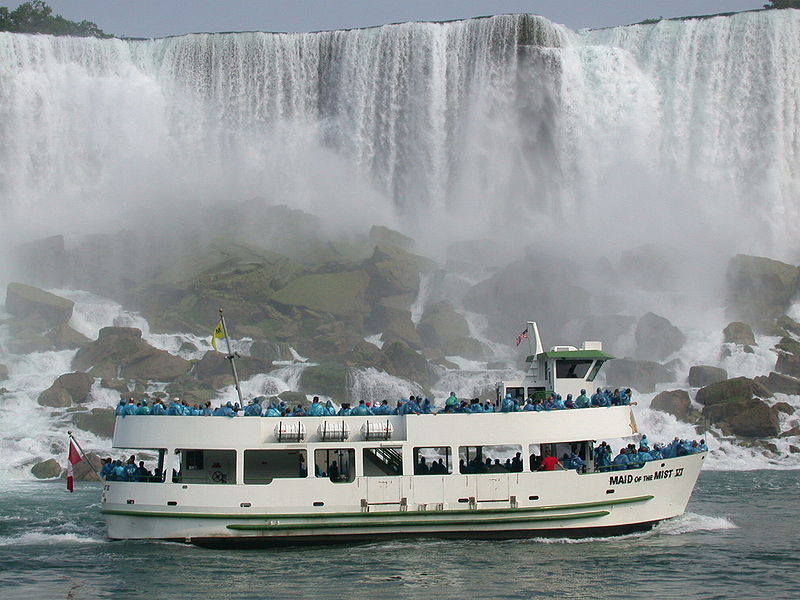
The waterfall can be viewed from several angles: you can swim up to it on a tourist boat, go to the observation deck located right at the waterfall cliff, or explore the waterfall from a balloon in a more relaxed atmosphere.
Gallery