The volcanic origins of the island
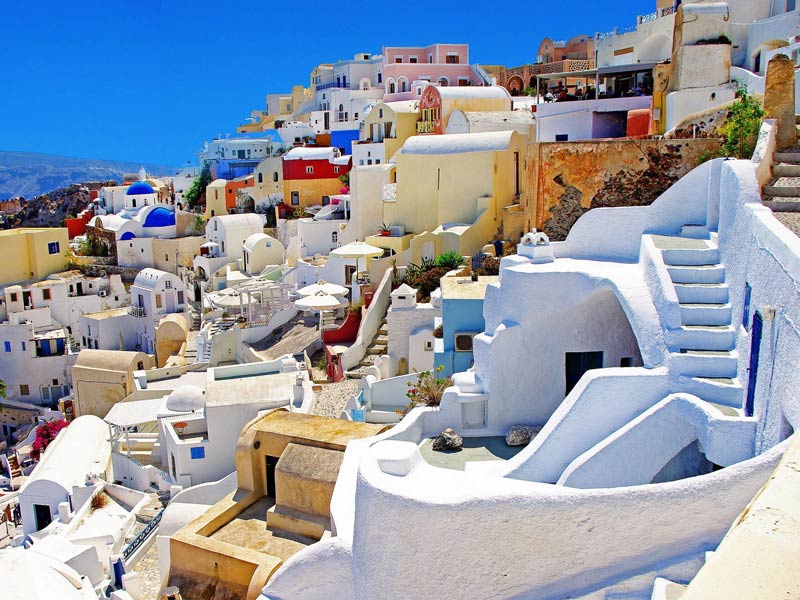
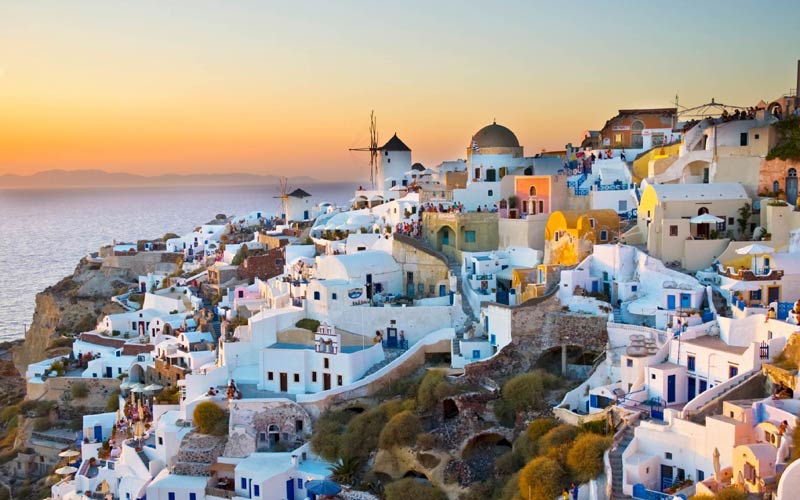
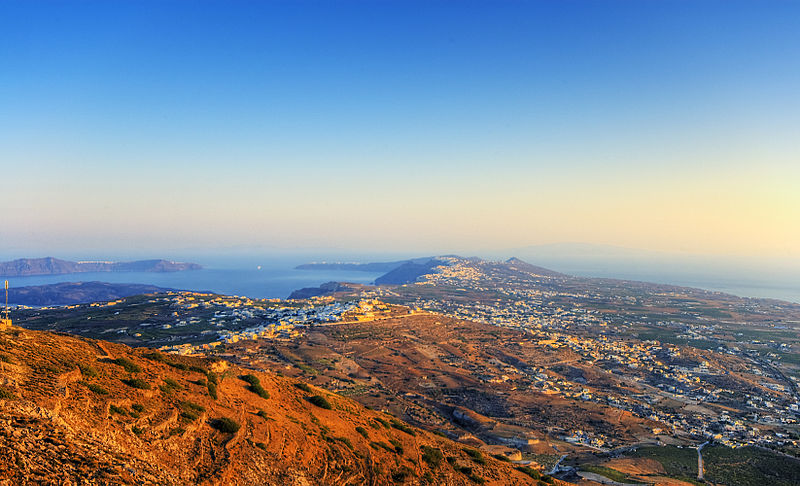
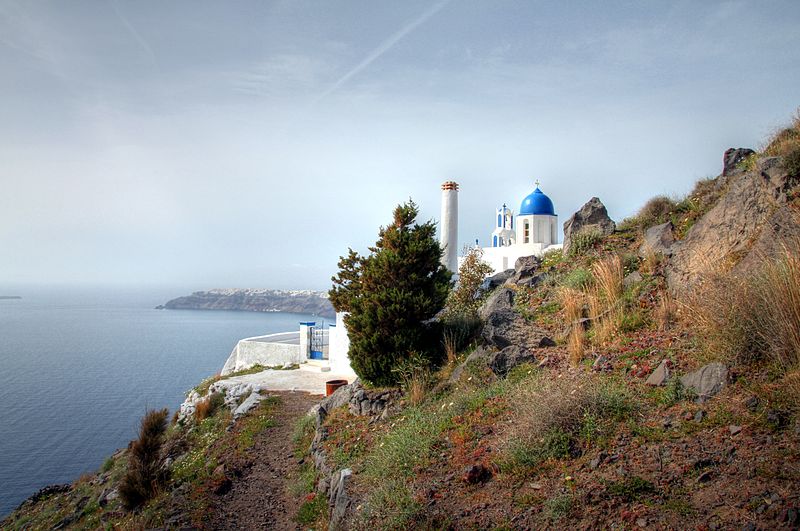
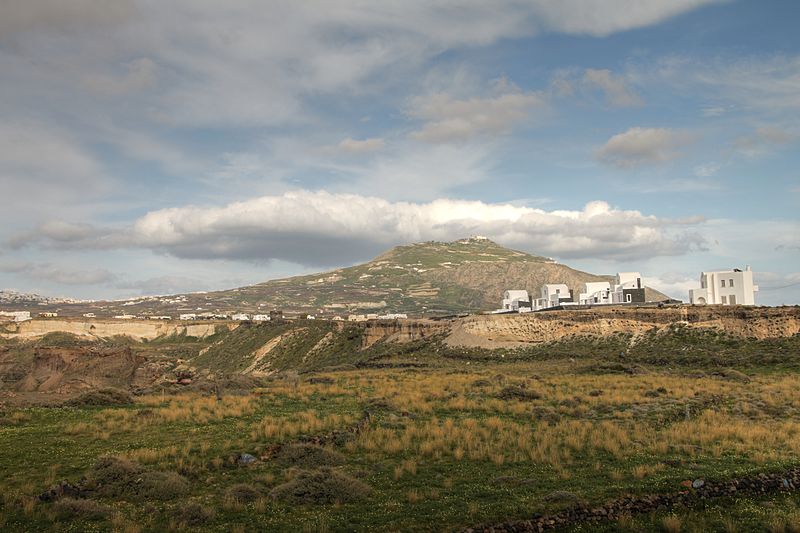
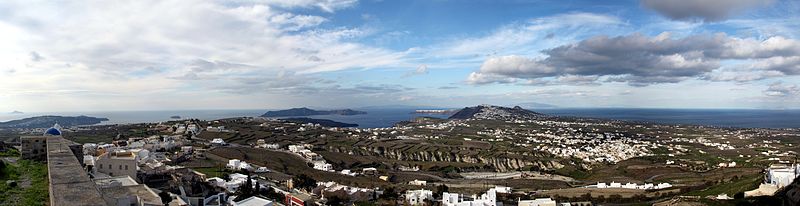
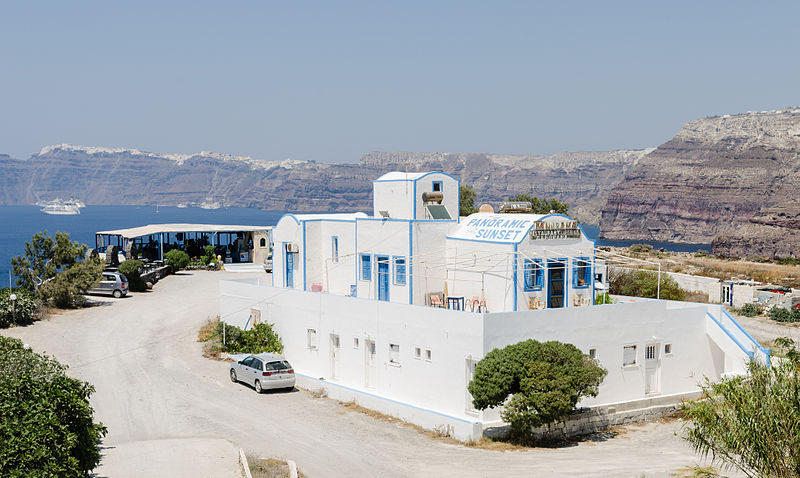
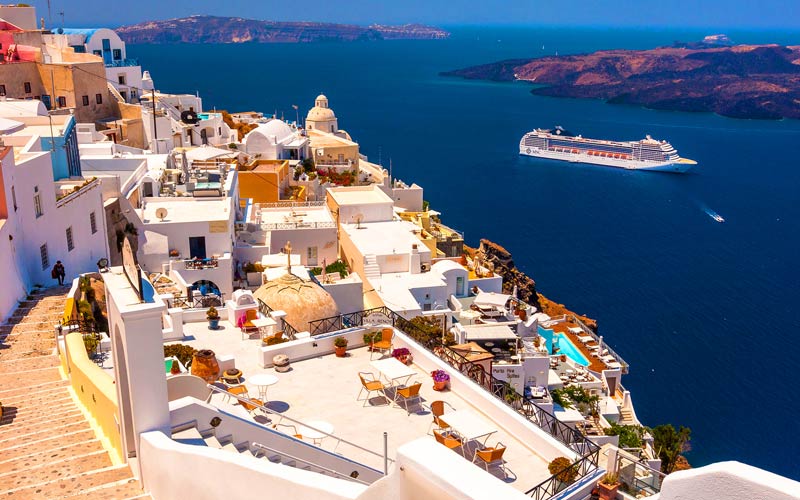
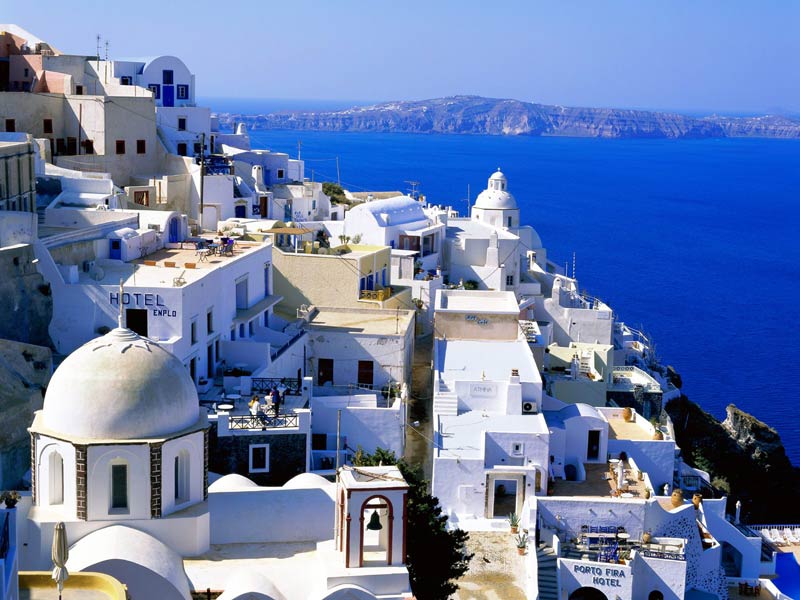
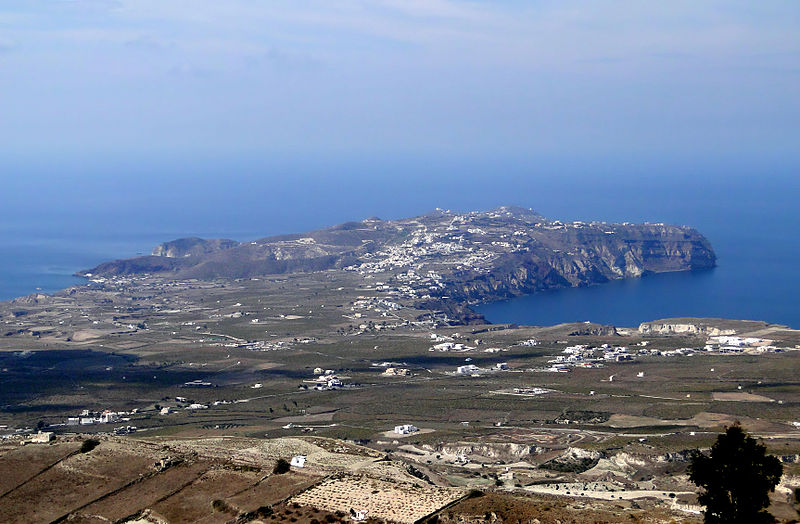
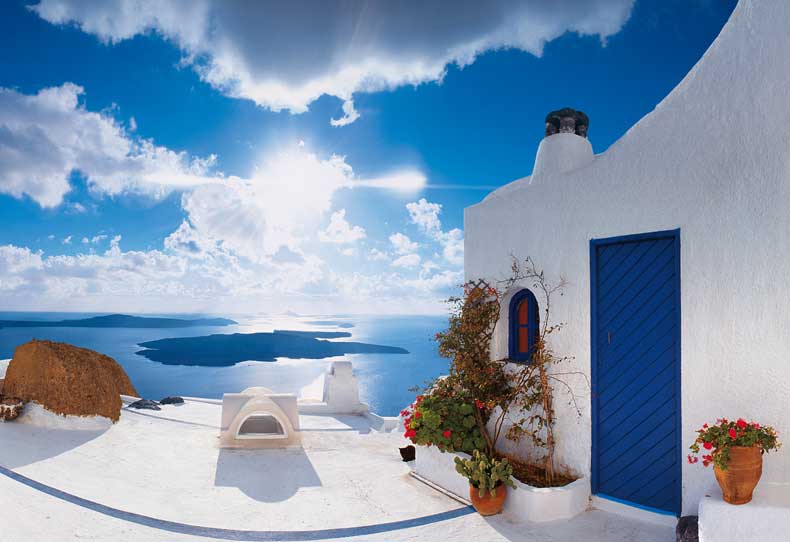
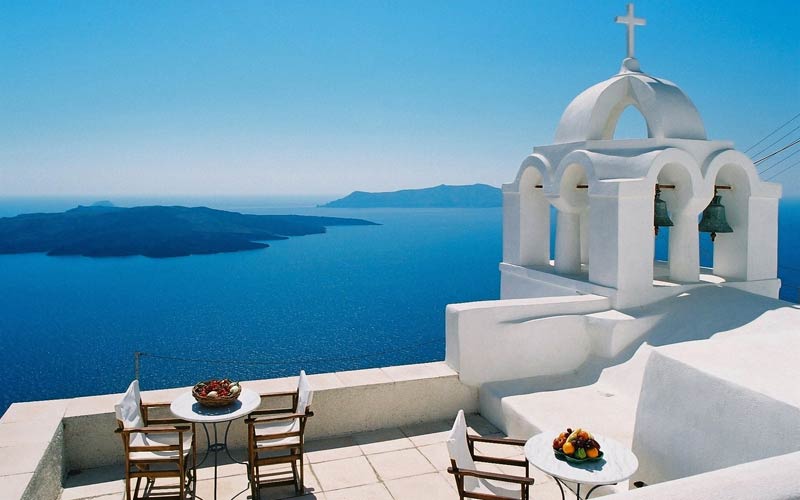
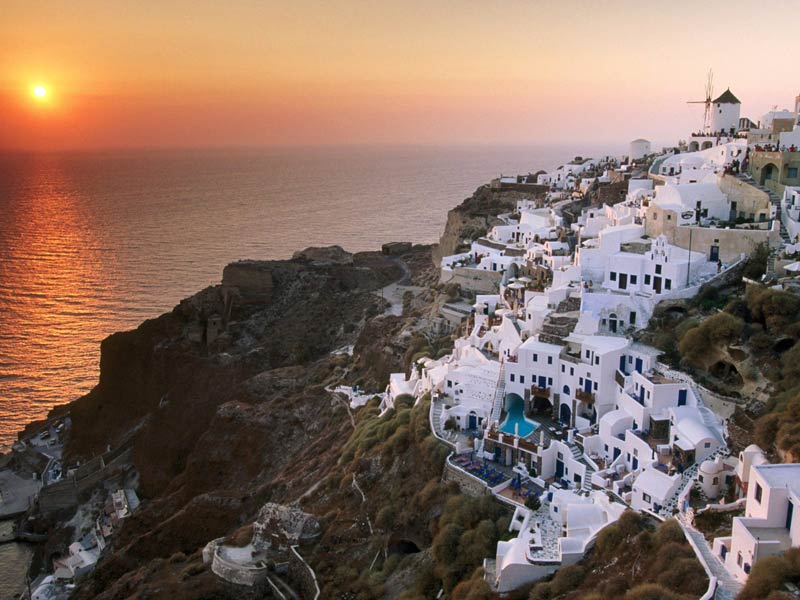
Santorini is one of Greece's most recognizable islands, located in the southern Cyclades in the Aegean Sea. Its distinctive landscape was shaped by repeated volcanic eruptions. The island's defining feature is its caldera, a vast depression formed when part of the volcanic structure collapsed. Steep cliffs rise above the bay, with whitewashed settlements perched along their edges and panoramic views across the sea and volcanic islets.
The eruption and ancient Akrotiri
A powerful Minoan eruption around 1600 BCE dramatically changed Santorini's landscape. Volcanic deposits covered the settlement of Akrotiri, helping preserve buildings, streets, wall paintings and everyday objects. Today, the archaeological site is one of the most important prehistoric sites in the Aegean. It is often compared with Pompeii, although the histories of the two settlements differ. The eruption has also inspired theories connecting Santorini with the legend of Atlantis, but this connection has not been established as historical fact.
Fira, Oia and traditional villages
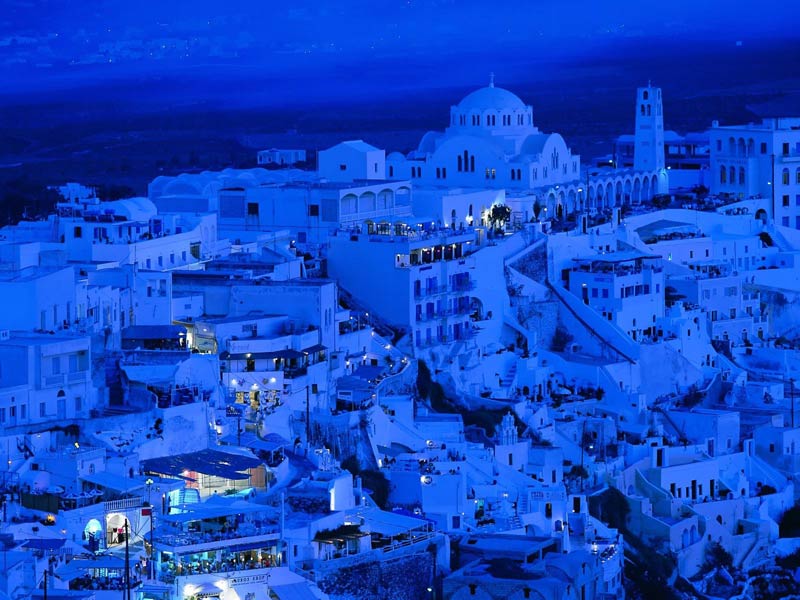
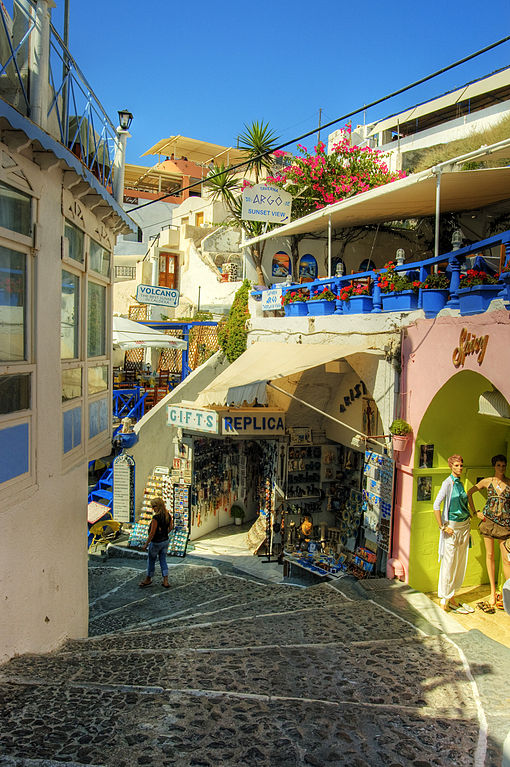
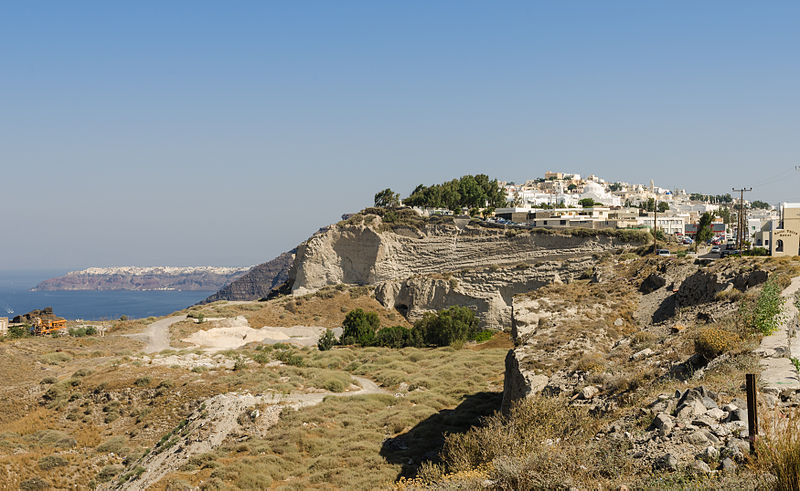
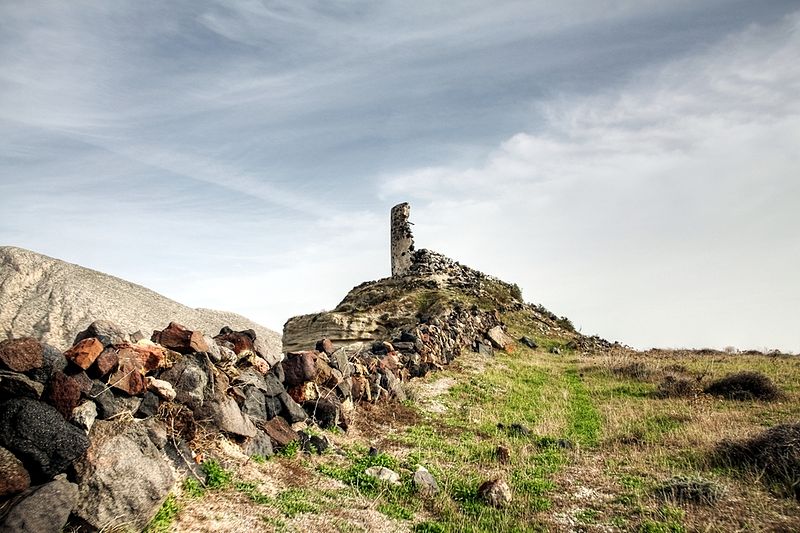
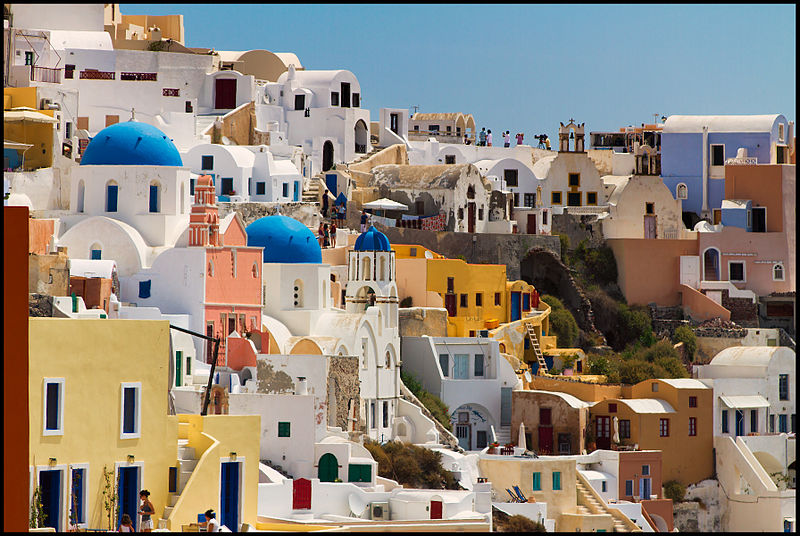
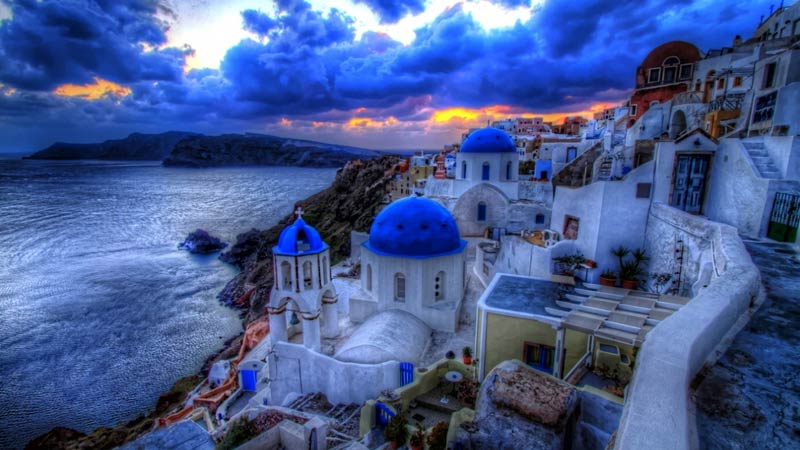
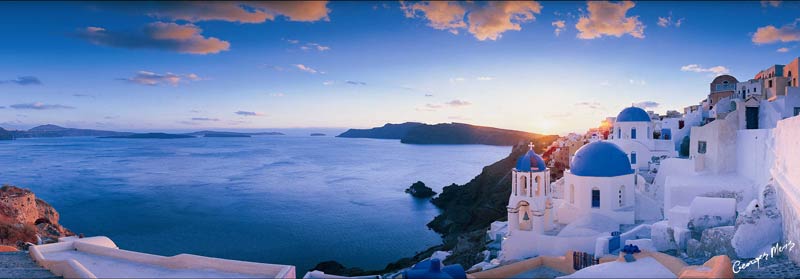
Fira, the island's capital, stands on the edge of the caldera and offers narrow lanes, museums, cafés and viewpoints. Oia, at the northern end of Santorini, is famous for white houses, blue church domes and sunset views. Imerovigli and Firostefani also overlook the caldera. Inland, Pyrgos is worth visiting for its traditional architecture and remains of fortifications, while Megalochori has quiet squares, historic houses and a long association with winemaking.
Volcanic beaches
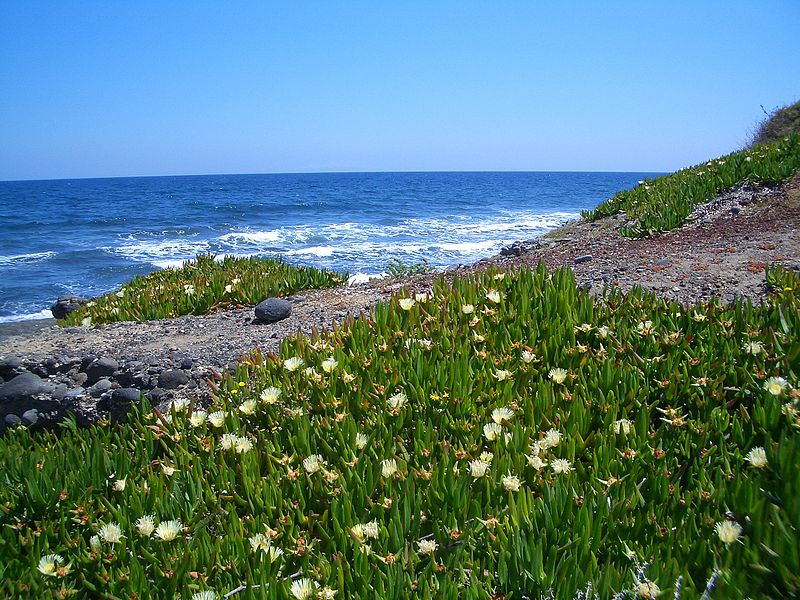
Santorini's beaches are distinguished by sand and pebbles formed from volcanic rock. Red Beach near Akrotiri is framed by reddish cliffs, while Perissa and Perivolos are known for dark volcanic sand and long stretches of coastline. Black pebbles can be found along parts of the eastern shore. Some coastal areas have steep or unstable slopes, so visitors should respect barriers and local safety warnings.
Nea Kameni volcano and the caldera
Small volcanic islands, including Nea Kameni and Palea Kameni, lie within the caldera. Excursions to Nea Kameni cross lava landscapes and reveal evidence of relatively recent volcanic activity. Boat trips offer views of the caldera walls from the sea, and some itineraries include stops near hot springs. Because the volcanic system remains active, visitors should follow current safety instructions and guidance from local authorities.
Wine and local food
Despite its dry climate, Santorini has a distinctive agricultural and winemaking tradition. Vines are often trained into low basket-shaped forms that protect grapes from strong winds and intense sun. Assyrtiko, a renowned white grape variety, produces crisp wines with pronounced mineral character. Local dishes include fava made from yellow split peas, tomato fritters known as tomatokeftedes and recipes featuring island-grown vegetables. Family-run tavernas and wineries offer opportunities to discover Santorini's food culture.
When to visit
Spring and early autumn are good for walking, sightseeing and archaeological visits in milder temperatures. Summer is popular for beaches and long evenings, but the island is much busier. Sunset viewpoints in Oia can become crowded, so quieter inland villages and walking routes away from the main tourist streets offer a more relaxed alternative.
Getting there and things to see
Santorini can be reached by air from Athens and other seasonal destinations, or by ferry from Piraeus and nearby islands. Allow time for Fira, Oia, the Akrotiri archaeological site, the beaches of Perissa and Perivolos, and a boat excursion to Nea Kameni. Santorini combines dramatic geology, ancient history, Cycladic architecture and distinctive local cuisine, making it appealing for cultural trips as well as beach holidays.
Gallery