Sukhothai Historical Park is one of Thailand's most important archaeological sites, preserving the ruins of the ancient capital of the Sukhothai Kingdom. Buddhist temples, stupas and sculptures stand among green lawns, ponds, canals and remnants of the old city walls. The park offers an introduction to the early development of the Thai state, its religion, art and architecture.
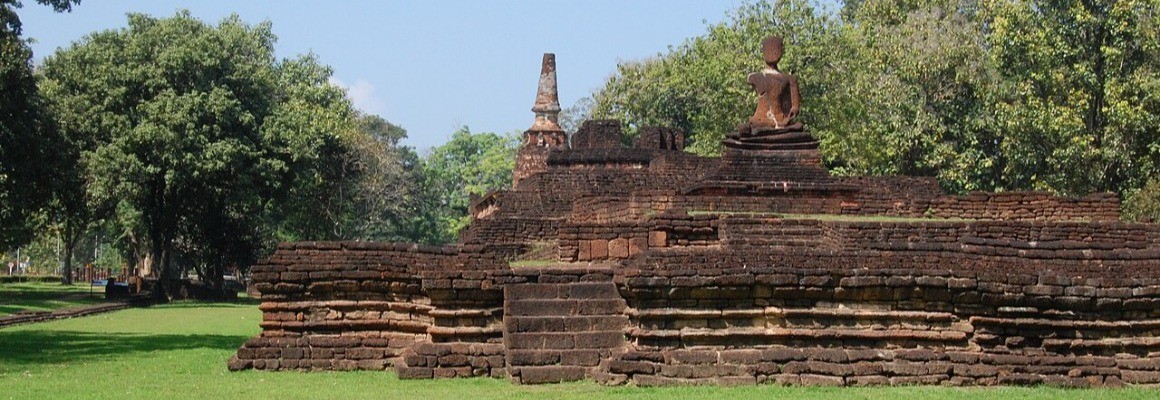
In 1991, Sukhothai was inscribed on the UNESCO World Heritage List together with the historic towns of Si Satchanalai and Kamphaeng Phet. The shared property, known as the Historic Town of Sukhothai and Associated Historic Towns, is one of the most significant heritage sites of early Thai civilization.
History of Ancient Sukhothai
Sukhothai became the political and administrative centre of one of the first major Thai kingdoms in the 13th century. The city flourished during the 13th and 14th centuries, when government, Buddhism, crafts, trade and artistic traditions developed. This period is often associated with the foundations of Thai national culture.
One of its best-known rulers was King Ramkhamhaeng, whose name is linked to the development of writing and the consolidation of the kingdom. Stone inscriptions discovered in the region provide information about everyday life, religious traditions, the economy and political organization. Sukhothai was also an important centre of ceramics production, with pottery traded across other parts of Asia.
Over time, Sukhothai's political influence declined as the rising kingdom of Ayutthaya extended its power. The city lost its former importance, and many religious structures gradually fell into disrepair. Archaeological research and conservation work have helped preserve the ruins and transform the ancient city into a historical park.
Architecture and Urban Planning
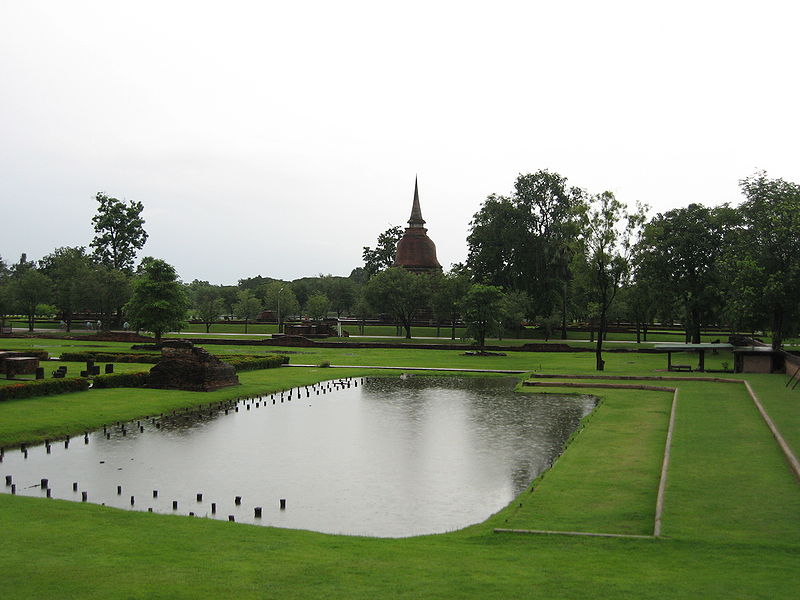
Ancient Sukhothai was more than a collection of temples. It was an organized city with defensive walls, gates, reservoirs and canals. Water supported everyday life, agriculture, religious ceremonies and the defence of the settlement. The remains of this hydraulic system reveal how carefully the capital was planned.
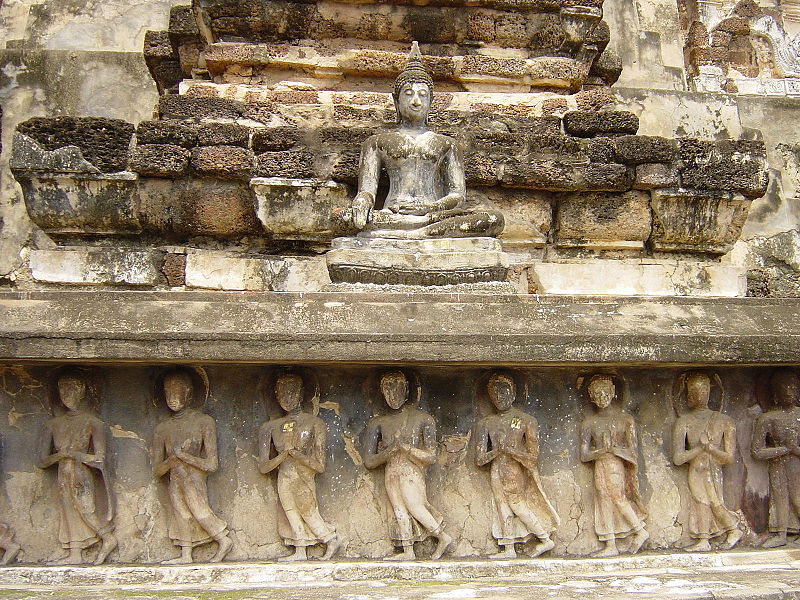
Sukhothai architecture is recognized as one of the earliest distinctive styles of Thai art. Its features include elegant stupas, structures topped with lotus-bud shapes, balanced proportions and expressive Buddha images. Sculptures often have flowing lines and serene faces. Images of the walking Buddha are among the best-known achievements of this artistic tradition.
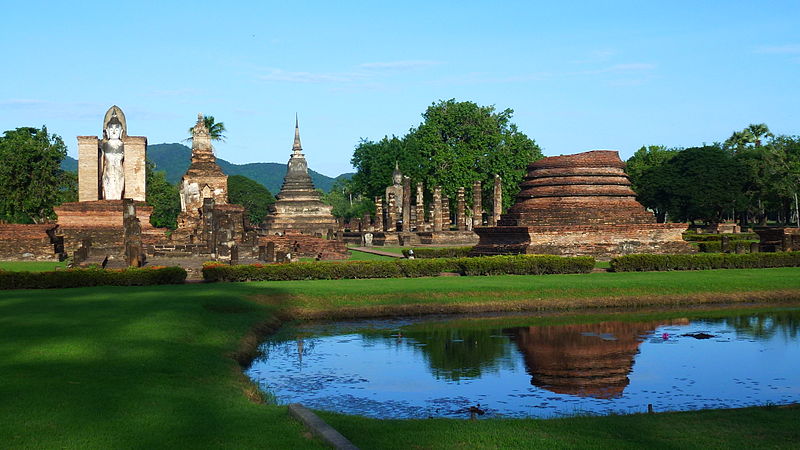
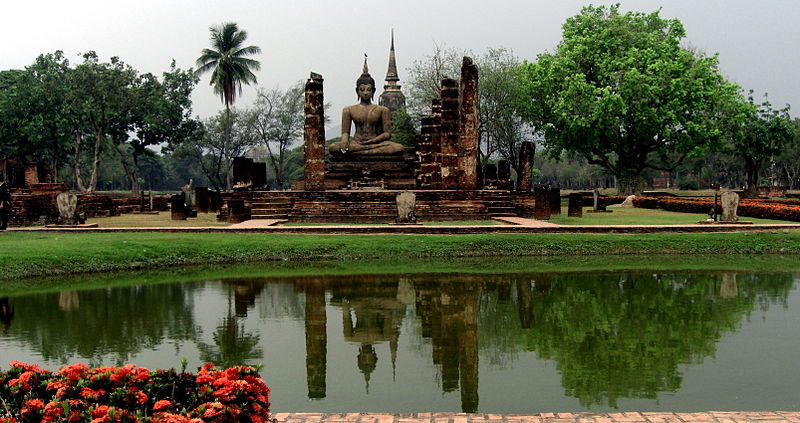
The park preserves brick temple foundations, decorative fragments, column remains, stupas and statues. Some structures have been partially restored, while others remain atmospheric ruins. The combination of historic architecture and greenery makes the site rewarding for history enthusiasts and photographers.
Wat Mahathat – The Main Temple
Wat Mahathat is considered the central and one of the most important temple complexes in the historical park. Located within the old city walls, it likely played a major role in the religious and public life of the capital. The complex contains numerous stupas, shrine remains and Buddha images.
The central stupa is especially notable for its silhouette, which resembles a lotus bud. This architectural motif became one of the defining symbols of Sukhothai art. The surrounding structures form a complex composition that is particularly beautiful in soft morning light or at sunset.
Wat Si Chum and the Giant Buddha
Outside the central city walls stands Wat Si Chum, one of the region's best-known temples. Inside its massive, high-walled structure is the monumental Phra Achana Buddha image. The statue is about 15 metres tall, and its calm expression creates a powerful impression of serenity and grandeur.
The statue occupies a narrow space between the walls, so its scale becomes apparent as visitors approach. Wat Si Chum is considered one of the outstanding works of Sukhothai Buddhist art and is especially interesting for its distinctive sculptural style.
Wat Si Sawai and Other Monuments
Wat Si Sawai is distinguished by three prang towers that reflect Khmer architectural influence. The temple illustrates how different cultural traditions interacted in the region and contributed to the development of Sukhothai's artistic identity.
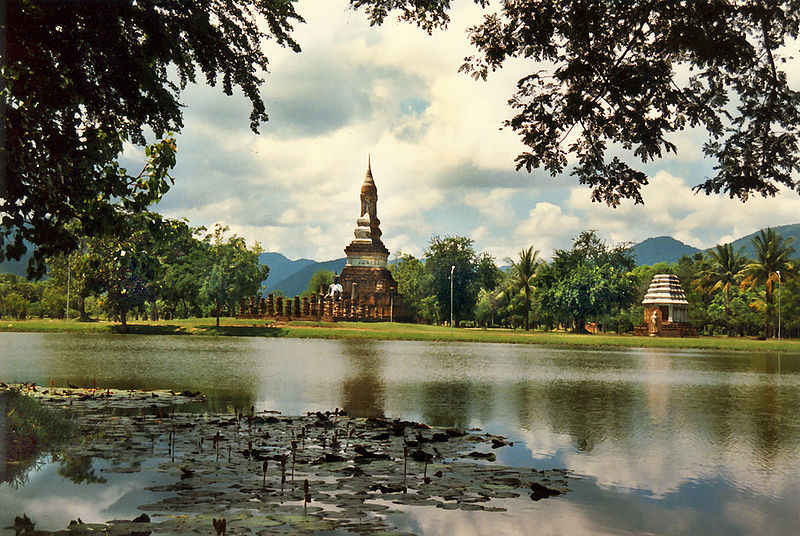
Wat Sra Si stands beside a pond. Its stupas and temple remains are reflected in the water, creating a peaceful setting. Wat Traphang Thong remains connected with living religious traditions, allowing visitors to experience both historical monuments and contemporary Buddhist life.
Beyond the central area, visitors can explore Wat Phra Phai Luang, Wat Chetuphon and Wat Saphan Hin. These sites differ in location, architectural details and state of preservation, and reaching them may require extra time or transport.
UNESCO World Heritage
Sukhothai Historical Park forms part of a World Heritage property that includes three ancient towns. Sukhothai was the kingdom's political centre, Si Satchanalai served important spiritual and craft functions, and Kamphaeng Phet had a strategic role in protecting southern frontiers and trade routes.
The towns shared cultural traditions, administrative connections and sophisticated water management. Their monuments demonstrate early achievements in Thai art, architecture, writing and urban planning. Conservation protects not only individual temples but also the historic landscape surrounding them.
How to Explore the Park
The historical park covers a large area, with monuments both inside and outside the old city walls. The central zone is easy to explore on foot or by bicycle along relatively flat paths passing temples, ponds and lawns. Cycling is especially useful for seeing several sites at a relaxed pace.
Local transport or a sightseeing tram may help visitors reach more distant monuments, depending on services available on the day. Check current opening hours, ticket prices and access arrangements through the official Tourism Authority of Thailand website and the UNESCO website.
When to Visit
Early morning and late afternoon are ideal for walking around the park, as the sun is less intense and the light is better for photography. Open areas can become very hot around midday, so bring water, a hat and sunscreen.
Sukhothai celebrates Loy Krathong, a festival associated with water and small decorated offerings set afloat on ponds and waterways. During the festival, historic monuments may form part of cultural events and evening performances. Dates, programmes and visitor arrangements should be checked in advance.
Travel Tips
Allow several hours for the central area and extra time if you plan to visit outlying temples. Comfortable shoes are useful on the paths between ruins, while water and sun protection are important in hot weather. Do not climb on ancient structures or touch fragile decorative details.
Some monuments remain places of worship. Treat Buddha images, worshippers and local customs with respect. Wear modest clothing when visiting active temples and follow any photography restrictions posted on site.
Nearby Attractions
The Ramkhamhaeng National Museum is worth visiting for its archaeological finds and artworks connected with the region's history. You can also plan a separate trip to Si Satchanalai Historical Park, which preserves temple ruins and the remains of another ancient town within the same World Heritage property.
Sukhothai Historical Park is ideal for travellers interested in ancient civilizations, Buddhist art and peaceful walks among historic monuments. Beyond its famous temples, it offers a glimpse into the life and planning of one of the key capitals in Thailand's early history.
Gallery