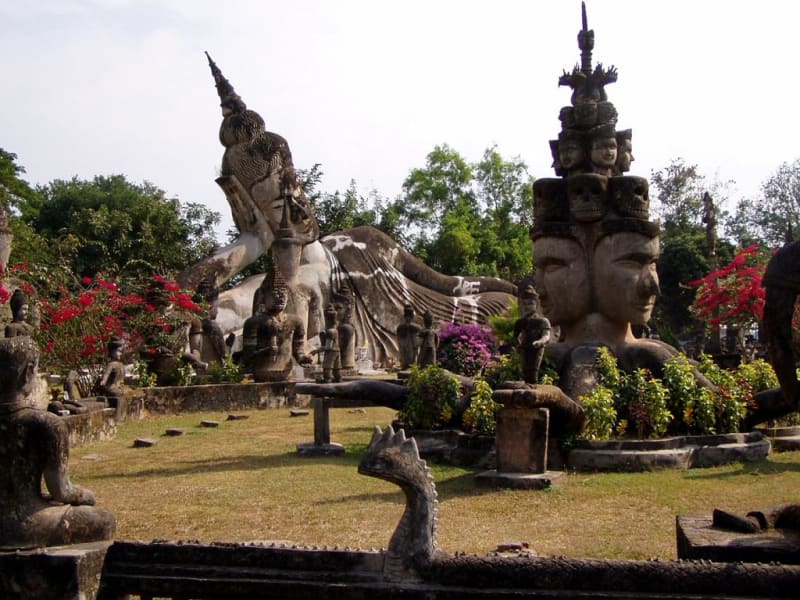
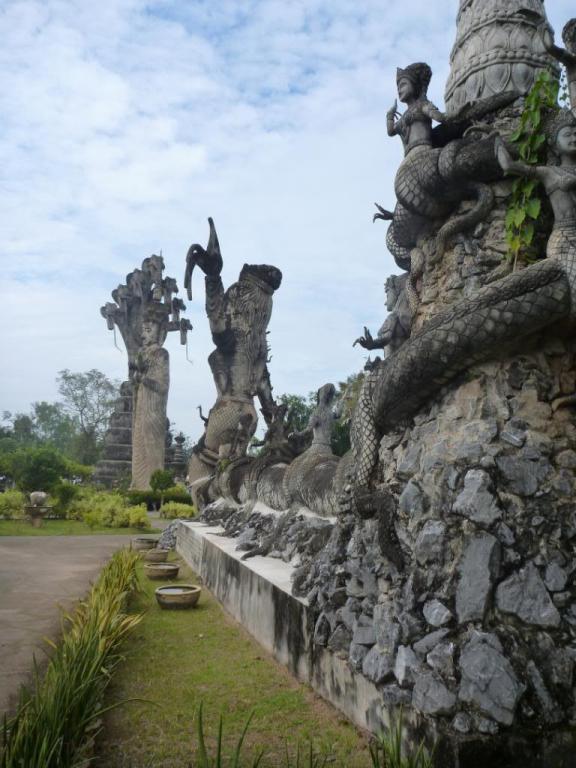
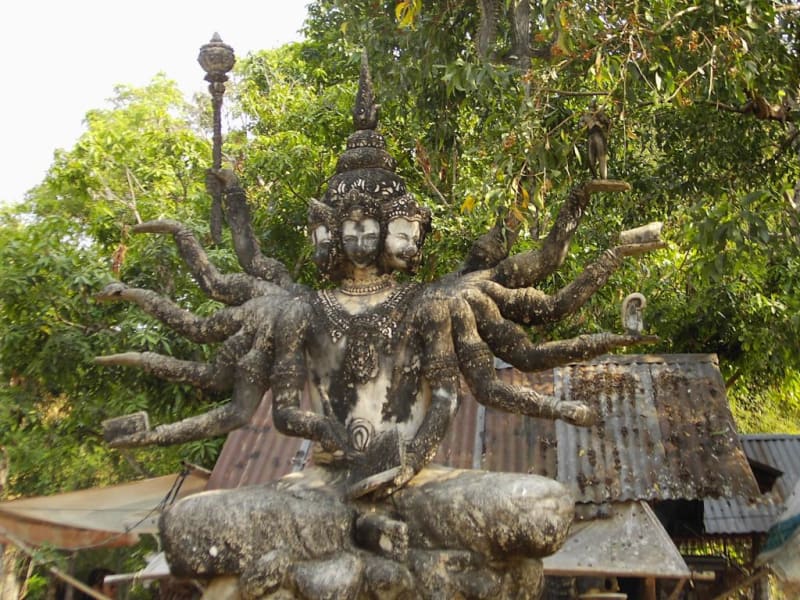
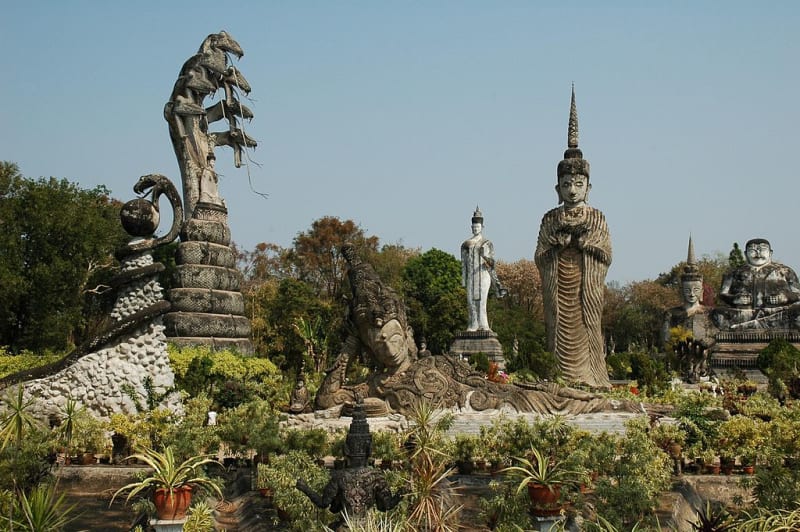
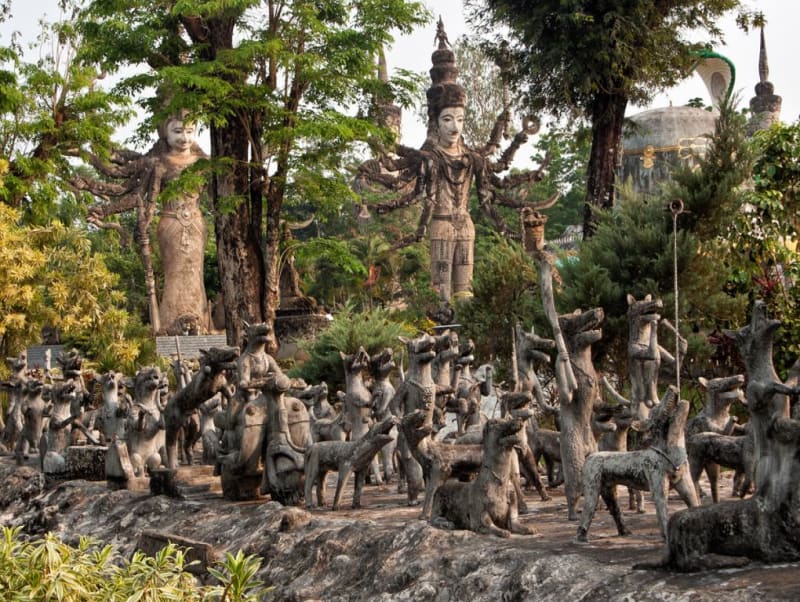
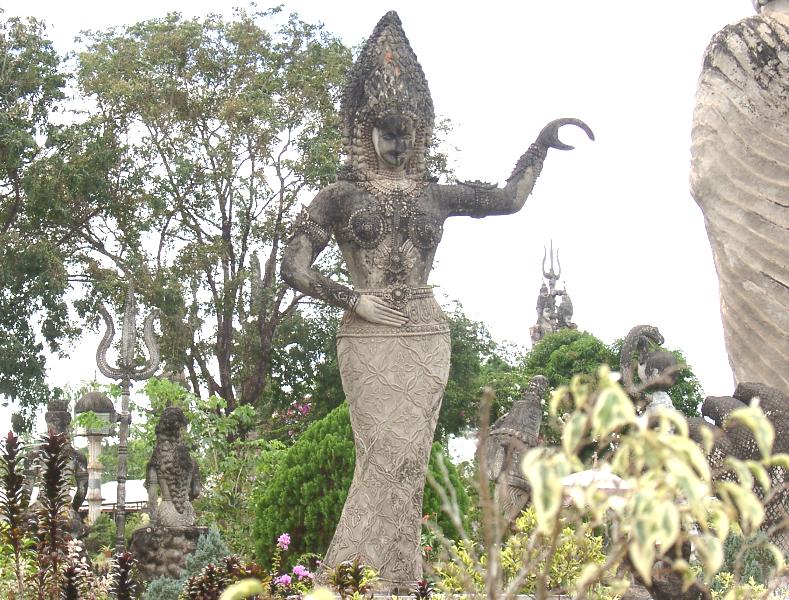
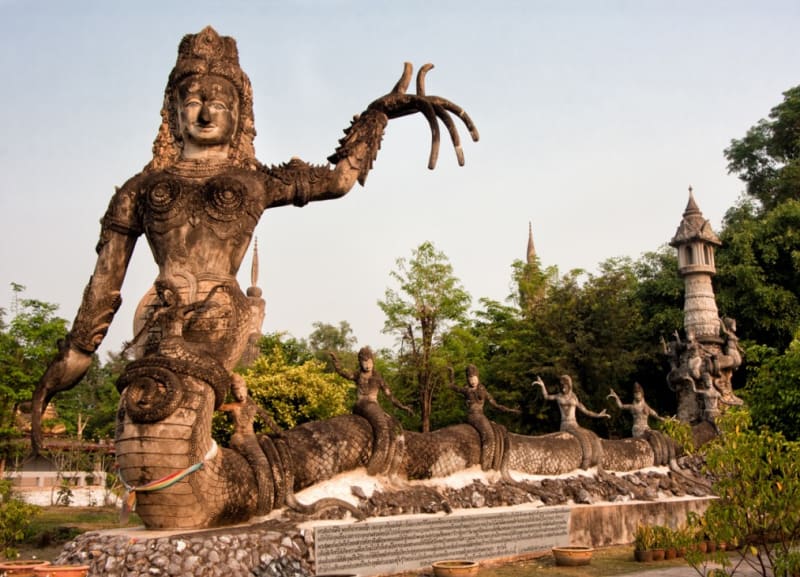
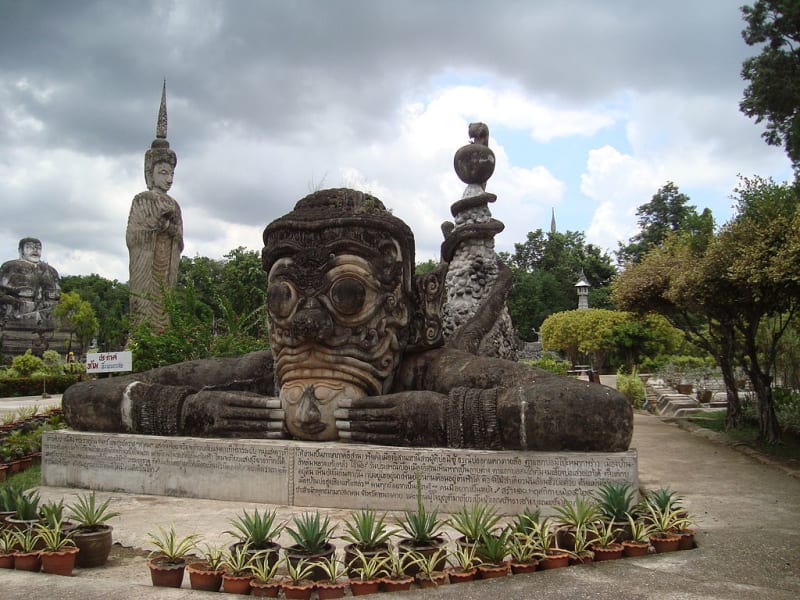
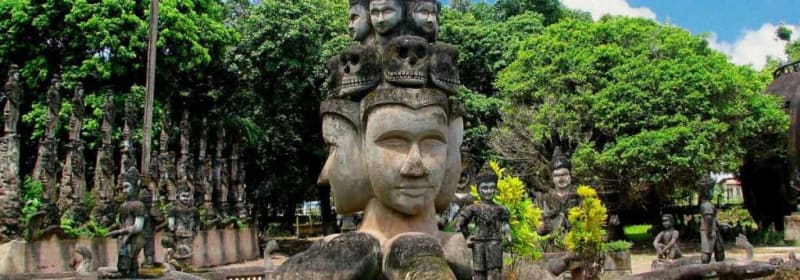
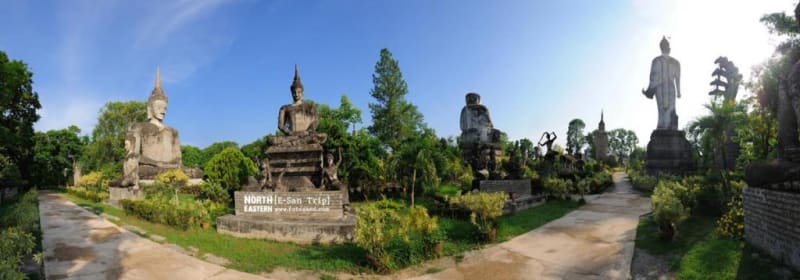
Sala Keoku is an unusual open-air sculpture park near Nong Khai in northeastern Thailand, close to the Lao border and the Mekong River. Giant concrete figures of Buddha, Hindu deities, mythical creatures, and fantastic characters rise among tropical greenery. The park combines religious symbolism, personal artistic expression, and philosophical ideas about life, death, and rebirth.
The history of the park
Construction of Sala Keoku began in 1978 under the direction of spiritual teacher and sculptor Bunleua Sulilat, also known as Luang Pu Bunleua Sulilat. He had previously created a similar Buddha Park near Vientiane, the capital of Laos. After political changes in Laos, Sulilat moved to Thailand and continued developing his religious and artistic ideas on the opposite bank of the Mekong.
His followers helped build the park. Together, they created monumental concrete compositions blending Buddhism, Hinduism, local legends, and the founder's personal worldview. Sulilat died in 1996, but the park remains an unusual artistic legacy of his life and spiritual exploration.
Giant sculptures and mythical figures
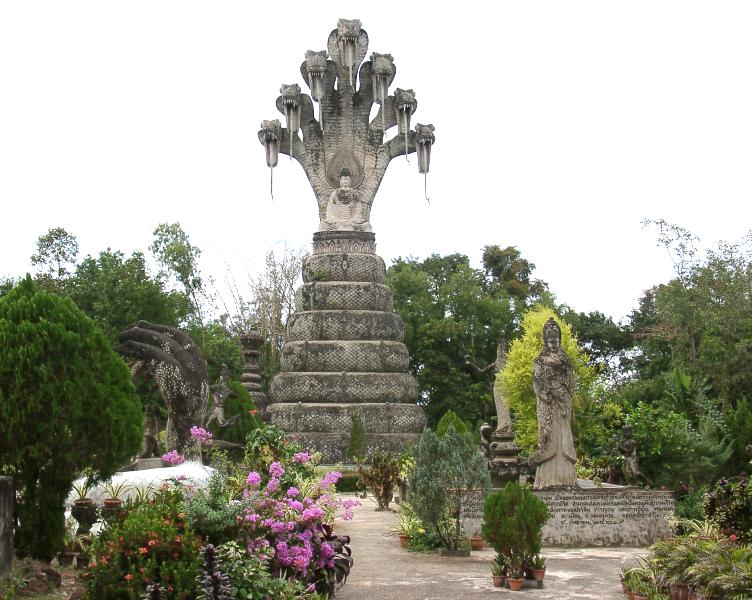
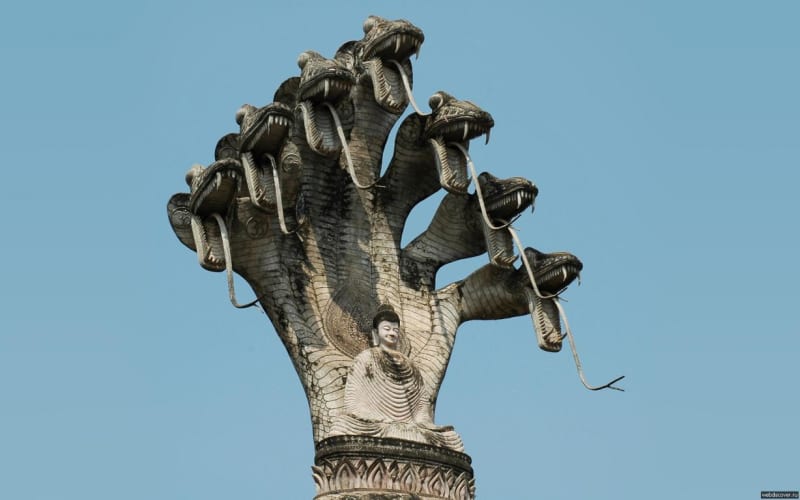
Sala Keoku is known for its enormous statues, some reaching approximately 25 metres in height. One of its most striking images depicts Buddha meditating beneath the protection of a seven-headed naga, a serpent-like being found in South and Southeast Asian mythology.
The paths lead past multi-armed deities, unusual animals, human figures, and fantastic creatures. Unlike the carefully established styles of traditional Thai temples, the park reflects the founder's freedom to combine religious motifs and invent original compositions. Walking through it feels like entering a symbolic world in which each figure may carry several meanings.
The Wheel of Life
One of the park's best-known compositions is the Wheel of Life. This circular arrangement of sculptures represents human existence, karma, birth, ageing, and death. The sequence of figures illustrates the Buddhist idea of the cycle of rebirth.
The installation works as a visual story. Visitors follow the figures and encounter different stages of life, culminating in an image symbolising the possibility of transcending the ordinary cycle of existence and attaining spiritual liberation. Its unusual arrangement makes it one of the most memorable parts of the park.
The pavilion and the founder's legacy
The grounds include a three-storey pavilion with distinctive domes. Inside are religious objects and materials connected with the history of the park and its founder. A memorial room on the upper floor houses the mummified body of Bunleua Sulilat, giving the site religious as well as artistic significance.
How to get to Sala Keoku
The park lies a few kilometres east of central Nong Khai, in Nong Khai Province. Visitors can reach it by tuk-tuk, taxi, rental car, or bicycle. Nong Khai stands on the Mekong opposite Vientiane, the capital of Laos, so a visit to the park can be combined with a walk along the riverfront and exploration of the border town.
Allow around two hours to explore the grounds, examine the main sculptures, and visit the pavilion. In hot weather, morning or late afternoon is generally more comfortable. Visitors should dress respectfully and behave appropriately in memorial and religious spaces.
Why visit Sala Keoku
Sala Keoku differs from Thailand's more conventional temples and museums. It is a place where one artist's personal philosophy became a world of monumental images. The park appeals to travellers interested in unusual architecture, religious art, mythology, and unconventional attractions. Its location near the Mekong makes it a distinctive stop when exploring northeastern Thailand and the region bordering Laos.
Gallery