Göreme National Park is one of Turkey's most remarkable natural and historical destinations, located in the Cappadocia region of central Anatolia. It is known for its extraordinary rock formations, ancient cave dwellings, churches carved into volcanic tuff, and underground cities. Over thousands of years, wind, rain, and temperature changes shaped the soft volcanic rock into unusual valleys, stone pillars, and formations of striking shapes.
Göreme brings together a distinctive natural landscape and a rich cultural heritage. People used the local rock as shelter, homes, and religious spaces, creating entire complexes within the stone. Many churches preserve fragments of wall paintings that reveal aspects of the spiritual and artistic life of early Christian communities. In 1985, Göreme National Park and the rock sites of Cappadocia were inscribed on the UNESCO World Heritage List as one cultural and natural property.
Where Göreme National Park is located
The park lies in central Anatolia, in the historic region of Cappadocia, within Nevşehir Province. The nearby town of Göreme is the main tourist centre, surrounded by many of the region's best-known valleys and rock monuments. Nearby settlements such as Uçhisar, Ürgüp, and Avanos also serve as starting points for exploring local attractions.
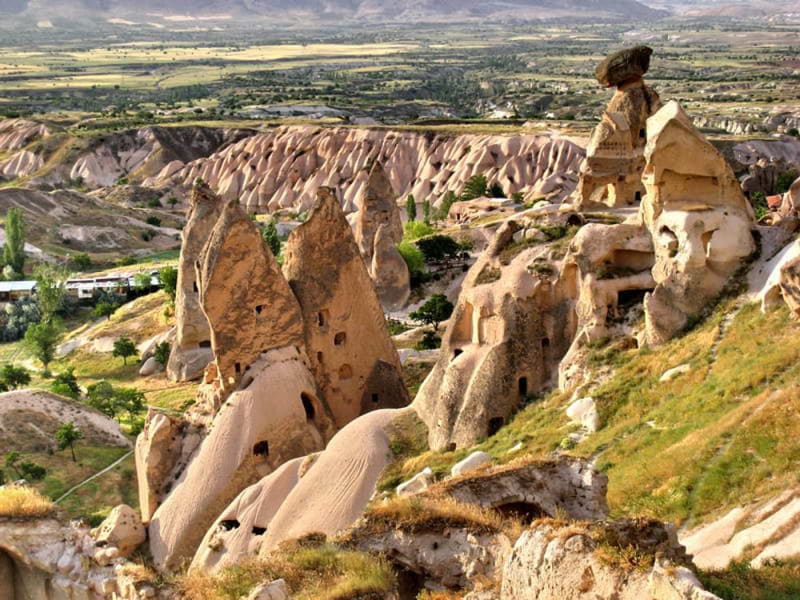
Cappadocia's landscape differs markedly from conventional mountain and forest parks. Dry valleys, rounded hills, open plateaus, and cliffs formed from volcanic deposits dominate the scenery. Vineyards, small gardens, and fields occupy the spaces between rocky ridges, while cone-shaped formations rise on the horizon. These are often called fairy chimneys or stone mushrooms.
Despite its rugged appearance, the region has a long history and varied natural conditions. The terrain, water sources, and availability of soft rock influenced where people settled and how they organised everyday life. Walking through Göreme therefore reveals not only unusual scenery but also evidence of centuries of interaction between people and their environment.
How Cappadocia's rock formations developed
The landscape is built on volcanic deposits created by ancient eruptions in central Anatolia. Ash and other volcanic material accumulated across broad areas and gradually formed tuff, a relatively soft rock that can be carved with simple tools. In some places, harder layers developed above the tuff and protected the underlying material from rapid erosion.
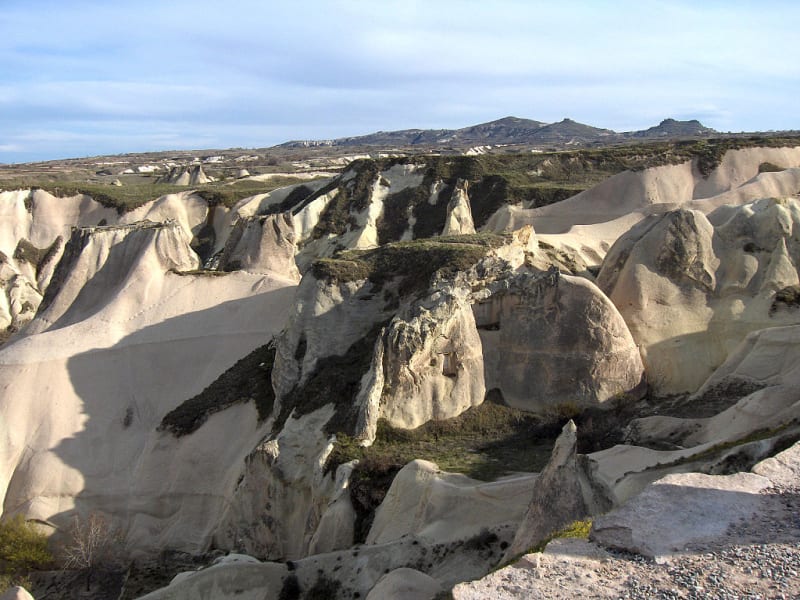
Over thousands of years, water, wind, and temperature changes gradually wore away the softer rock. Where the upper layer was more resistant, tall pillars and cones remained. These are the famous rock formations of Cappadocia, some resembling mushrooms, towers, or human figures. Their shapes and sizes depend on the composition of the rock and the pattern of erosion.
The process continues today: the rocks slowly erode and change under natural forces. The combination of volcanic origins, different rock layers, and prolonged erosion has created a landscape that can seem almost otherworldly. The formations are especially striking at sunrise and before sunset, when low sunlight highlights their contours and gives the tuff golden, pink, and reddish hues.
History of ancient settlements and cave dwellings
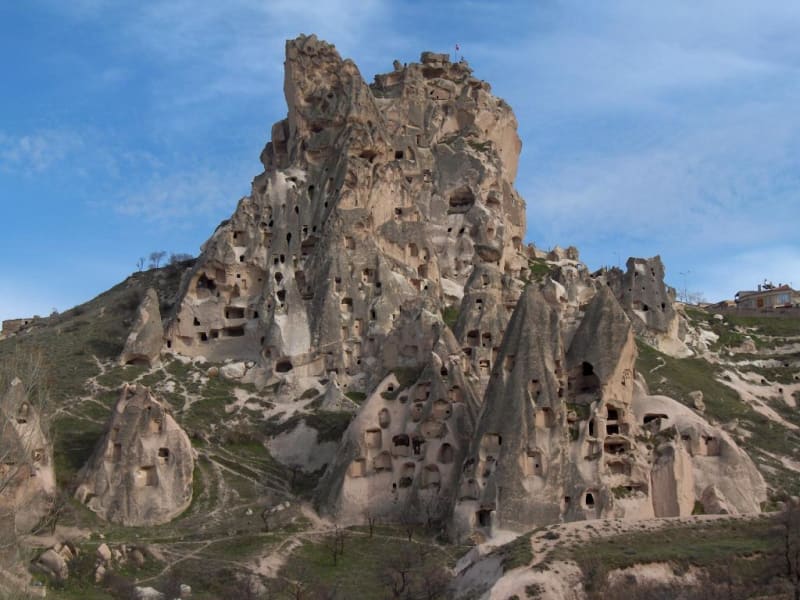
The softness of tuff allowed people to carve rooms, storerooms, kitchens, stables, and food-storage spaces into the rock. These interiors offered protection from summer heat and winter cold. Some complexes expanded over time into multi-level settlements connected by corridors and stairs. Traces of these structures remain in the valleys and rocky areas around Göreme.
Cappadocia became particularly important during the early Christian period. Its secluded valleys and natural shelters provided suitable places for religious communities, which carved churches, monastic rooms, and small chapels into the rock. Their interiors were decorated with paintings depicting Christ, the Virgin Mary, apostles, and scenes from biblical narratives.
Cave architecture was not exclusively religious. The rock also contained workrooms, living quarters, and communal spaces. Natural insulation made these structures practical in a continental climate. Today, they help researchers study daily life, building techniques, and religious traditions in historic Cappadocia.
Göreme Open-Air Museum
One of the park's main attractions is the Göreme Open-Air Museum, a complex of rock-cut churches, chapels, refectories, and monastic spaces. Located close to the town of Göreme, it offers an introduction to Cappadocia's religious architecture without requiring a journey to more remote valleys.
The surviving frescoes are especially valuable. Walls and ceilings feature saints, biblical scenes, and symbolic compositions. Their styles, colours, and states of preservation vary according to the period in which they were created and the condition of each monument. Some rooms are simple, while others have columns, arches, and carefully shaped niches that imitate features of masonry churches.
Among the best-known structures is the Dark Church, named for the limited amount of natural light inside. Reduced exposure to sunlight helped preserve the vivid colours of many frescoes. Visiting these monuments reveals how sophisticated the tradition of creating religious spaces inside volcanic rock became. Visitors should follow site rules and avoid touching the paintings.
Love Valley and its famous stone pillars
Love Valley is one of Cappadocia's most recognisable landscapes. It is famous for tall stone pillars with rounded caps, formed by the uneven erosion of volcanic rock. Their unusual outlines have made the valley popular for hiking, photography, and watching hot-air balloons rise over the surrounding landscape at sunrise.
The trail passes between rock formations, patches of shrubs, and small gardens. In some places, it descends to the valley floor, where visitors can examine the bases of the pillars and the layers of tuff. The ground may be uneven and dusty, so footwear with good grip is recommended. Some sections become slippery after rain.
The valley is especially popular at sunrise and late in the afternoon, when soft light emphasises the shapes of the rocks. Its appeal goes beyond photography: walking through the valley provides a close look at the region's geology and shows how erosion produced such unusual natural forms.
Red Valley and Rose Valley
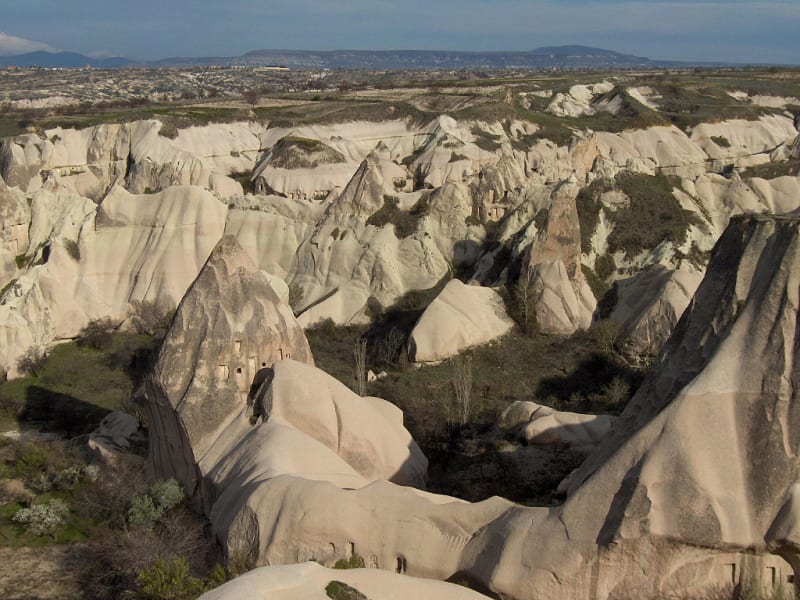
Red Valley and Rose Valley are among the most scenic areas near Göreme. Their names refer to the colours of the rock, which change with the light and mineral composition. In bright daylight, the surfaces may appear beige or golden, while near sunset they can take on pink, red, and purple tones.
Hiking trails pass through the valleys by rock outcrops, small caves, gardens, and old churches. Some paths connect, making it possible to plan walks of different lengths. Along the way, visitors encounter narrow passages and sections where the trail runs close to the rock walls.
These valleys are ideal for travellers who want to experience Cappadocia from within its landscape rather than only from viewpoints. They can examine the layered structure of the tuff, small hollows in the rock, and vegetation adapted to dry conditions. Check trail conditions before setting out and allow enough time to return.
Paşabağ Valley and fairy chimneys
Paşabağ, also known as Monks Valley, is famous for unusual rock pillars topped by several stone caps. These formations are often called fairy chimneys. They developed because different layers of volcanic rock erode at different rates: a harder cap protects the softer tuff below, leaving tall pillars with broad tops.
Some of Paşabağ's formations were used as dwellings and places of retreat. Carved rooms remain inside certain rocks, sometimes high above the ground. They show how local people adapted the unusual terrain for everyday and religious purposes.
Today, Paşabağ is one of the most popular places to see Cappadocia's characteristic formations. Paths between the rocks offer views from different angles. To protect these fragile structures, visitors should remain on marked routes and avoid climbing unstable surfaces.
Cappadocia's underground cities
The area around the national park is known for its underground cities, especially Derinkuyu and Kaymaklı. They lie beyond Göreme's main walking areas but are often included in longer Cappadocia excursions. Underground spaces included living quarters, storerooms, kitchens, ventilation shafts, wells, and other facilities needed by large groups of people.
These underground complexes were created and expanded over long periods. Their design allowed people to seek shelter from danger and protect food supplies. Narrow passages, heavy stone doors, and multi-level layouts helped control access to inner rooms. The history of individual sections is complex and reflects different periods of settlement in the region.
Visiting an underground city reveals another side of Cappadocia's past. While rock-cut churches and valleys show life above ground, the underground complexes demonstrate how people made use of the space below it. Some passages are low and narrow, so the visit may be uncomfortable for people who dislike enclosed spaces.
Hot-air balloon flights over Göreme
Hot-air ballooning has become one of Cappadocia's symbols. Before sunrise, dozens of colourful balloons rise into the sky and drift over valleys, rock towers, and small settlements. From above, visitors can see the broad landscape shaped by volcanic processes and centuries of erosion.
Flights usually take place early in the morning, when weather conditions are often more suitable. However, launches depend on wind, visibility, and aviation authorities' decisions. Flights may be cancelled in unfavourable weather even after a booking has been made. Travellers for whom ballooning is a priority should consider leaving a spare day in their schedule.
During the flight, the colours of the rocks change with the first sunlight. After landing, some operators hold a small ceremony and provide commemorative certificates. When choosing a company, check its safety procedures, insurance arrangements, and policies for cancellations.
Vegetation and wildlife
The park's natural environment is adapted to a continental climate with hot summers, relatively cold winters, and limited rainfall during parts of the year. Open areas support steppe grasses, shrubs, and drought-resistant plants. Gardens and vineyards grow in more sheltered locations, making use of the local terrain.
Wildlife includes birds, small mammals, reptiles, and invertebrates. Rock ledges and natural cavities can provide shelter and nesting places. Wildlife watching should be done quietly and respectfully: visitors should not disturb birds, damage burrows, or leave food waste behind.
Although Göreme is best known for its rock formations and historical monuments, nature is essential to the integrity of the site. Plants, soils, and animals are connected to the geology of the valleys and traditional land use. Protecting the area helps preserve not only individual monuments but the surrounding landscape as a whole.
Best time to visit
Spring and autumn are generally convenient seasons for exploring Göreme. In April, May, September, and October, daytime temperatures often suit longer hikes, while the light brings out the contours of the valleys. These months are good for combining visits to open-air museums, walks along rock trails, and excursions to nearby attractions.
Summers in Cappadocia can be very hot, so walks are best planned for early morning or late afternoon. Bring water, a hat, and sun protection. Winters can bring frost, snow, and icy trails, but snow-covered rocks create a striking landscape. Some activities in the colder season depend on the weather.
Hot-air balloon flights operate in different months when conditions allow. Even in the popular season, weather can cause cancellations. Check the forecast before travelling and leave some flexibility in your itinerary.
How to reach Göreme National Park
The nearest airports are in Nevşehir and Kayseri. From either city, travellers can reach Göreme by shuttle, bus, or rental car. Kayseri generally has more flight connections, but the road journey is usually longer. The best airport depends on schedules, ticket prices, and the rest of the route.
Within the region, visitors can travel by tour bus, taxi, rental car, or on foot through individual valleys. Many major attractions are relatively close together, although some require transport. Guided excursions are convenient for visiting several sites in one day and learning more about the region's history.
For independent hikes, study the route in advance, check walking times, and confirm that trails are accessible. Some valleys have several entrances and exits, so it is useful to plan how to return to your accommodation. In hot weather, do not underestimate distances or the lack of shade.
Tips for travellers
It is worth allowing at least two or three days to explore the park. This gives time to visit the Göreme Open-Air Museum, walk through several valleys, see Paşabağ, and take a trip to an underground city. A longer stay allows visitors to discover quieter trails and spend time in smaller Cappadocian settlements.
Comfortable closed shoes with non-slip soles are best for walking. Carry water, sun protection, a light jacket, and a charged phone with an offline map. Some trails cross dusty, rocky ground, and certain sections include steep descents and uneven steps.
Historic churches and frescoes require careful treatment. Do not touch the paintings, write on the rocks, or leave marked trails in fragile areas. Respect for the monuments and the natural environment helps preserve Göreme's distinctive appearance for future generations.
Why visit Göreme National Park
Göreme National Park combines unusual geological formations, ancient architecture, and the history of cultures that adapted to this extraordinary landscape over many centuries. Visitors can walk through valleys among stone pillars, see churches with ancient frescoes, explore cave dwellings, and learn about Cappadocia's underground cities.
The combination of natural and human-made features is especially striking: the rocks served as homes and places of worship, while the surrounding valleys became part of everyday life. Sunrise balloon flights add another perspective, revealing a panorama of the region. Göreme remains a place where geology, history, and modern tourism meet, and each route reveals a different side of Cappadocia.
Gallery