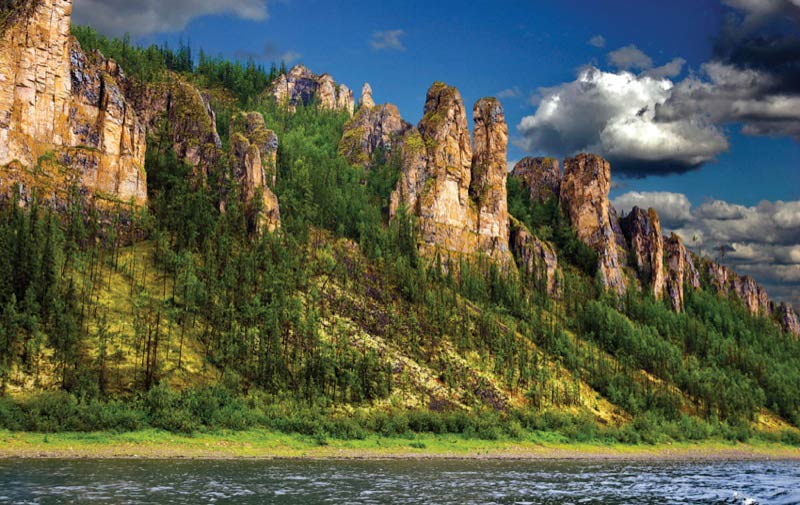
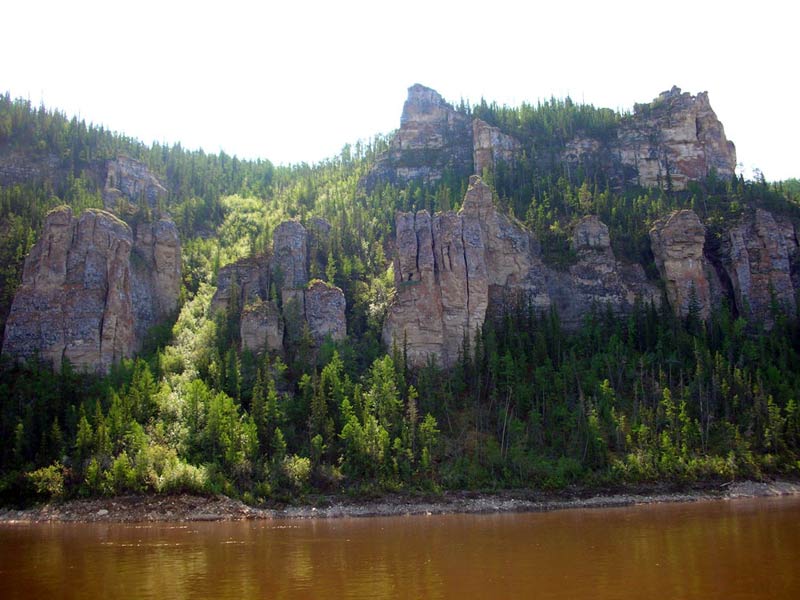
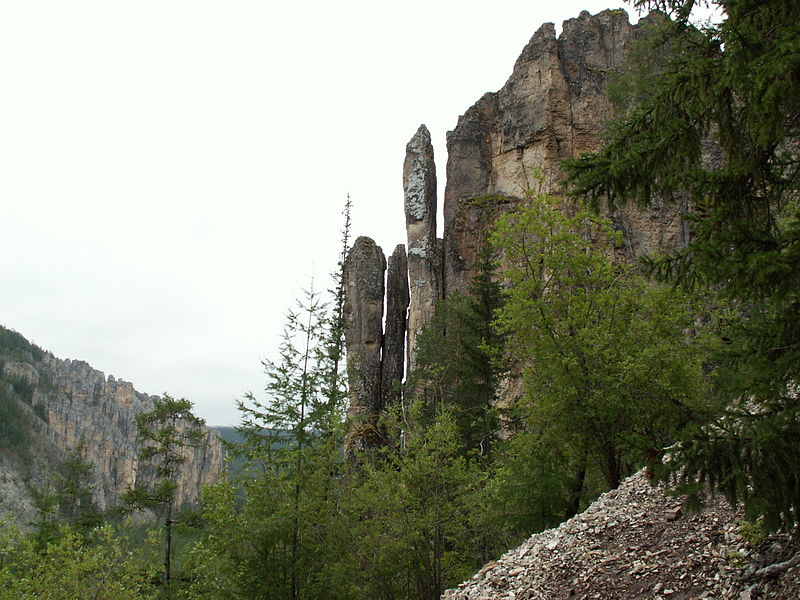
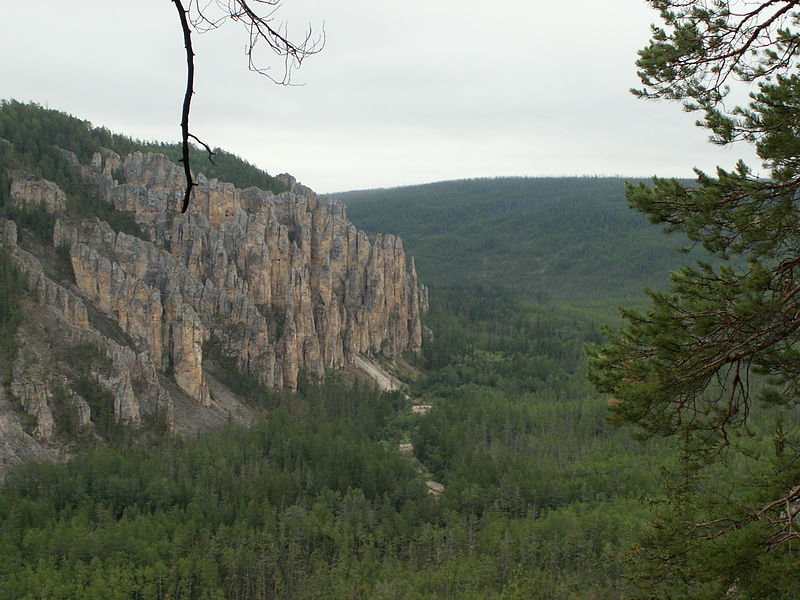
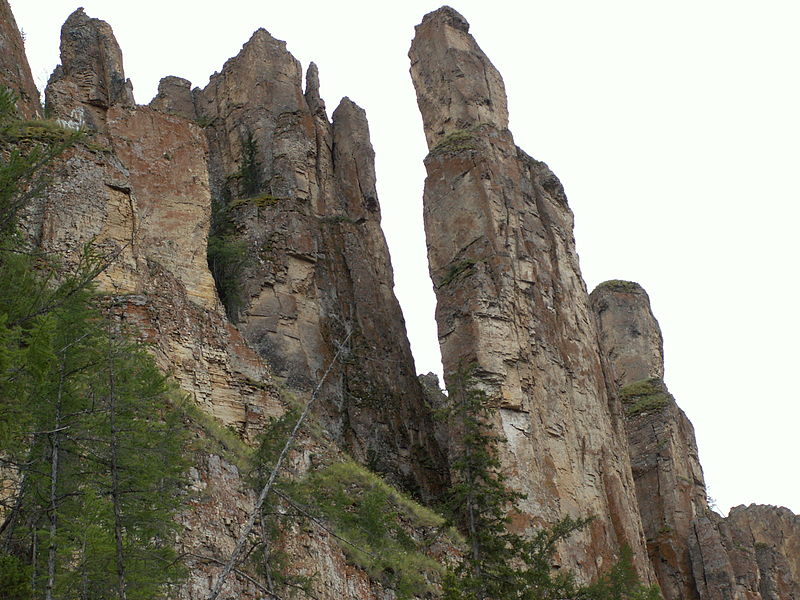
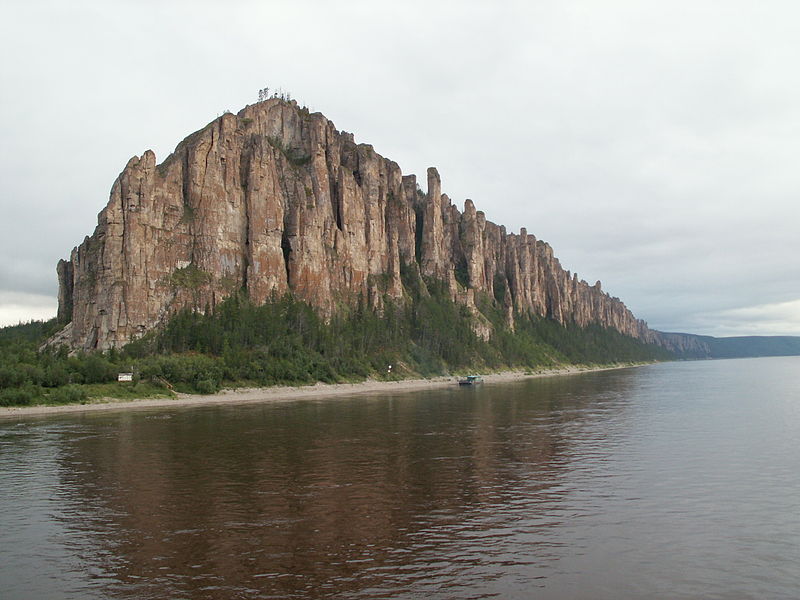
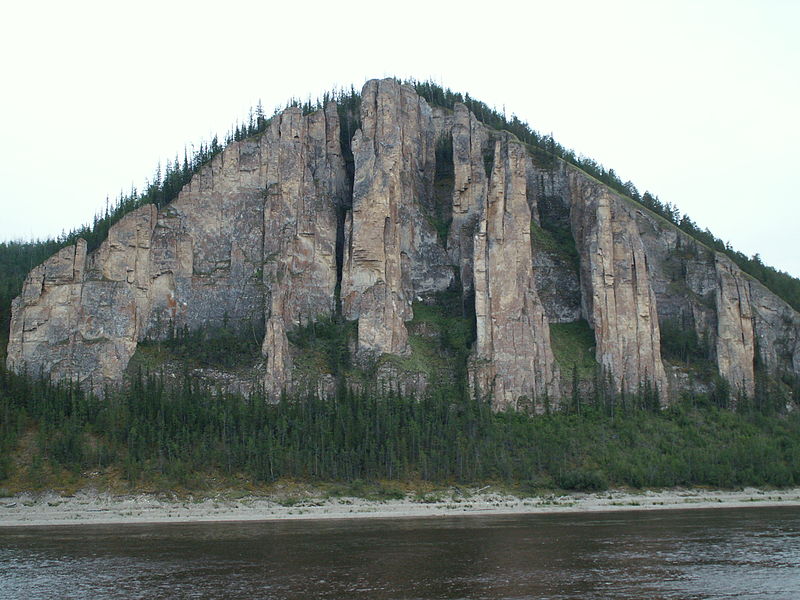
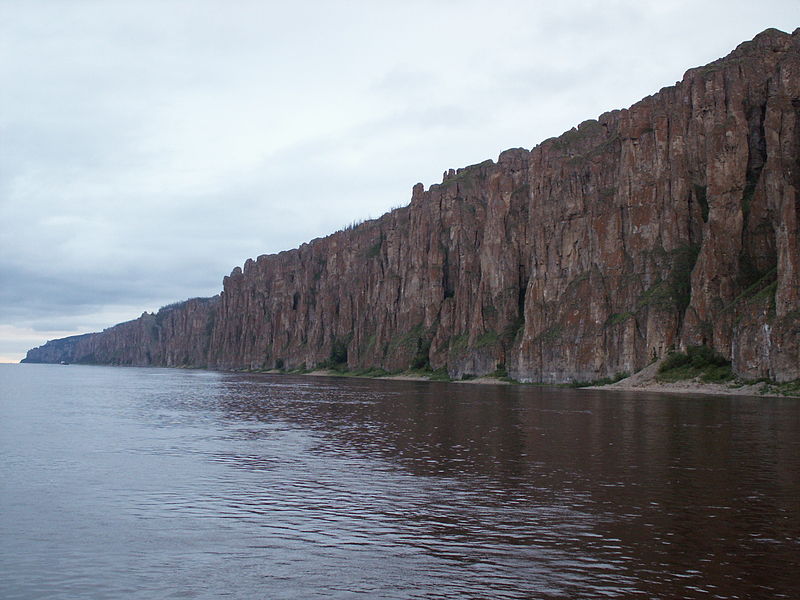
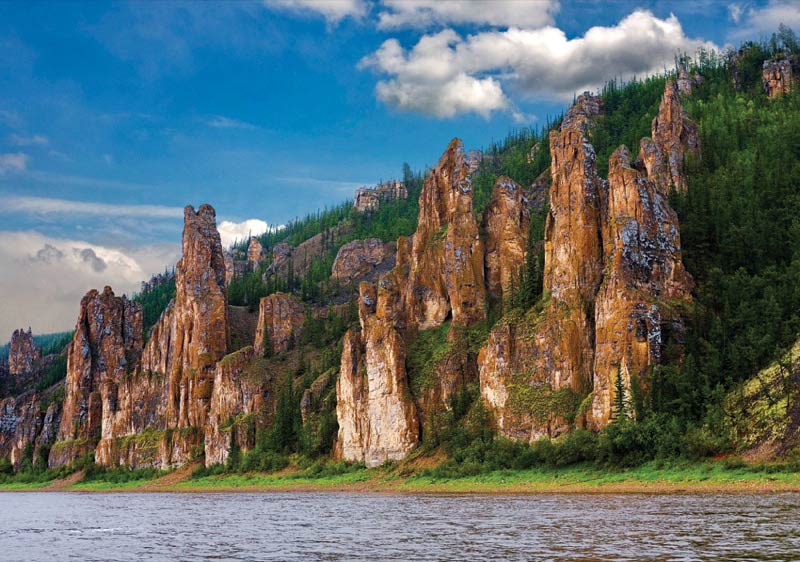
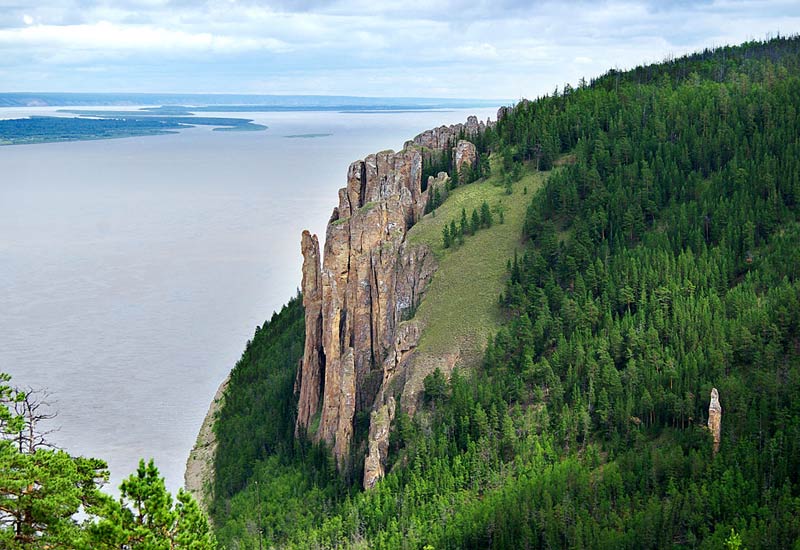
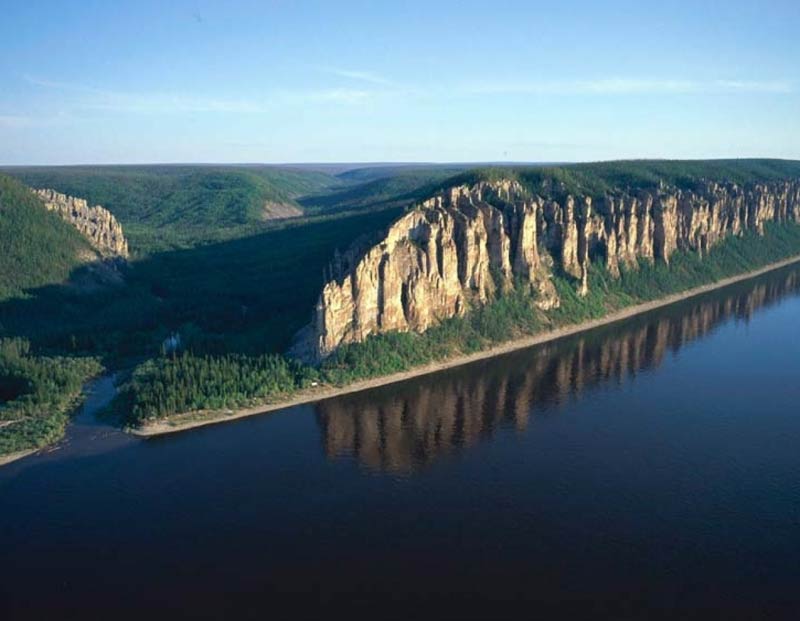
The Lena Pillars are one of Russia’s most spectacular natural landmarks, rising along the Lena River in the Republic of Sakha (Yakutia). These impressive rock formations create a long stone wall of towers, columns, sharp ridges, and deep crevices. Some pillars reach approximately 200–220 metres above the river. Their silhouettes resemble ancient castles, Gothic cathedrals, or fantastic stone figures.
The formations are the main attraction of Lena Pillars National Park and one of the best-known symbols of Yakutia. In 2012, the area was inscribed on the UNESCO World Heritage List for its outstanding geological and palaeontological significance.
Location and scenery
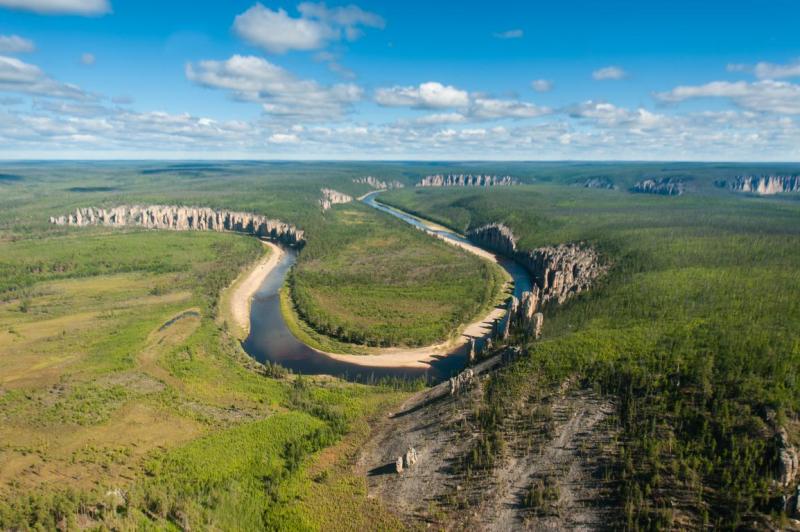
The pillars stand in central Yakutia on the right bank of the middle Lena River. The rocky ridge stretches for many kilometres, creating dramatic scenery where sheer cliffs meet forested slopes, sandy riverbanks, and a vast expanse of water. The formations are especially impressive when viewed from the river.
How the pillars formed
The rocks consist mainly of limestone formed in ancient marine environments during the Early Cambrian, around 530–540 million years ago. Their present shapes were created by weathering and erosion. Water entered cracks in the rock, froze, expanded, and gradually widened the fissures, separating individual rock masses.
Yakutia’s sharply continental climate, with enormous seasonal temperature differences, accelerates the breakdown of exposed rock. These natural processes continue to shape the landscape today.
Fossils and the ancient Earth
The limestone contains abundant fossils from the Cambrian Period, including trilobites and other ancient marine organisms. These remains help scientists reconstruct early marine ecosystems and investigate a crucial period in the evolution of life on Earth.
The combination of spectacular landforms and an exceptionally valuable geological record was a major reason for the site’s UNESCO recognition. The area is important to both geology and palaeontology.
Lena Pillars National Park
A nature park was established in 1995 to protect the rock formations, river valleys, and cultural heritage of the region. UNESCO added the site to its World Heritage List in 2012. The creation of a federal national park was formalised in 2018–2019.
The protected area includes more than the famous pillars. Its landscapes encompass taiga forests, unusual sandy dunes known as tukulans, archaeological sites, and other natural features. Near the Buotama River, the Ust-Buotama forest bison nursery helps conserve these large animals.
Wildlife and vegetation
The park’s vegetation is typical of central Yakutia, with taiga forests that include larch and pine. Moose, foxes, hares, squirrels, and many bird species inhabit the region. The river ecosystem supports a variety of fish. Visitors should remain on authorised routes and avoid disturbing wildlife or leaving rubbish behind.
When to visit
Summer is the most popular season because river transport can provide access to the pillars. The forests are green, the sandy banks are accessible, and the long daylight hours are ideal for sightseeing. However, weather can change quickly, so warm and waterproof clothing is useful even in summer.
Autumn brings golden colours to the taiga and often fewer visitors. Winter transforms the region into a world of snow and ice, but extreme cold and more difficult transport conditions mean that winter trips require careful preparation and local guidance.
How to get there
Most journeys begin in Yakutsk. From there, visitors travel to the Lena River and continue by passenger boat, motorboat, or organised excursion. Travel times and access depend on the season, weather, and chosen landing point, so arrangements should be checked in advance.
Wear sturdy footwear, bring water, and dress for wind and changing conditions. Keep away from cliff edges and follow park instructions. Do not carve into the rocks or remove fossils, which are part of the area’s scientific heritage. The Lena Pillars offer a remarkable encounter with northern wilderness and the deep history of our planet.
Gallery