Mount Pulag is one of the best-known mountains in the Philippines, located in the Cordillera mountain range in northern Luzon. Its summit rises to approximately 2,922–2,930 metres above sea level, making Pulag the highest mountain on Luzon and one of the country's highest peaks. The mountain spans the provinces of Benguet, Ifugao and Nueva Vizcaya, and its slopes form part of the protected Mount Pulag landscape. It is known for high-elevation forests, open grassy slopes, rare wildlife and remarkable sunrises above the clouds.
Pulag attracts travellers, hikers, photographers and nature researchers. The mountain's main draw is the chance to stand above a layer of clouds and watch valleys turn into a white sea at sunrise, with mountain peaks rising above it. Yet Pulag's natural importance goes far beyond its views: it preserves important forest ecosystems, habitats for endemic species and watersheds on which many communities in the region depend.
Geography and Features of the Mountain
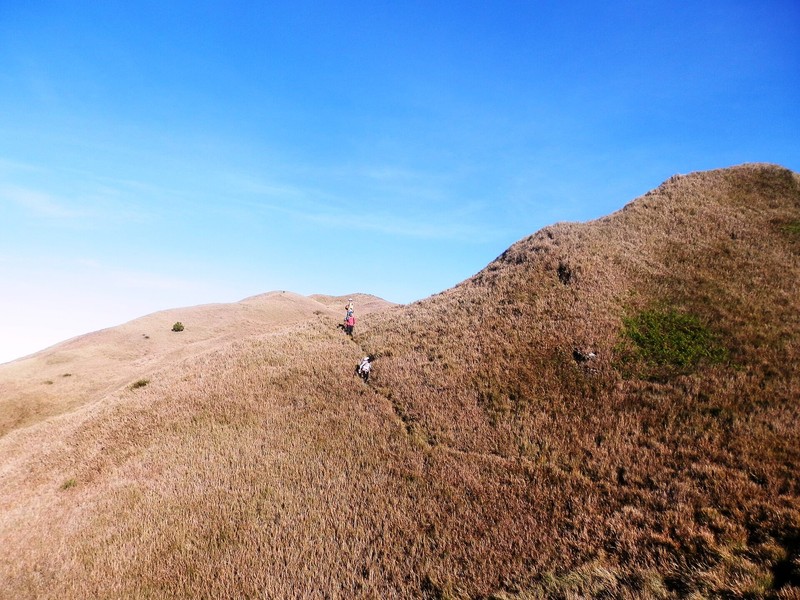
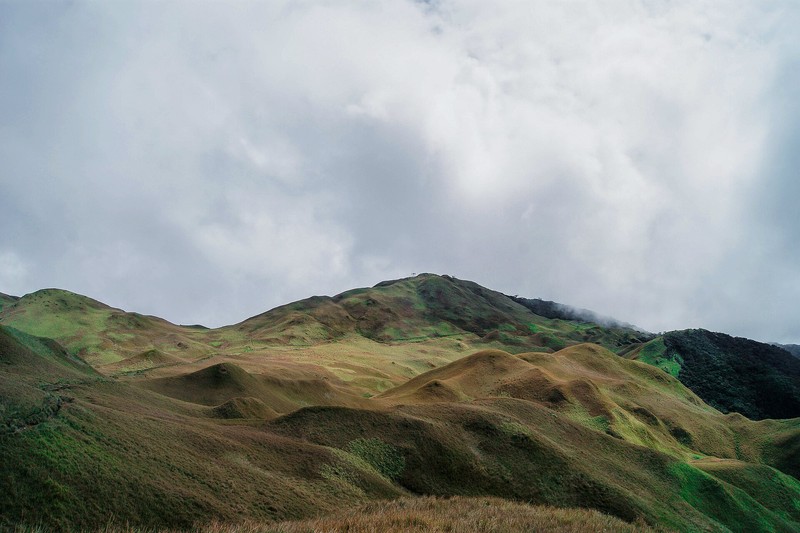
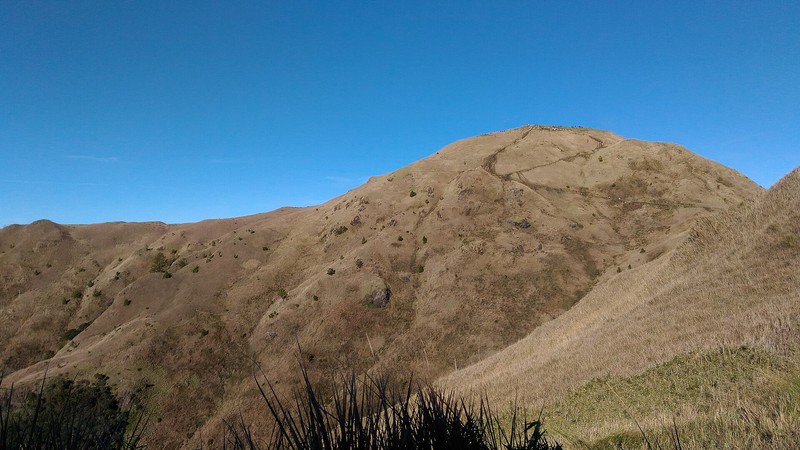
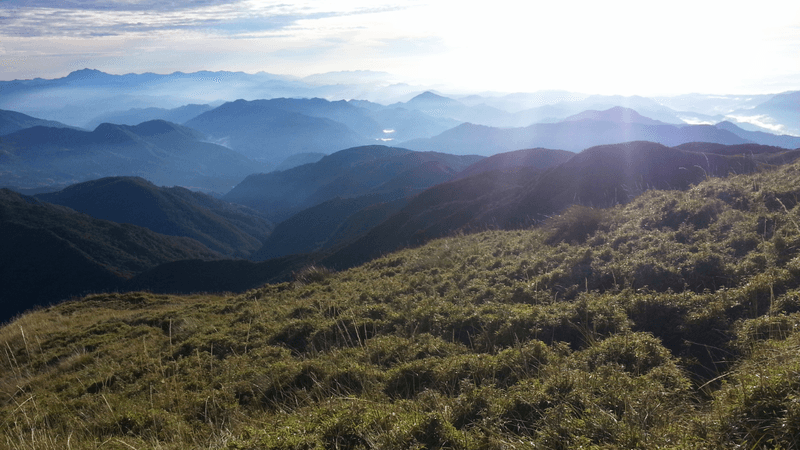
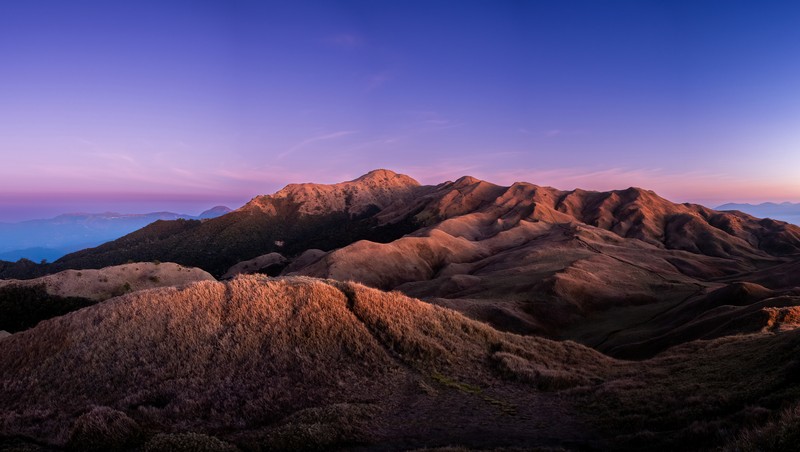
Mount Pulag forms part of the Central Cordillera, an extensive mountain system in northern Luzon. Its terrain features steep slopes, deep valleys and ravines, while the areas closer to the summit become more gently rolling. Climate and vegetation change with elevation: pine forests cover the lower slopes, moist montane forests appear higher up, and high-altitude grasslands with dwarf bamboo occupy the summit area.
Sources list Pulag's elevation slightly differently, at about 2,922, 2,926 or 2,930 metres. These differences reflect varying measurements and reference data. Regardless of the precise figure used, the mountain is the highest point on Luzon and one of the Philippines' most important natural landmarks.
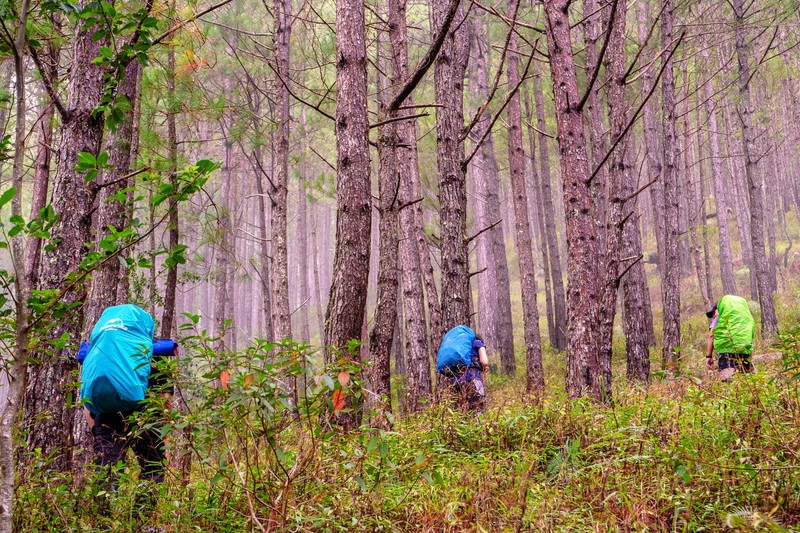
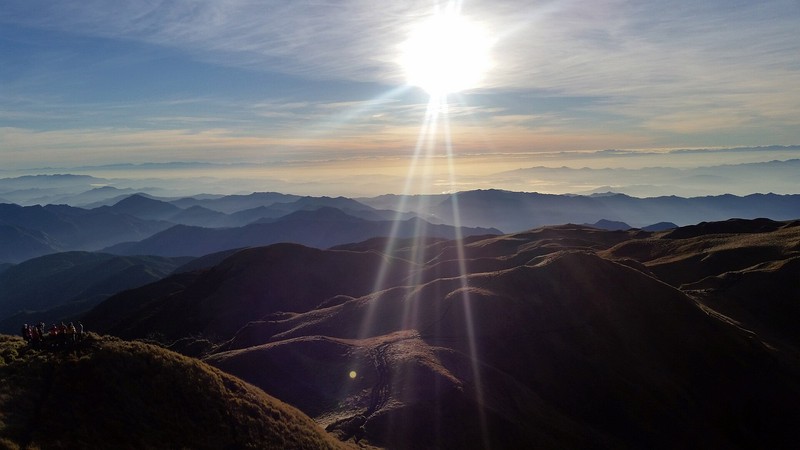
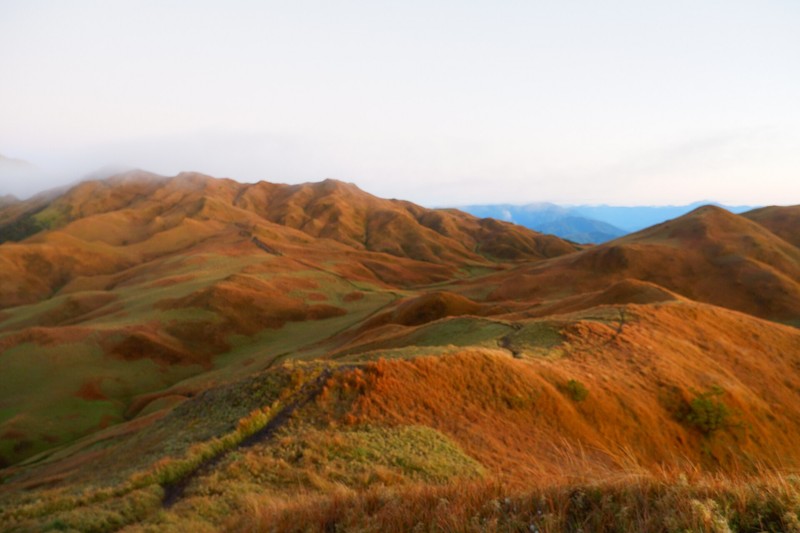
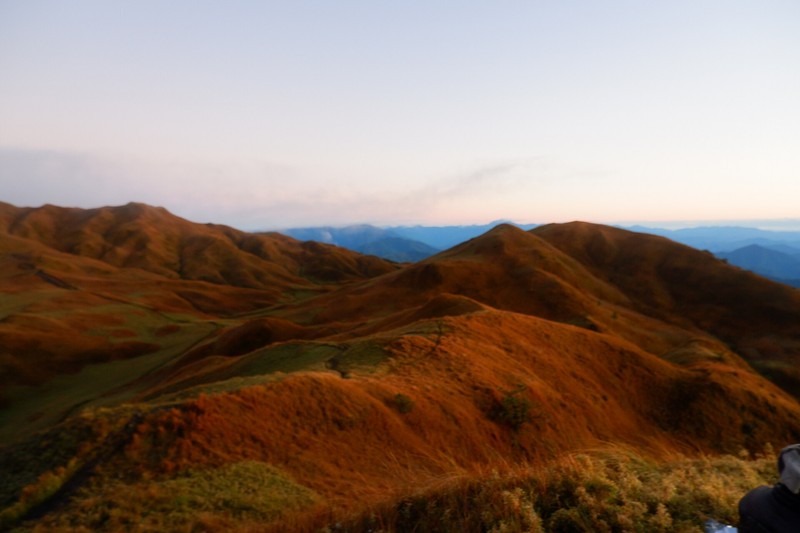
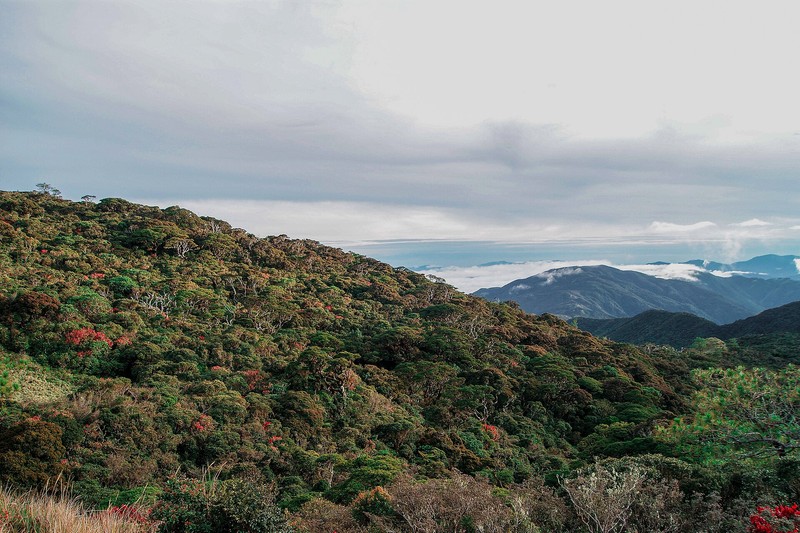
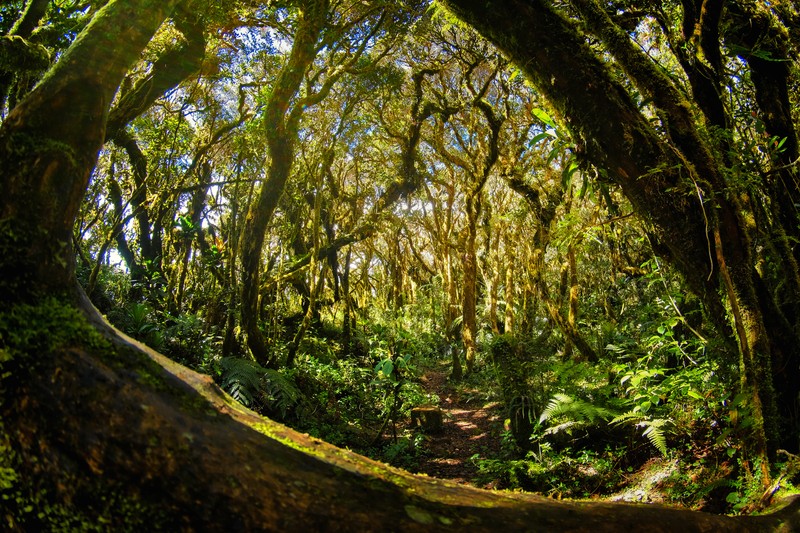
The area around the summit has distinct vegetation zones. The lower slopes support pines characteristic of the Cordillera highlands. Higher up are humid forests where tree trunks, rocks and the forest floor are often covered with mosses, lichens and ferns. Near the summit, the forest gradually gives way to open grasslands, providing broad views of surrounding ridges and valleys during the final kilometres of the ascent.
Sea of Clouds at Sunrise
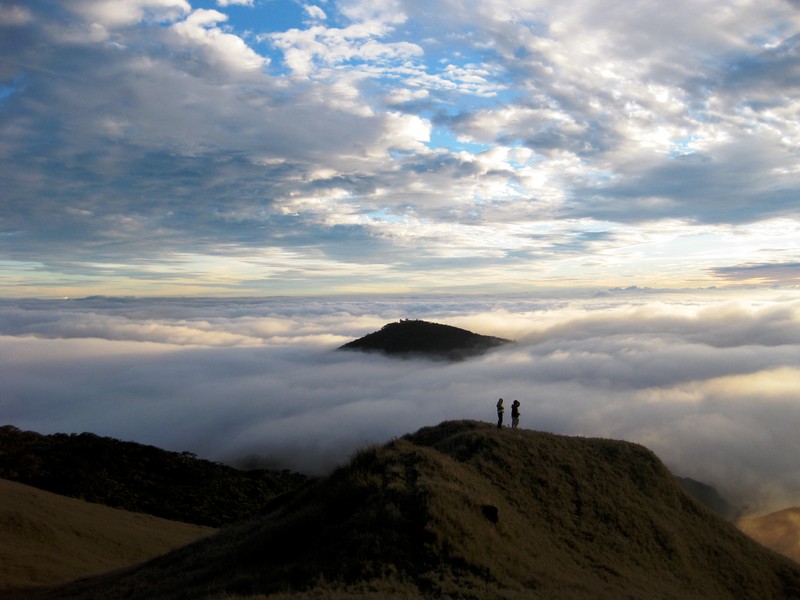
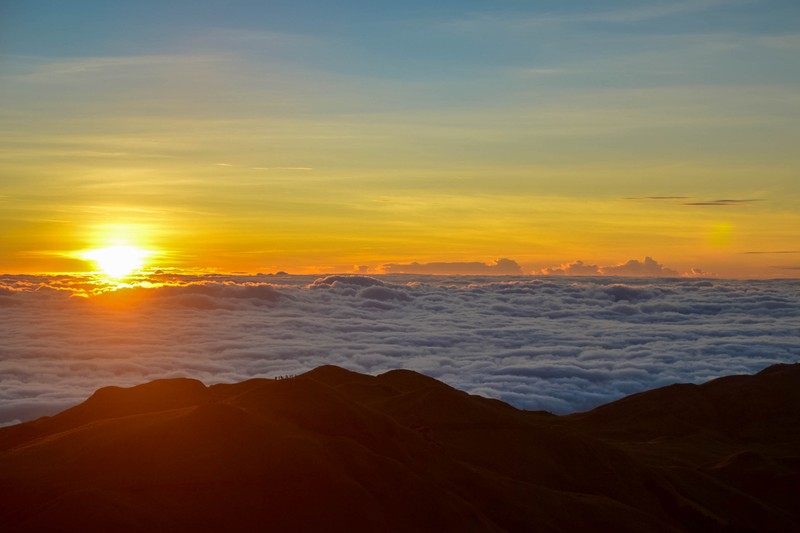
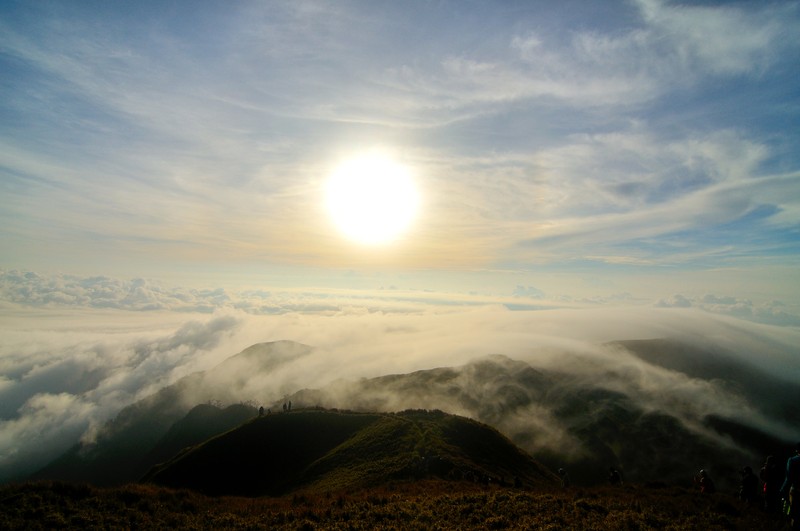
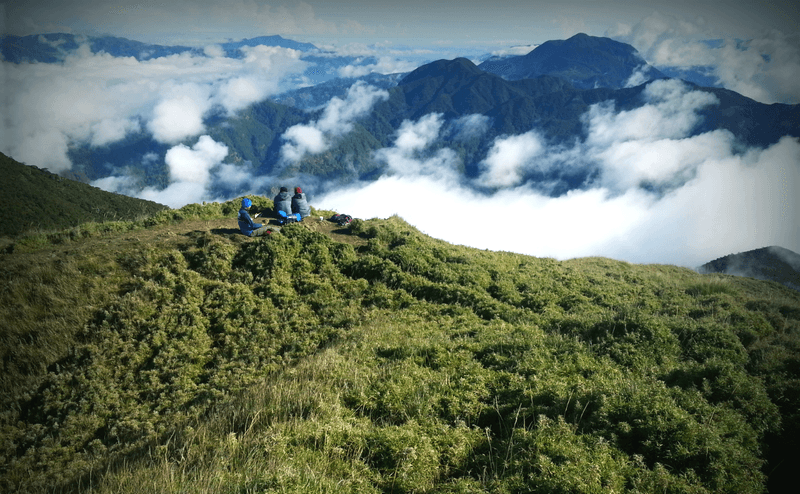
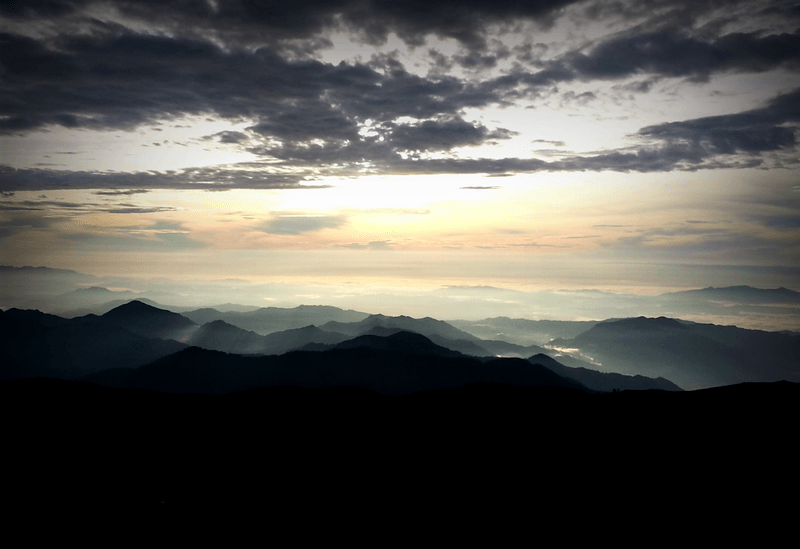
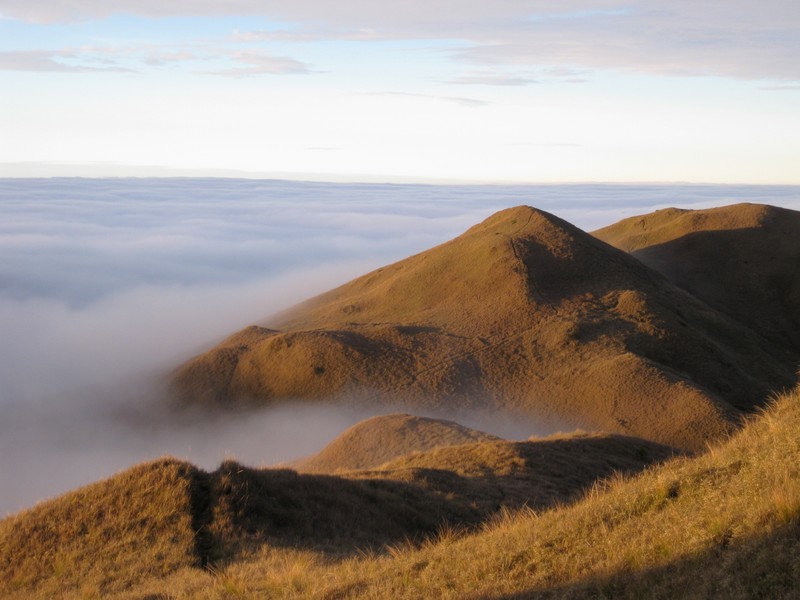
Mount Pulag's most famous sight is the so-called sea of clouds. Under suitable weather conditions, clouds fill the lowlands and valleys, while hikers on the upper slopes or near the summit see open sky above them and a continuous white layer below. When the first sunlight colours the clouds and mountain ridges in golden and pink shades, the scenery becomes especially striking.
The sea of clouds does not appear every morning. Its formation depends on humidity, temperature, wind and the movement of cloud masses. Even a carefully planned climb therefore cannot guarantee this spectacle. On clear days, visitors may instead enjoy far-reaching mountain views, while low cloud can sometimes cover the summit completely in mist.
Many hikers begin the final part of the ascent in darkness to reach an open section of the mountain by sunrise. Temperatures before dawn can be very low, and wind on exposed slopes increases the chill. Hikers need warm layers, protection from wind and rain, a headlamp and footwear with reliable grip.
Forests and Highland Vegetation
Vegetation on Pulag changes with altitude and forms several natural zones. Pine forests dominate the lower slopes, with Benguet pine playing a notable role. These forests are adapted to the cool mountain climate and grow in places on rocky soils. They provide habitat for birds, small mammals and numerous invertebrates.
Higher elevations support moist montane forests often called mossy forests. In the cool, damp air, mosses, lichens and ferns cover branches, trunks and the forest floor. These forests contain various orchids, shrubs and other plants, some of which have limited distributions. Frequent mist maintains high humidity and helps preserve the distinctive microclimate of these habitats.
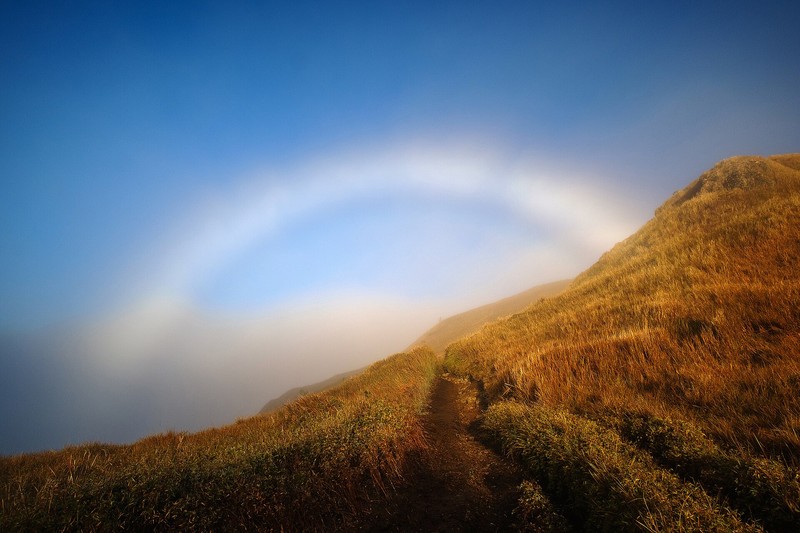
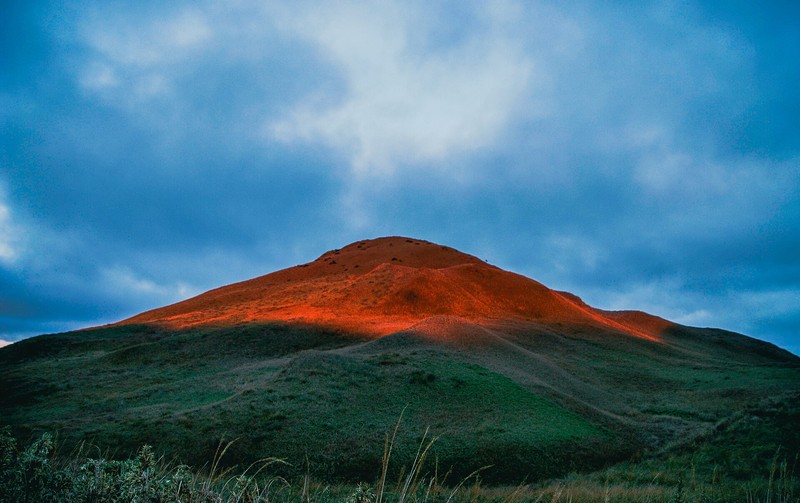
Near the summit, open grasslands and stands of dwarf bamboo predominate. This landscape contrasts sharply with the forested slopes and gives Pulag its characteristic appearance. Highland plants are adapted to cold nights, strong winds and rapid weather changes. Their roots and ground cover also help retain moisture and protect the surface from erosion.
Wildlife and Rare Species
Mount Pulag supports a wide range of wildlife, including species characteristic of northern Luzon and the Cordillera highlands. Notable animals include the Philippine brown deer, the Northern Luzon giant cloud rat and the Luzon pygmy fruit bat. These animals contribute to natural ecosystems by helping disperse seeds and maintain food webs.
Forest and high-altitude habitats are also important for birds, amphibians, reptiles and invertebrates. Some species have restricted ranges and are especially vulnerable to forest loss, fires, climate change and disturbance by people. Protecting continuous forest patches and natural highland grasslands is essential for maintaining biological diversity.
Wildlife is best observed quietly and from a distance. Most forest mammals are elusive, so sightings are never guaranteed on an ordinary hike. Visitors should not feed wild animals, attempt to capture them or leave the trail to photograph them. Allowing wildlife to behave naturally is an important part of responsible visitation to a protected area.
Sacred Mountain and Indigenous Cultures
Mount Pulag is significant not only as a natural landmark but also as a culturally important place for Indigenous peoples of the Cordillera. Communities associated with the region include the Ibaloi, Kalanguya, Kankana-ey and Karao. Traditional beliefs connect the mountain, its forests, waters and other natural features with ancestors and spirits. These traditions reflect the deep relationship between local communities and their environment.
For residents of the highlands, Pulag's natural resources have historically provided water, food and conditions for agriculture. Cultural traditions and knowledge of plants and local landscapes have been passed down through generations. Protecting the mountain therefore means not only conserving plants and animals but also respecting Indigenous rights, customs and knowledge.
Visitors should follow the guidance of local guides and park authorities, respect cultural practices and avoid treating sacred places merely as photo backdrops. Supporting local guides and legitimate tourism services helps communities participate in preserving natural and cultural heritage.
National Park and Environmental Protection
Mount Pulag was declared a national park in 1987. In 2022, legislation established the Mount Pulag Protected Landscape under the Philippines' national system of protected areas. The protected area covers parts of several municipalities in Benguet, Ifugao and Nueva Vizcaya. Its purpose is to conserve natural ecosystems, native species, cultural heritage and the ecological functions of the mountain region.
Pulag is also included on UNESCO's Tentative List of World Heritage sites. This highlights the area's international conservation significance, particularly its biodiversity and the role of its mountain ecosystems. Inclusion on the Tentative List does not mean that the site is already inscribed on the main World Heritage List, but it indicates potential value for further consideration.
Protecting the mountain requires managing visitor numbers, preventing forest and grass fires, safeguarding water sources and restoring damaged areas. Visitors also affect the environment: litter, leaving designated trails, trampling vegetation and careless use of fire can cause significant harm to fragile high-altitude ecosystems.
Pulag as an Important Watershed
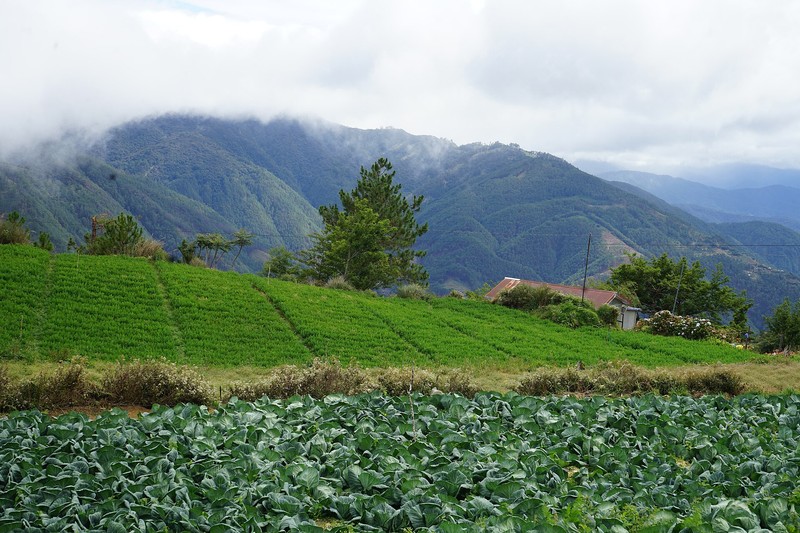
Mount Pulag plays an important role in supplying water to communities and agricultural areas in the Central Cordillera and neighbouring regions. Forests, soils and mountain streams retain moisture and release it gradually, sustaining springs, creeks and rivers. Water from the area supports household needs, irrigation and electricity generation.
Maintaining forest cover is essential to the stability of the watershed. Vegetation loss and soil erosion can increase surface runoff, raise the risk of landslides and reduce water quality. Protecting Pulag is therefore connected not only to wildlife conservation but also to the long-term security of local communities and sustainable resource use.
Hiking Routes on Mount Pulag
Several hiking routes cross the mountain, differing in length, difficulty and scenery. One of the most popular is the Ambangeg Trail, often chosen by beginners who have good general fitness. It passes through forested areas and open highland terrain. Despite being relatively accessible, the hike requires stamina, appropriate equipment and readiness for cold, wind and rain.
The Akiki Trail is known for its steeper ascent and is considered a challenging route, generally better suited to experienced hikers. It passes through pine and moist montane forests before reaching exposed highland areas. The Tawangan Trail is also used for ascents and can form part of longer treks. Trail access, permitted sections and registration requirements can change, so routes should be confirmed with park management.
Visitors generally need advance registration, must follow park rules and are accompanied by an authorized local guide. Access may be restricted because of poor weather, ecosystem recovery or other safety concerns. Before travelling, check current conditions, permit requirements, any medical certificate or briefing requirements, and rules for overnight stays.
When to Go Hiking
Many travellers choose the drier months, often from November to April, although weather in the Cordillera can be changeable at any time of year. Fog, strong winds and rain are possible even during the relatively dry season. The coldest conditions generally occur during the winter months, when nighttime temperatures at altitude can approach or fall below freezing.
Travellers hoping to see the sea of clouds often plan to reach the summit area before sunrise. However, photographs and seasonal expectations are not a guarantee: cloud cover and visibility depend on current weather conditions. If the weather deteriorates, follow the guide's and park authorities' instructions and postpone the ascent if necessary.
How to Get to Mount Pulag
Baguio City in northern Luzon is one of the main transport hubs for journeys to Pulag. From there, travellers continue to towns and trailheads in Benguet, including areas around Bokod and Kabayan. The final approach usually involves a road transfer to a registration station or meeting point with a guide. Mountain roads can be winding, and travel times depend on weather and road conditions.
For many travellers, the easiest option is a pre-arranged trip that includes transport, registration, permits and a local guide. Anyone planning independently should verify which trail is open, where the current registration point is located and which documents are required. Do not set out without confirmed access and an agreed return plan.
What to Bring
Hiking Pulag requires warm layers, a waterproof jacket, spare socks, sturdy hiking boots, a headlamp, food and water. Wind and low temperatures at altitude can cause rapid heat loss, especially during breaks and while waiting for sunrise. Gloves, a warm hat, sun protection and a waterproof cover for electronic devices are also useful.
Before the hike, review park requirements and the guide's recommendations. Carry enough water rather than relying solely on natural sources, and take all rubbish away with you. Overnight stays must use authorized campsites and follow fire regulations. Open flames and any activity that could start a fire are especially dangerous in dry grassy areas.
Responsible Tourism and Mountain Conservation
High-altitude ecosystems recover slowly and are sensitive to trampling. Walking off designated trails damages vegetation and accelerates soil erosion, while litter can pollute water and attract animals to human food. Visitors should stay on established routes, avoid picking plants or collecting natural objects, and leave no trace of their visit.
Respect limits on visitor numbers, campsite rules and instructions from rangers. Supporting local guides and communities helps preserve traditional knowledge and creates economic incentives for conservation. Responsible travel allows people to experience Pulag's nature while protecting its distinctive landscapes and cultural importance.
Why Visit Mount Pulag
Mount Pulag combines spectacular views, unusual highland landscapes, rich biodiversity and the cultural heritage of the Philippines' Indigenous peoples. Visitors can walk through pine forests and misty mossy woodland, emerge onto open grasslands and watch sunrise above a sea of clouds. For hikers, it is a rewarding physical challenge; for nature lovers, it is an opportunity to discover one of the country's most important protected mountain areas.
Pulag requires preparation, respect for local traditions and careful treatment of the environment. The combination of natural beauty, ecological importance and cultural history makes the mountain far more than simply a popular hiking destination.
Gallery