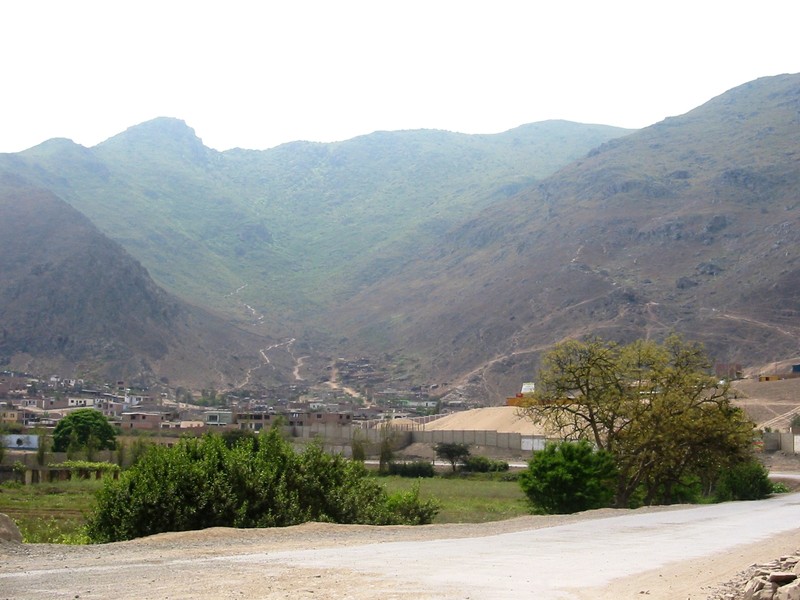
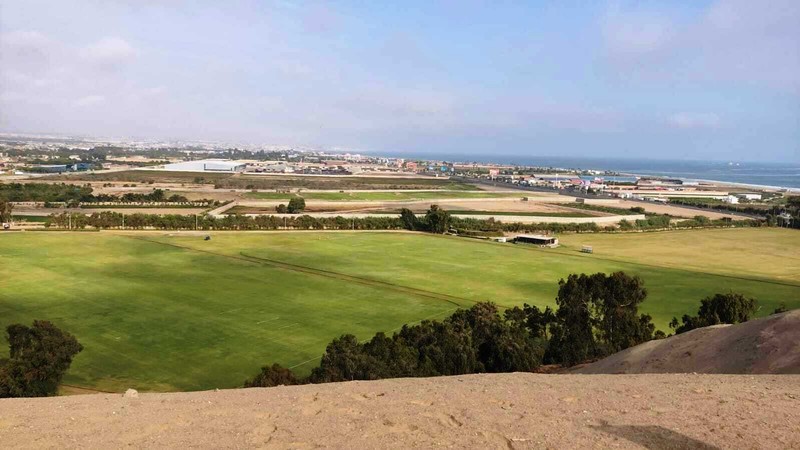
Pachacamac is one of Peru’s largest and most important archaeological complexes, located in the Lurín Valley about 40 kilometers southeast of central Lima. For many centuries, it was the principal religious center of Peru’s central coast. Pilgrims arrived from coastal valleys and distant Andean regions to consult the deity Pachacamac, seek predictions, or ask for help with important questions.
The archaeological complex covers approximately 465 hectares and includes temples, pyramids with ramps, palaces, plazas, streets, and burial structures. Its history reflects the development of several ancient cultures, including Lima, Wari, Ychsma, and the Inca. Pachacamac is particularly notable because it retained its religious importance despite changes in political power and cultural traditions.
Who Was Pachacamac?
The name Pachacamac comes from the deity Pachacamac, associated with the creation of the world and the life-giving force of the earth. In the religious beliefs of ancient Peru, this powerful being could influence natural phenomena, including earthquakes. Worship of Pachacamac was especially widespread along the central coast, but the sanctuary’s reputation extended far beyond the region.
Pachacamac was regarded as a deity to whom people turned for predictions and advice. Pilgrims arrived with questions about the future, harvests, public affairs, and personal concerns. Historical accounts describe the oracle as highly respected, while access to sacred rooms was restricted. Ritual practices, special rules of conduct, and the secluded nature of certain sanctuaries emphasized the sacred character of the site.
The deity’s name is associated with the idea of a force that animates the world. Ancient beliefs did not always match later interpretations, however, so the meaning of particular rituals and images continues to be studied. Archaeological discoveries and historical accounts help explain why Pachacamac became one of ancient Peru’s most important spiritual centers.
History Before the Inca Arrival
The Lurín Valley was settled long before the sanctuary reached its height. Areas near the river provided water and supported agriculture in the dry coastal climate. Early settlements and ceremonial structures appeared in the region during the pre-Columbian era, and a large religious complex gradually developed here.
During the first centuries CE, the Pachacamac area developed under the influence of the Lima culture. Its people built ceremonial structures from adobe bricks and created architectural complexes associated with religious practices. Some early temples had a distinctive U-shaped layout, a design found in ancient architecture along Peru’s central coast.
Later, the region came under the influence of the Wari culture, which spread across large parts of the Andes. During this period, Pachacamac developed into a larger religious and political center, and its connections with other regions strengthened. Over the following centuries, the sanctuary continued to grow, attracting visitors from different parts of ancient Peru.
The Ychsma State and the Growth of the City
After Wari influence weakened along the central coast, regional political entities emerged. One of them was the Ychsma polity, whose capital was Pachacamac. Residential and administrative districts developed around the ceremonial core, new buildings were constructed, and the network of plazas and roads expanded.
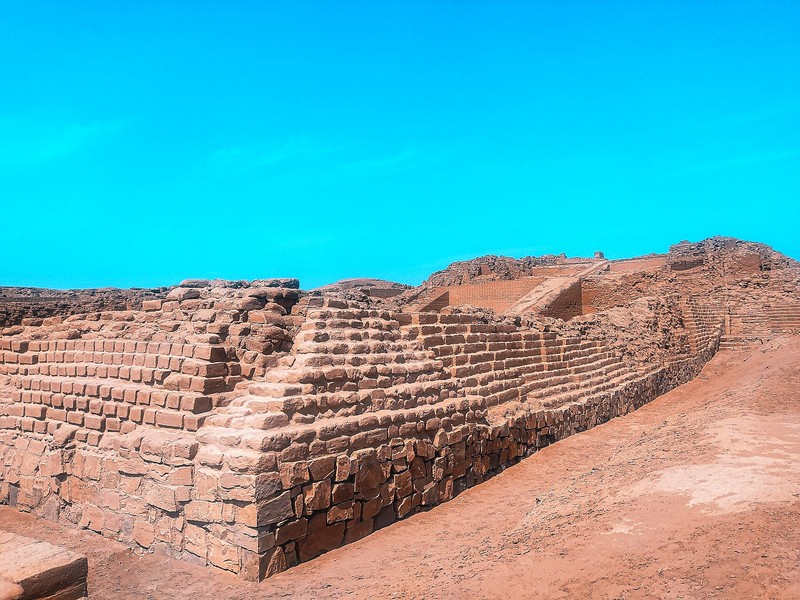
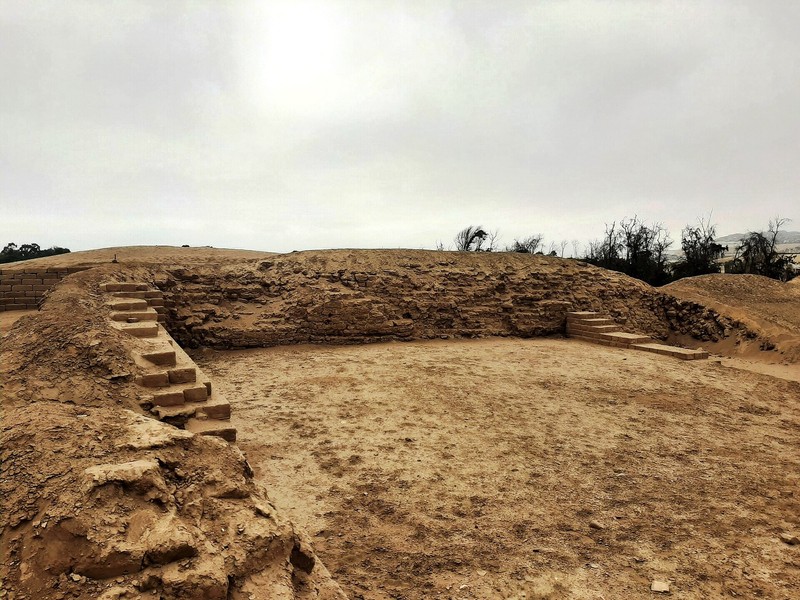
Pyramids with ramps played a particularly important role. These structures contained platforms, interior rooms, open spaces, and passages connecting different levels. They may have served administrative, ceremonial, or representative functions for the local elite. Some buildings were remodeled repeatedly, reflecting changes in urban organization and the needs of the population.
Pachacamac was more than a place of worship. Religious, economic, and political interests converged here. Pilgrimage encouraged the exchange of goods and ideas, while the sanctuary strengthened the authority of local rulers. As a result, the city became one of the most important centers on Peru’s central coast.
The Inca Arrival and the Temple of the Sun
Around 1470, the region was incorporated into the Inca Empire. The new rulers did not erase the importance of the ancient sanctuary; instead, they adapted it to their own religious and administrative system. Pachacamac continued to attract pilgrims, and its cult became part of the empire’s broader network of beliefs and political relationships.
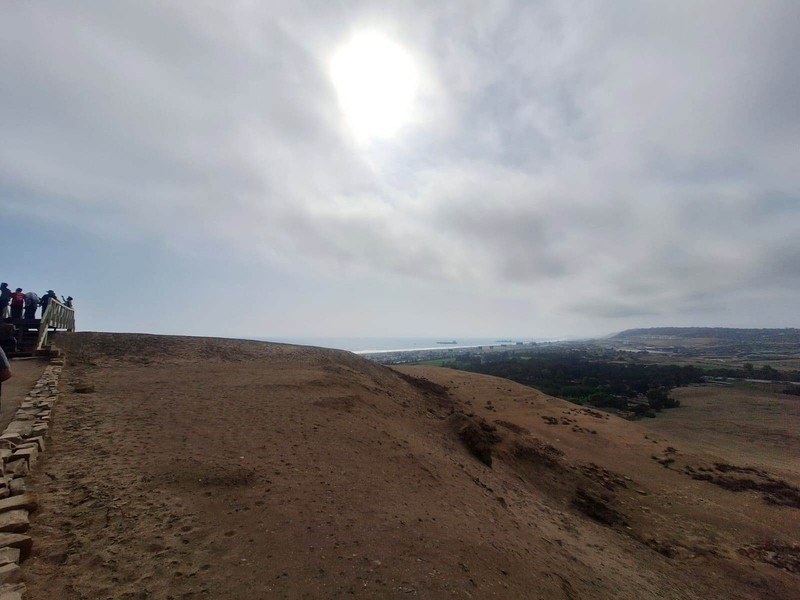
One of the most prominent structures built during the Inca period was the Temple of the Sun, constructed on elevated ground overlooking the surrounding landscape and coastline. Its massive platforms and terraces demonstrate the monumental character of Inca architecture. Dedicated to the sun deity, the temple reflected the religious worldview of the rulers of Tawantinsuyu.
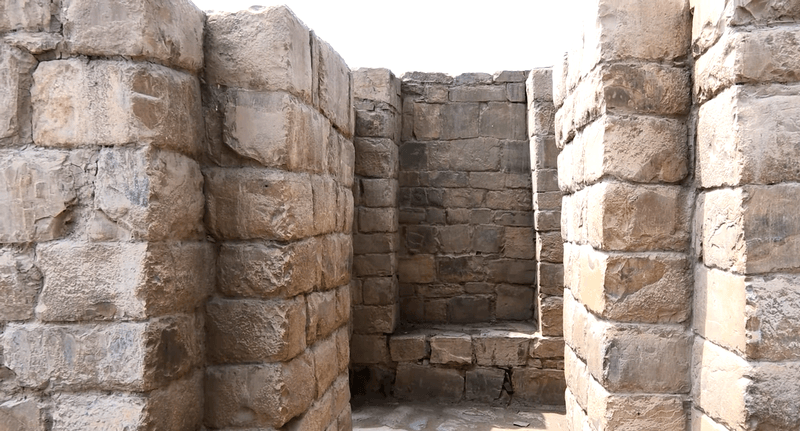
The Inca period is also associated with the Acllahuasi, a complex intended for selected women who took part in religious life and other state duties. Its rooms, courtyards, and terraces show how the Inca organized specialized spaces within important centers. Incorporation into the empire changed the sanctuary’s architecture and administration but did not remove its spiritual significance.
The Oracle and Pilgrimage
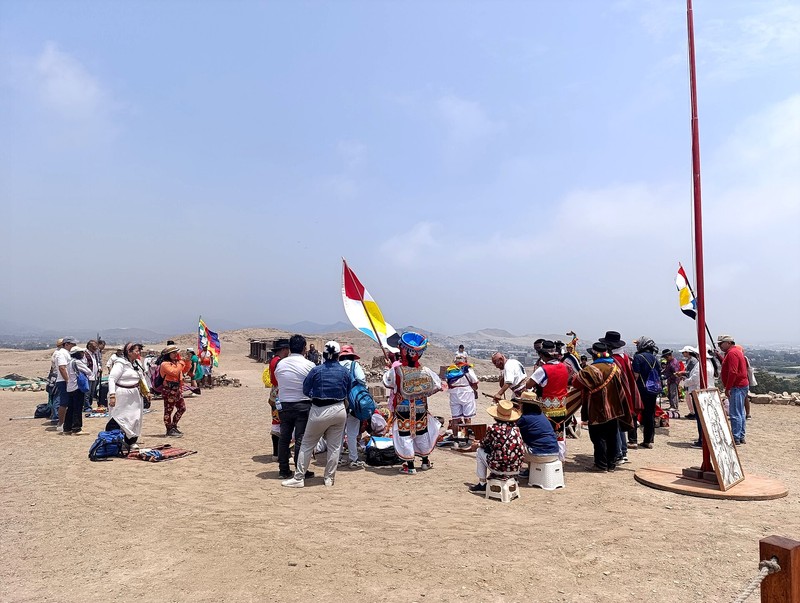
The main source of Pachacamac’s fame was its oracle. People arrived from different parts of the Andes, sometimes traveling considerable distances, to consult the deity. These journeys had social as well as religious significance: they brought together members of different communities and encouraged the spread of traditions, knowledge, and artistic motifs.
Pilgrims might bring offerings and take part in ceremonies held on particular days or special occasions. The sanctuary contained spaces for different purposes, from large gathering plazas to enclosed rooms used for ritual activities. Its architecture helped separate everyday activities from sacred areas, emphasizing the special status of the religious center.
Historical accounts describe Pachacamac as a powerful deity who could predict the future and influence the movements of the earth. Such beliefs help explain why the sanctuary maintained its influence for many generations. Although details of ancient ceremonies remain incomplete, archaeological evidence and historical sources together reveal the scale of religious life at the site.
Architecture and Main Monuments
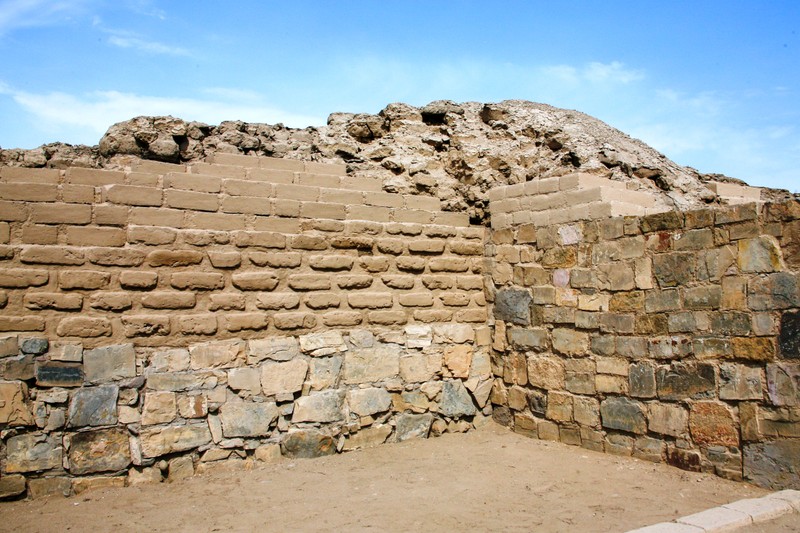
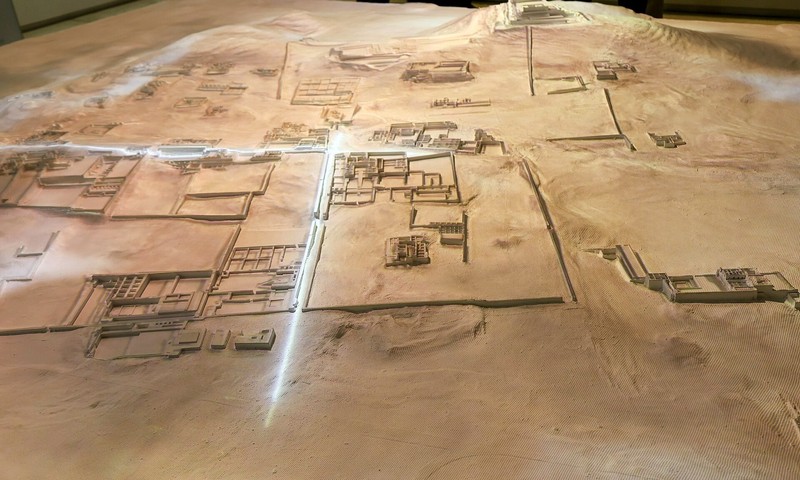
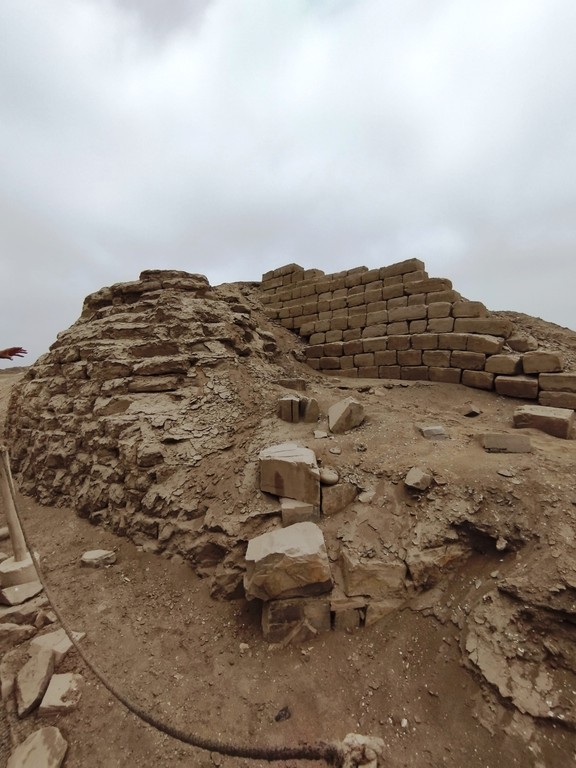
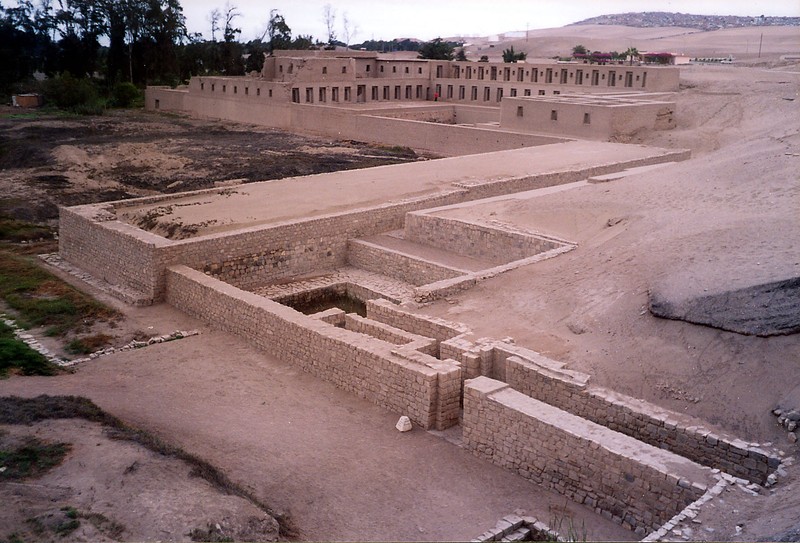
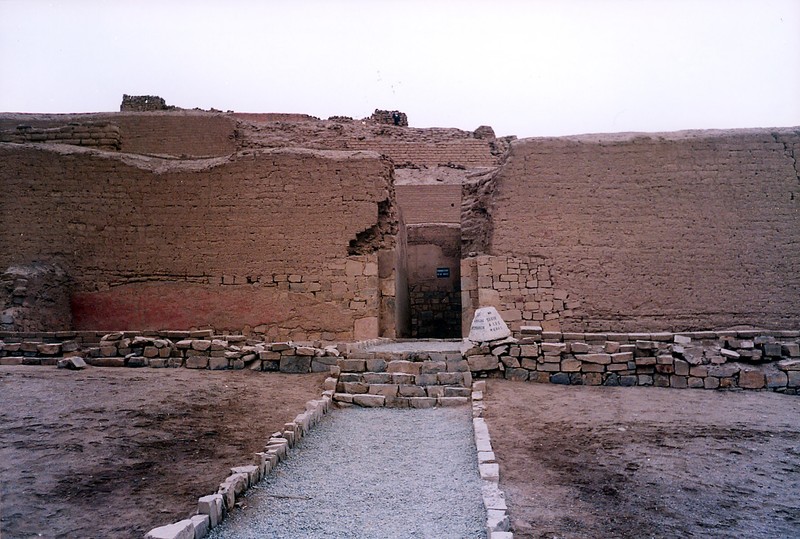
Pachacamac is an extensive complex with ceremonial, administrative, and residential zones. Its structures include the Old Temple, the Painted Temple, the Temple of the Sun, pyramids with ramps, palaces, plazas, and ancient streets. Many buildings were made from adobe, a material suited to the dry coastal climate.
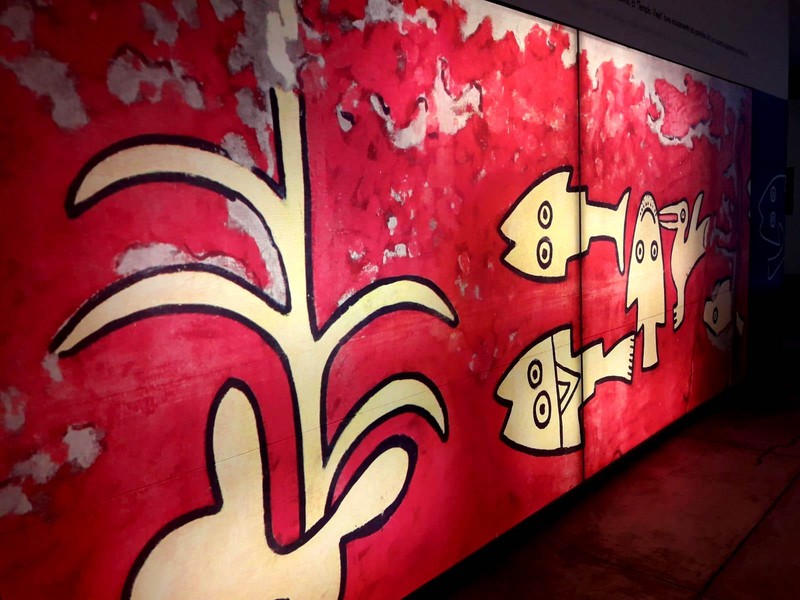
The Old Temple belongs to the earlier stages of the sanctuary’s development and reflects local building traditions. The Painted Temple takes its name from decorative images found on its surfaces. These images and associated finds help researchers study the artistic traditions and religious symbolism of the region’s ancient inhabitants.
The pyramids with ramps have multi-level layouts and complex interior arrangements. They may have served as administrative centers, ceremonial complexes, or residences for influential members of society. The Pilgrims’ Plaza, palace structures, and ancient roads connected different parts of the city into a larger system.
The Wooden Idol of Pachacamac
One of the best-known archaeological objects associated with the sanctuary is the wooden idol of Pachacamac. It depicts a figure with human features and is important for understanding the religious beliefs of the ancient population. The idol was discovered during archaeological investigations of the Painted Temple and is now one of the principal exhibits at the Pachacamac Museum.
Scientific research has clarified the material and coloring of the sculpture. Analysis showed that the idol was carved from the wood of a young carob tree and painted in several colors, including red, white, and yellow. Researchers associate it with the period of Wari influence, making it especially valuable for studying religious contacts and artistic traditions in the region.
The idol helps illustrate how significant the deity was to ancient coastal communities. Its symbolism cannot, however, be reduced to a single simple explanation: the figure is interpreted in the context of archaeological evidence, the sanctuary’s history, and changing religious traditions. Together with other finds, it demonstrates how the cult of Pachacamac endured and evolved over many centuries.
Archaeological Finds and the Museum
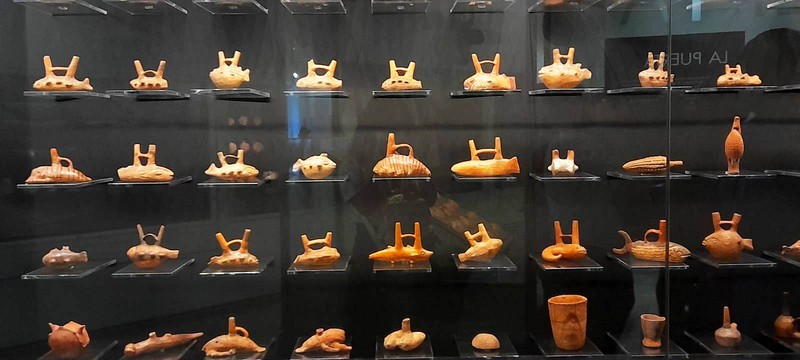
The Pachacamac Museum stands near the entrance to the archaeological complex and is an important part of the visit. Founded in 1965, it preserves and displays objects recovered during excavations. Its exhibitions introduce visitors to the different stages of the sanctuary’s history, from early regional cultures to the Inca period.
The collection includes pottery, textiles, ritual objects, wooden sculptures, and other finds. Notable exhibits include the idol of Pachacamac and a decorated textile door embellished with Spondylus shells. These objects provide insight into artistic preferences, religious practices, and trade connections among ancient societies.
Inca-period khipus are particularly interesting. These systems of knotted cords were used for recording and communicating information. Examples were found in a room near the Taurichumpi Palace. Together with architecture, pottery, and other artifacts, they help researchers trace changes in administration and cultural traditions over time.
The Spanish Arrival and the Decline of the Sanctuary
In 1533, the Spanish arrived at Pachacamac during the conquest of Peru. European chroniclers described it as one of the most revered religious centers on the coast. Colonial rule gradually transformed local religious practices and led to the decline of traditional pilgrimage.
Over time, large parts of the sanctuary were abandoned, and some structures suffered damage or were reused as sources of building material. Nevertheless, the vast complex preserves evidence of centuries of development. Archaeological research has identified different construction phases and helped explain how successive cultures interacted in the Lurín Valley.
Today, Pachacamac is protected by Peruvian cultural institutions. Research, restoration, and museum programs aim to preserve its architecture and archaeological objects. The site is an important resource for understanding Peru’s history and the cultural heritage of the Andes.
Visiting Pachacamac
The archaeological complex is located in the Lurín district, about 40 kilometers southeast of central Lima. It can be included in a trip around the Peruvian capital. Visitors should allow several hours to explore it fully: the grounds are extensive, and distances between temples, pyramids, and plazas can be considerable.
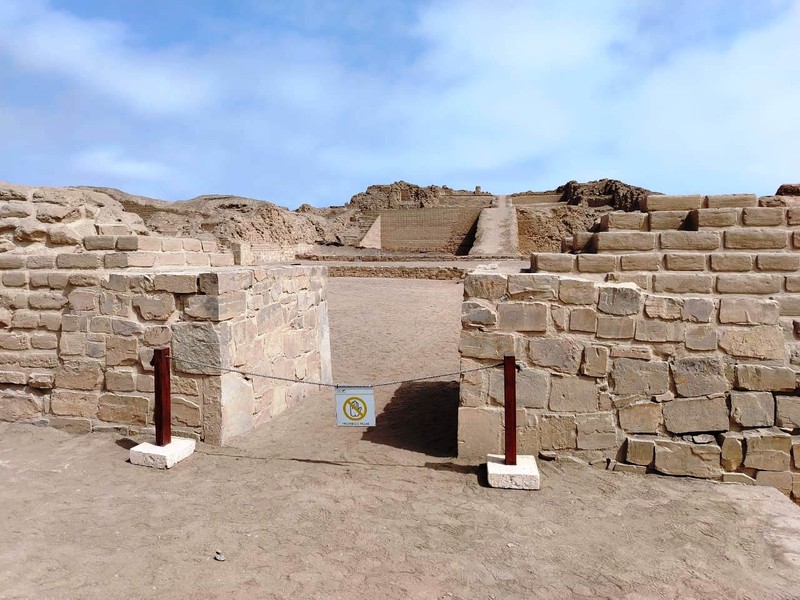
It is useful to begin at the museum, where visitors can learn about the sanctuary’s history and view archaeological finds. The route through the site then leads past ancient structures, including pyramids with ramps, the Painted Temple, the Temple of the Sun, and the Pilgrims’ Plaza. Access to some areas may be restricted to protect the remains.
Pachacamac is especially rewarding for people interested in archaeology, ancient architecture, pre-Columbian civilizations, and the religious traditions of South America. The site reveals how societies on Peru’s central coast changed over more than a thousand years while preserving the importance of one of the region’s greatest sanctuaries.
Gallery