Chichen Itza is one of Mexico’s best-known archaeological complexes and a major monument of Maya civilization. Located on the Yucatán Peninsula among tropical vegetation and limestone plains, the ancient city preserves monumental pyramids, temples, ritual ball courts and structures that demonstrate the Maya’s advanced knowledge of architecture, mathematics and astronomy. Chichen Itza offers a glimpse into the religious, political and commercial life of pre-Columbian Mesoamerica.
History of the Ancient City
The settlement emerged during the first centuries CE and gradually became one of the principal centres of northern Yucatán. Over nearly a thousand years, the city changed under the influence of different cultural traditions. The period from the 10th to the 13th centuries was particularly important, when Chichen Itza held considerable political and cultural influence. Its architecture combines local Maya traditions with elements associated with cultures of central Mexico.
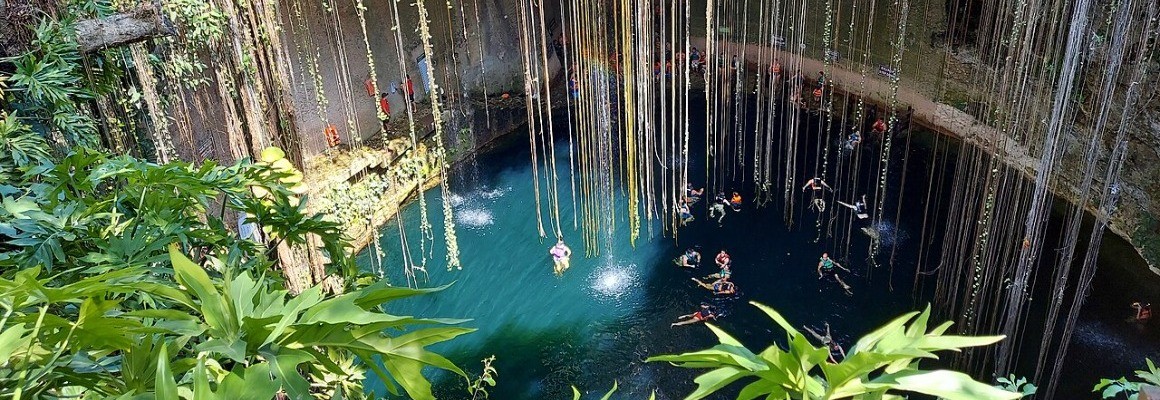
The name Chichen Itza is commonly interpreted as “at the mouth of the well of the Itza.” It refers to natural sinkholes known as cenotes, which supplied water to the inhabitants. In the dry landscapes of Yucatán, these sources were essential to urban life and could also acquire religious significance.
The city’s political influence eventually declined. By the 15th century, it had lost much of its former importance, although it remained a place of memory and pilgrimage. After the Spanish conquest, the ancient structures gradually fell into disrepair. Systematic research and archaeological excavations began much later, revealing the scale of the site’s historical heritage.
The Pyramid of Kukulkan
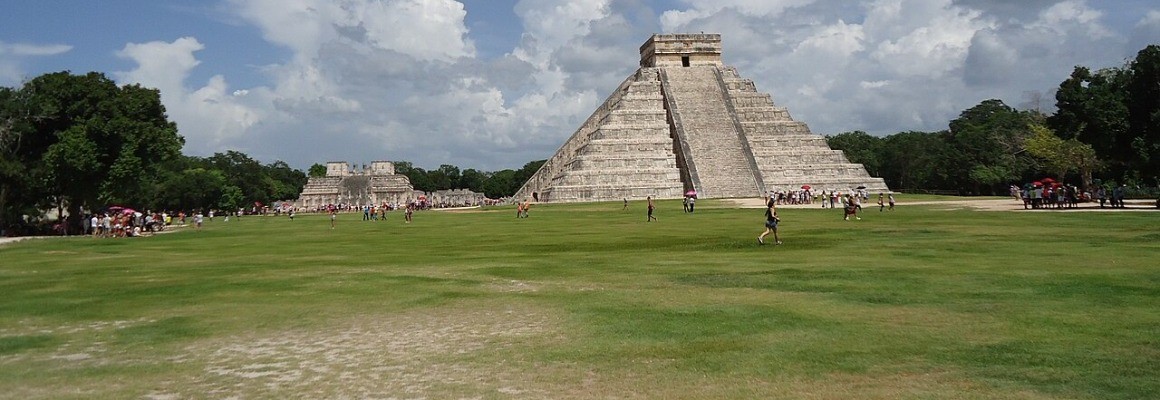
The principal symbol of Chichen Itza is El Castillo, the stepped pyramid also known as the Temple of Kukulkan. It rises above the central area and demonstrates the Maya’s precise architectural planning. Four stairways lead toward the upper temple, while the pyramid’s sides form a carefully ordered geometric composition.
The pyramid is particularly famous for its relationship with Maya calendar and astronomical ideas. Around the spring and autumn equinoxes, the play of sunlight and shadow along the northern staircase creates the appearance of a feathered serpent descending toward a stone head at the base. This effect is associated with Kukulkan, a deity represented as a feathered serpent. Its visibility depends on the position of the Sun and weather conditions.
The pyramid also reflects the Maya interest in numbers and cycles of time. Its stairways, terraces and architectural features are often interpreted in relation to calendar calculations, although some symbolic explanations remain debated. Visitors are not allowed to climb the pyramid, helping to protect this fragile archaeological monument.
The Great Ball Court
One of Chichen Itza’s most impressive structures is the Great Ball Court, the largest known playing court of its type in Mesoamerica. High parallel walls frame a long space designed for a ritual game in which participants used a heavy rubber ball.
The ball game had sporting, religious and social significance. It may have symbolized the struggle between opposing forces, the movement of celestial bodies and mythological narratives. Carved images of players and ritual scenes survive on the walls. Stone rings set high along the sides are among the court’s most striking features.
The Temple of the Warriors and the Thousand Columns
The Temple of the Warriors is another outstanding monument in the complex. Its stepped structure is decorated with reliefs, warrior figures and symbolic motifs. In front lies a group of pillars often called the Group of a Thousand Columns. These supports probably once held roofs over spaces associated with public, administrative or ceremonial activities.
Among the sculptural details are figures known as Chac Mool, reclining forms with raised heads and vessels resting on their stomachs. Similar sculptures are known from several ancient Mesoamerican cultures and were probably associated with ritual practices. The temple and its colonnades reveal how closely religion, political authority and public life were connected in Chichen Itza.
El Caracol Observatory
El Caracol, meaning “the snail,” is an unusual circular building often associated with Maya astronomical observations. Its internal stairways and design differ from many other structures in the complex. Researchers believe it may have been used to observe celestial objects, although the precise purpose of every architectural feature remains under discussion.
Astronomy was an important part of Maya culture. Observations of the Sun, Moon and planets helped people develop calendars, identify seasonal cycles and choose dates for agricultural and ceremonial activities. El Caracol reflects the connection between architecture, the sky and religious ideas.
The Sacred Cenote
The Sacred Cenote is a natural limestone sinkhole with steep walls located within the archaeological site. Water from such formations was vital to the people of the Yucatán Peninsula, but this cenote also had special ritual importance.
Archaeological investigations have recovered objects associated with ceremonies, including ornaments and other offerings. These finds indicate that the cenote was used for rituals connected with deities and beliefs about the supernatural world. It is an important archaeological site, so access to the water and visitor behaviour are strictly regulated.
Art and Daily Life
Chichen Itza was more than a religious centre. Artisans, traders, members of the elite and people who maintained the city all lived and worked here. Archaeological discoveries help researchers study trade networks, craft production, stone and ceramic objects, and contacts between different parts of Mesoamerica.
Carved reliefs, sculptures and architectural decorations depict warriors, mythological beings, animals and ceremonial scenes. They offer insight into the worldview of the ancient inhabitants, although not every image can be interpreted with certainty. The variety of artistic motifs reflects the cultural contacts that shaped the city over time.
Chichen Itza and UNESCO
In 1988, Chichen Itza was added to the UNESCO World Heritage List. This recognition reflects the site’s outstanding architecture, historical role and importance for understanding Maya civilization. In 2007, the Pyramid of Kukulkan also gained international attention as one of the New Seven Wonders of the World following a global initiative.
The complex is protected by Mexican institutions, including the National Institute of Anthropology and History. Conservation requires ongoing care because tropical weather, stone erosion and large visitor numbers put pressure on the ancient structures. Visitors should follow the rules, avoid climbing buildings and refrain from damaging carved surfaces.
How to Visit Chichen Itza
The archaeological zone is in the Mexican state of Yucatán, near the town of Pisté. It can be reached from Mérida or Cancún by car, bus or organised tour. Several hours are worth setting aside to explore the principal monuments. Arriving early helps avoid the hottest part of the day and the largest crowds. Bring drinking water, a hat, comfortable shoes and sun protection.
Opening hours, ticket prices and access rules can change, so check the current information from Mexico’s National Institute of Anthropology and History before travelling. Respect restrictions on items brought into the site, do not touch archaeological features and do not climb the pyramids.
Why Visit Chichen Itza?
Chichen Itza offers a direct connection to one of the most sophisticated civilizations of pre-Columbian America. The Pyramid of Kukulkan, Great Ball Court, Temple of the Warriors, observatory and Sacred Cenote reveal different aspects of ancient urban life, from astronomy and architecture to religion and public ritual.
The site is remarkable not only for its scale but also for the way the Maya connected the natural world, the movements of celestial bodies and the structure of society. Visiting Chichen Itza offers a chance to experience the extraordinary heritage of the Maya and better understand the history of Mexico.
Gallery