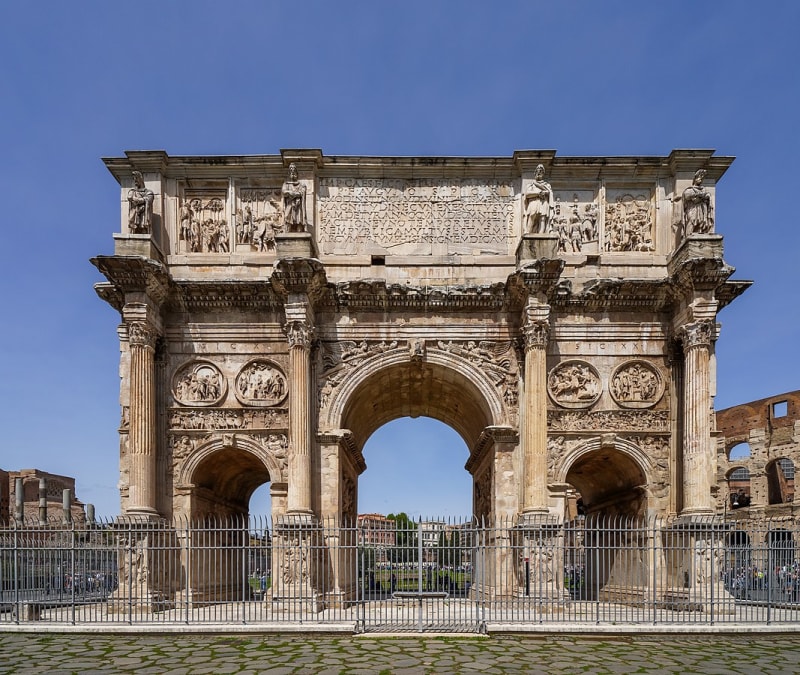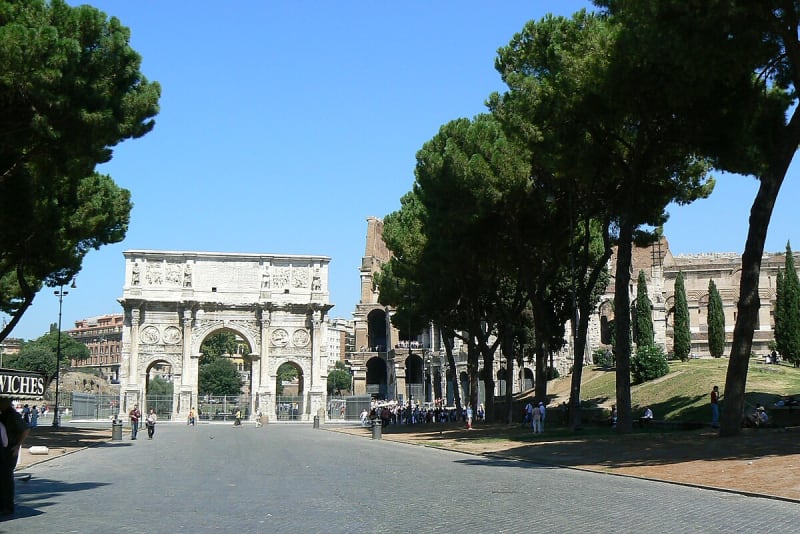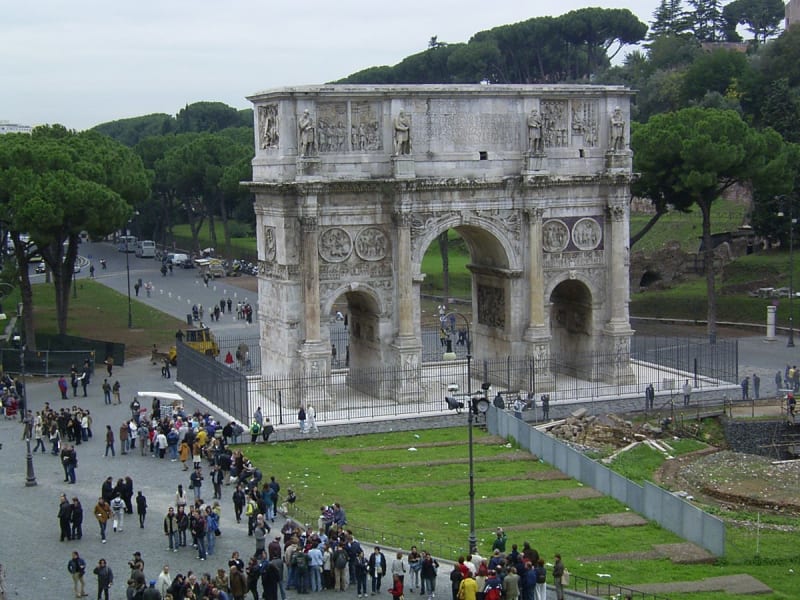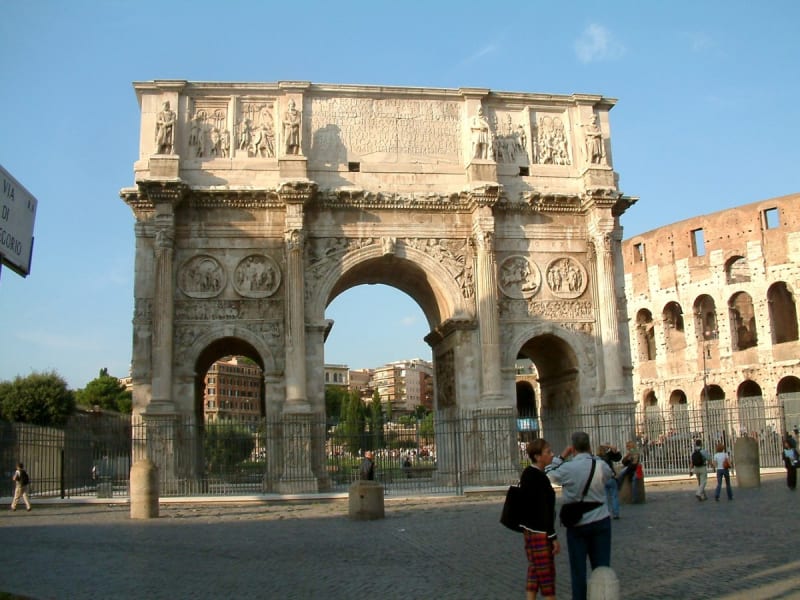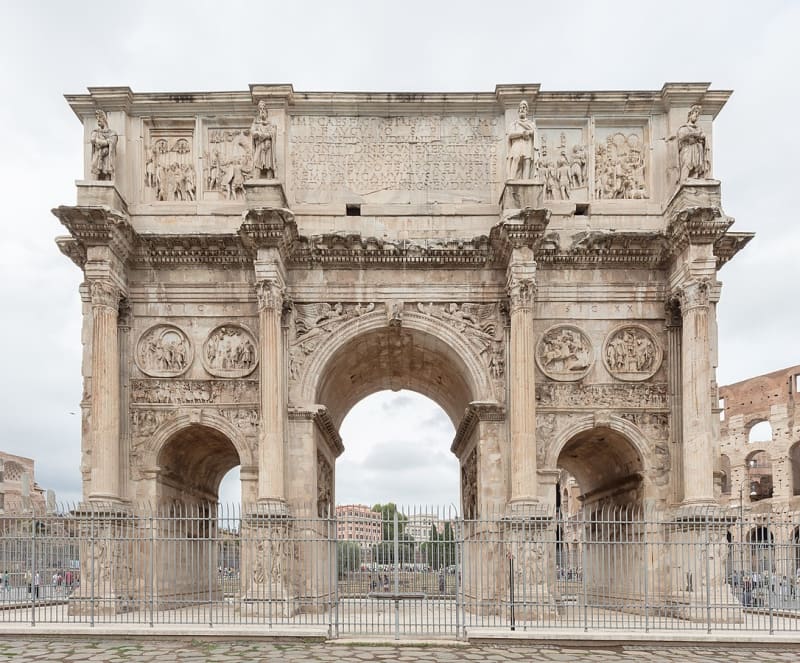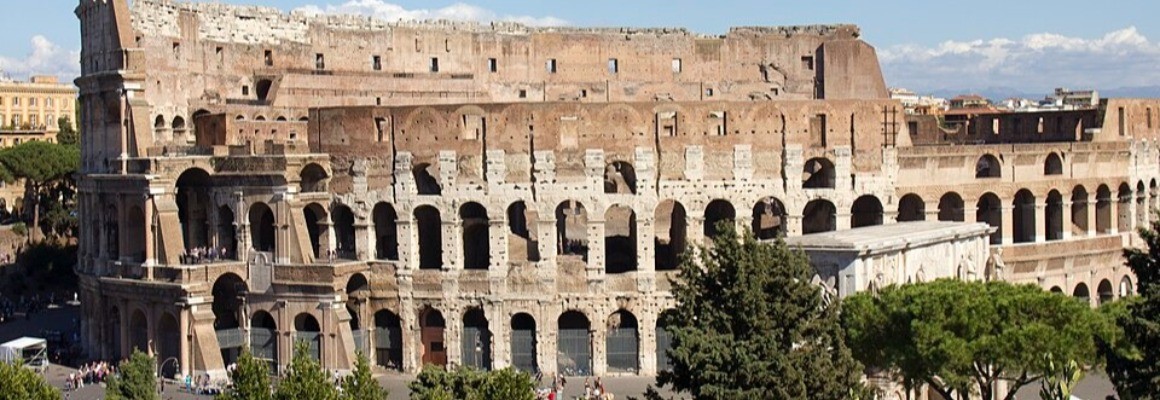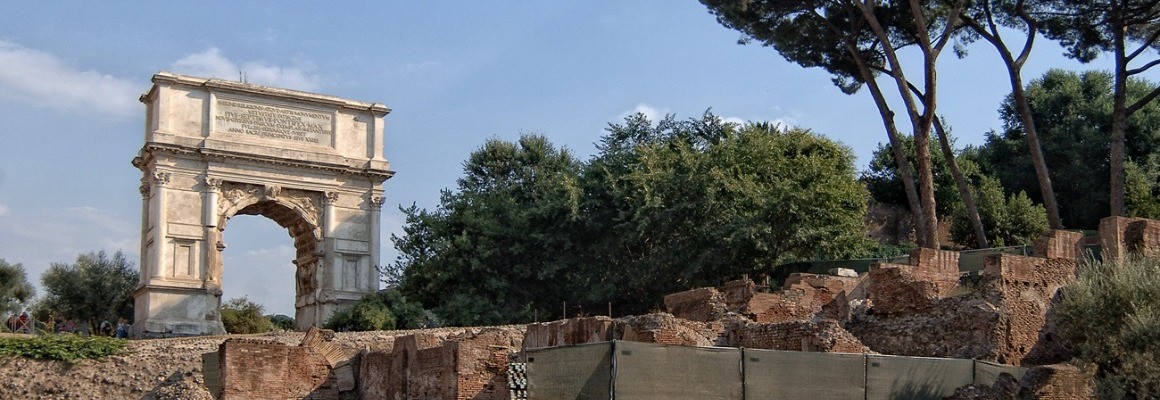

The Arc de Triomphe of Constantine is located in Rome. It is located near Italy's most visited attraction, the Colosseum. The Arch of Constantine is considered the most beautiful of all existing in the country, so it was included in the main group of architectural monuments of Rome. This amazing building is located in an open area, so anyone can see it, absolutely free of charge.
Description of the Triumphal Arch of Constantine
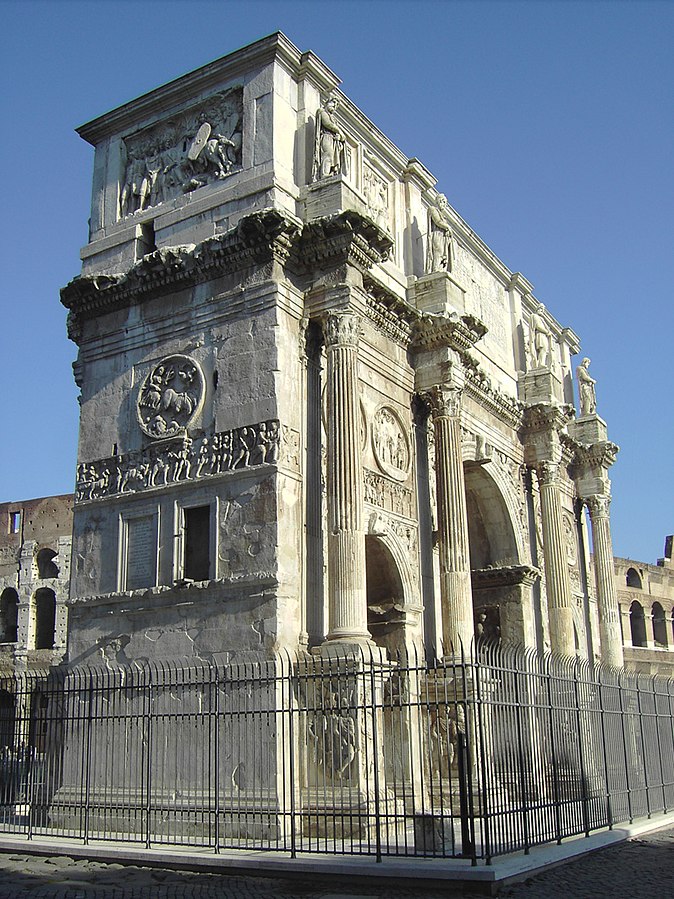
It is a three-span stone arch. The largest span of the arch is the central part of the structure, and the two side arches are slightly smaller. When you see the arch of Constantine, you are surprised not only by the beauty of the structure, but also by its impressive size. After all, the height of the arch is 21 meters, and the width is slightly more than 25 meters, while its depth exceeds 7 meters. These are quite large sizes, especially when compared with the sizes of other arches.
Marble and stone blocks were used in the manufacture of the main part of the structure. This is the last of the perfectly preserved Roman arches. In addition, it is the most visited by tourists coming to Rome.
History of origin
The Triumphal Arch of Constantine was created in 315 AD. It was built during the great victory during the civil war. Therefore, it is an important value dedicated to the victory of the great Constantine during the Battle of the Milvian Bridge in 312 AD.
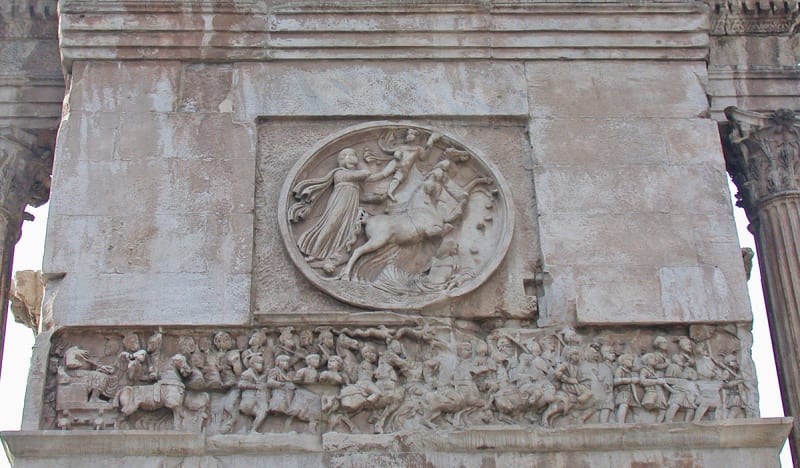
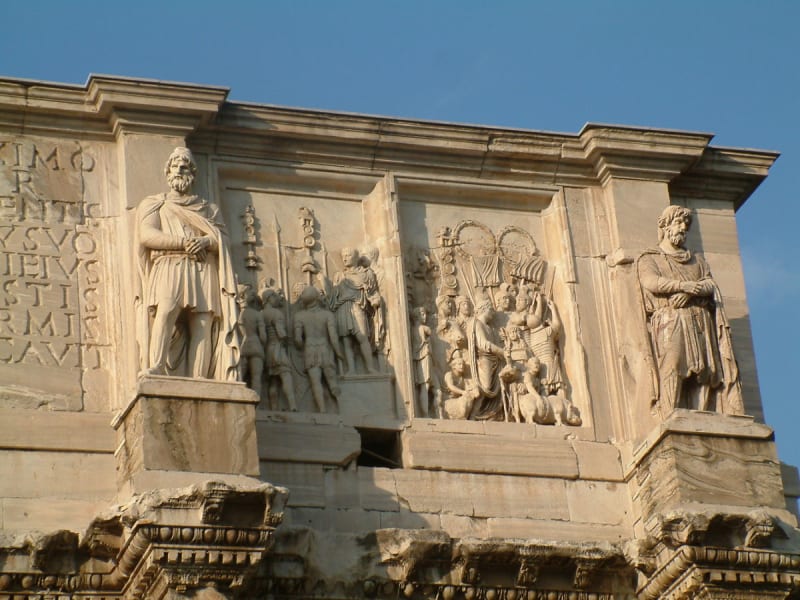
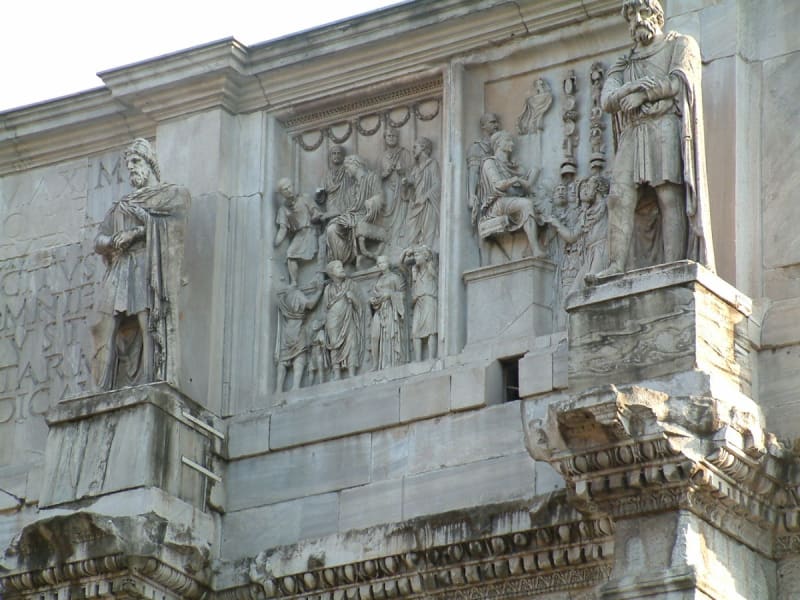
During the construction of the Triumphal Arch of Constantine, various decorative elements were used, which were removed from other monuments. They were trophies. During the construction of arches, they were considered columns and stones, which during antiquity and the Middle Ages were removed from the most ancient structures. Often, they were pagan temples, and then they were used during the construction of new structures, and mostly they were Christian temples.
Features of the attraction
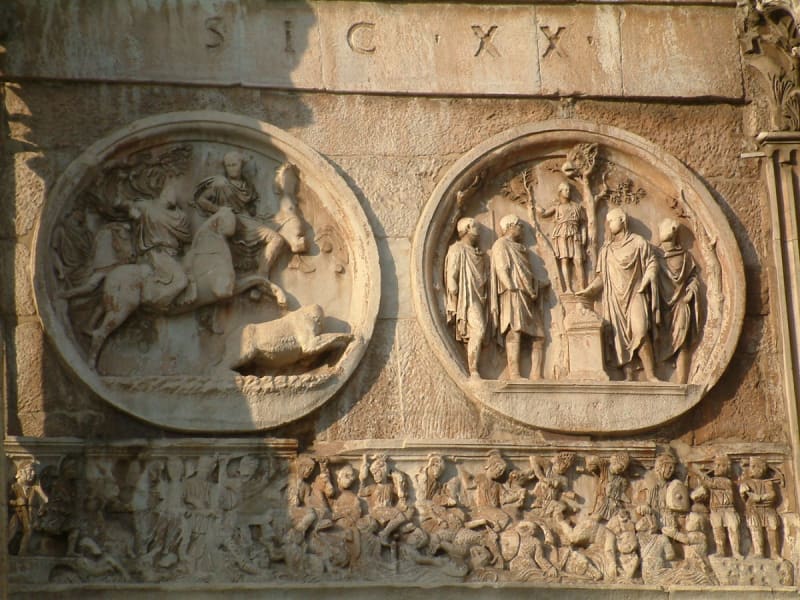
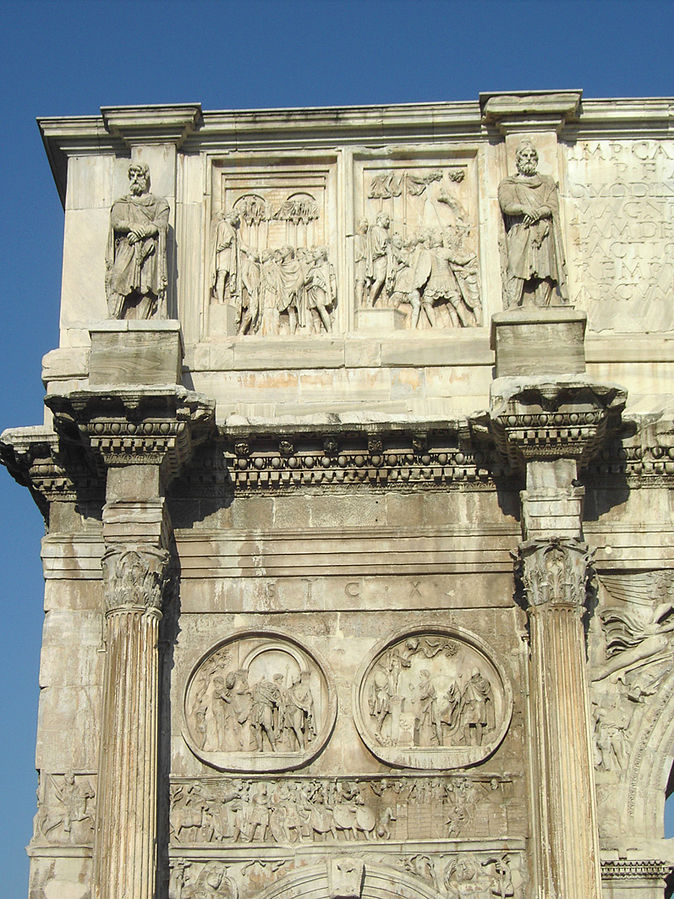
The Triumphal Arch of Constantine was no exception, so most of its decorative elements were previously used for other buildings. For example, it includes marble statues, which are its main value and early statues of the Trojan Forum. The smaller spans are decorated with medallions depicting hunting from the Adriano period, which dates back to the second century.
Later, other arches with a three-span design appeared in Rome, but all of them were created following the example of the Triumphal Arch of Constantine. Despite the ingenuity of the design, the condition and appearance of the arch have deteriorated over the years. Therefore, in 1832, the government of Rome allocated funds for the reconstruction of the landmark, thanks to which today the Arch of Constantine has a magnificent view and is one of the main historical treasures of Rome.
Gallery