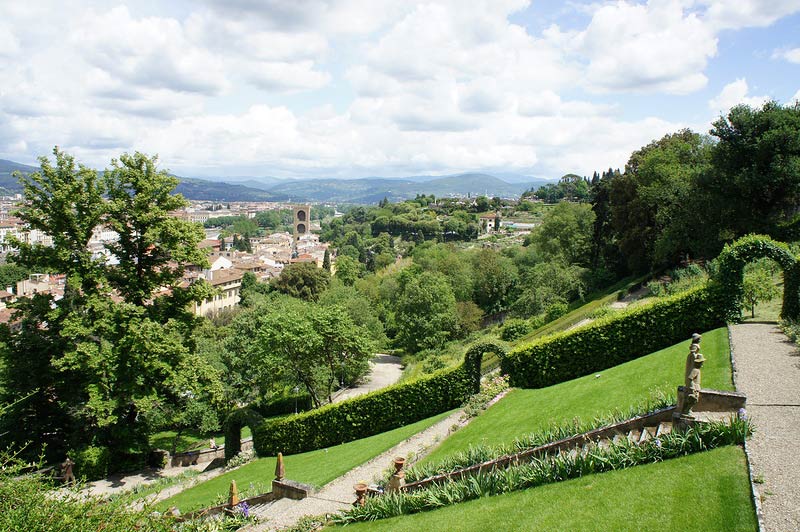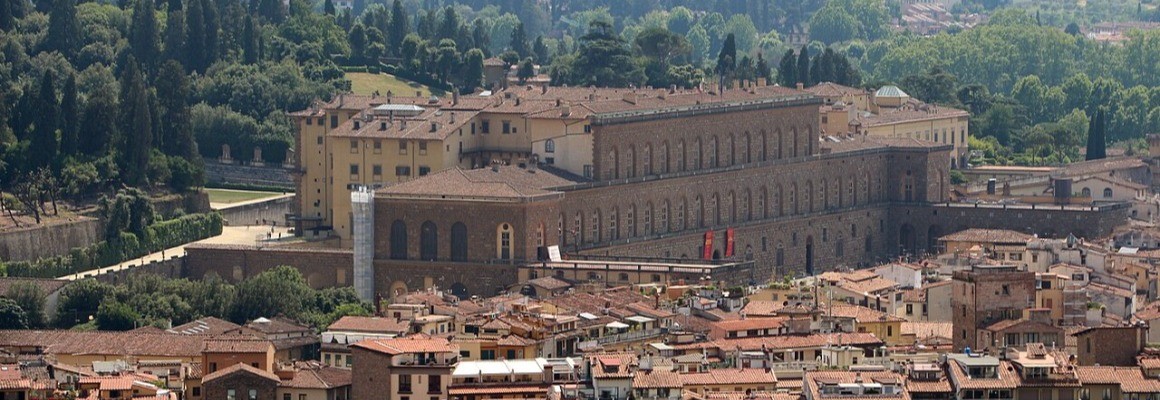

The Boboli Gardens are a historic park in Florence, located on the hillside behind Pitti Palace on the south bank of the Arno River. They are among the finest examples of an Italian Renaissance garden, where architecture, sculpture, fountains and greenery form a carefully designed ensemble. Terraces, avenues and viewpoints offer attractive views over Florence.
Covering about 30 hectares, the gardens resemble an open-air museum. Visitors can discover sculptures, monumental fountains, decorative grottoes, formal lawns, shaded paths and small architectural pavilions. Boboli is more than a green space: it reveals how ruling families used landscape design to express wealth, taste and political influence.
History of the Boboli Gardens
The gardens were begun in 1549 at the initiative of Eleonora of Toledo, wife of Cosimo I de’ Medici, Grand Duke of Tuscany. The project was entrusted to architect and artist Niccolò Pericoli, known as Tribolo. After his death, work continued under Bartolomeo Ammannati and Bernardo Buontalenti.
Initially, the gardens formed part of the Medici residence, belonging to one of Florence’s most influential families. The design followed the natural slope of the hill, using straight avenues, symmetrical layouts, terraces and fountains to express the harmony valued during the Renaissance. Later rulers expanded and modified the park, including members of the Habsburg-Lorraine and Savoy dynasties.
The Amphitheatre and Egyptian obelisk
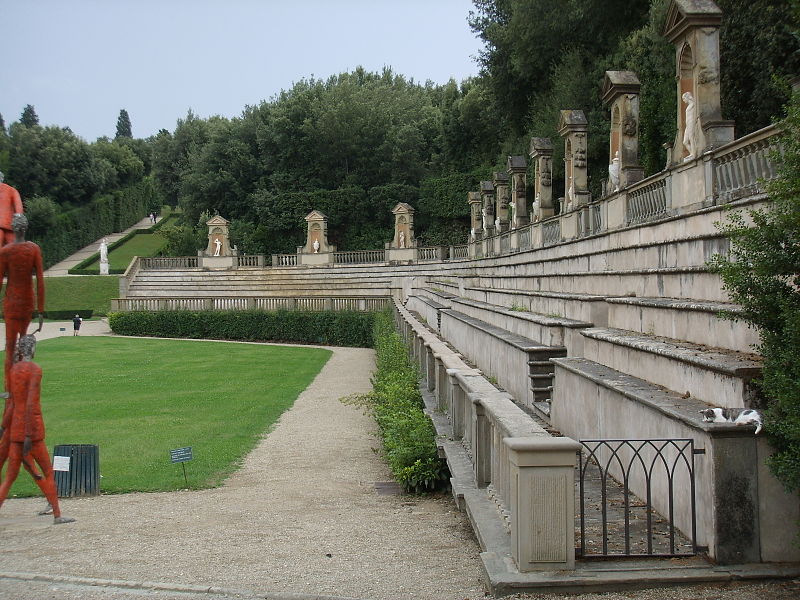
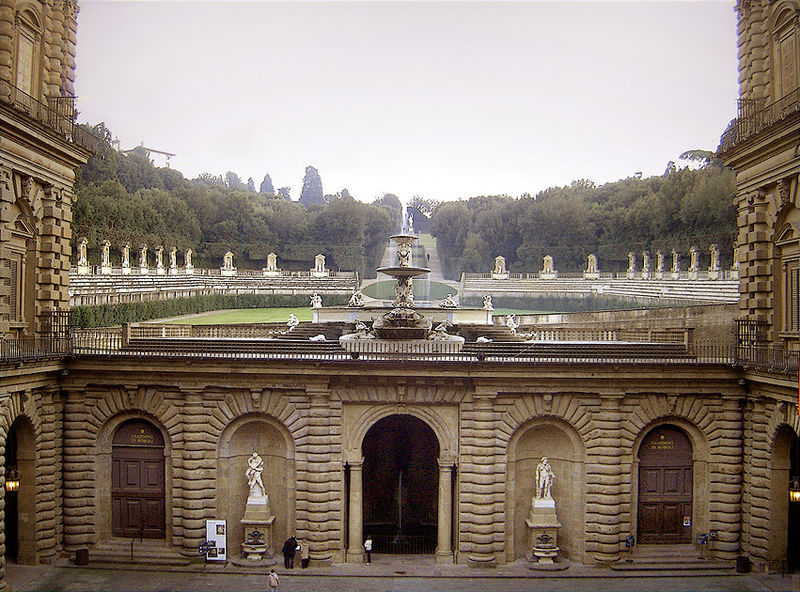
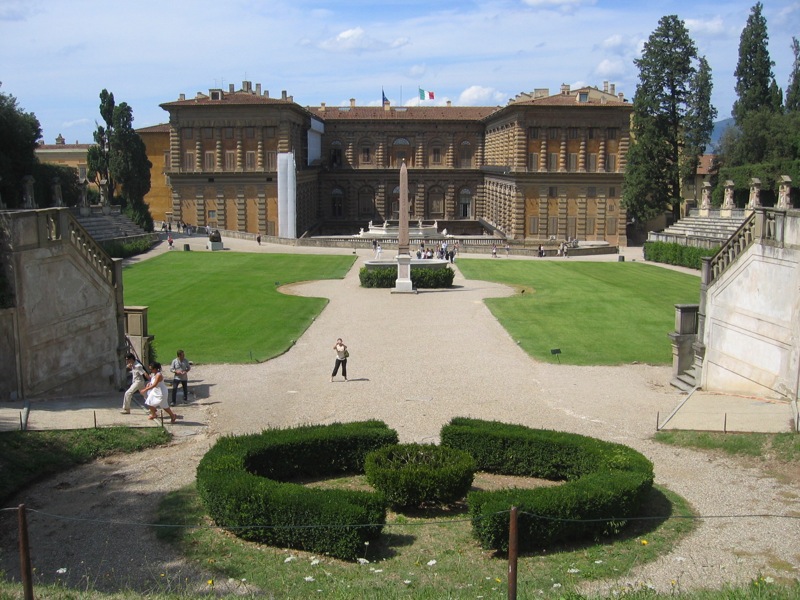
One of the most recognizable areas is the amphitheatre near Pitti Palace. Its original shape was connected with a quarry that supplied stone for the palace. During the seventeenth century, it gained a more monumental architectural form and became a setting for court ceremonies and performances.
An Egyptian obelisk from Luxor stands at the centre of the composition. It later entered the Medici collections. Nearby is a large stone basin associated with the Baths of Caracalla in Rome. These objects reflect the fascination with classical antiquity among European rulers.
The Buontalenti Grotto
The Buontalenti Grotto is one of the gardens’ most unusual structures. Created in the late sixteenth century under Bernardo Buontalenti, it was designed to resemble a fantastic natural cave. Artificial stalactites, shells and reliefs decorate its surfaces, while sculptures create a mysterious atmosphere.
Such grottoes were fashionable at European courts, combining artistic invention with imaginative architecture. The grotto offers insight into the tastes of the Medici family and Mannerism, a style known for elaborate compositions and theatrical decorative effects.
Fountains and sculptures
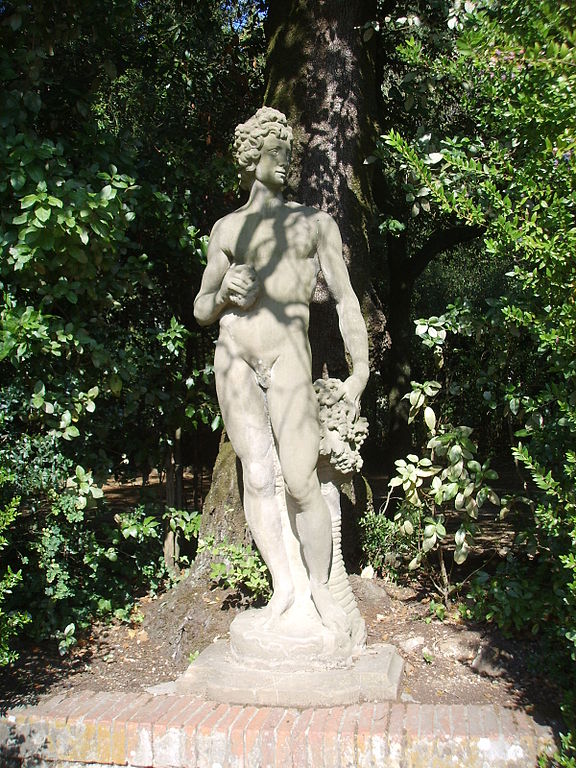
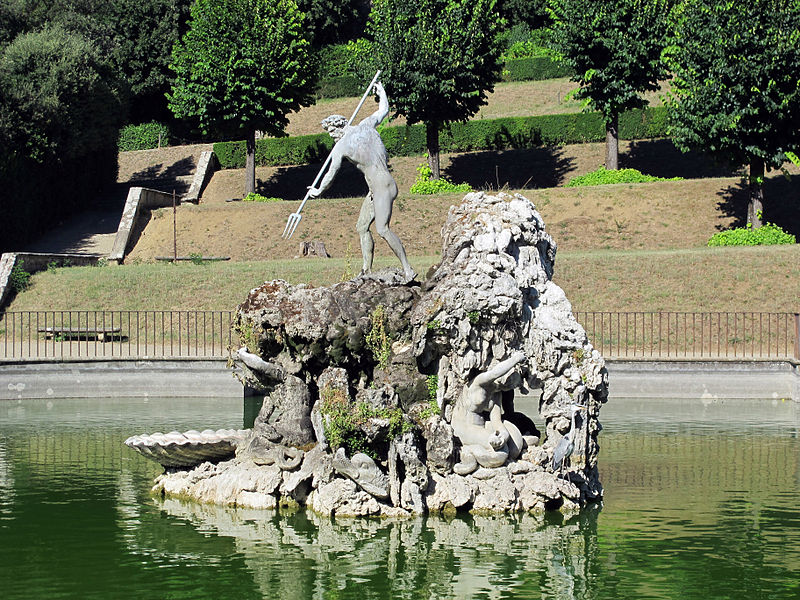
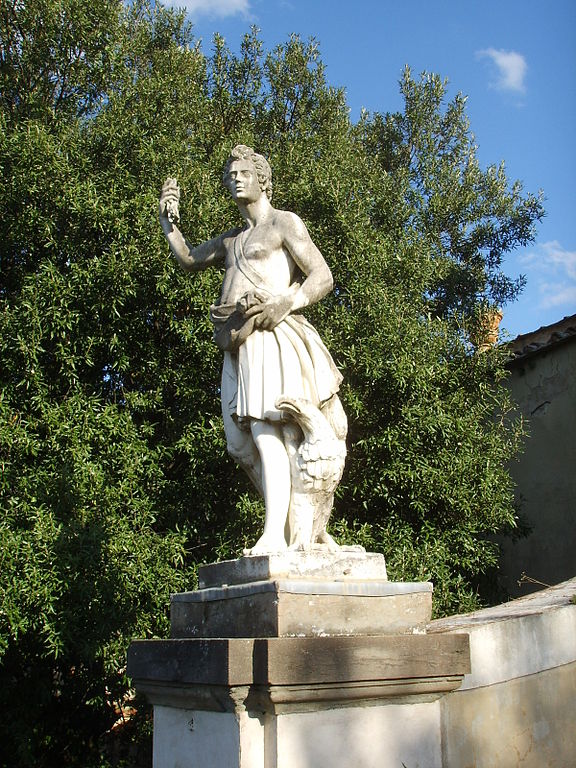
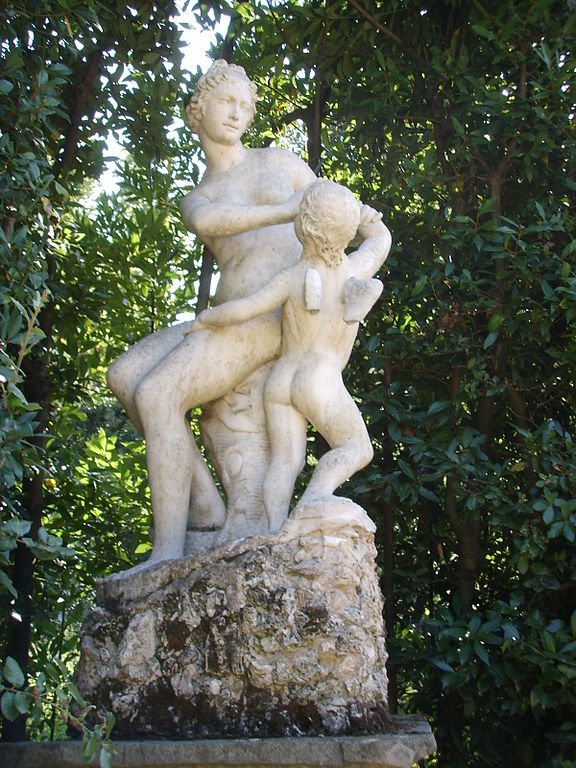
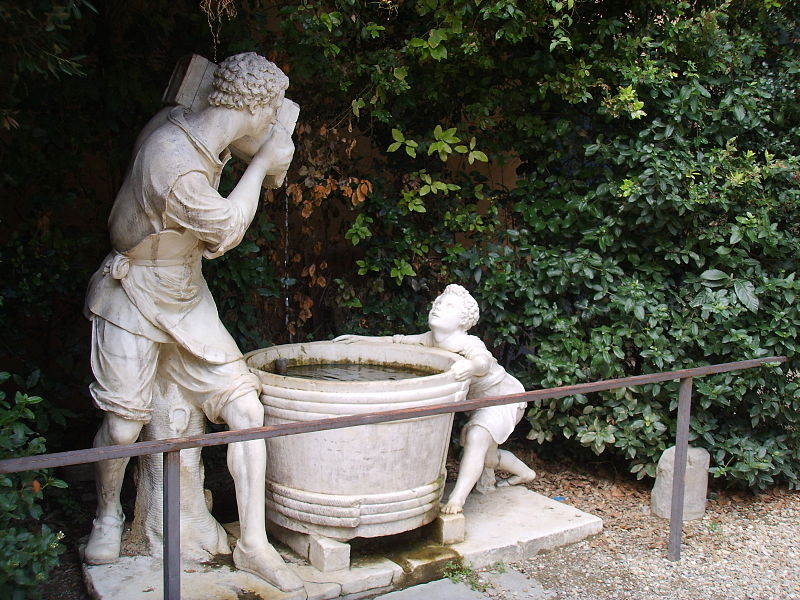
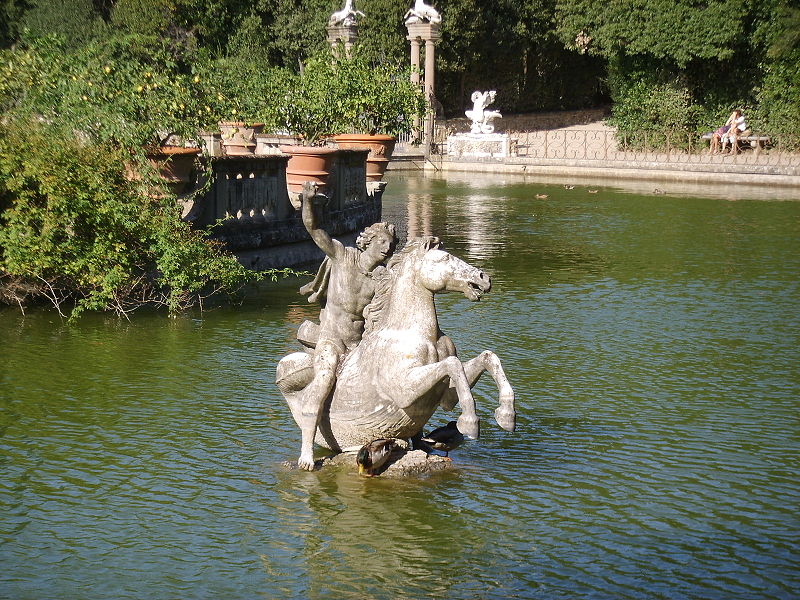
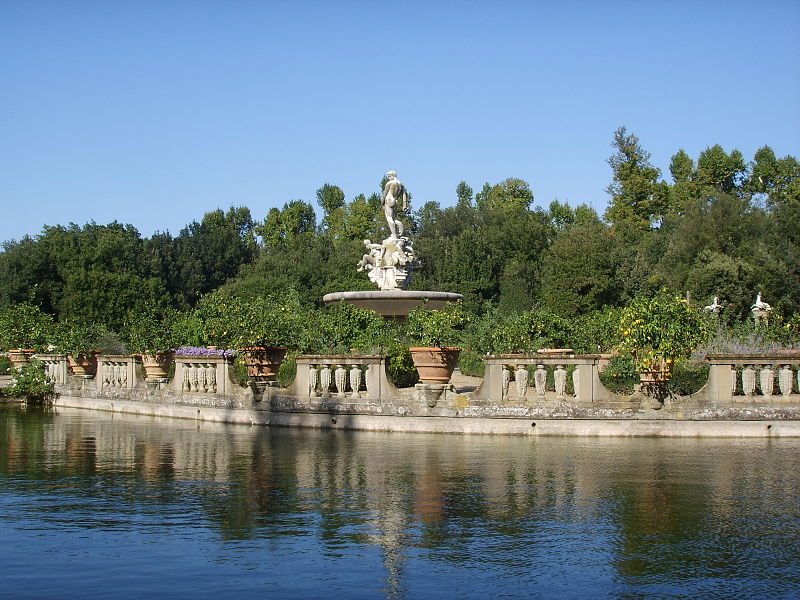
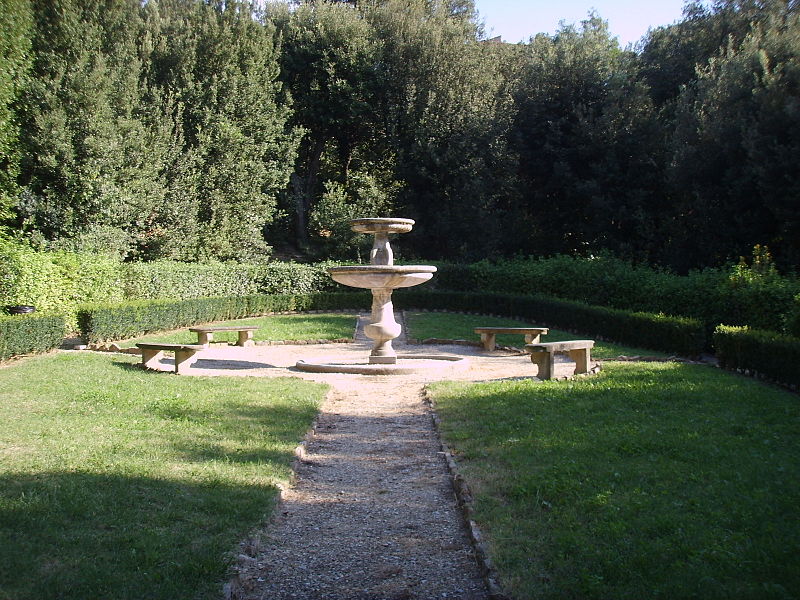
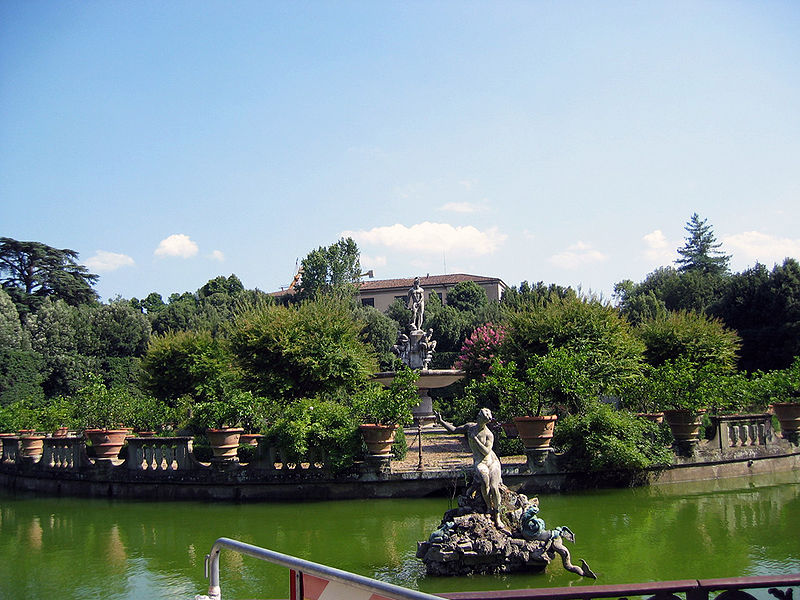
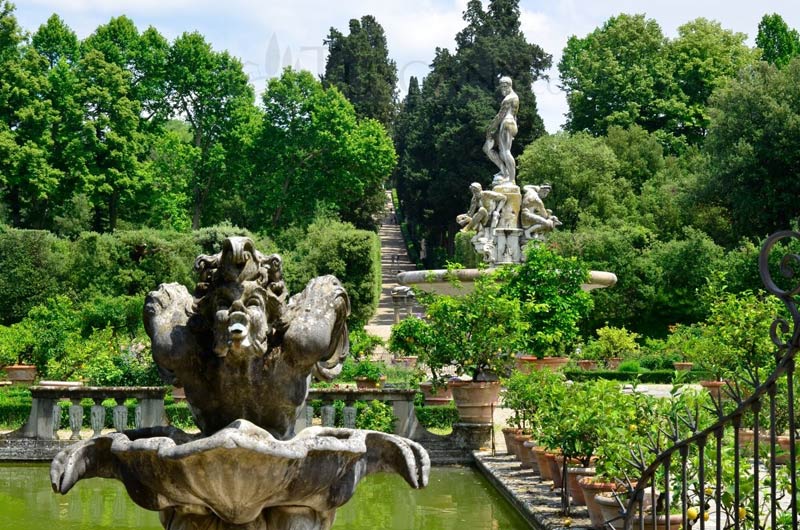
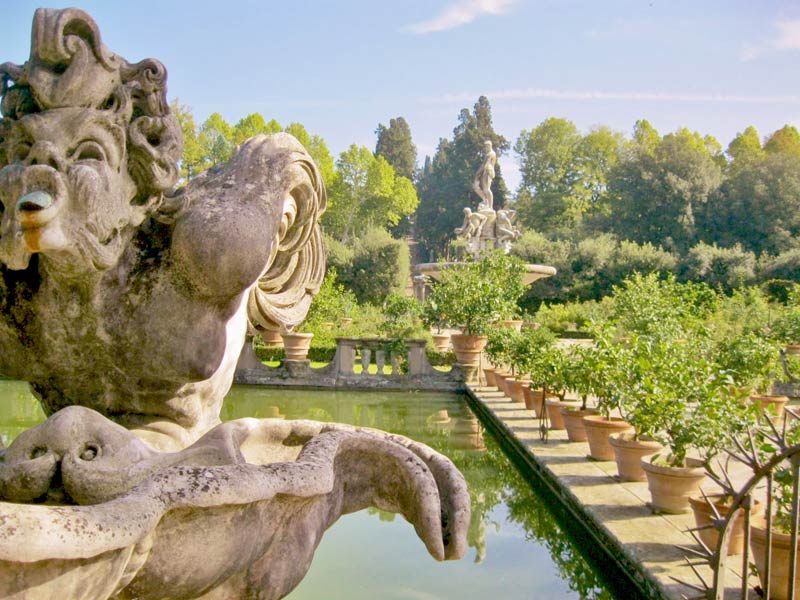
Fountains, statues and ornamental pools are scattered throughout the gardens. Among the best known are the Fountain of Neptune and the Fountain of the Ocean. Giambologna’s monumental Oceanus sculpture is associated with a basin and island in the lower part of the park. Mythological figures and classical themes reflect the Medici interest in ancient culture.
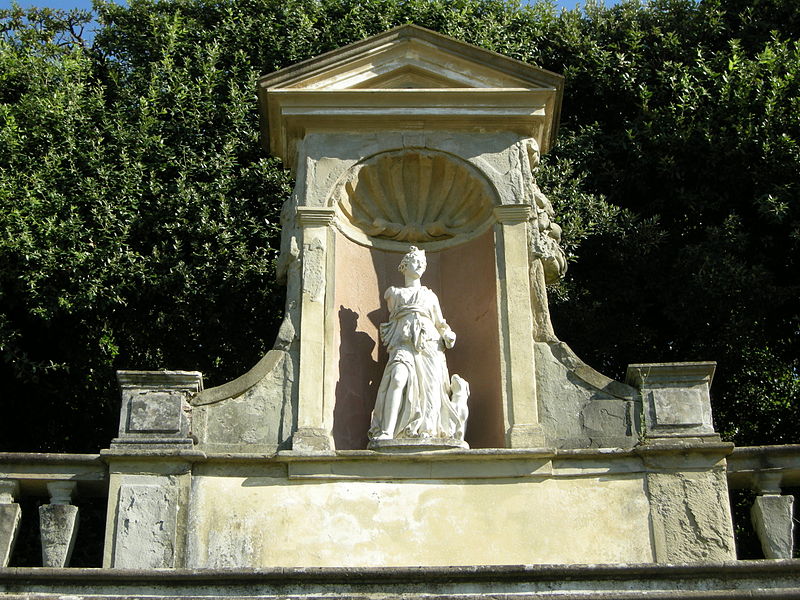
The sculptures do more than decorate the landscape. They frame views, mark intersections and guide visitors along the paths. A walk through Boboli becomes a sequence of carefully arranged scenes, each with its own perspective and atmosphere.
The Viottolone and the island basin
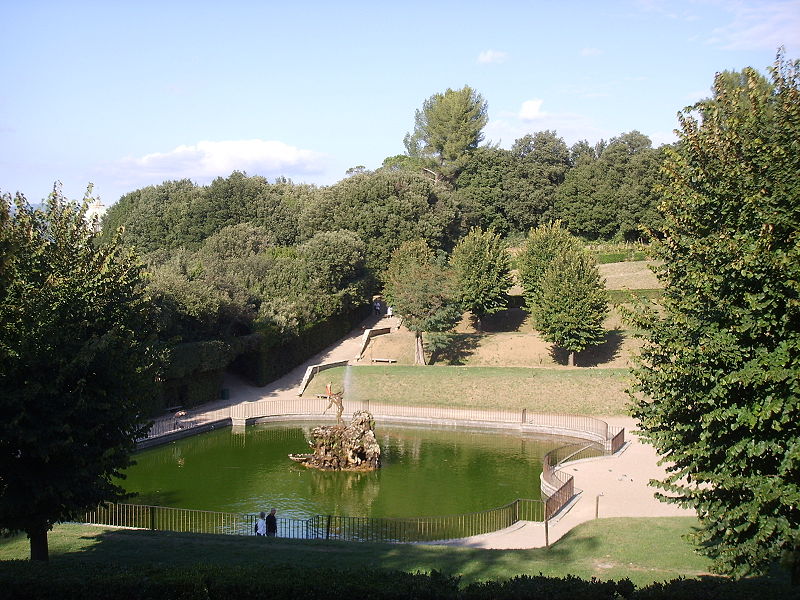
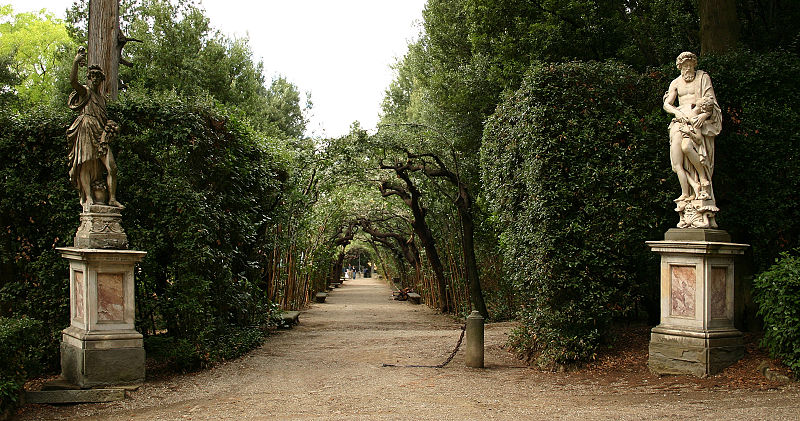
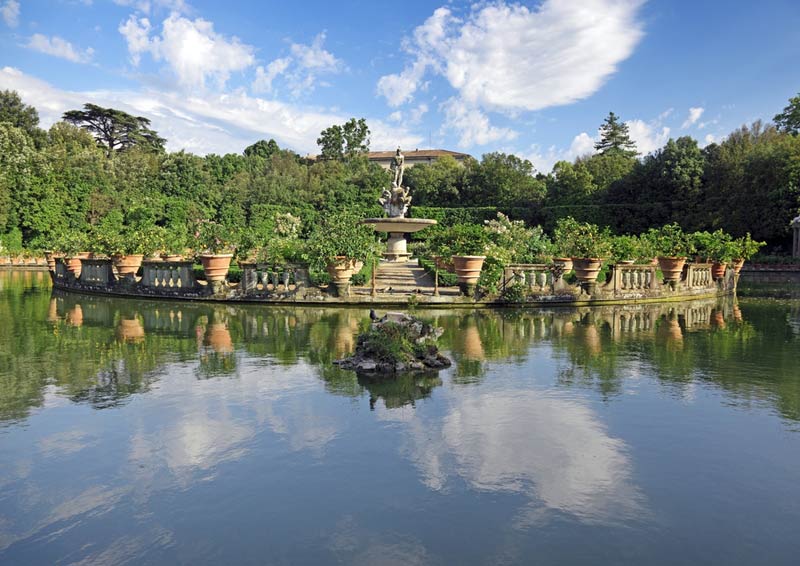
The Viottolone is a broad avenue running through the southern section of the gardens. It leads to a large oval basin with an island at its centre. Statues and plants decorate the composition, which is best appreciated at a leisurely pace.
The island and pool form a distinct ornamental ensemble. Sculptures and reflective water create a theatrical effect typical of Medici garden design. It is a good place to pause and admire the long perspective of the avenue.
The Kaffeehaus and Lemon House
On the hillside stands the Kaffeehaus, an eighteenth-century pavilion associated with the court culture of the Habsburg-Lorraine dynasty. It provided a resting place during garden walks. Its architectural style differs from the earlier Renaissance structures.
The Lemon House, designed by Zanobi del Rosso in the late eighteenth century, was built to shelter citrus trees in large containers during colder months. Such collections were a feature of prestigious gardens and demonstrated the skill of gardeners as well as the wealth of their patrons.
Plants and garden design
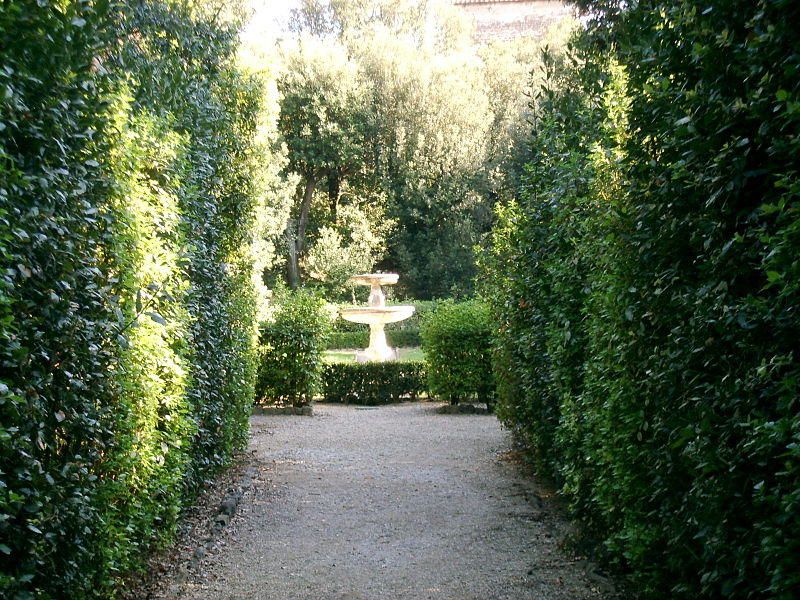
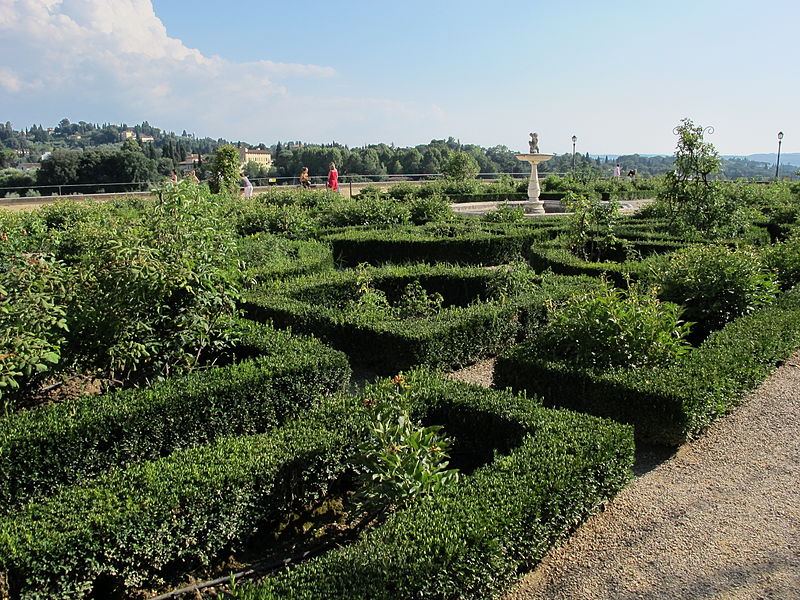
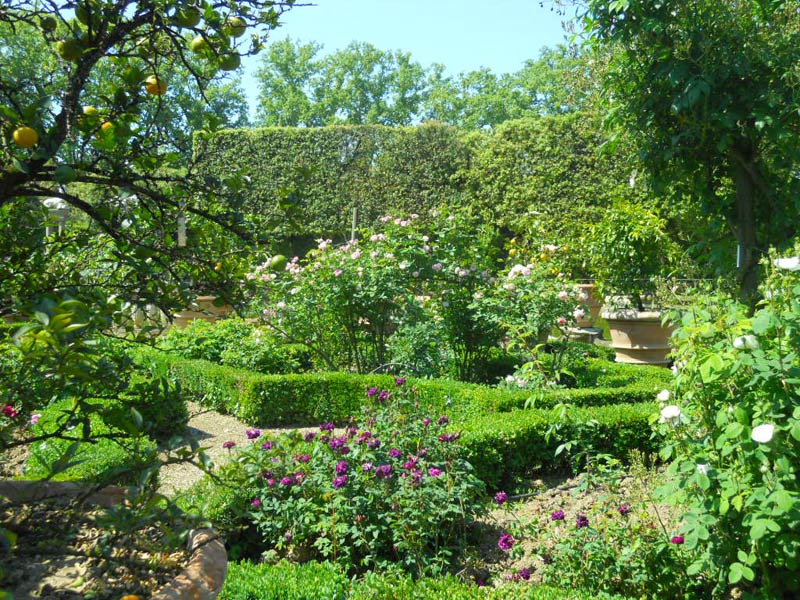
The Boboli Gardens combine the geometry of a formal garden with the natural contours of the hillside. Cypress trees, oaks and other species grow among hedges, lawns and ornamental plantings. Terraces and paths allow visitors to climb gradually to higher parts of the grounds.
Spring and early summer bring fresh greenery, while autumn gives the park a quieter palette. Boboli is primarily a historic landscape, and its appeal comes from the relationship between architecture, sculpture and open space as much as from its plants.
The Boboli Gardens and UNESCO heritage
The gardens form part of the Medici Villas and Gardens in Tuscany, added to the UNESCO World Heritage List in 2013. The wider ensemble illustrates the Medici family’s influence on European culture and the development of garden design. Ideas developed in Tuscan gardens became models for palace parks throughout Italy and beyond.
How to get there and visitor tips
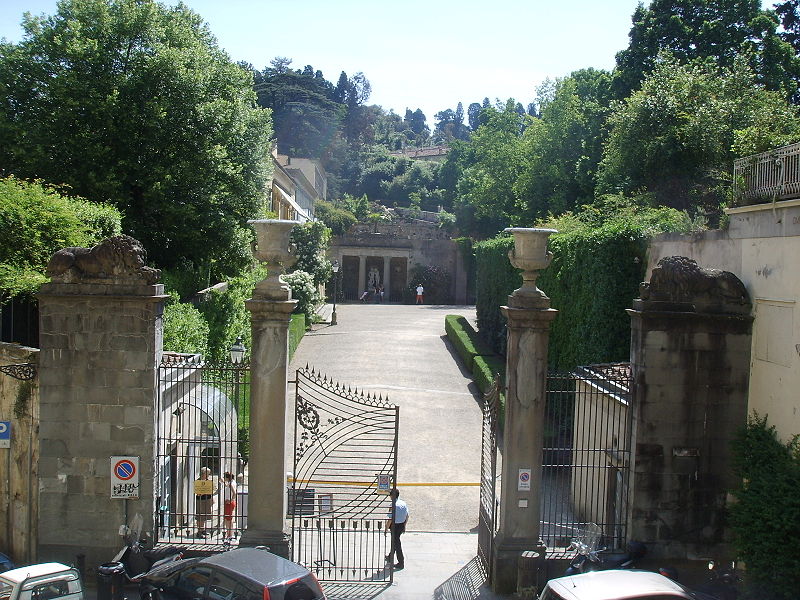
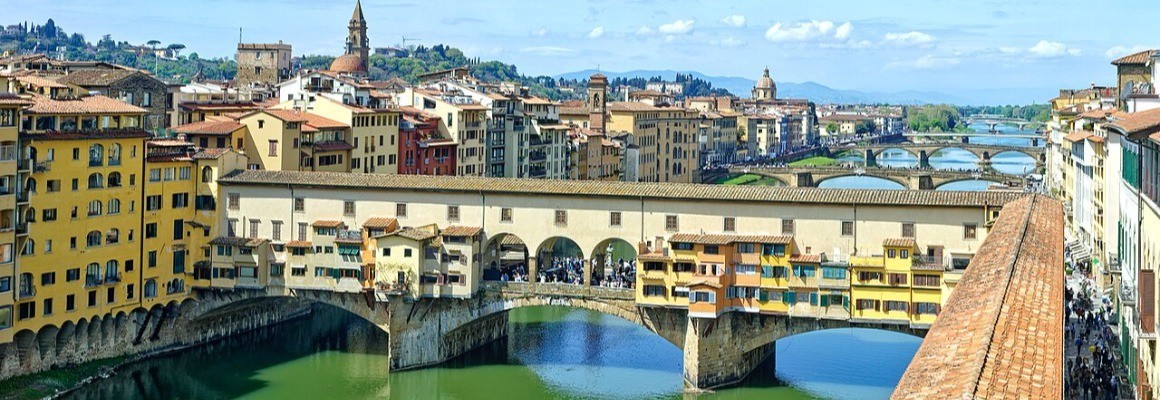
The gardens are in Florence’s Oltrarno district, behind Pitti Palace. They can be reached on foot from the historic centre by crossing the Arno over one of the central bridges. Entrances are available near the palace, from Via Romana, Porta Romana and the Forte di Belvedere area.
Allow several hours to explore the grounds. The park is extensive, and some paths climb the hillside. Comfortable shoes are useful for gravel paths, steps and uneven surfaces. On sunny days, bring water, a hat and sun protection. Check current opening times and access arrangements before visiting.
Why visit the Boboli Gardens
Boboli is not simply a park in central Florence; it is a landmark in the history of art and landscape design. Its sculptures, grottoes, fountains, pavilions and carefully planned avenues developed over several centuries. It is especially rewarding for visitors interested in the Medici, the Italian Renaissance and historic gardens.
Gallery