The Taj Mahal is a magnificent white-marble mausoleum in Agra, northern India. It is considered one of the greatest achievements in world architecture and a symbol of eternal love. The complex was commissioned by Mughal emperor Shah Jahan in memory of his beloved wife, Mumtaz Mahal. Its harmonious proportions, delicate ornamentation and reflection in the water make the Taj Mahal one of the most recognizable landmarks on Earth.
History and Construction
The story of the Taj Mahal is closely connected with Mumtaz Mahal, Shah Jahan’s wife, who died in 1631 after giving birth to their fourteenth child. Historical accounts say that the emperor decided to build a magnificent tomb in her memory. Construction began in 1632 and continued for decades. The main mausoleum was completed around 1648, while some parts of the complex were finished later.
Craftspeople, stonecutters, carvers, calligraphers and artists came from different parts of the empire and neighboring regions. Persian, Indian and Islamic traditions came together in the architecture and decoration. Ustad Ahmad Lahori is generally identified as the principal architect. After Shah Jahan died in 1666, he was buried beside Mumtaz Mahal inside the mausoleum.
Architecture and White Marble
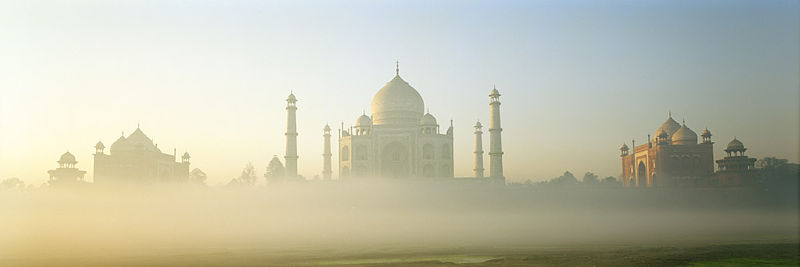
The main building rises from a square platform and is crowned by a large central dome. Four minarets stand at the platform’s corners, reinforcing the composition’s symmetry. The façades feature arches, geometric patterns, calligraphic inscriptions and floral designs. The white marble changes with the light: it may appear soft pink at dawn, brilliant white during the day and golden at sunset.
One of the monument’s most remarkable features is pietra dura inlay. Artisans embedded carefully cut pieces of colored semiprecious stones into the marble to create flowers, leaves and intricate patterns. Arabic calligraphy decorates the arched entrances and includes religious texts. The precision of the craftsmanship and the combination of materials make the mausoleum an exceptional work of decorative art.
Gardens and the Monumental Complex
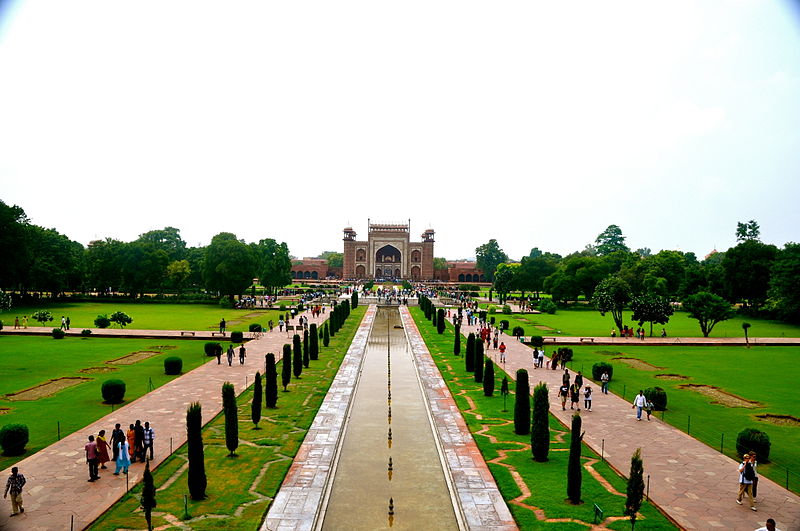
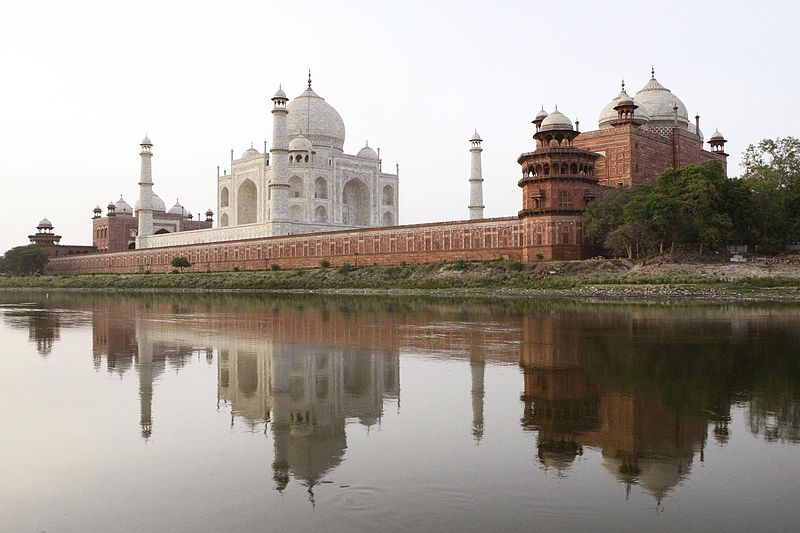
The Taj Mahal forms part of a large architectural ensemble on the banks of the Yamuna River. In front of the mausoleum lies a Persian-style charbagh garden, divided into geometric sections by paths and water channels. A central reflecting pool mirrors the building and creates one of the monument’s most famous views.
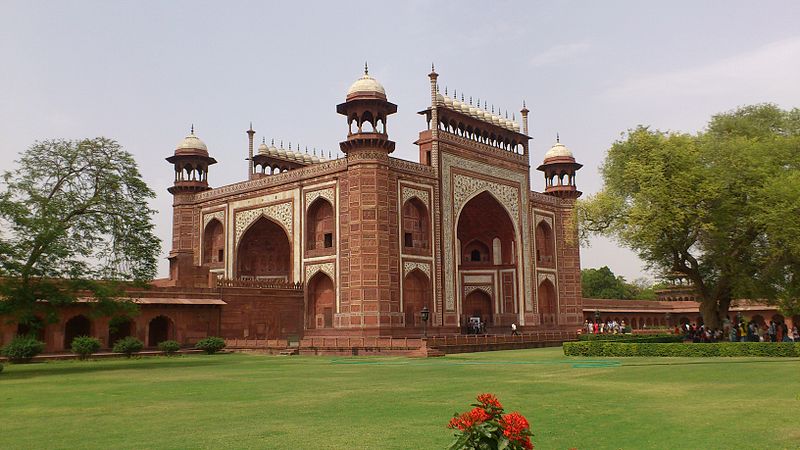
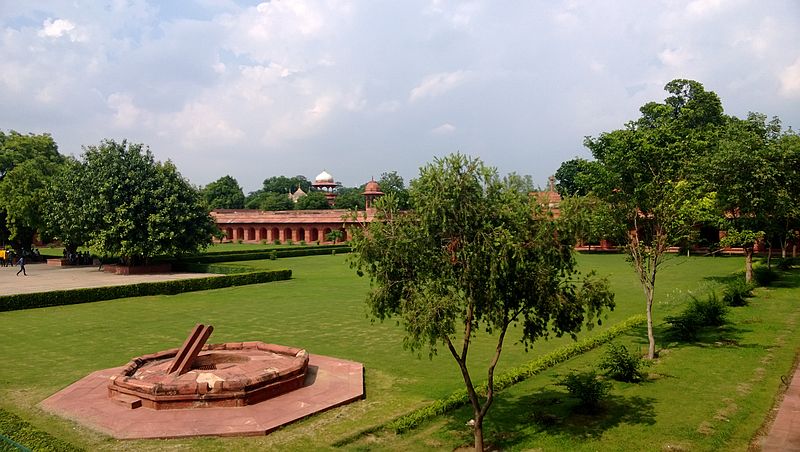
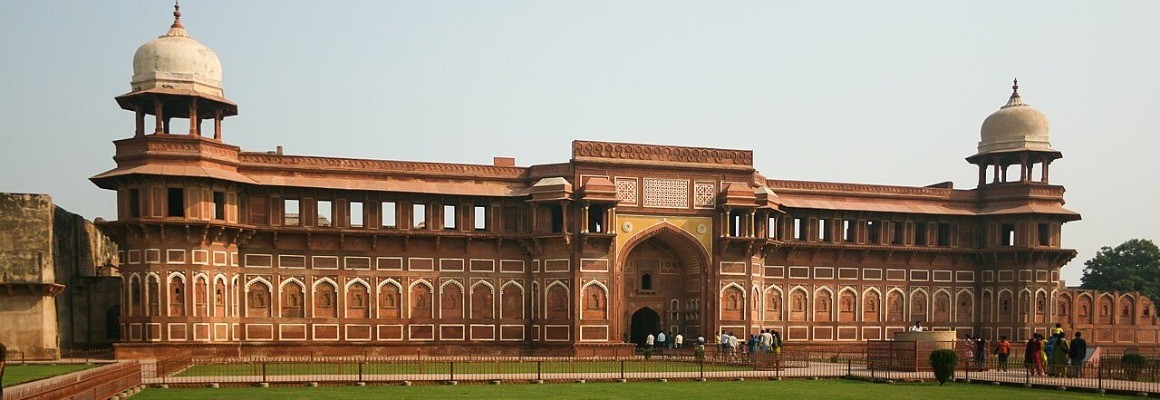
The complex also includes a monumental gateway, a red-sandstone mosque and a matching guesthouse. The contrast between white marble and red stone reinforces the harmony of the ensemble. Placing the mausoleum near the northern end of the garden, rather than in its center, distinguishes the design from many traditional garden layouts.
A Symbol of Love and a World Heritage Site
The Taj Mahal is often described as a monument to eternal love. This interpretation reflects the story of Shah Jahan and Mumtaz Mahal, although the complex also represents imperial power, religious ideas and the artistic achievements of the Mughal era. In 1983, the Taj Mahal was added to the UNESCO World Heritage List. It is also widely known as one of the New Seven Wonders of the World, selected through an international initiative in 2007.
Inside the Mausoleum
The central chamber contains decorative cenotaphs for Mumtaz Mahal and Shah Jahan, surrounded by an intricately carved marble screen. Their actual graves lie in a lower chamber. Mumtaz Mahal’s cenotaph occupies the central position, while Shah Jahan’s was placed beside hers, disrupting the otherwise strict symmetry of the interior. Carving, ornamental details and inscriptions decorate the space, while subdued lighting creates a solemn atmosphere.
Visiting the Taj Mahal
The monument is located in Agra, approximately 200 kilometres south of Delhi. Visitors can reach the city by train, bus or car. For many travellers, the Taj Mahal is the highlight of a journey through northern India. Early morning is especially popular because temperatures are usually lower and the soft light brings out the details of the marble.
Opening hours and visitor rules can change, so it is advisable to check official information before travelling. According to the official tourism website, the complex generally opens 30 minutes before sunrise and closes 30 minutes before sunset, but it is closed to ordinary tourist visits on Fridays. An entry ticket is required, and access to the main mausoleum may involve an additional fee. Night viewing around the full moon is available under separate rules.
Preserving the Monument
Protecting the white marble is an ongoing challenge. Air pollution, environmental exposure and large visitor numbers put pressure on the historic structures. Conservation work is carried out to protect the complex, monitor the condition of its materials and regulate activity in the surrounding area. Visitors should follow the rules, avoid touching decorative surfaces and take their rubbish with them.
Why Visit the Taj Mahal?
The Taj Mahal impresses not only through its scale but also through its rare combination of architectural precision, decorative craftsmanship and carefully planned landscape. It tells the story of the Mughal Empire, the traditions of Indian art and a personal loss that inspired a monumental architectural project. Walking through the gardens, seeing the mausoleum reflected in the pool and admiring the delicate stone inlay make a visit unforgettable.
Gallery