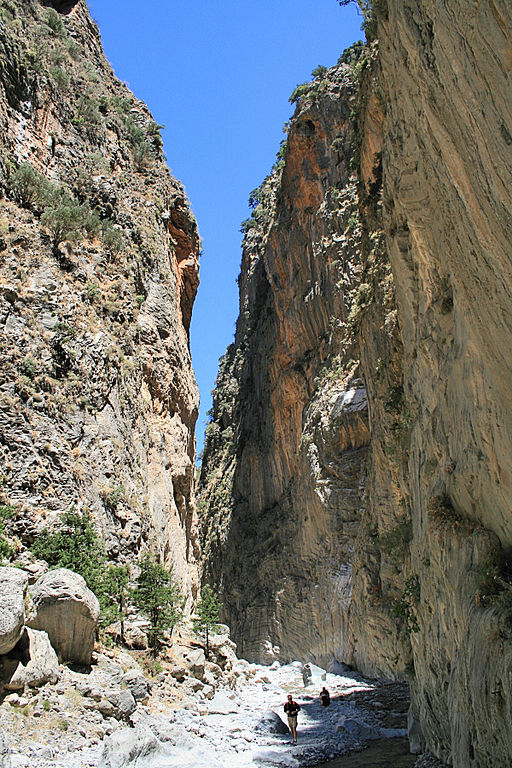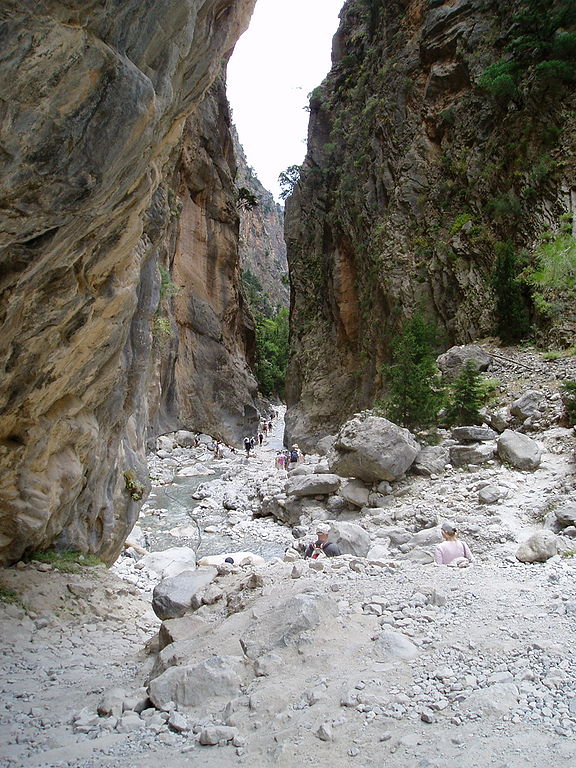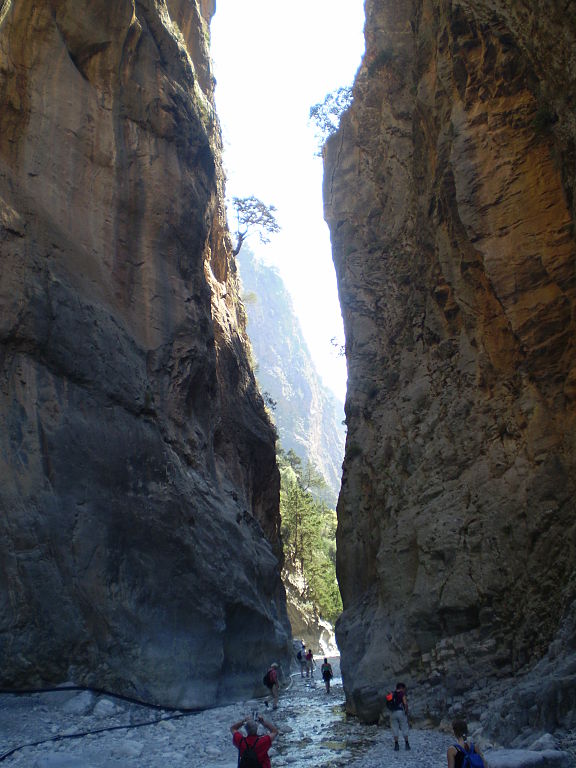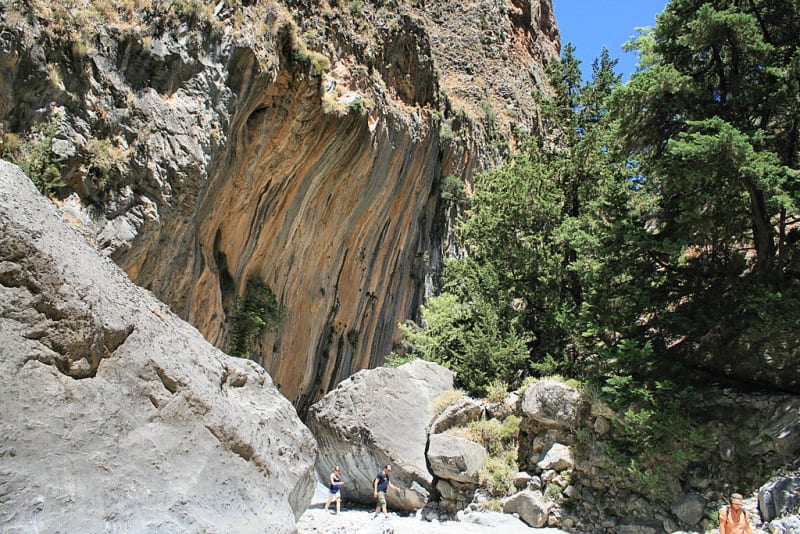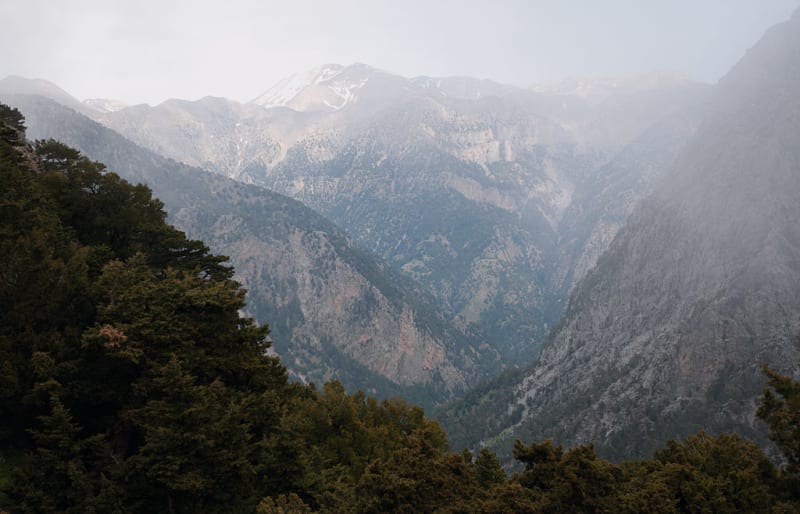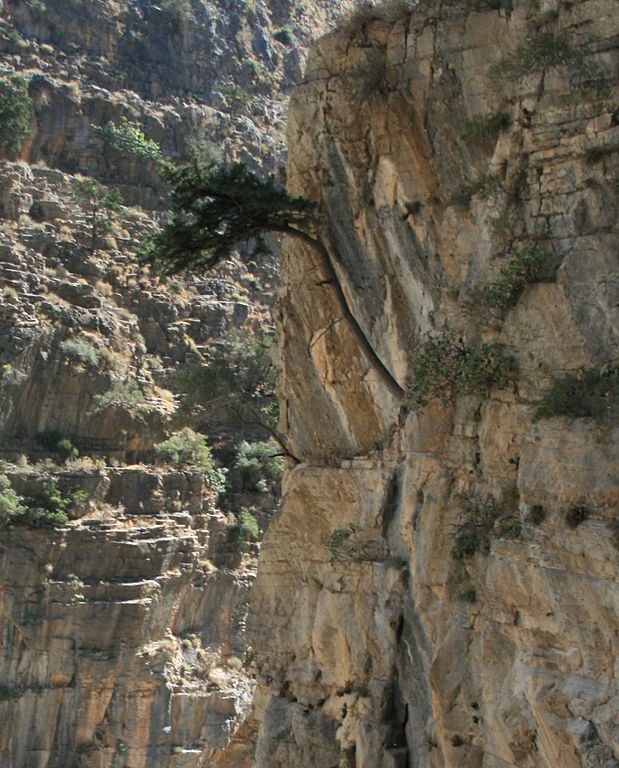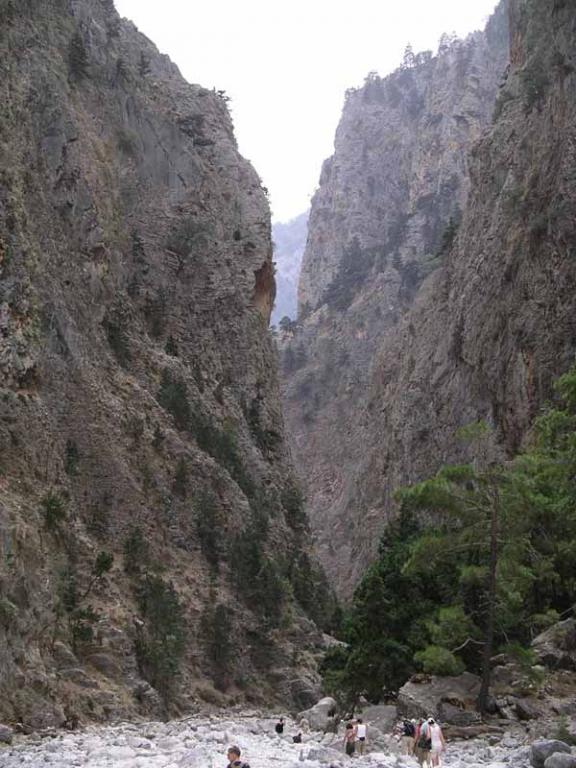

Lefka Ori is a Greek national park on the island of Crete. It was founded in 1962 on the territory of the Samaria Gorge, the deepest gorge in Europe. The Samaria gorge stretches for more than 15 km in length, and the width decreases from three hundred meters to three. The park area is 48.5 km2.
The gorge was named after the nearby village of Samaria, and the village was previously named after the church of Osias Marias. The inhabitants of the village were resettled after the territory was granted the status of a national park.
Lefka-Ori Park has been occupied by humans for a very long time. Ruins of temples have been discovered here, which may have been built in honor of Artemis and Apollo. In the 6th century BC, the famous city of Tarra was located in the gorge, which even had its own coins. A bee was minted on one side of the coin, and a goat's head was minted on the other. In those days, the river in the gorge was called Tarreos. The city of Tarra was mentioned by Greek and Roman scientists in their writings. During the reign of the Romans, the city reached its peak. When the Turks captured the island, residents of the Sfakia region defended themselves in the gorge, who, after bloody battles, were able to hold the Samaria Gorge. During the Second World War, the path of the Greek government, which emigrated to Egypt, passed through here.
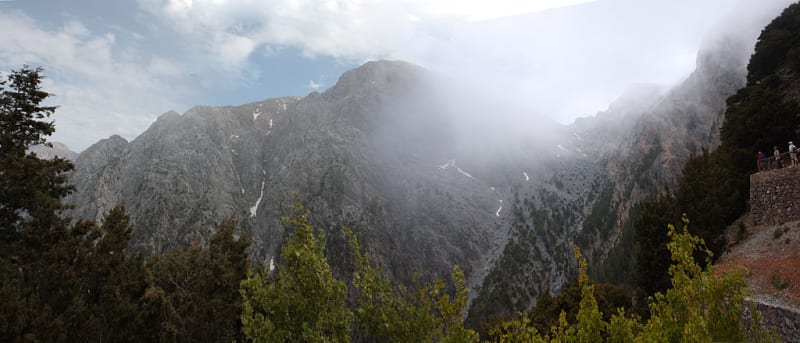
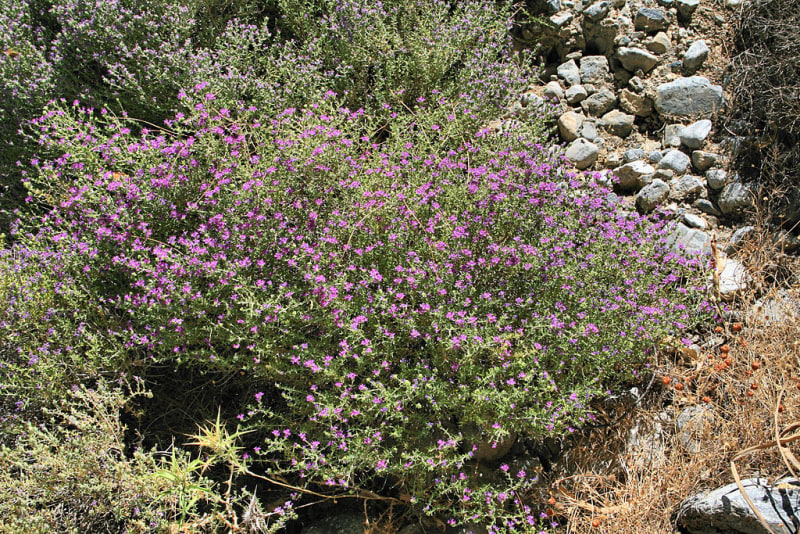
The National Park was created to preserve the unique White Mountains (Lefka Ori), its flora and fauna. This is the only place where the kree-kree mountain goat and several other rare species of plants and animals live. Of the animals in the gorge, it is easy to meet martens, badgers, partridges, golden eagles, eagles, as well as over four hundred varieties of plants. Almost the entire park is covered with forests of cypresses, pines and oaks.
The first tourists in the gorge appeared in 1931, when the Greek Mountaineering Society began organizing rare trips by tourist groups. Since 1962, hiking has become systematic, and in 1969, Lefka-Ori National Park was taken over by travel agencies. About two hundred thousand people pass through the park every year. And at the peak, 3,000 people can be in the gorge, which creates some difficulties for movement. Therefore, you need to go to the park as early as possible. The National Park is best visited in spring, as it is very hot in summer.
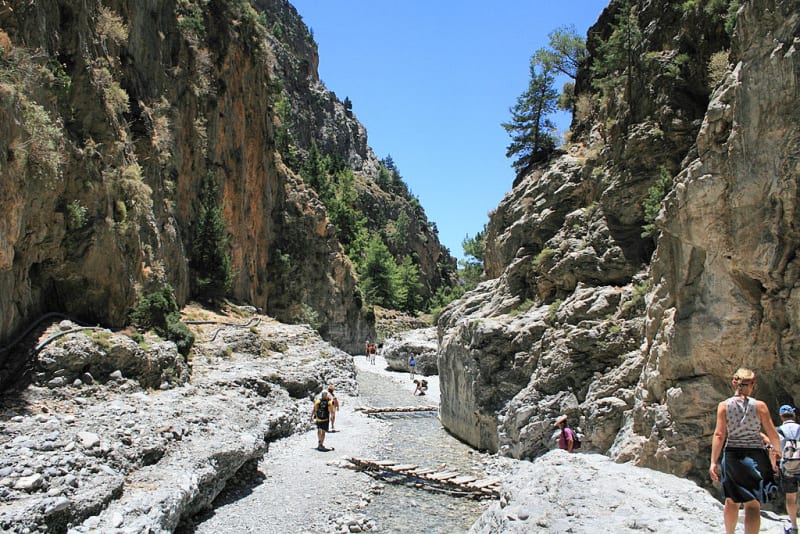
It takes about five hours to pass through the gorge. For untrained people, the route can be very painful. The route runs along the river, which dries up almost completely in summer. For convenience, the trail is equipped with rest areas with toilets and water sources. The park is being maintained by foresters on mules.
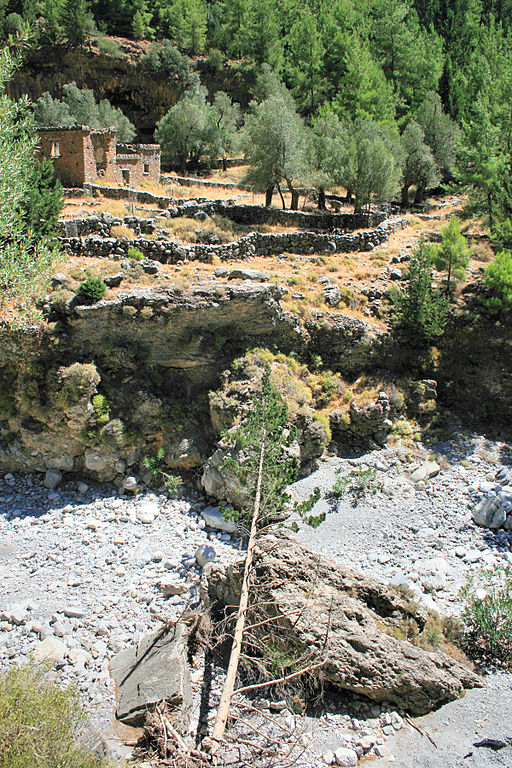
The route is laid out so that visitors can see the local attractions: the churches of Agios Nikolaos, St. Mary of Egypt, Osia Maria. On the route we come across the village of Samaria, whose houses have been restored. The village has a pharmacy, a telephone, a helipad, and a forest guard station. Four kilometers from the village is the narrowest part of the gorge, called the Portes Gorge. At this point, the width of the Samaria Gorge is about 3.5 meters, and the height is almost three hundred meters.
In winter and early spring, Lefka-Ori Park is closed to the public, as due to rains, furious streams of water rush through the gorge, and boulders fall from the mountains. You can not spend the night in the park, for this purpose, visitors are checked at the entrance and exit to the park. Entrance is paid.
Gallery