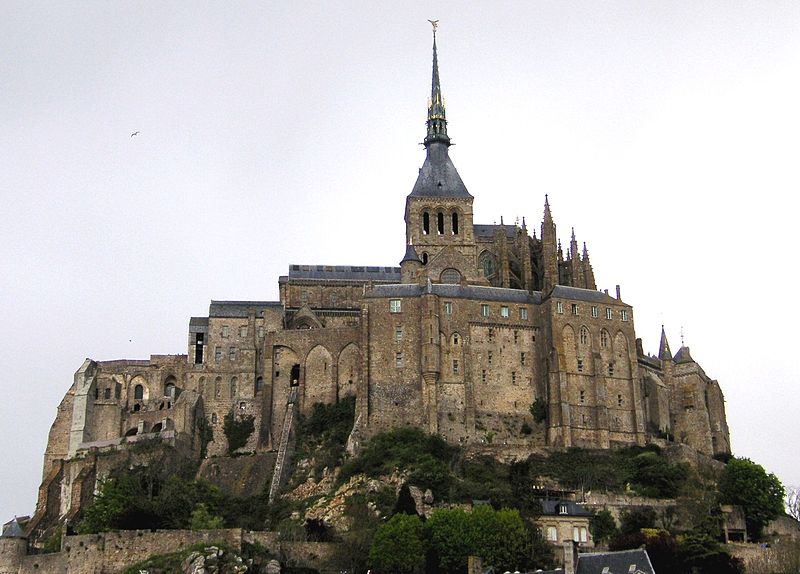
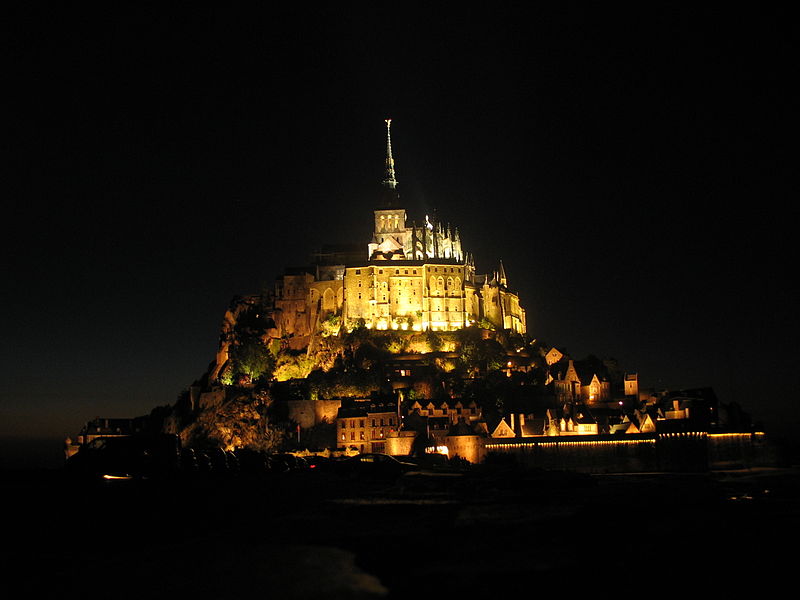
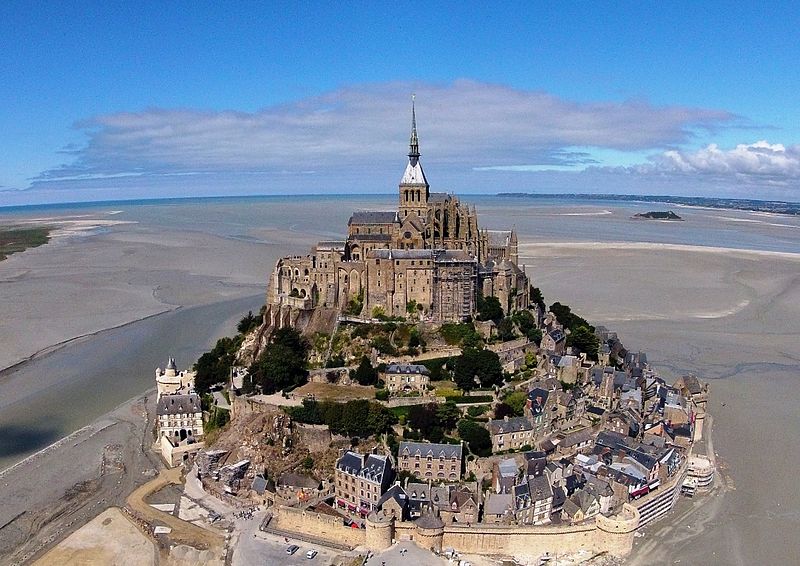
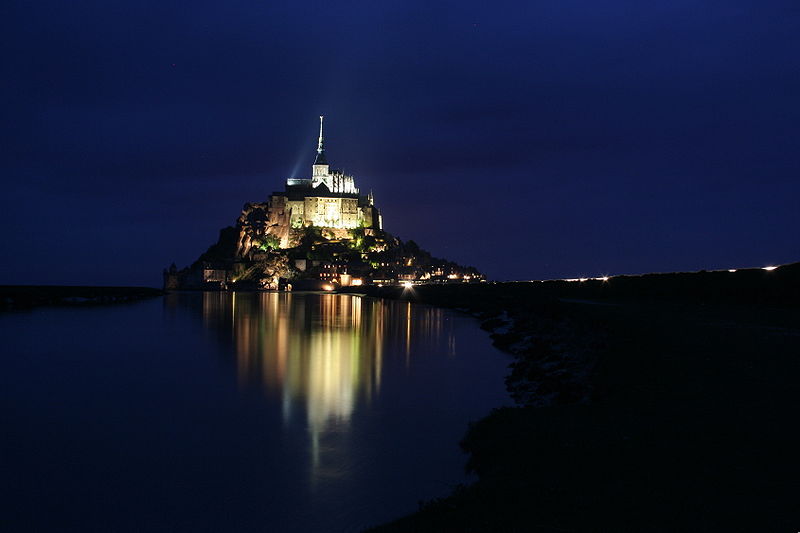
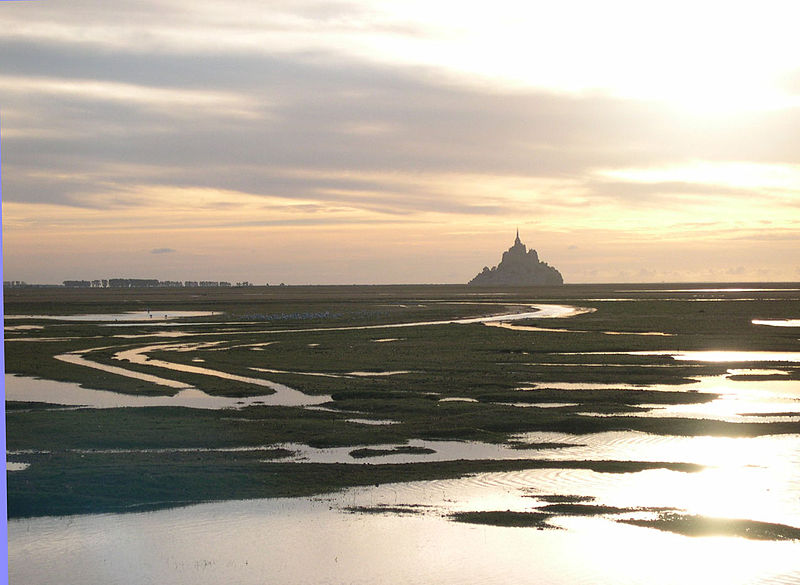
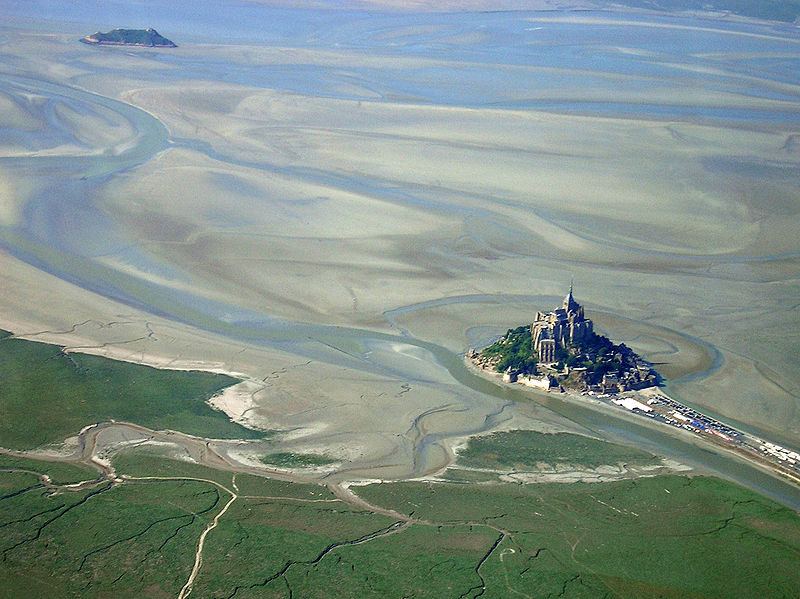
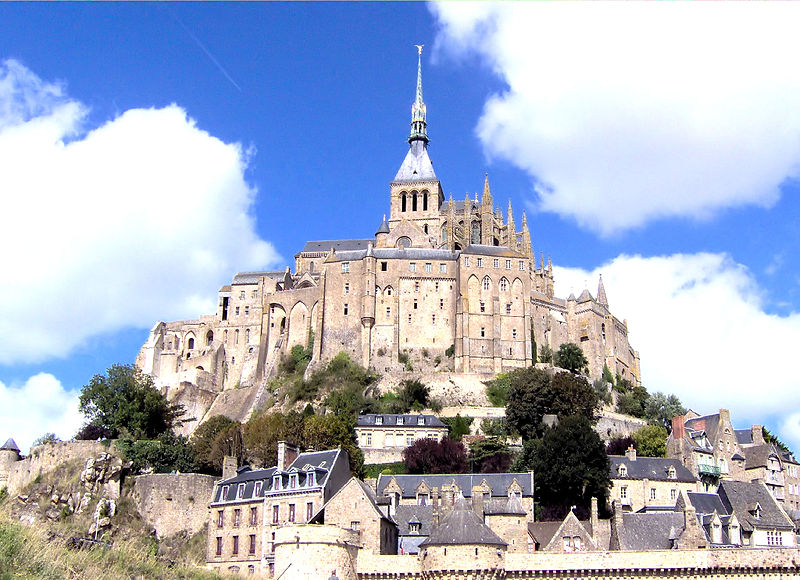
Mont-Saint-Michel is a famous rocky island off the coast of Normandy in northwestern France. A medieval Benedictine abbey rises above a small village of narrow streets, historic houses and fortified walls. At high tide, the sea surrounds the island; at low tide, broad expanses of sand become visible.
Mont-Saint-Michel and its bay have been a UNESCO World Heritage Site since 1979. The landmark is celebrated for its combination of medieval architecture, a dramatic rocky setting and powerful tides.
History of Mont-Saint-Michel
The history of the sanctuary is associated with the Archangel Michael. According to tradition, a religious sanctuary was established on the rock in 708. A Benedictine abbey was founded here in 966 and gradually became an important pilgrimage destination.
During the Middle Ages, the monastery expanded. Churches, monastic rooms, halls and service buildings were constructed on the limited space of the rocky island. The complex grew considerably during the 12th and 13th centuries. After a fire in 1204, work began on the monumental section known as La Merveille, or “The Marvel.” A new choir for the abbey church was begun in the 15th century.
During the Hundred Years’ War, the island had an important defensive role. After the French Revolution, the abbey was closed and used as a prison. Restoration of the historic complex began in the 19th century.
The abbey above the rock
The abbey is the island’s main architectural landmark. Its buildings rise up the slope, forming a complex ensemble crowned by the church and a tall spire bearing a statue of the Archangel Michael. Romanesque and Gothic elements reflect the different periods of construction.
La Merveille is one of the most remarkable parts of the complex. Its monastic rooms occupy several levels, making efficient use of the limited space. The cloister with slender columns, the refectory and the vaulted halls demonstrate the skill of medieval builders. Views from the galleries extend across the bay and its sandbanks.
The medieval village
At the foot of the abbey lies a small village with a narrow main street, historic buildings, hotels, restaurants and shops. The settlement grew to serve pilgrims visiting the monastery. Fortified walls and towers recall the island’s military history and offer views of the surrounding bay.
Tides and the natural environment
The Bay of Mont-Saint-Michel is known for its substantial tidal range. During high tides, seawater spreads quickly across the sandy flats and may surround the island once again. At low tide, broad areas of sand and mud are exposed.
Tides depend on the lunar cycle and weather conditions. The bay can be dangerous because soft mud may conceal unstable ground and the water can return rapidly. Cross the open bay only on a safe route and with a qualified guide when such an excursion is available. Check the tide timetable before visiting.
Restoring the island setting
A causeway built in the 19th century connected the island to the mainland. Although it made access easier, it altered the natural movement of water and sediment. A major restoration project replaced the old causeway with infrastructure that allows water to circulate more freely. A new bridge opened in 2014 for pedestrians and special shuttle buses.
UNESCO World Heritage
Mont-Saint-Michel and its bay were inscribed on the UNESCO World Heritage List in 1979. Their value lies in the exceptional combination of natural scenery and architecture, the preservation of the medieval village and the abbey’s importance in the history of European Christianity.
Getting there and visiting
Mont-Saint-Michel is in the Manche department of Normandy. Visitors can reach the area by car, bus or a combination of public transport services. Cars are generally left in mainland parking areas, from which visitors continue on foot or by shuttle bus.
Allow several hours to explore the village and visit the abbey. The route includes steep streets and stairs, so comfortable footwear is essential. Check abbey opening hours, transport schedules and tide times before travelling. Mont-Saint-Michel brings together medieval architecture, religious history and remarkable coastal scenery.
Gallery