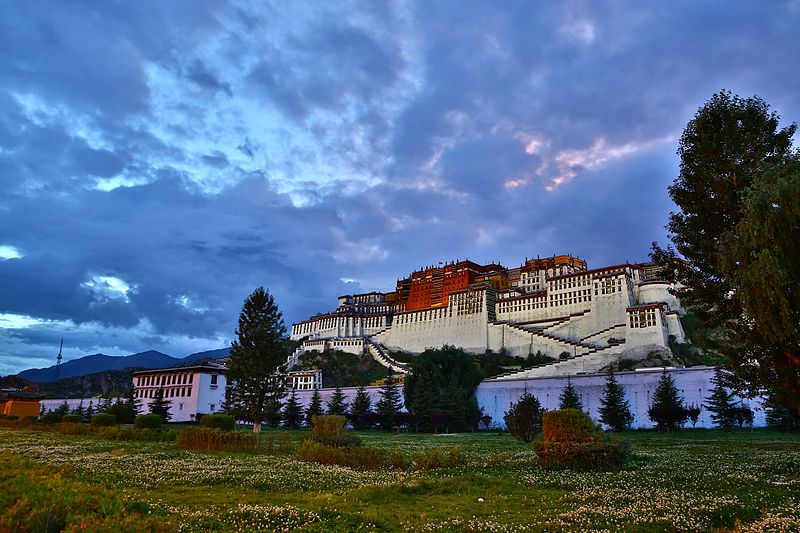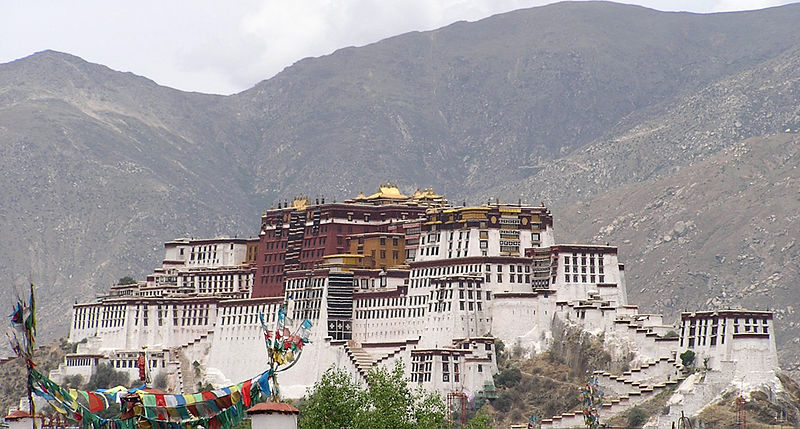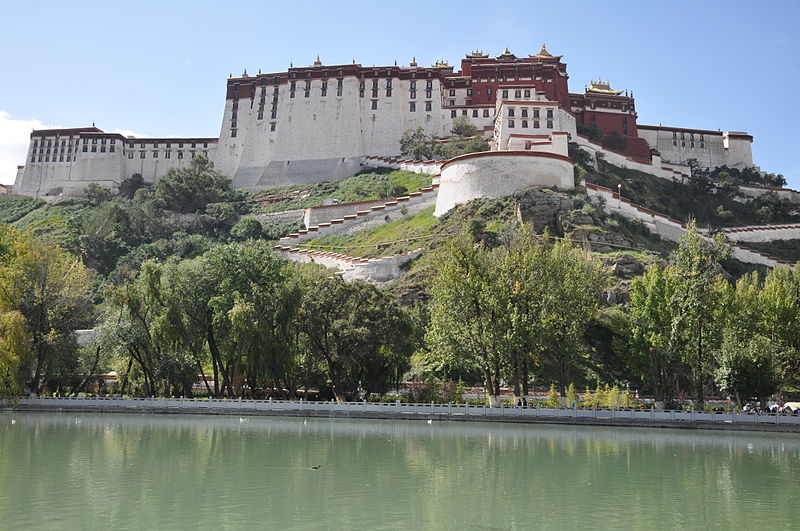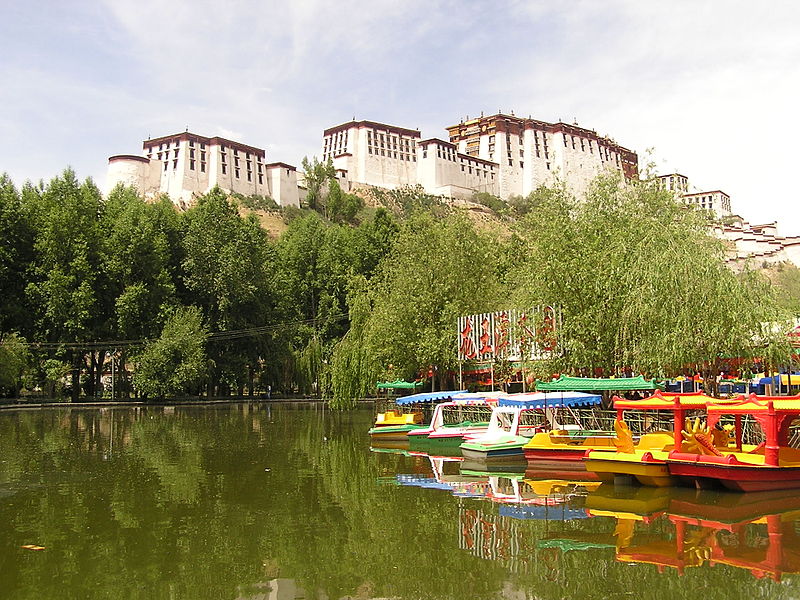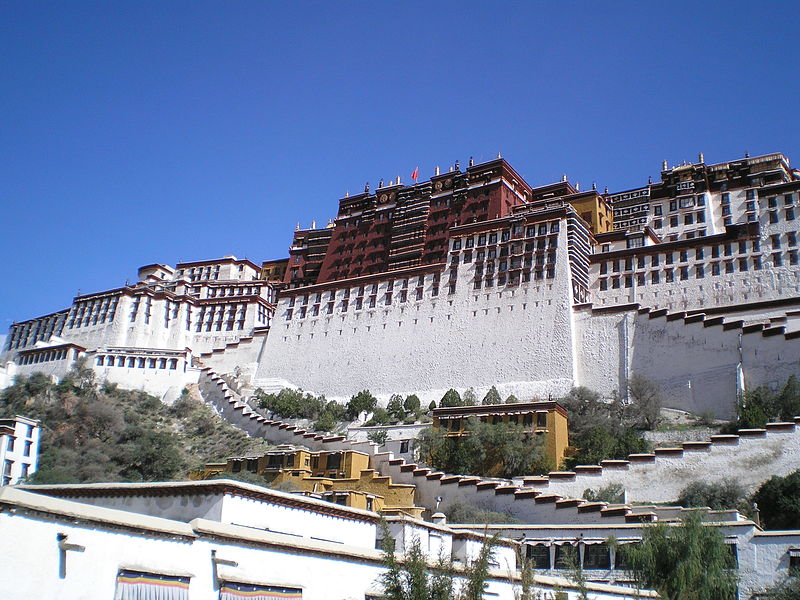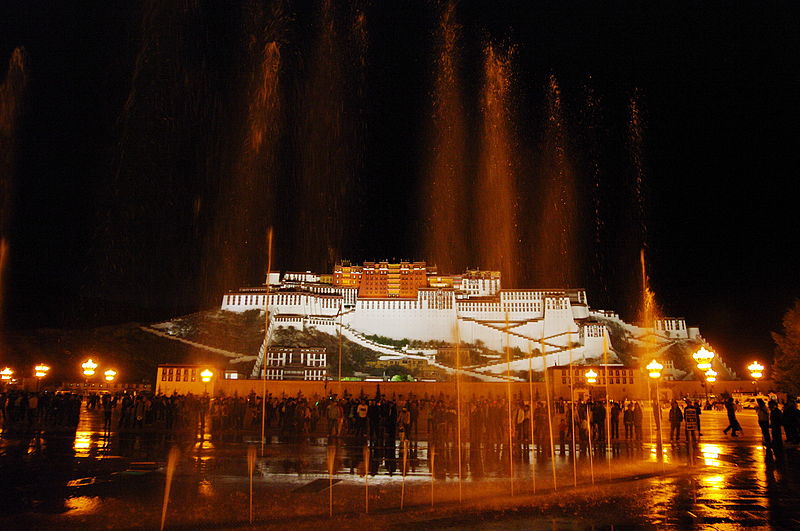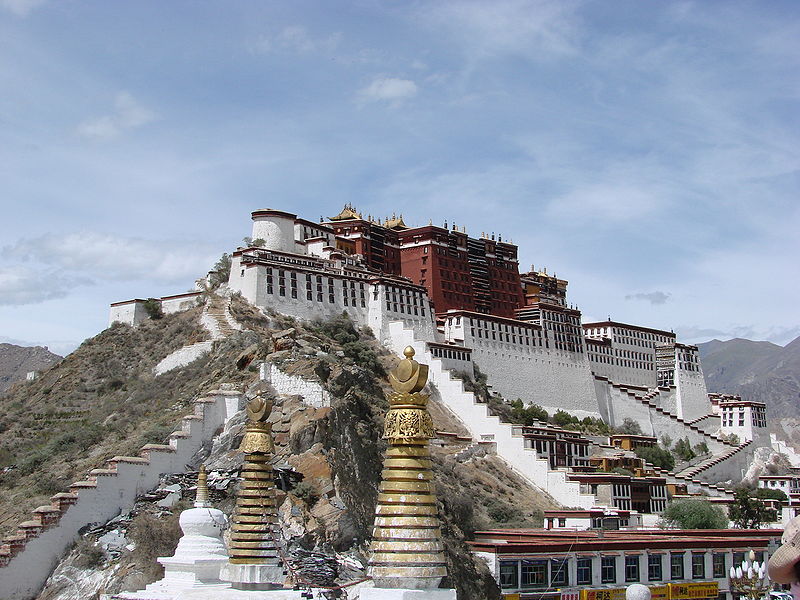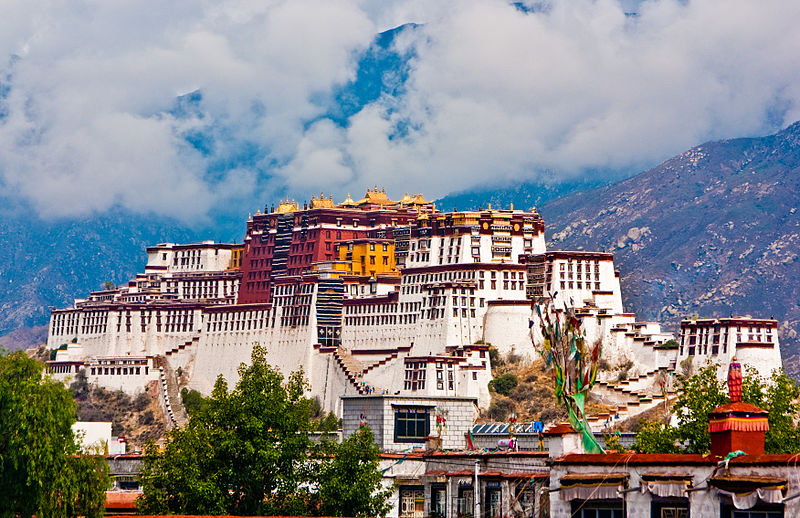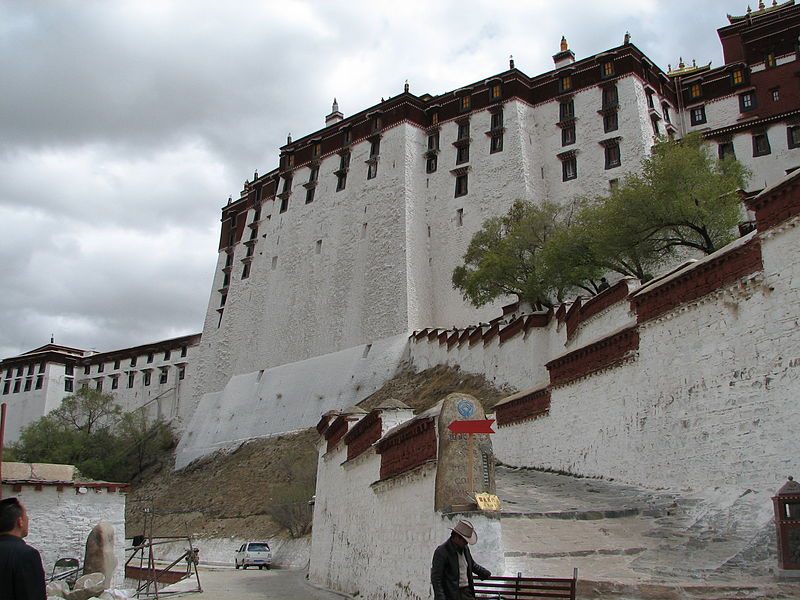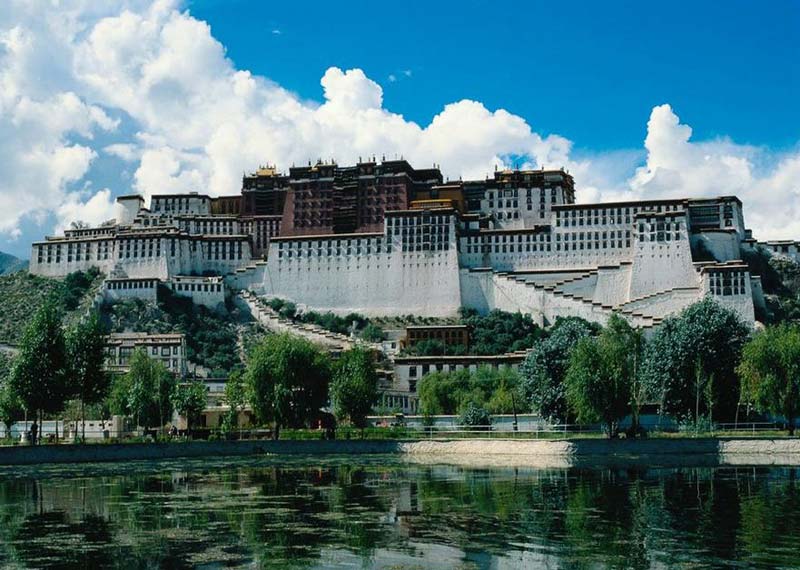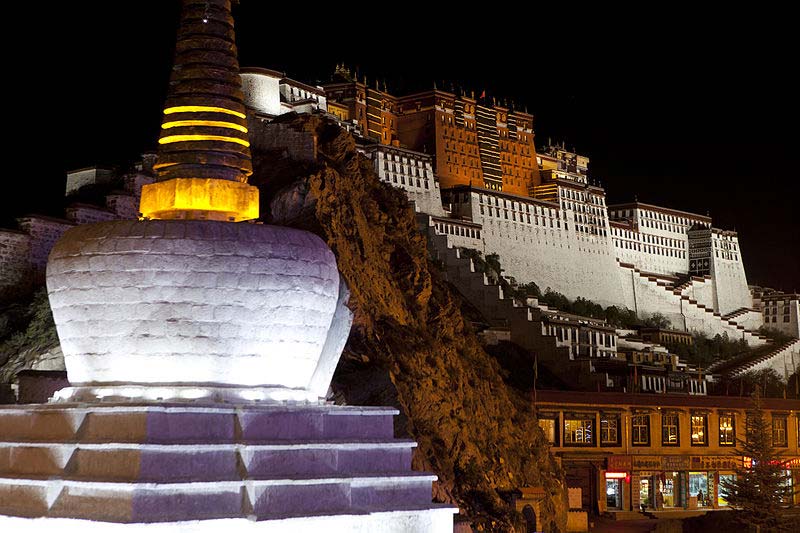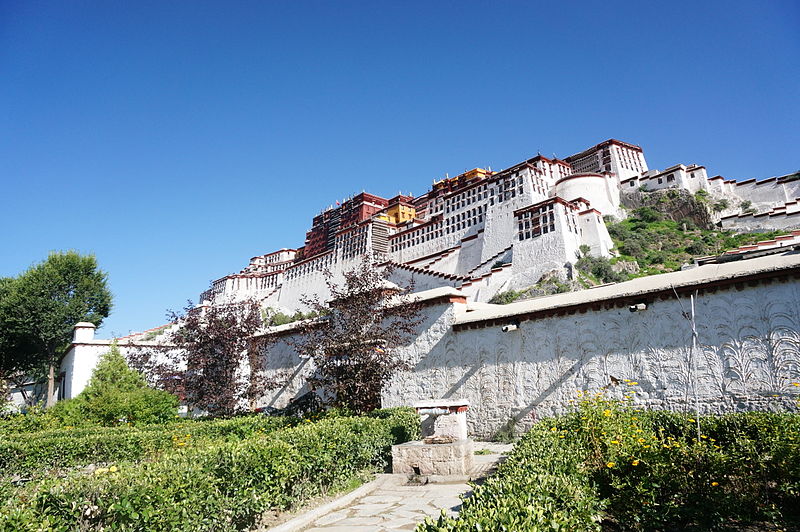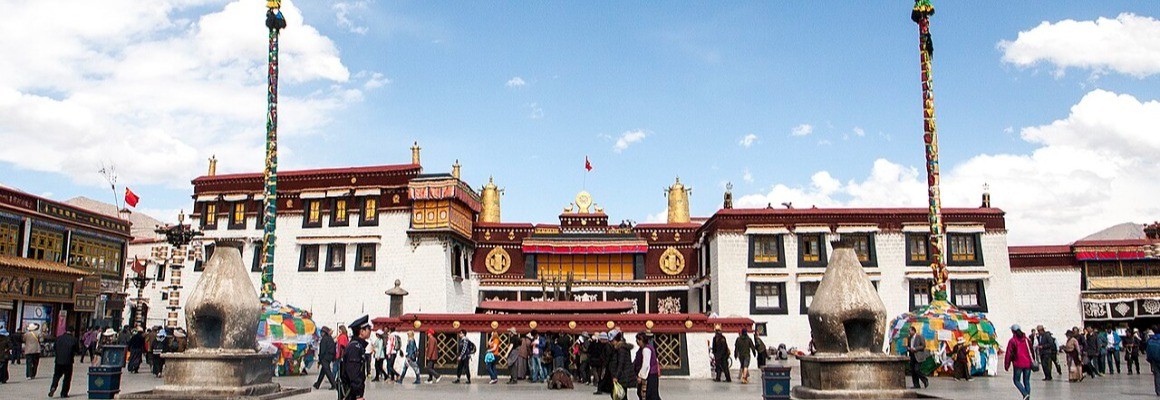

The Potala Palace is the oldest and tallest architectural structure in China. It is located at an altitude of more than 3,700 meters above sea level and rises 115 meters high. The palace was built on the Red Hill of the Tibetan city of Lhasa. In translation, Potala means "mystical mountain".
The first temple was built in 637 by King Songtsen Gampo on the site of his constant meditations. After the king's marriage to Princess Wen Cheng, the palace territory was expanded to 999 rooms, towers were completed and an artificial canal was dug.
Due to natural disasters and frequent military operations, the temple could not be preserved in its original form. The building that has survived to this day was built in the 17th century and is an architectural masterpiece of the Qing Dynasty. A lot of building materials were used for its construction – stone and wood, as well as gold and precious stones.
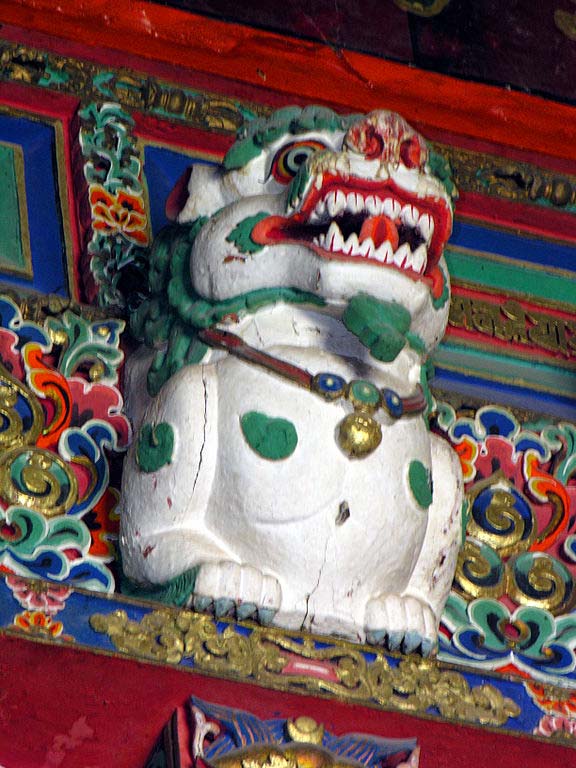
The entire architectural structure consists of two parts – the Red and White Palaces. The Red Palace is the center of the architectural complex, and it is surrounded on two sides by the White Palace, which is associated with two wings and gives the architecture a majestic appearance. The palace is famous for its wall paintings and many sculptures. From the wall paintings you can learn about the traditions and life of the Tibetans.
The Red Palace is the highest part of the building, consisting of many halls, chapels and libraries located on various levels. The largest hall of the palace is The Great West Hall. The red pavilion is used for religious rituals and prayers.
The main building blocks of the White Pavilion are the Large Oriental Pavilion, the Sunny Pavilion and many office buildings. For many centuries, the Potala Palace has been considered a holy place. Nowadays, the Potala is a museum that is visited by pilgrims and ordinary tourists from all over the world, while remaining a sacred Buddhist pilgrimage site. It is a religious, historical, and political center of Tibetan culture.
More than 10 thousand sculptures and paintings, more than 2,4 thousand square meters of frescoes have been provided to the Potala. Collections of books and Buddhist scriptures have been preserved. There are 8 funerary stupas designed to preserve the remains of the Dalai Lama dynasty. All of them are decorated with gold and jewels.
Monks serve on the territory of the palace, who maintain the palace in perfect condition. The Potala Palace is included in the UNESCO World Heritage List.
Gallery