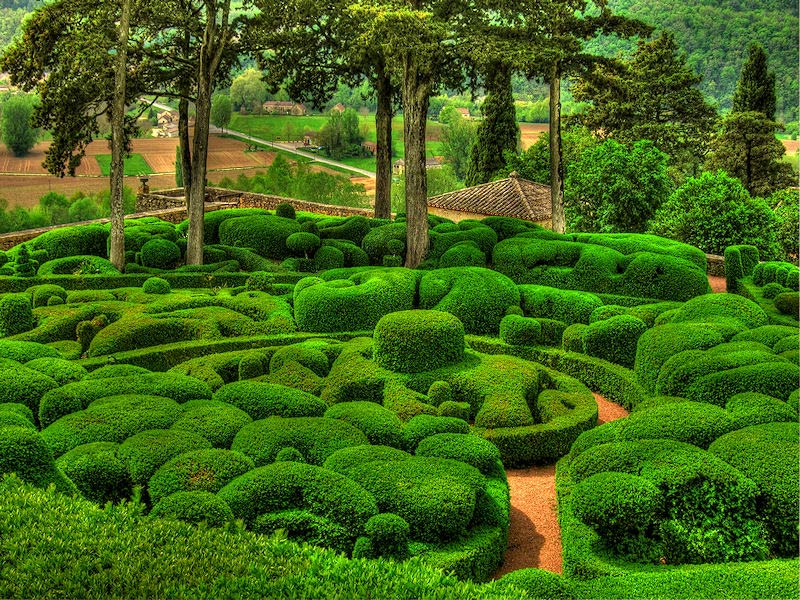
Marqueyssac Gardens (Jardins de Marqueyssac) is one of France's best-known historic gardens, set on a rocky promontory above the Dordogne Valley in Nouvelle-Aquitaine. Near the village of Vézac and the town of Sarlat-la-Canéda, it lies among the medieval castles and historic settlements of Périgord Noir. Its defining feature is a landscape of tens of thousands of rounded boxwood shrubs, shaped into flowing green forms along winding paths.
The historic park covers around 22 hectares and offers more than six kilometres of walking paths. Routes pass boxwood hedges, mature trees, stone structures, small waterfalls and viewpoints. Marqueyssac combines formal garden craftsmanship with a romantic style that allows the landscape to appear natural and almost fantastical.
History of the gardens
The estate's history began in the seventeenth century. In 1692, Bertrand Vernet de Marqueyssac acquired the property and created terraces around the residence. During the first half of the nineteenth century, Julien Bessière opened the Great Walk for horseback riding and had a chapel built.
The garden's modern character owes much to Julien de Cerval, who inherited the estate in 1861. Passionate about gardening, agronomy and Italian culture, he planted tens of thousands of boxwoods, introduced ornamental trees and shrubs, and created romantic walking routes. A major restoration began in 1996, and the gardens opened to the public in March 1997. Today, Marqueyssac is protected as historic heritage and holds France's Jardin remarquable quality label.
The boxwood maze
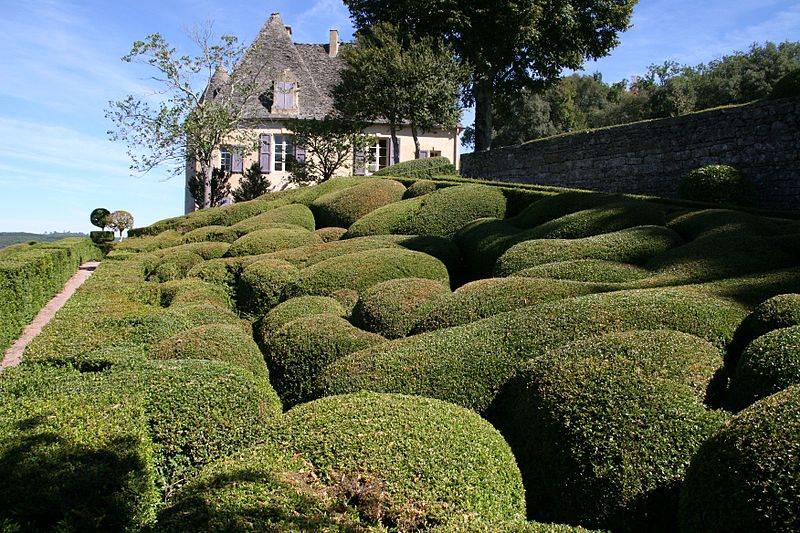
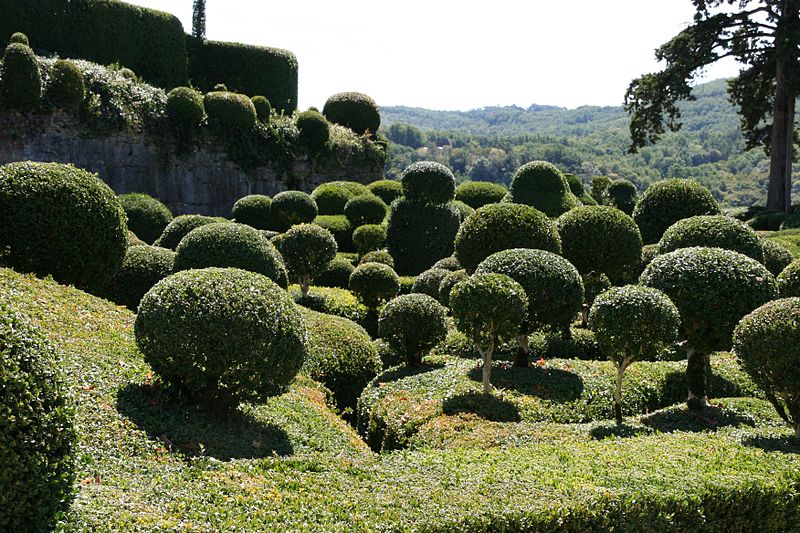
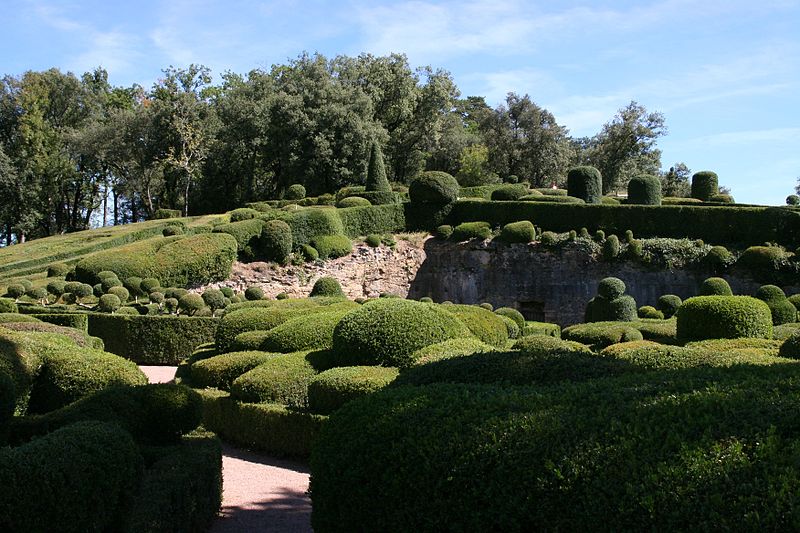
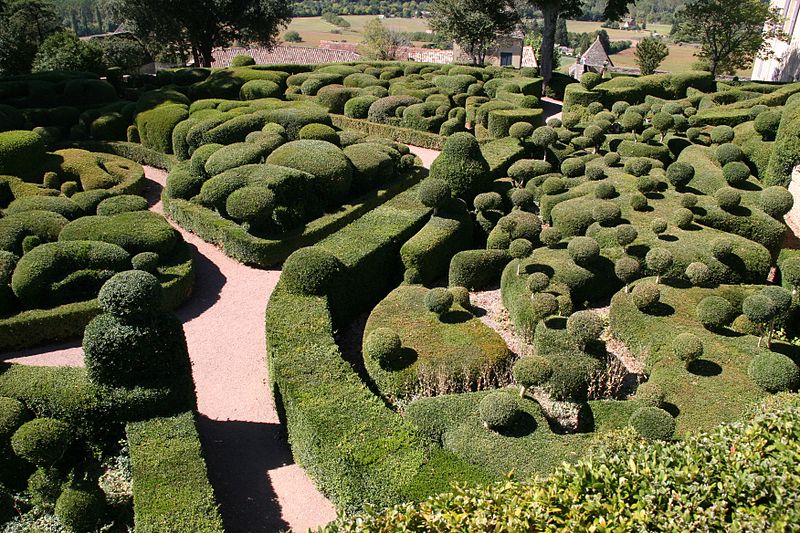
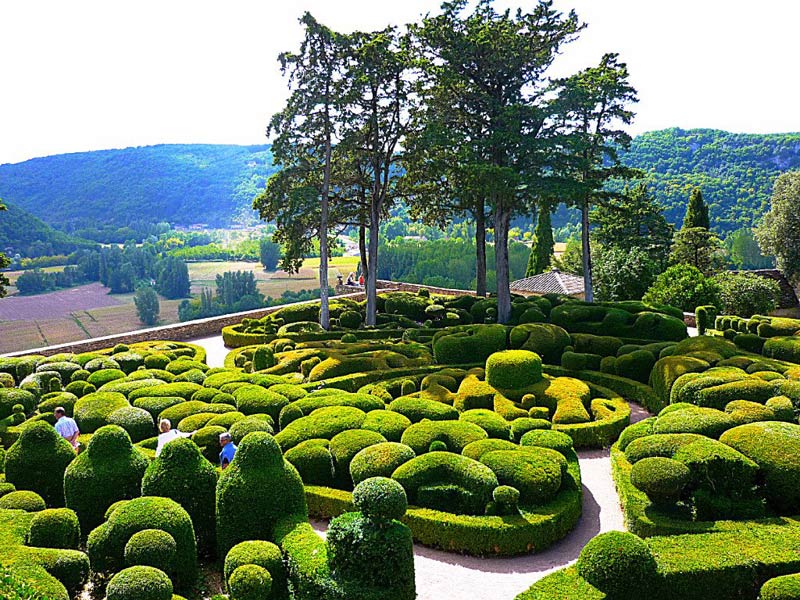
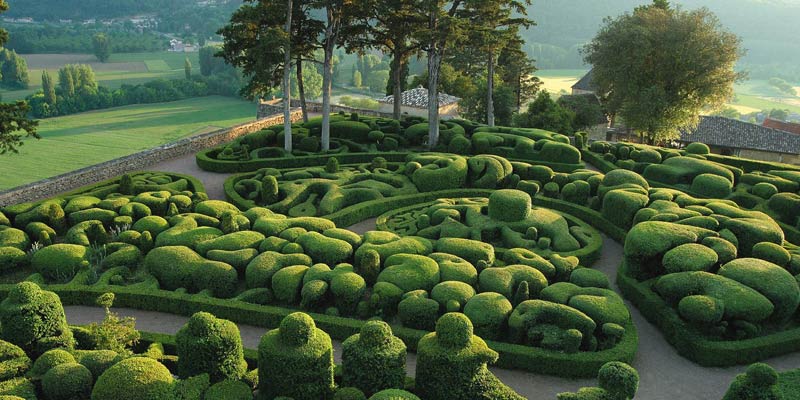
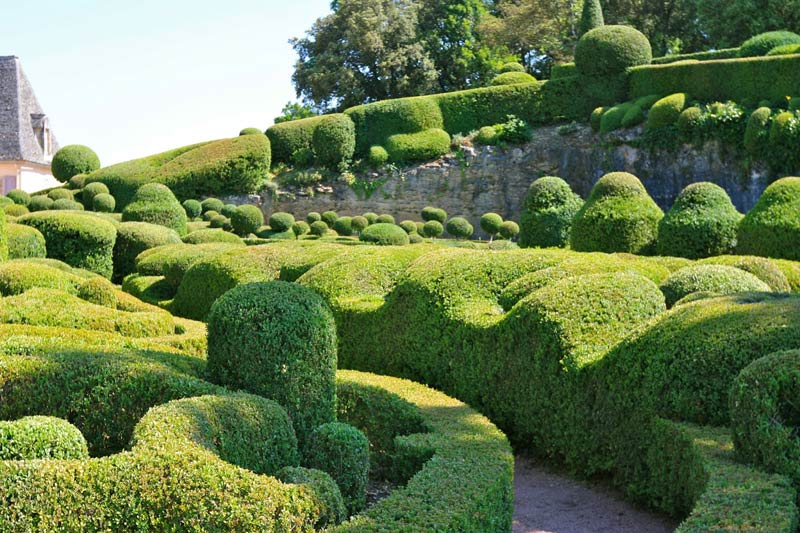
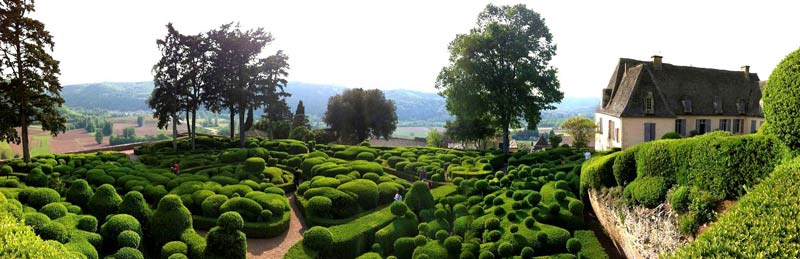
The garden's most recognisable feature is its collection of approximately 150,000 hand-pruned boxwood shrubs. Rather than strict geometric shapes, the planting forms soft rounded mounds resembling green waves. Winding paths pass between the shrubs, revealing new views, stone shelters and ornamental corners. Maintaining the characteristic shapes requires regular work by skilled gardeners.
The Dordogne viewpoint
The main destination is the Belvedere, approximately 130 metres above the river. It offers a broad panorama of the Dordogne Valley, wooded hills, historic villages and medieval castles. On clear days, visitors can see the castles of Beynac, Castelnaud and Fayrac, as well as the villages of La Roque-Gageac and Domme. It is one of the finest places to appreciate the scenery of Périgord Noir.
Architecture and plants
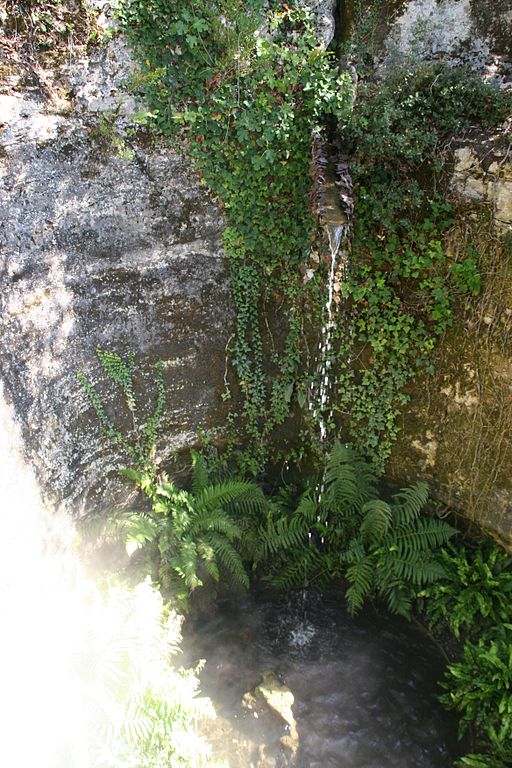
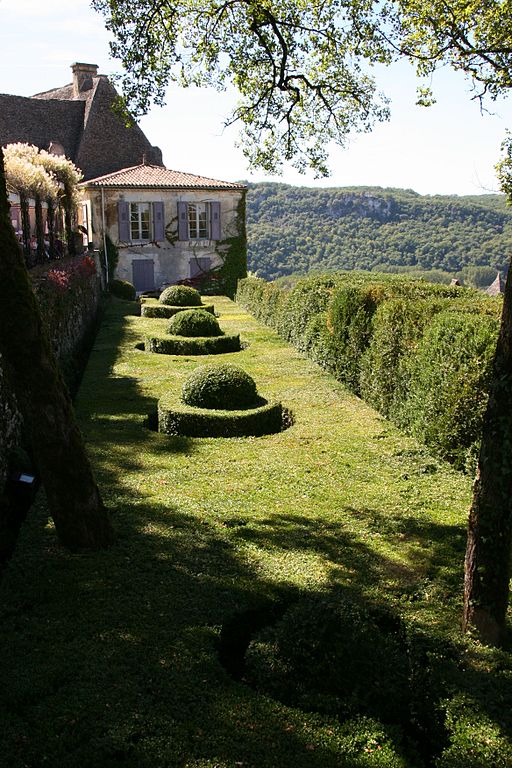
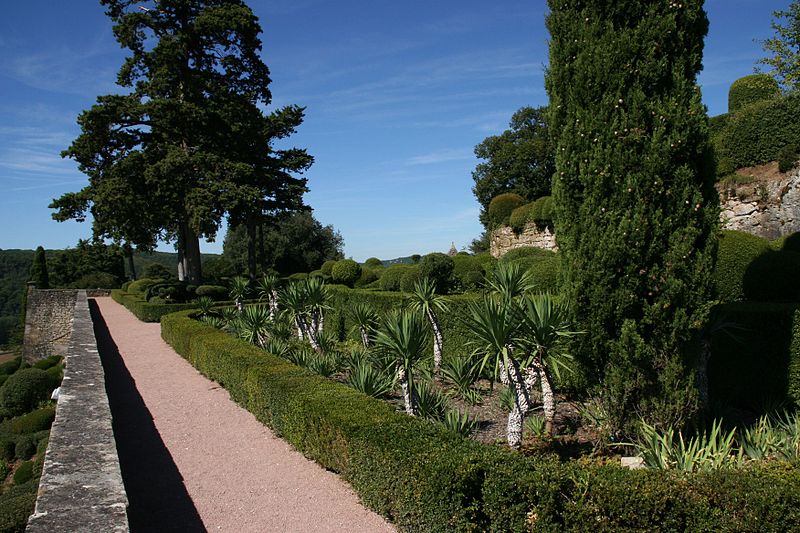
The estate's château took its present form in the early nineteenth century and features a traditional stone-tiled roof. Throughout the gardens are dry-stone huts, shelters, rockeries, cascades and small water features. In addition to boxwood, the grounds contain oaks, hornbeams, lime trees, maples, strawberry trees, cypresses and ornamental shrubs. The sunnier southern slopes support plants adapted to drier conditions, while the cooler northern side has more moisture-loving vegetation.
Walking routes and the best time to visit
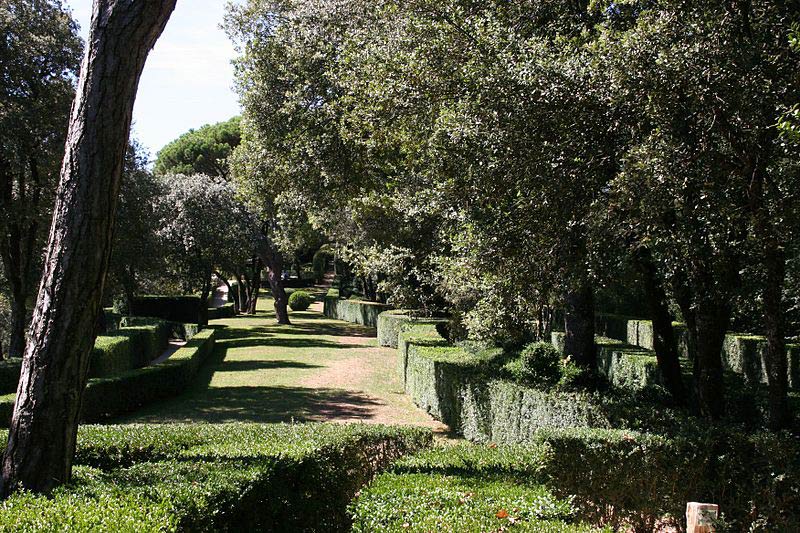
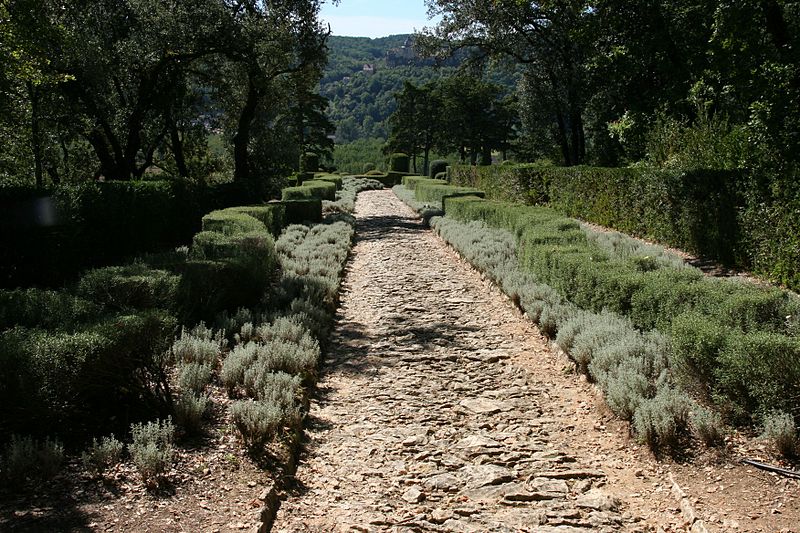
The paths connect the château, boxwood avenues, shaded woodland and viewpoints. The Belvedere is about 800 metres from the château. A typical visit takes around an hour and a half, although photographers and visitors who want to explore every corner may wish to stay longer.
Spring brings fresh foliage and flowers; summer highlights the green contours of the boxwood; autumn adds golden and copper tones; and winter reveals the structure of the paths and shrubs. On selected summer evenings, Marqueyssac aux Chandelles illuminates the walkways with thousands of candles. Event dates should be checked in advance.
Nearby attractions
A visit can be combined with the castles of Castelnaud and Beynac, the riverside village of La Roque-Gageac, the medieval town of Domme and the historic centre of Sarlat-la-Canéda. Together, these places offer a broader introduction to the history and heritage of the Dordogne Valley.
Practical information
The gardens are located in Vézac, in the Dordogne department of southwestern France. Travelling by car is generally the most convenient option. Opening hours vary by season, so check the official website for current schedules, ticket prices and special events. Comfortable footwear is recommended because some paths are sloping. Bring water and sun protection on hot days. Dogs are welcome on a lead. Marqueyssac is ideal for garden enthusiasts, photographers, history lovers and visitors seeking memorable views of the French countryside.
Gallery