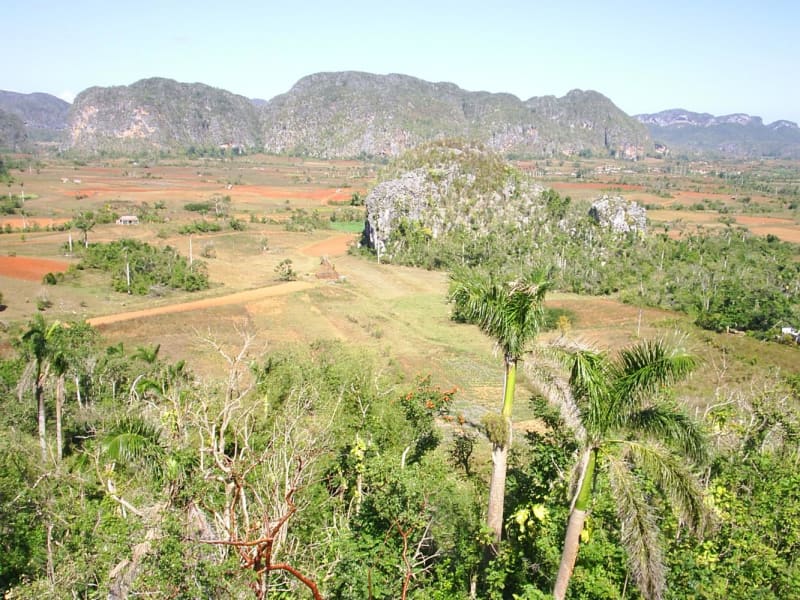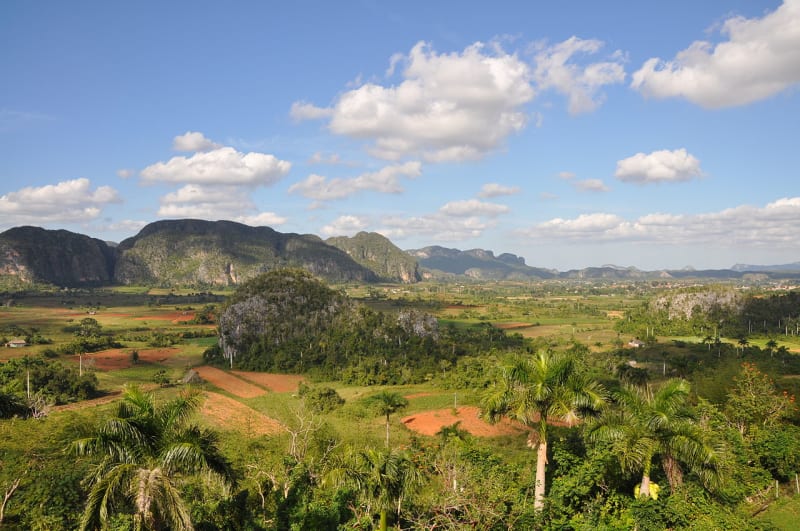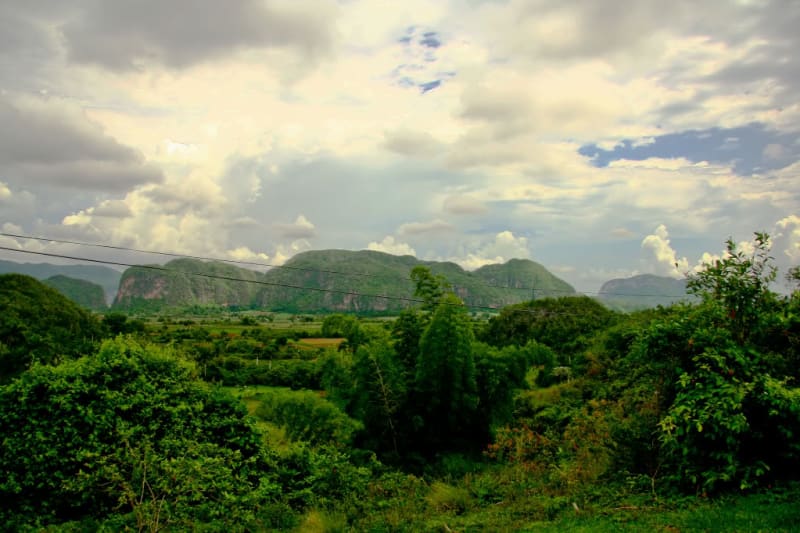

Viñales Valley is one of Cuba's most recognisable natural attractions, located in Pinar del Río Province in the western part of the island. It is known for fertile farmland, unusual limestone hills, traditional tobacco plantations and numerous caves. Set among the Sierra de los Órganos mountains, the valley is an outstanding example of a karst landscape. In 1999, Viñales was inscribed on the UNESCO World Heritage List as a cultural landscape where natural features remain closely connected with the traditional way of life of local communities.
Mogotes: the symbol of Viñales Valley
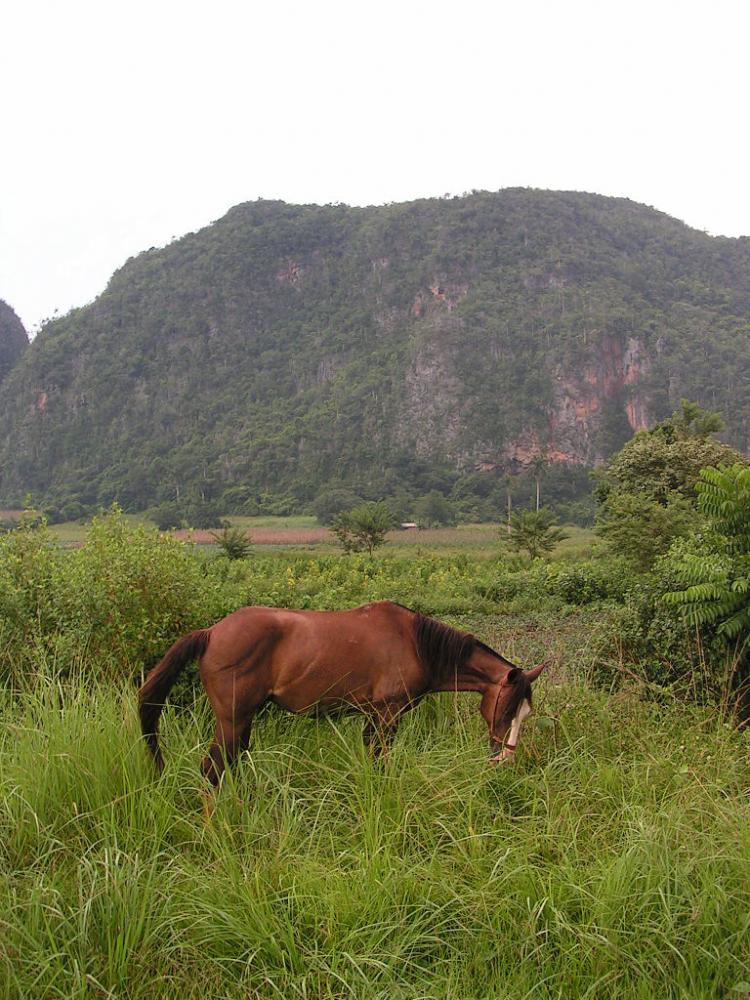
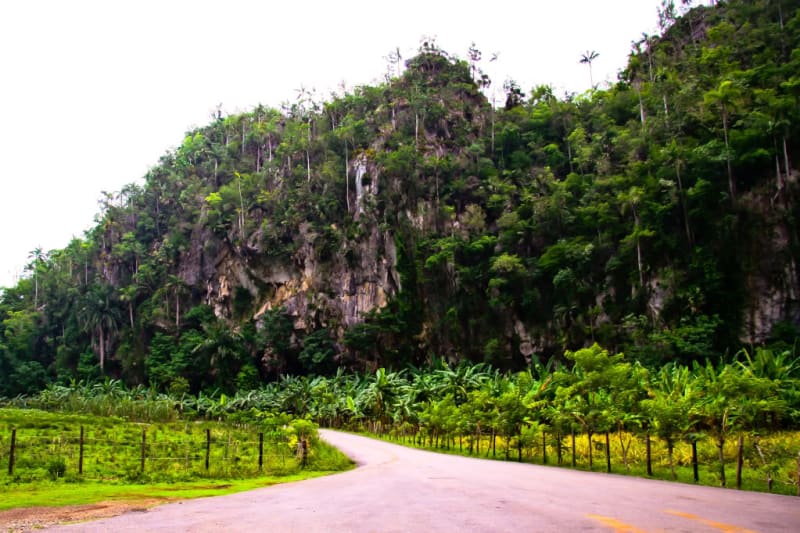
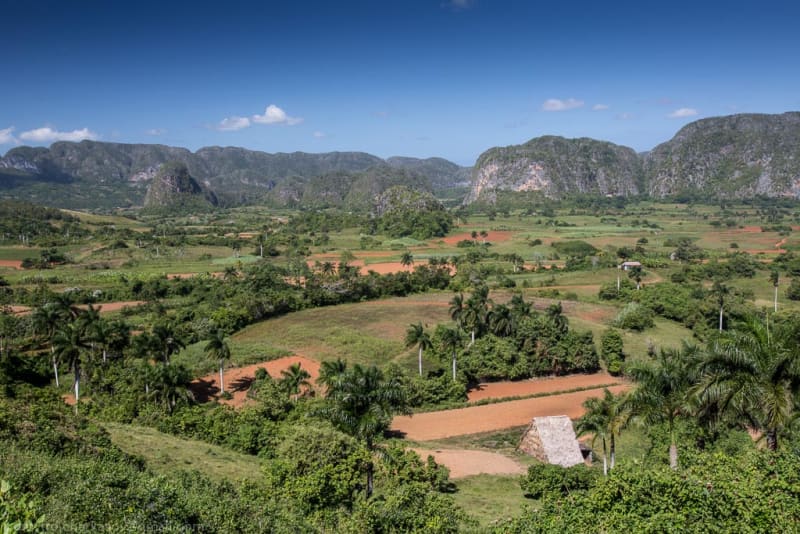
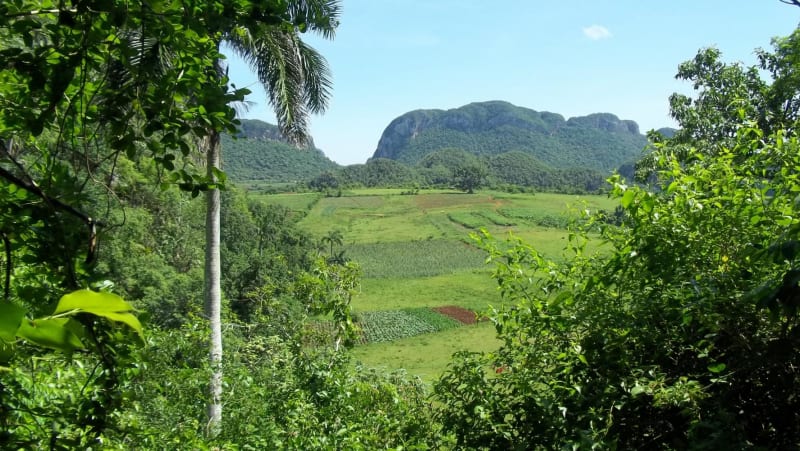
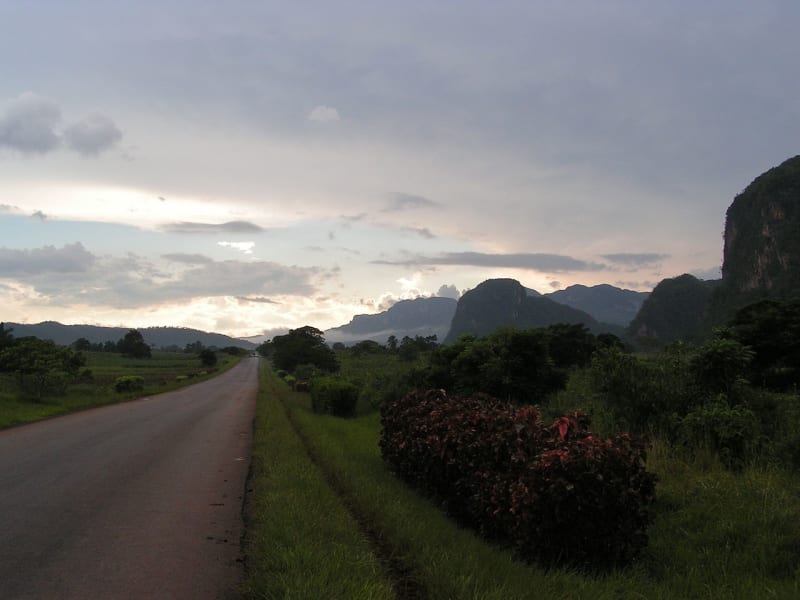
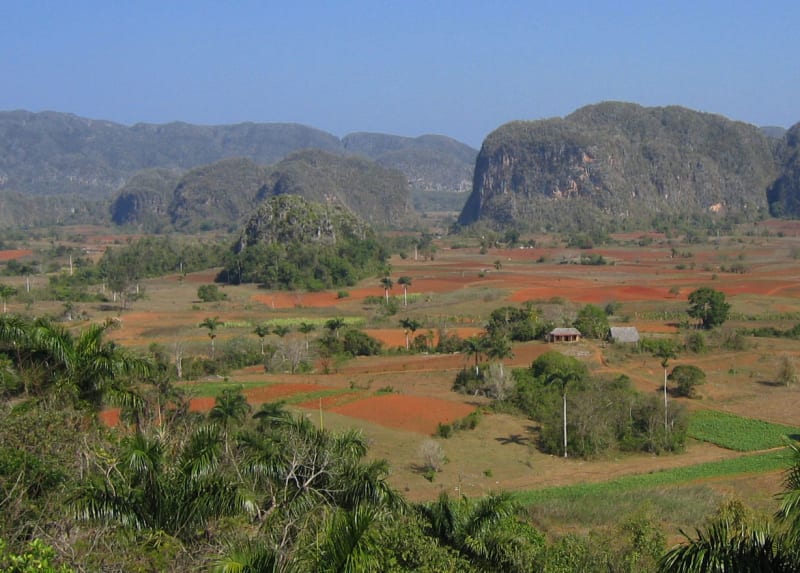
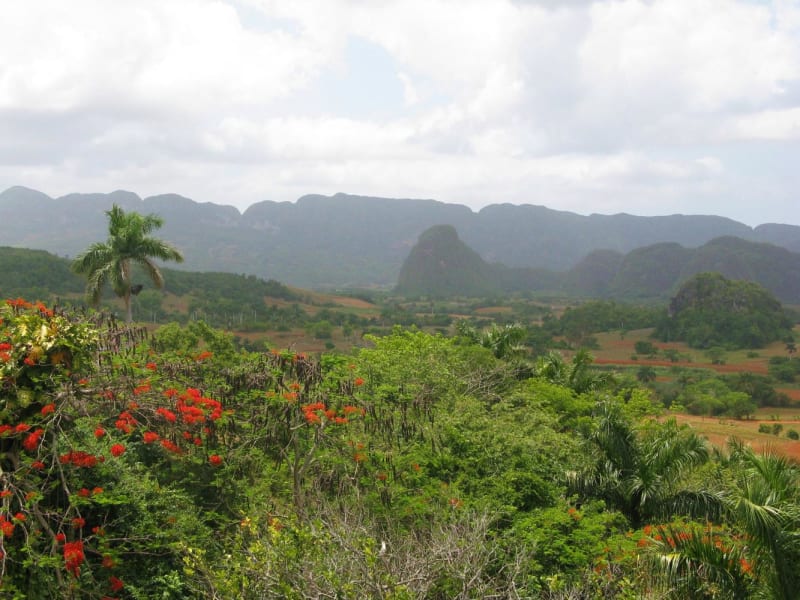
The valley's defining feature is its mogotes, tall limestone hills with steep sides and rounded summits. They rise abruptly above the relatively flat plain, creating a striking landscape. Some mogotes reach approximately 300 metres in height.
These formations developed through long geological processes. Limestone gradually eroded under the influence of water and other natural forces, while more resistant sections remained as isolated hills. Fertile valleys later developed around them, providing land for agriculture.
The mogotes are covered with dense vegetation, and their slopes contain caves, fissures and sheer rock walls. They are particularly impressive in the morning and late afternoon, when sunlight highlights the terrain and creates dramatic shadows.
Tobacco plantations and rural life
Viñales Valley is one of Cuba's most important areas for traditional tobacco cultivation. Fertile reddish soil and a favourable climate provide suitable growing conditions. Traditional farming methods are still used in the fields, and animal power remains part of many agricultural activities.
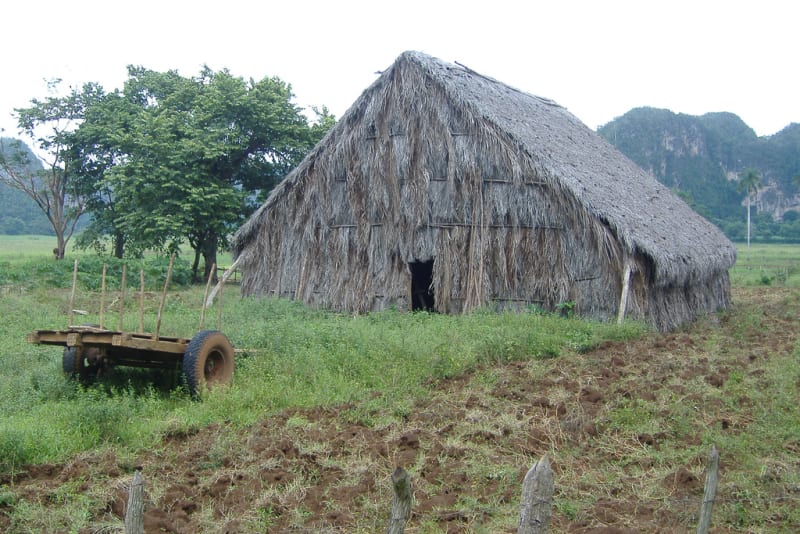
Walking through the valley, visitors can see small farms, tobacco-drying barns and fields at the foot of the mogotes. After harvesting, tobacco leaves are dried in special wooden structures. Visiting local farms offers insight into how tobacco is grown and how it became part of Cuba's cigar-making tradition.
Agriculture remains closely connected with everyday life. Many families continue farming and preserve skills passed down through generations. The combination of natural scenery, traditional work and rural architecture was one of the reasons the valley received UNESCO recognition.
Caves and the underground world
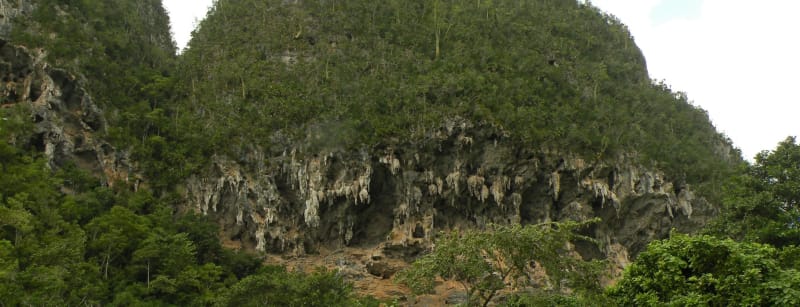
Karst processes have created an extensive cave system around Viñales. Inside the limestone hills are underground passages, chambers, stalactites and other formations shaped by water over long periods. The caves are important not only geologically but also historically, as some were used by people long before modern settlements appeared.
One of the region's best-known attractions is Cueva del Indio, or Indian Cave. Part of the route is explored on foot, after which visitors can take a boat along an underground river. Illuminated sections reveal rock walls and unusual shapes formed by water.
Another important site is the Great Cavern of Santo Tomás, an extensive network of underground passages. Visiting some sections may require a guide and specialised equipment. It is advisable to check access conditions and tour availability before travelling.
The Mural of Prehistory and cultural attractions
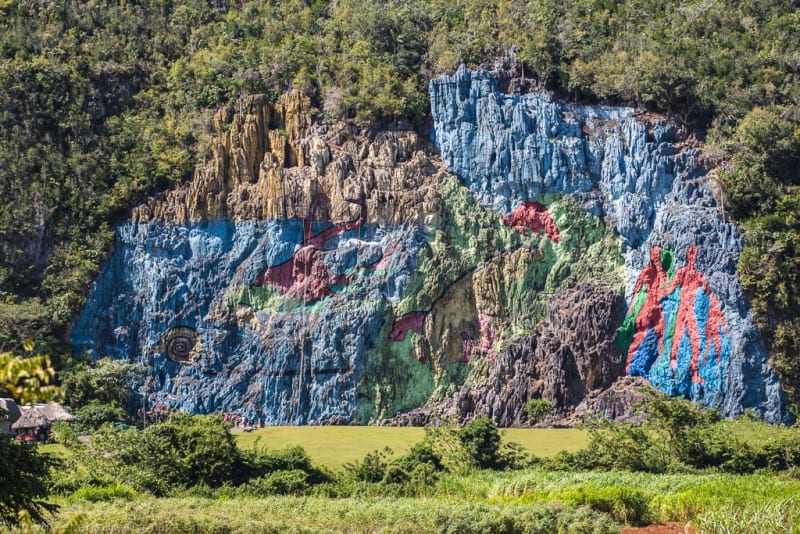
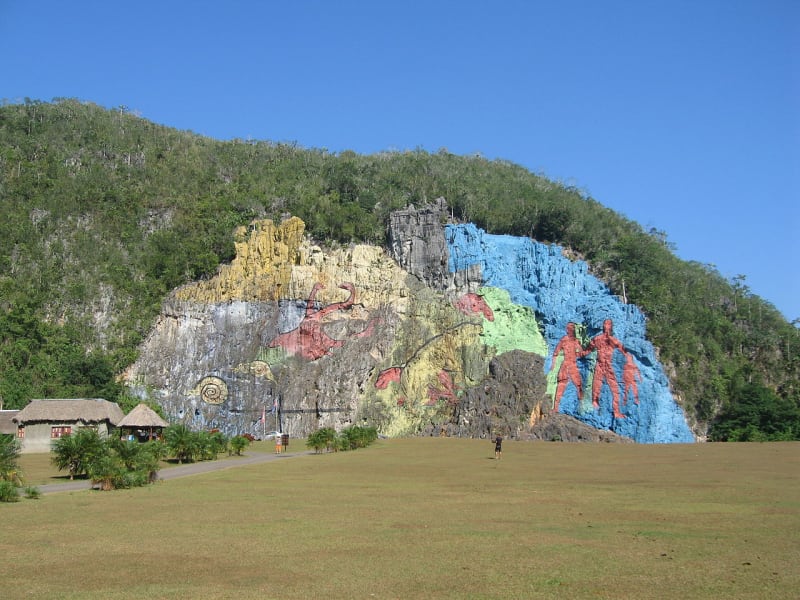
On the side of one of the mogotes stands the Mural of Prehistory, a large colourful painting depicting supposed stages in the development of life in Cuba. It was created in the twentieth century by artist Leovigildo González Morillo. The mural stands out against the green vegetation and has become one of the valley's best-known tourist attractions.
The village of Viñales is also worth visiting for its distinctive rural atmosphere. Its streets feature low houses with porches, small cafés and family-run establishments. Visitors can sample local cuisine, purchase handicrafts and see how traditional architecture blends with modern life.
The region's cultural heritage developed under the influence of Indigenous peoples, Spanish settlers and Africans brought to the island during the colonial period. This diversity is reflected in local music, crafts, architecture and agricultural traditions.
Nature and wildlife
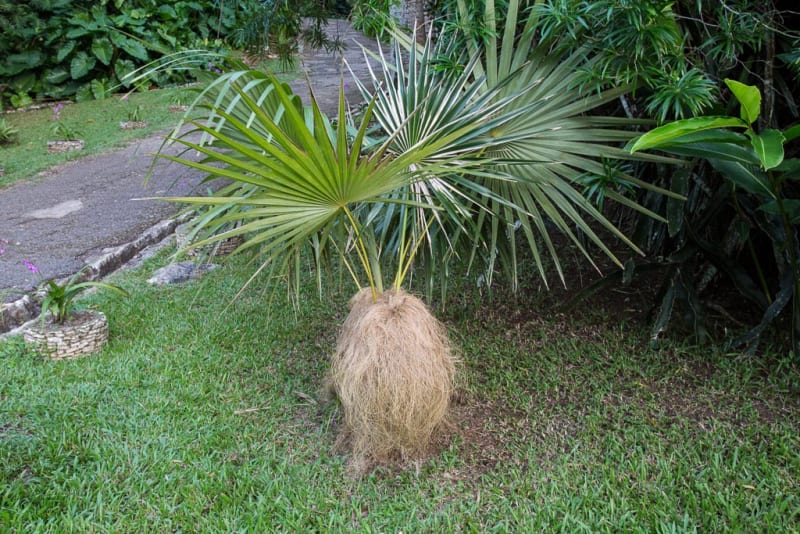
Despite the agricultural use of part of the area, Viñales Valley has rich biodiversity. The slopes of the mogotes and the caves preserve distinctive natural communities, including endemic plants and animals. One notable plant is Microcycas, an ancient species sometimes described as a living fossil.
The region is home to a variety of birds, reptiles and land molluscs. The isolated limestone hills create conditions in which some species have evolved separately from populations elsewhere. Caves also provide shelter for animals adapted to life in darkness.
Protecting this natural heritage means avoiding litter, damaging plants or disturbing wildlife. When walking through rural areas, visitors should respect private property and use designated routes.
Viewpoints and outdoor activities
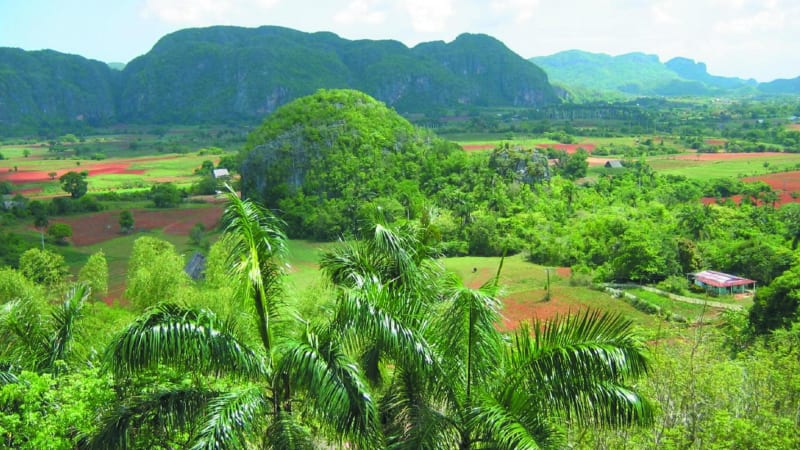
Some of the finest panoramic views of the valley can be enjoyed from the viewpoint near Hotel Los Jazmines. The vista includes green fields, small farms and the distinctive limestone hills. The scenery is particularly beautiful early in the morning and before sunset, when changing light transforms the colours of the rocks and vegetation.
Visitors can explore the surrounding area on foot, on horseback or by bicycle. These excursions reveal country roads, tobacco fields, small farms and natural corners that are not always easy to reach by car. Adventure seekers can also choose cave tours or rock climbing with experienced instructors.
For a more relaxed visit, stroll through the village, visit local farms and learn about traditional rural life. It is worth setting aside a full day or several days rather than limiting the trip to a single viewpoint.
How to reach Viñales Valley
The valley lies in Pinar del Río Province, about 180 kilometres west of Havana. Viñales village can be reached by intercity bus, car or organised excursion. The journey from the capital usually takes several hours, depending on transport and road conditions.
Most attractions lie outside the village centre, so bicycles, taxis, guided tours or local transport are useful for exploring the valley. Before travelling, check the weather forecast and access conditions for the routes you plan to visit.
Viñales Valley brings together remarkable geology, fertile farmland, traditional tobacco cultivation and distinctive rural culture. It offers a chance to discover Cuba beyond its major cities and experience a landscape where nature and human activity have coexisted for centuries.
Gallery