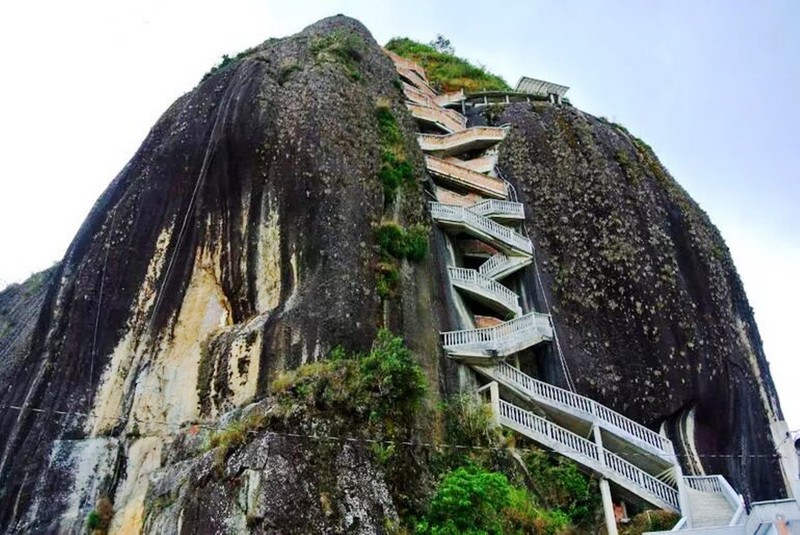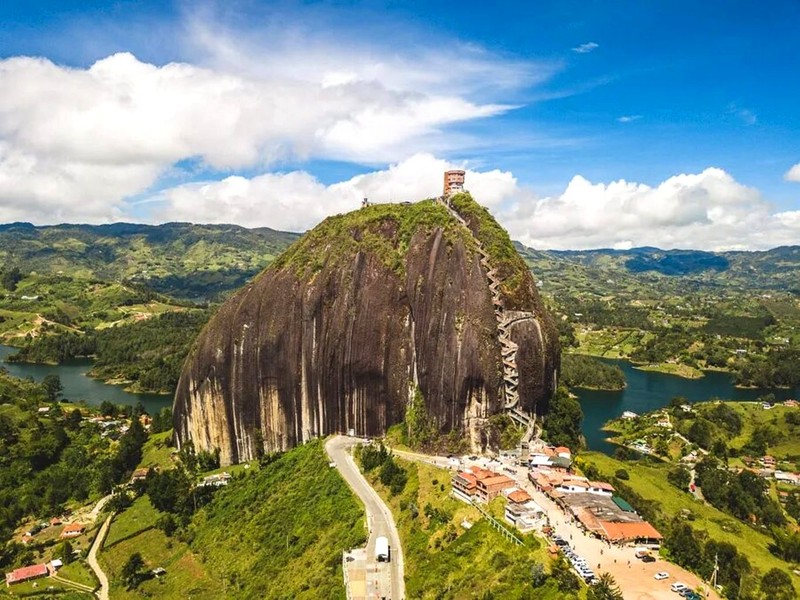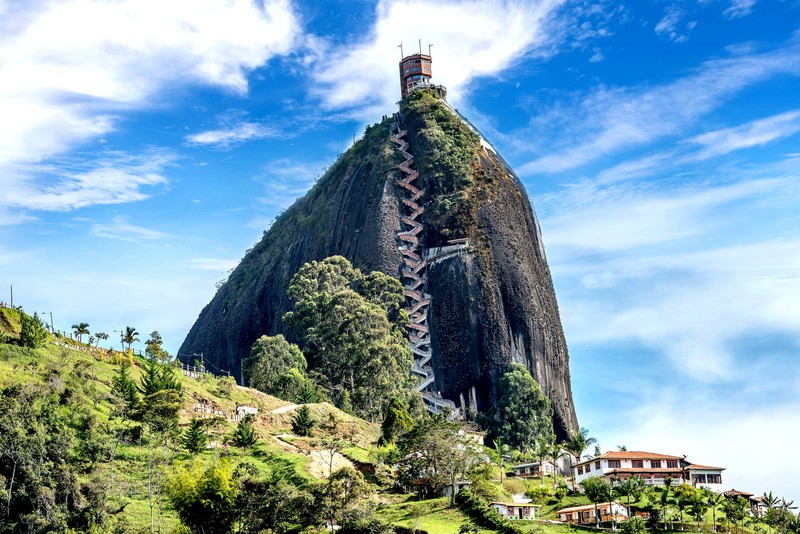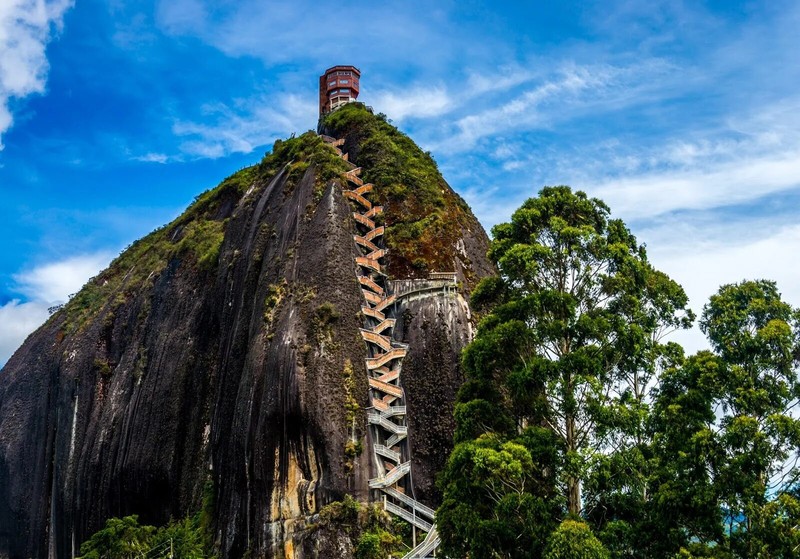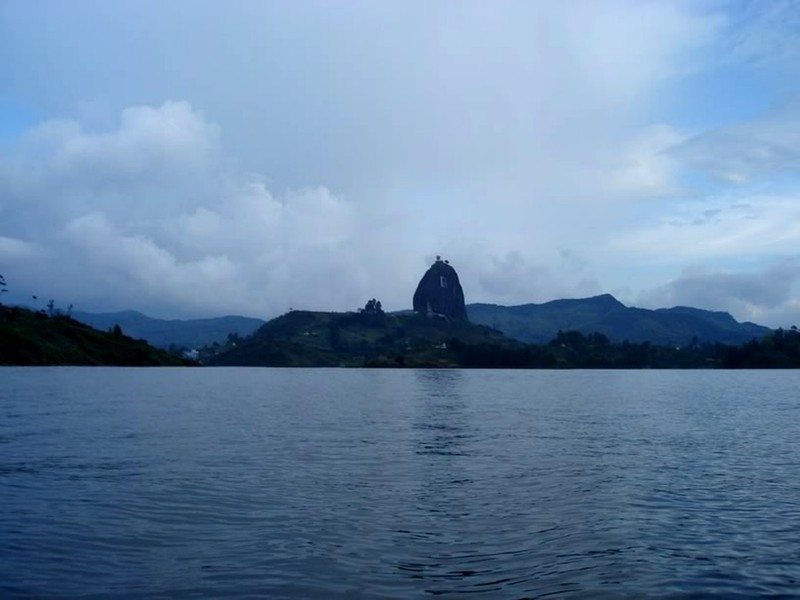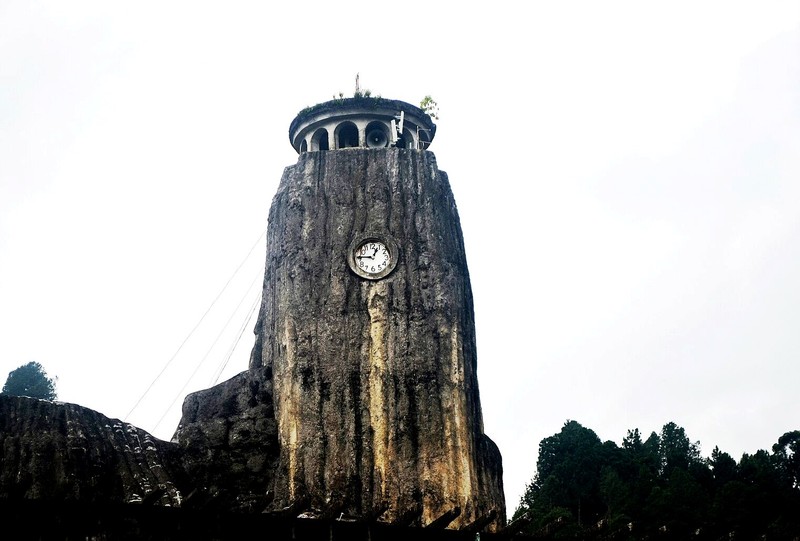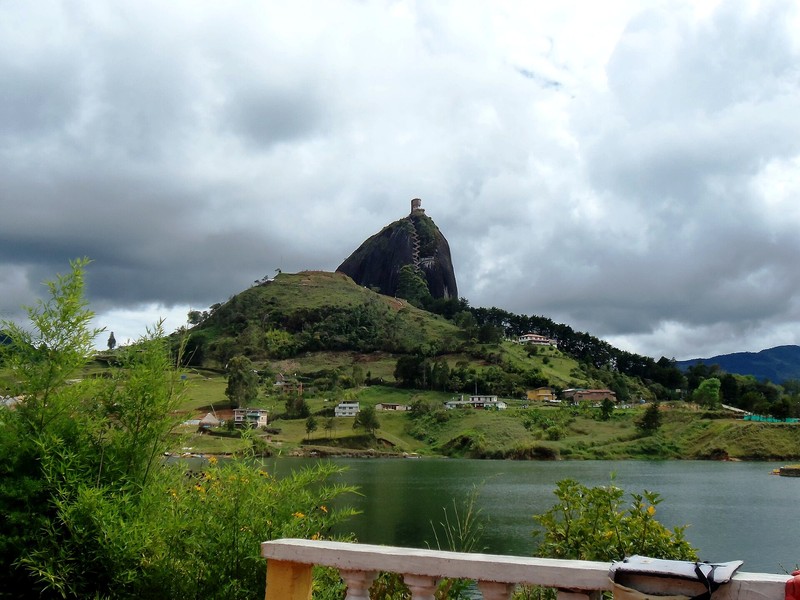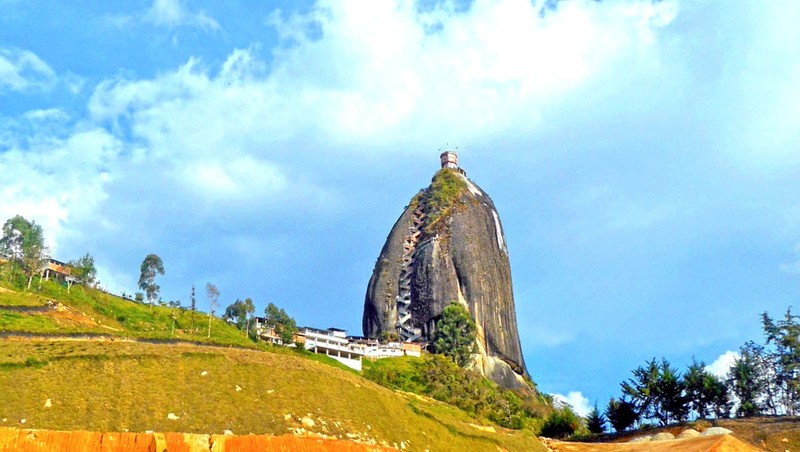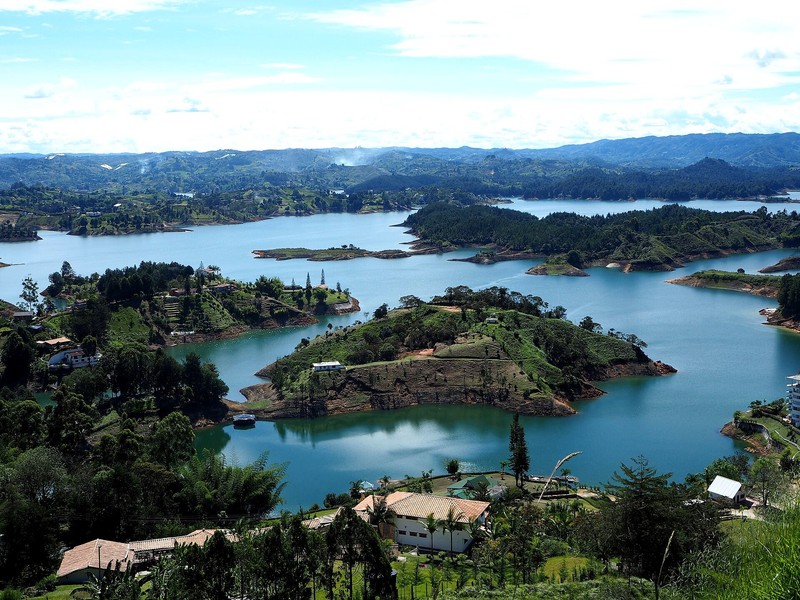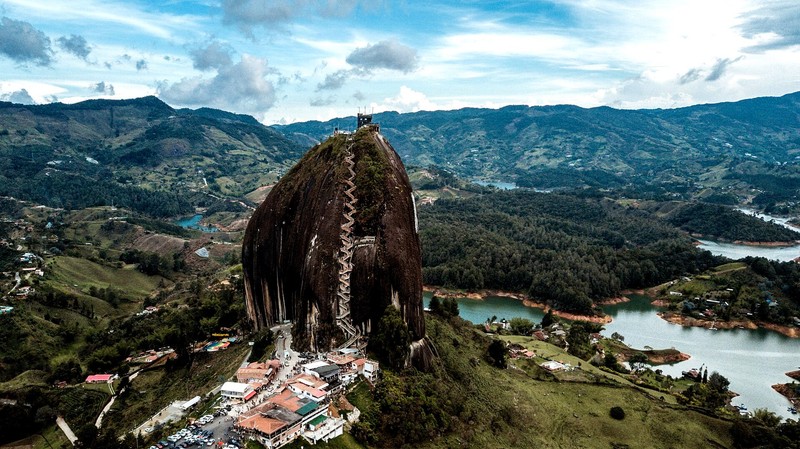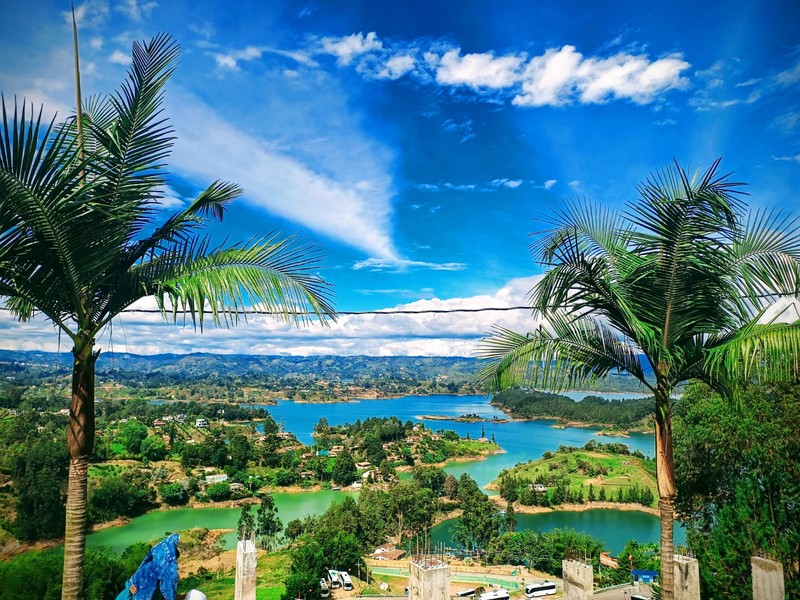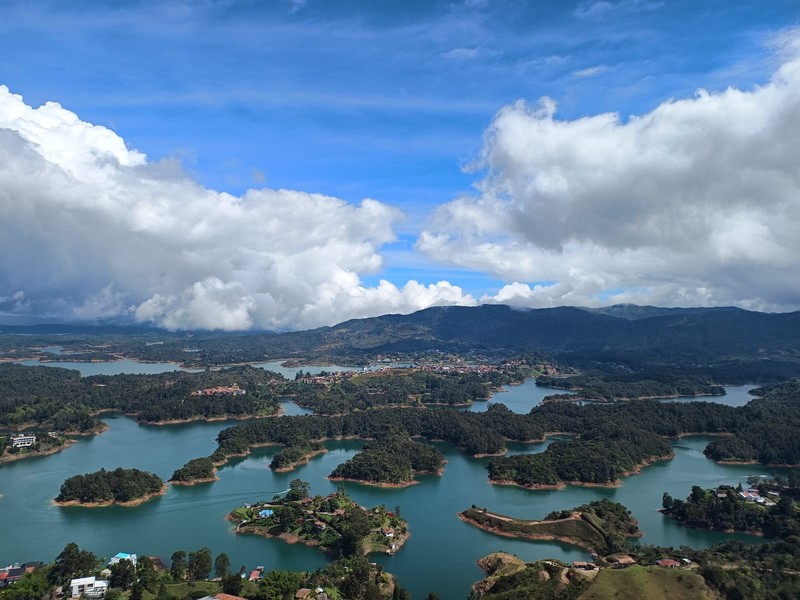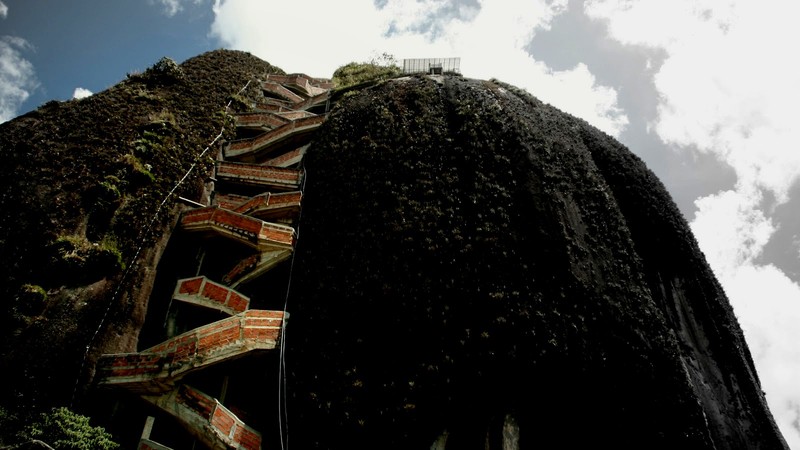

El Peñol Rock, also known as the Rock of Guatapé, is a massive natural monolith in the department of Antioquia in northwestern Colombia. The granite rock rises about 220 metres above the surrounding landscape and is one of the country's best-known natural attractions. A staircase built into a natural fissure leads to the summit, where visitors can enjoy a remarkable panorama of the Guatapé Reservoir and its many green islands and peninsulas.
Natural features of the rock
El Peñol is a massive monolith shaped by ancient geological processes. Its smooth, steep sides stand out against the hills and green valleys of Antioquia. The rock lies between the municipalities of El Peñol and Guatapé, and both communities connect it with their local history and tourism.
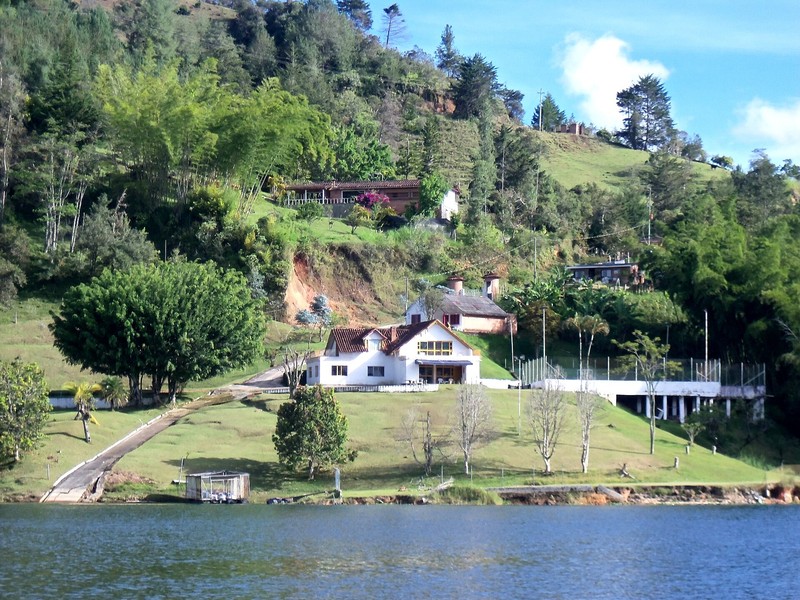
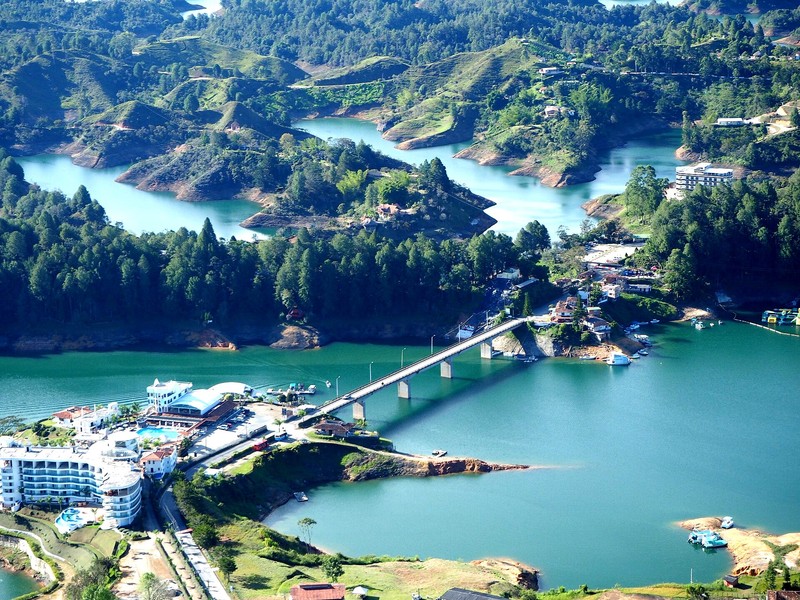
The surrounding landscape is especially striking because of the Peñol–Guatapé Reservoir. It was created as part of a hydroelectric project in the second half of the twentieth century. Water flooded part of the former valley, creating an intricate shoreline with bays and islands. From the rock, the reservoir resembles a mosaic of blue water and vegetation-covered land.
The staircase to the summit
The main activity for visitors is climbing to the viewing platform. The staircase runs through a deep crack in the rock and contains around 700 steps; tourist sources list figures of 649, 702 and 740 depending on the counting method. The climb requires physical effort, but visitors can stop to rest along the way as views of the reservoir gradually open up.
At the summit, a viewing platform offers an almost 360-degree panorama of the surrounding area. Numerous islands, winding shorelines and green hills are visible from here. The scenery is particularly impressive on clear days, so allow time not only for the climb but also to enjoy the view from above.
History and local stories
The first recorded ascent of the rock took place in 1954. Local residents reached the summit using improvised equipment and supports. The staircase was built later, making the monolith accessible to visitors and turning it into one of the region's symbols.
The rock is also known for an unfinished inscription on one of its slopes. In the 1980s, an attempt was made to paint the name Guatapé in huge letters on the stone, but the work stopped after the first characters were completed. Neighbouring municipalities disputed the landmark's ownership because it stands near their boundary.
Places to visit nearby
A visit to the rock can easily be combined with a trip to Guatapé, a town known for brightly painted houses and decorative reliefs on the lower parts of building façades, called zócalos. Its central streets have small shops, cafés and restaurants, and a walk through town offers an introduction to the architecture and traditions of Antioquia.
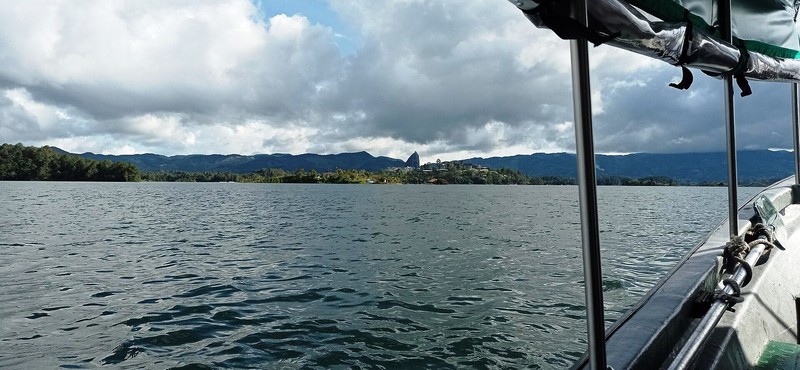
Visitors can take a boat trip on the reservoir, admire the shoreline from the water and enjoy a range of water activities. Excursions vary according to the season and local operators. The rock, reservoir and colourful town of Guatapé form a popular day trip from Medellín.
Visitor tips
Arrive in the morning, when there are usually fewer visitors and the climb is more comfortable. Wear secure shoes with non-slip soles, as the steps can become slippery after rain. Bring water and sun protection, and allow enough time for the ascent, a rest at the summit and the descent. Visitors who have difficulty with long staircases or are uncomfortable with heights should consider the physical demands beforehand.
El Peñol Rock combines an unusual geological formation with a vast waterside landscape and the history of a transformed region. Even without climbing to the top, the monolith is impressive and remains one of the main attractions around Guatapé.
Gallery