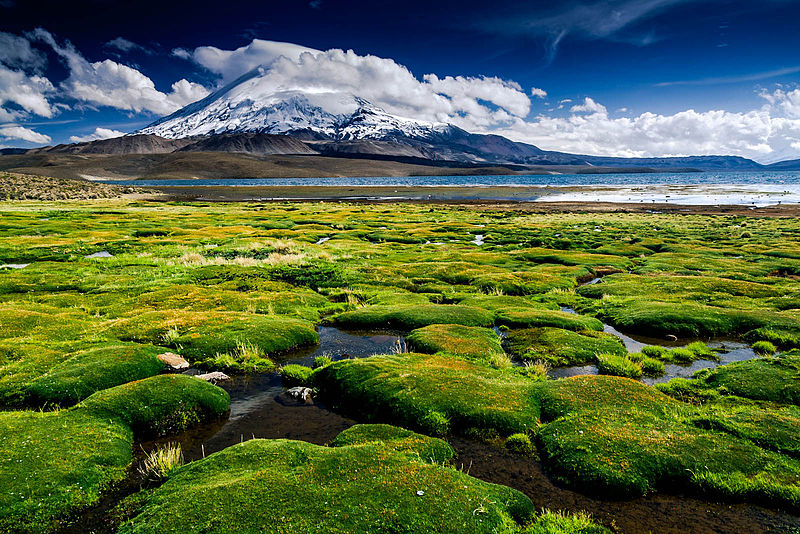
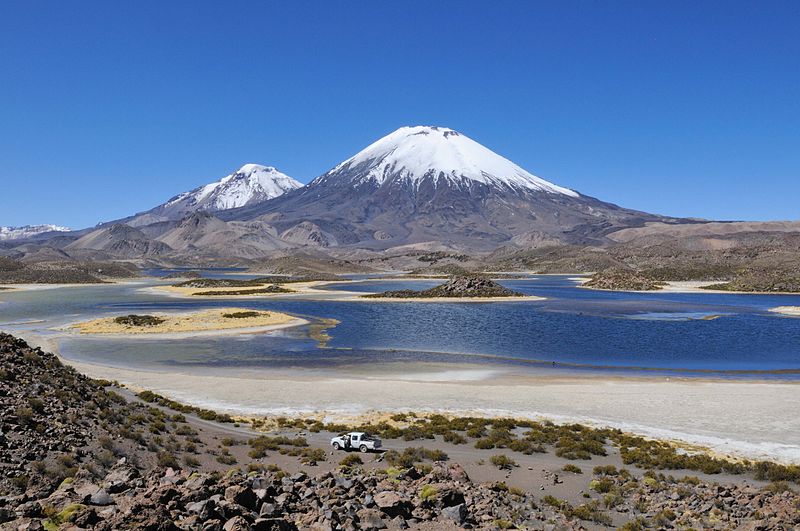
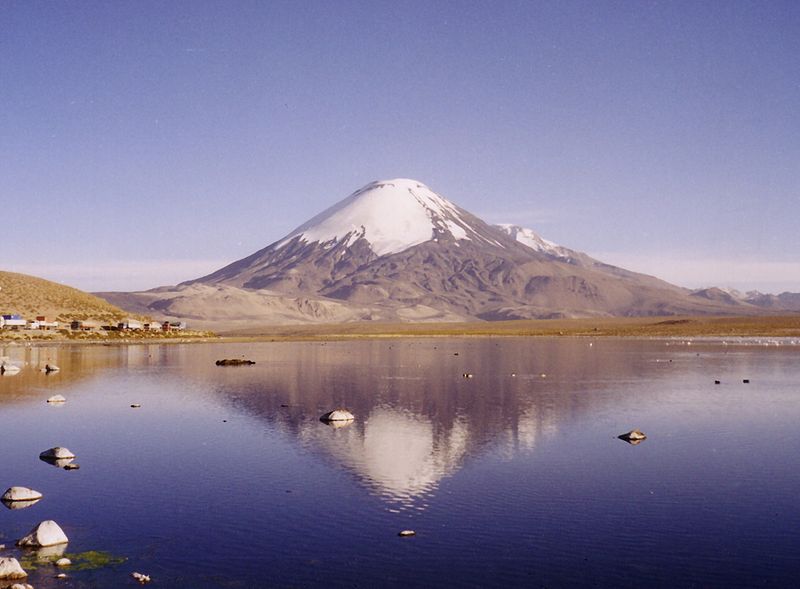
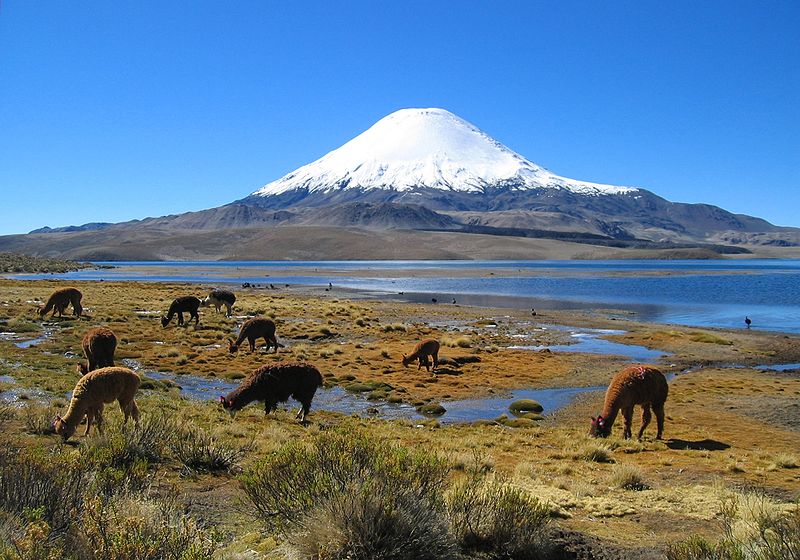
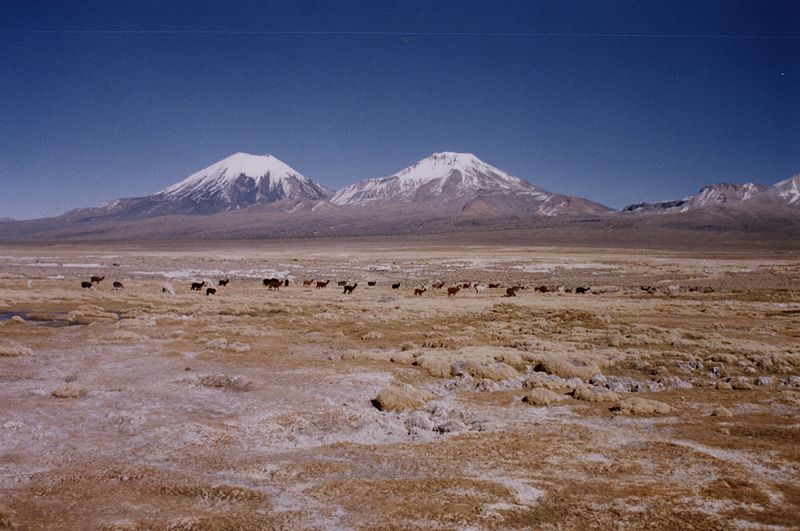
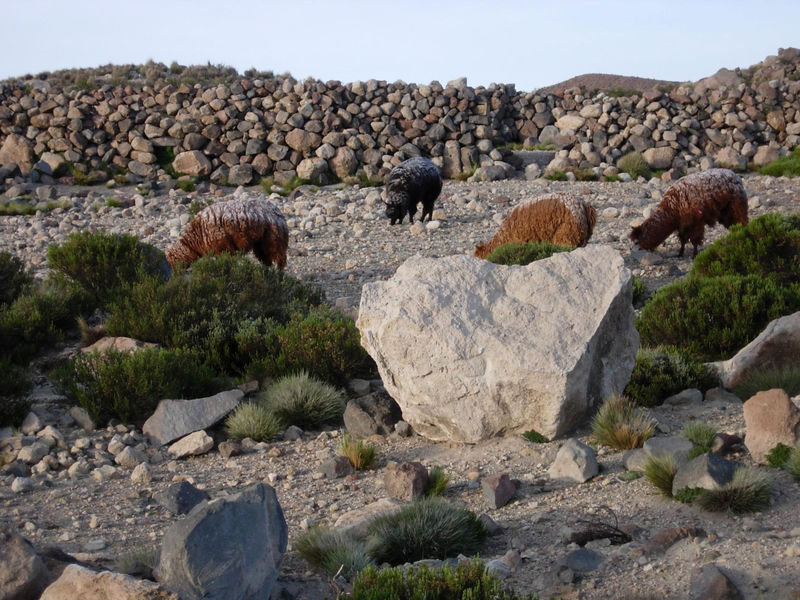
Lauca National Park lies in northern Chile, in the Arica y Parinacota Region, amid the high plateaus of the Andes. It is known for volcanic peaks, clear lakes, wetland meadows and diverse wildlife. The stark scenery of the high-altitude plateau contrasts with wetlands and lakes inhabited by flamingos and other waterbirds.
The park covers approximately 137,883 hectares and includes foothills and the high-altitude Altiplano. In 1981, it became part of UNESCO’s World Network of Biosphere Reserves. Lauca attracts travellers, photographers, birdwatchers and anyone interested in the distinctive natural landscapes of the Andes.
Lake Chungará
The park’s main attraction is Lake Chungará, located at approximately 4,500 metres above sea level. Its surface reflects the surrounding mountains, especially the Parinacota and Pomerape volcanoes. Depending on the light, the water ranges from deep blue to turquoise, creating striking views across the high plateau.
The lake is important to the local ecosystem and provides habitat and nesting grounds for many birds. Visitors may spot Andean and Chilean flamingos, giant coots and ducks. The best way to observe wildlife is from designated viewpoints, without approaching nesting or feeding areas.
The Parinacota and Pomerape Volcanoes
Parinacota and Pomerape, collectively known as the Payachatas, are among the region’s most recognisable natural landmarks. Their conical peaks rise above the plateau, contrasting with Lake Chungará and the surrounding plains. The upper slopes of Parinacota are often snow-covered, and its nearly symmetrical profile is especially striking on clear days.
The volcanoes are important to the natural and cultural heritage of the Andes. Local traditions connect them with the history and beliefs of Indigenous communities. Climbing requires specialist preparation, high-altitude experience and careful assessment of weather conditions. Most visitors should enjoy the official trails and viewpoints instead.
The Cotacotani Lagoons
Another highlight is the Cotacotani Lagoons, a group of small bodies of water linked by channels and surrounded by volcanic scenery. Rocky islets, reflective water and patches of high-altitude grassland create varied photographic compositions. The colours and reflections change throughout the day with the clouds and the position of the sun.
Wetland meadows known as bofedales occur around water sources and streams. These fragile habitats help retain moisture and provide food for wildlife. Visitors should remain on permitted routes and avoid trampling the vegetation.
Wildlife
Lauca is particularly rewarding for observing birds and mammals. Its wildlife includes vicuñas, guanacos, vizcachas, Andean foxes, tarucas and pumas. Different species of flamingos, ducks and coots can be seen around lakes and wetlands. Some birds live in the area year-round, while others use its high-altitude waters during seasonal movements.
Vicuñas, relatives of llamas and alpacas, are well adapted to life at high elevations. They can often be seen on open slopes and plains. To protect wildlife, do not feed animals, chase them for photographs or approach them too closely.
Altiplano Vegetation
Despite the cold, dry conditions and intense sunlight, the park supports a variety of plants. High-altitude grasses and shrubs grow in open areas, while wetland vegetation thrives in moist locations. Rocky slopes are home to yareta, a dense cushion-shaped plant that grows extremely slowly and is vulnerable to damage.
The park also contains queñoa trees adapted to the harsh Andean climate. They grow at considerable elevations and tolerate significant temperature changes. Plant communities provide food and shelter for animals, making the protection of soil and vegetation essential to the wider ecosystem.
Trails and Walks
Short official trails and designated viewpoints offer accessible ways to explore the park. The Lake Chungará trail is about 600 metres long and usually takes around 30 minutes. The Las Cuevas trail is approximately one kilometre long and takes about 40 minutes. The Parinacota trail extends for roughly 3.2 kilometres and takes around two hours. Trail access and conditions may change, so check with park staff before setting out.
Even an easy walk at this elevation requires care. Reduced oxygen can cause headaches, weakness, dizziness and shortness of breath. Avoid rushing, running or strenuous activity. If you begin to feel unwell, stop walking and descend to a lower altitude.
How to Get There
The main access road is international route CH-11, which connects Arica with the route towards La Paz. The distance from Arica to the Lake Chungará area is approximately 145–165 kilometres, depending on the destination, and the drive generally takes several hours. The road climbs steadily, so allow time for acclimatisation and drive carefully.
You can travel by private or rental car or join an organised tour. Public transport directly to the park’s main attractions is limited. Check your vehicle, fuel supply and the weather forecast before departure. Fuel stations are scarce along the route, and mountain conditions can change quickly.
When to Visit
The park can be visited in different seasons, but temperatures on the Altiplano can fluctuate sharply. Sunshine is intense during the day, while mornings, evenings and nights may be very cold. During the Southern Hemisphere summer, especially from December to March, rainfall and thunderstorms may occur as part of the high-altitude rainy season.
Bring warm clothing, a hat, sunglasses, sunscreen and plenty of drinking water. Monitor the forecast and follow instructions from CONAF staff. Check which areas and trails are open before travelling, as access rules may change.
Visitor Guidelines
Lauca is a protected natural area. Visitors must not leave rubbish, feed or disturb animals, collect plants or stones, light fires or leave authorised trails. Pets are not allowed. Drone use is restricted and requires prior authorisation. Following these rules helps protect the park’s fragile ecosystems and keeps visits safer.
Lauca National Park is one of the most remarkable places in Chile’s Altiplano. Lake Chungará, the Payachata volcanoes, the Cotacotani Lagoons and the rich high-altitude wildlife reveal the diversity of the Andes in a single journey. Its exceptional elevation, however, calls for careful preparation and respect for the natural environment.
Gallery