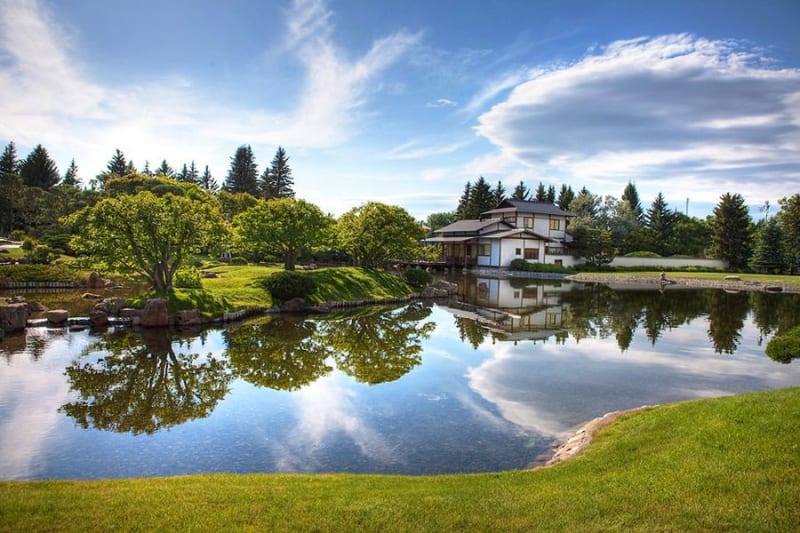
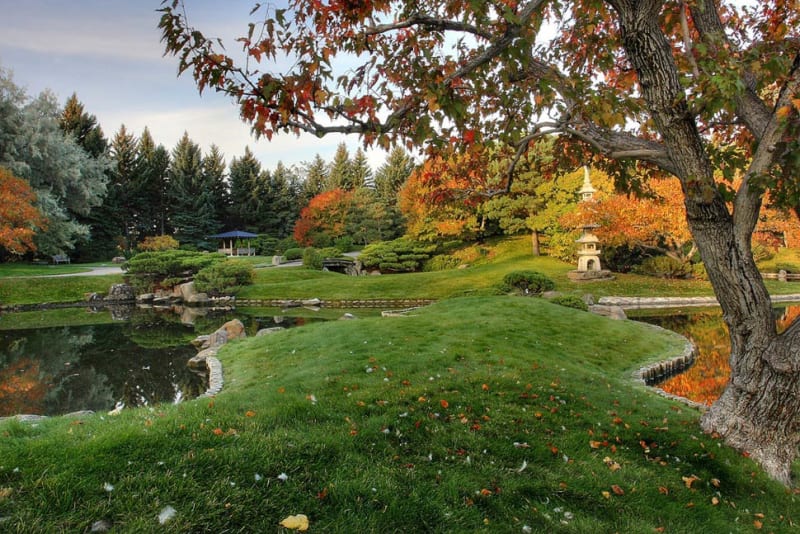
Nikka Yuko Japanese Garden is a traditional Japanese garden in Lethbridge, Alberta, Canada. Designed as a place for peaceful walks and cultural discovery, it introduces visitors to Japanese landscape design and the symbolism of nature. Ponds, rocks, bridges, trees, and traditional structures create a setting where Japanese gardening traditions meet the wide-open scenery of southern Alberta.
The garden covers approximately 1.6 hectares and is located beside Henderson Lake. Its name expresses the idea of friendship between Japan and Canada, and the site has become one of Lethbridge's distinctive cultural attractions.
History of Nikka Yuko Japanese Garden
The idea for the garden emerged in the early 1960s. It was supported by Buddhist priest Yutetsu Kawamura, his wife Yoneko, and Cleo Mowers, publisher of the Lethbridge Herald. They envisioned an authentic Japanese garden in southern Alberta that would recognize the contributions of residents of Japanese ancestry and serve as a symbol of cultural understanding.
The local community supported the project, which was developed as part of Canada's centennial celebrations. Japanese landscape architect Tadashi Kubo of Osaka Prefecture University was commissioned to design the garden. He studied the region's natural environment to bring traditional Japanese garden principles together with the local prairie and mountain scenery.
Masami Sugimoto supervised construction. Many architectural elements were handcrafted in Kyoto, shipped to Canada, and assembled on site with help from local tradespeople. The garden officially opened on July 14, 1967. Japanese dignitaries, including Prince and Princess Takamatsu, attended the opening ceremony.
Japanese landscape philosophy
Japanese garden design does not simply copy nature; it interprets it through symbolism and carefully balanced composition. Every rock, path, pond, and tree contributes to the overall harmony. The paths at Nikka Yuko reveal the scenery gradually, allowing visitors to notice new views and appreciate small details along the way.
The design reflects southern Alberta's wide prairies, distant mountains, and expansive sky. Japanese garden designers call the use of surrounding scenery as part of a garden's composition “borrowed scenery.” This approach makes the relatively compact garden feel more open and connected to its environment.
Ponds, stones, and traditional plants
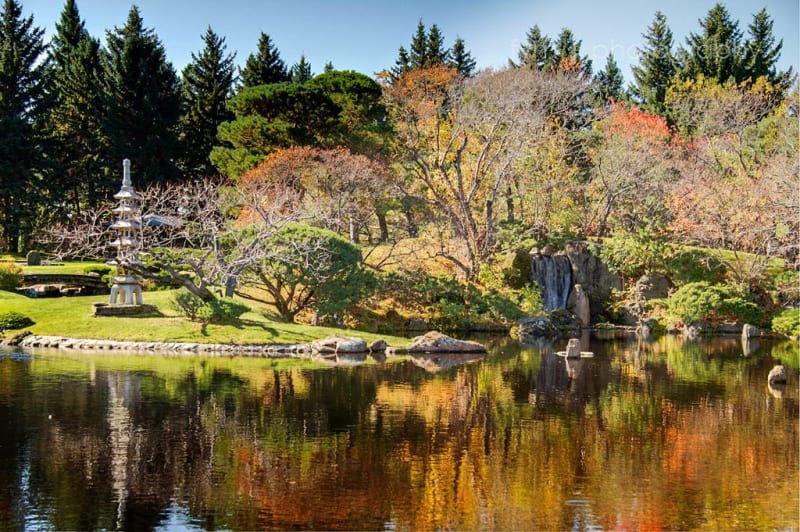
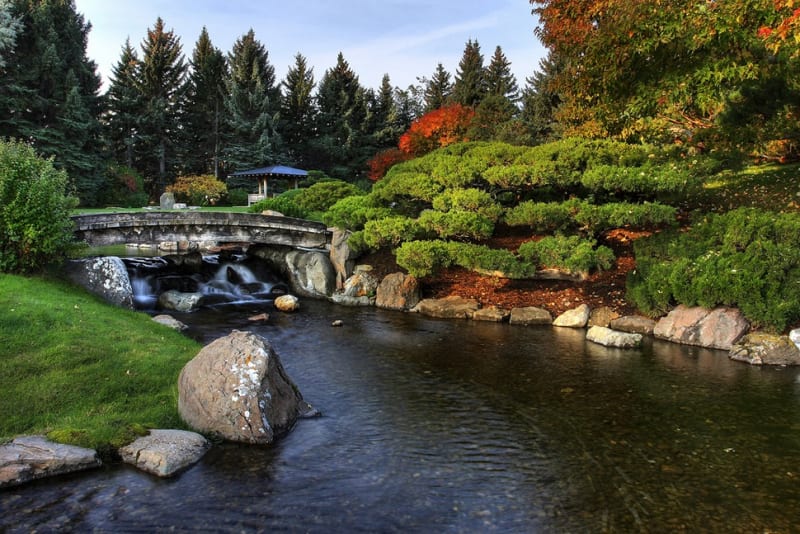
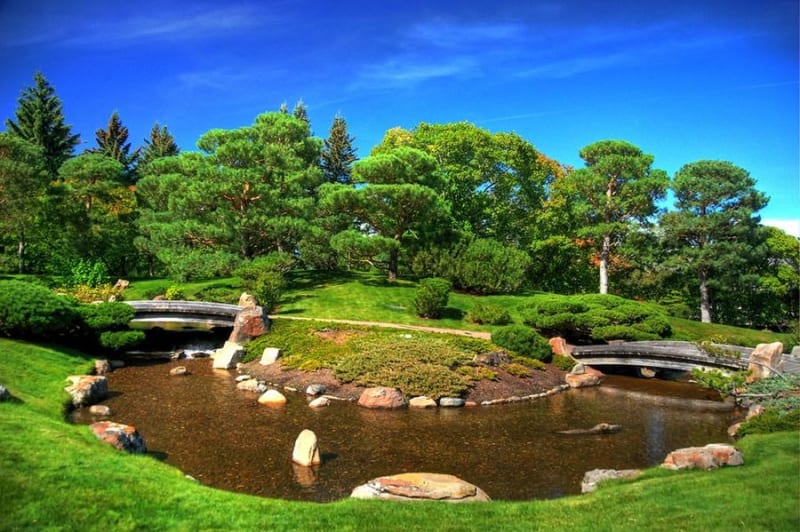
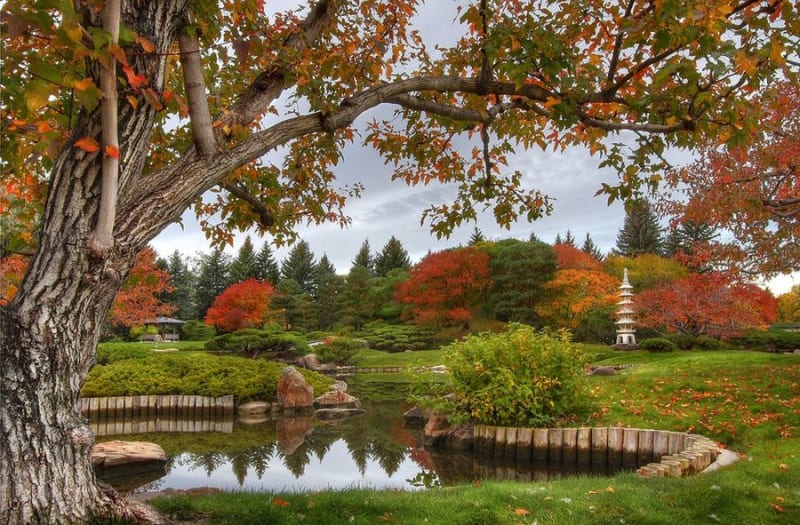
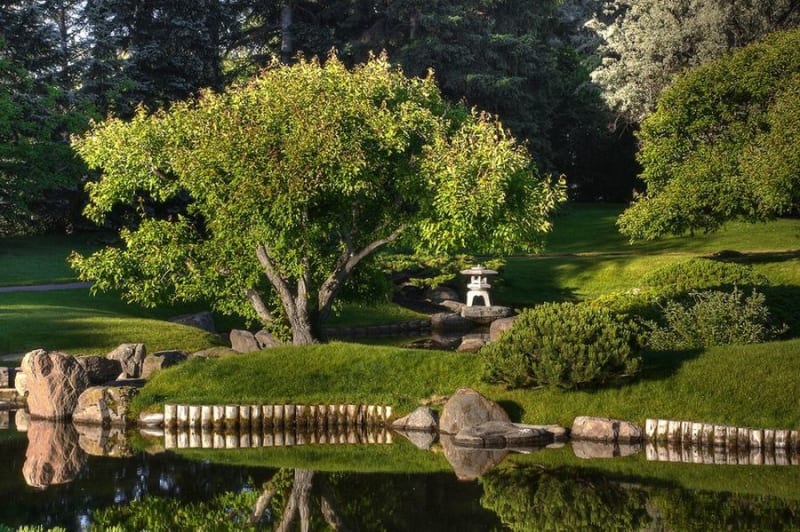
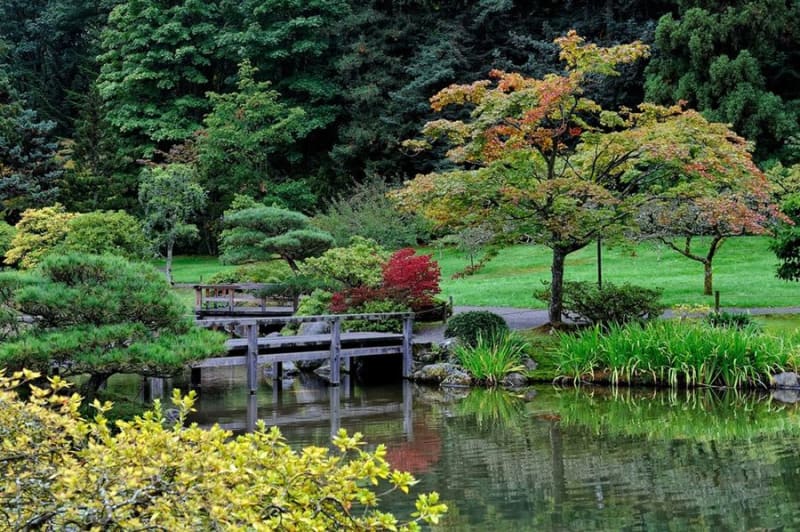
The garden combines water features with dry landscapes, stone lanterns, bridges, trees, and carefully maintained shrubs. Water creates movement and reflections, while stones suggest permanence and natural forms. The planting changes with the seasons: delicate blossoms appear in spring, lush greenery defines summer, and warm foliage colours arrive in autumn.
Symbolic features include an island shaped like a turtle, traditionally associated with longevity, and a dry rock garden beside the tea pavilion. Carefully arranged stones and gravel evoke natural landscapes without relying on large amounts of water or vegetation.
Pavilions, bridges, and the Friendship Bell
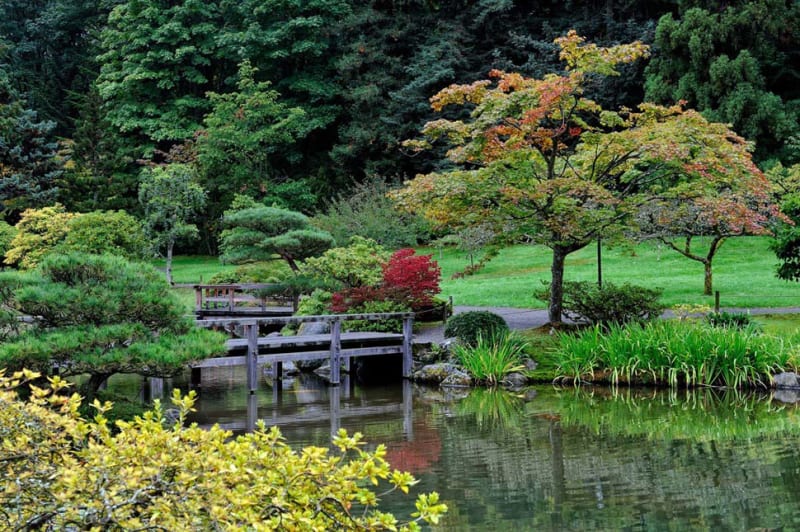
Architecture is an essential part of Nikka Yuko. The garden features a tea pavilion, an azumaya shelter, gates, bridges, and a bell tower. Many wooden structures were crafted in Kyoto before being assembled in Canada. Their traditional appearance highlights the garden's connection to Japanese craftsmanship.
A central feature is the bronze Friendship Bell, cast in Kyoto specifically for the garden. It represents goodwill and the bond between the two countries. Stone lanterns are placed throughout the grounds according to Japanese garden traditions. A five-tier stone pagoda also represents earth, water, fire, wind, and sky.
Bunka Centre
A visit to Nikka Yuko involves more than a garden walk. The Bunka Centre introduces visitors to Japanese traditions and the history of the Japanese Canadian community in southern Alberta. It hosts cultural programs, workshops, and activities for different age groups. The centre also includes exhibition spaces, a gift shop, and Cleo's Café.
Depending on the schedule, visitors may experience a Japanese tea ceremony, join a guided tour, or take part in cultural activities. Programs and availability vary throughout the year, so checking the current schedule before visiting is recommended.
Festivals and seasonal events
During the warmer months, the garden hosts cultural gatherings, guided walks, themed programs, and outdoor activities. Seasonal celebrations highlight Japanese culture and traditions. In winter, the Winter Light Festival transforms the garden with numerous lights, creating a distinctive atmosphere after dark.
Each season offers a different experience: spring brings the first flowers, summer highlights greenery and water reflections, and autumn reveals changing foliage. Winter events may differ from regular garden visits, so dates, tickets, and program details should be confirmed in advance.
How to get to Nikka Yuko Japanese Garden
The garden is located at 835 Mayor Magrath Drive South in Lethbridge, Alberta, Canada, on the western side of Henderson Lake. Public parking is available near Henderson Lake Park. Visitors can reach the area by car or city bus, depending on their starting point and the current transit schedule.
Check the official garden website before travelling. During pathway construction, access to the garden grounds may be restricted even if the cultural centre remains open. The website provides updated opening hours, ticket information, tour details, and event listings.
Visitor tips
Take your time rather than rushing through the grounds. Notice the arrangement of stones, the shape of the island, the lanterns, the bridges, and the views from different points along the paths. If a guided tour is available, it can help explain the symbolism of the garden's features and the story behind its creation.
Rules help preserve the peaceful atmosphere and protect traditional structures. Drone photography is prohibited, and visitors entering the tea pavilion are asked to remove their shoes or wear protective shoe covers. Review current visitor guidelines before your trip.
Why visit Nikka Yuko Japanese Garden
Nikka Yuko Japanese Garden is a distinctive Canadian attraction that brings together Japanese aesthetics, local community history, and the natural character of Alberta. Visitors can learn about traditional garden design, see handcrafted architectural features, and enjoy a quiet setting beside Henderson Lake. It is especially appealing to anyone interested in Japanese culture, landscape architecture, photography, and leisurely walks.
Gallery