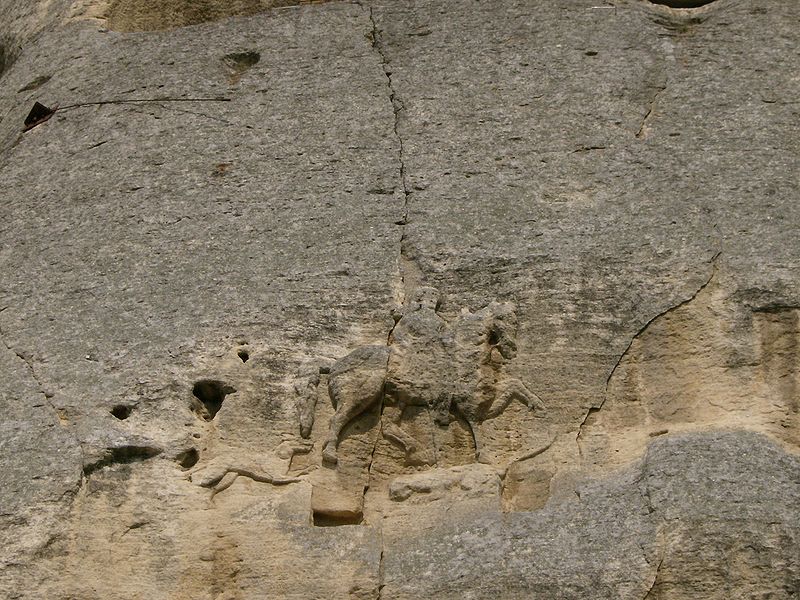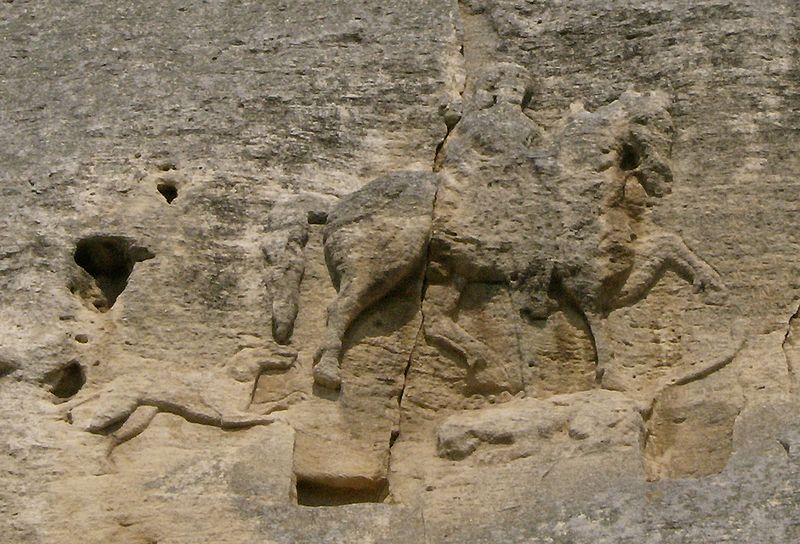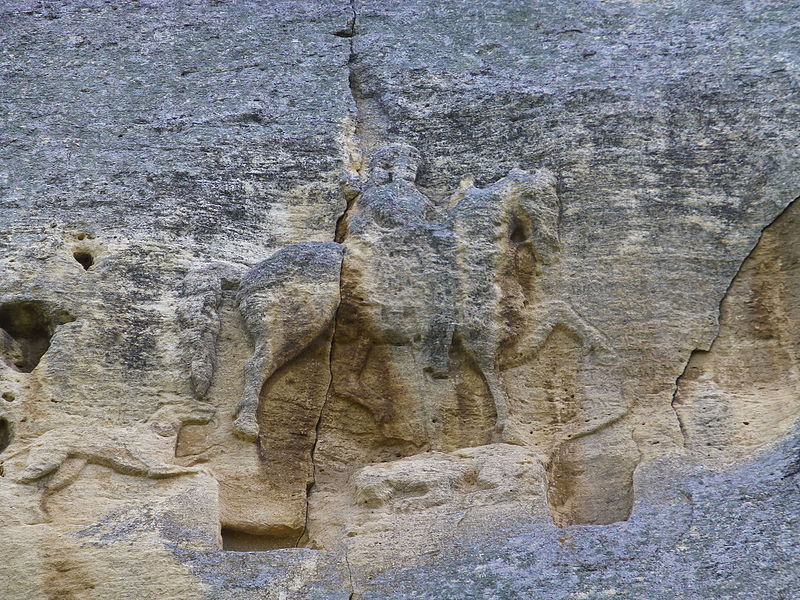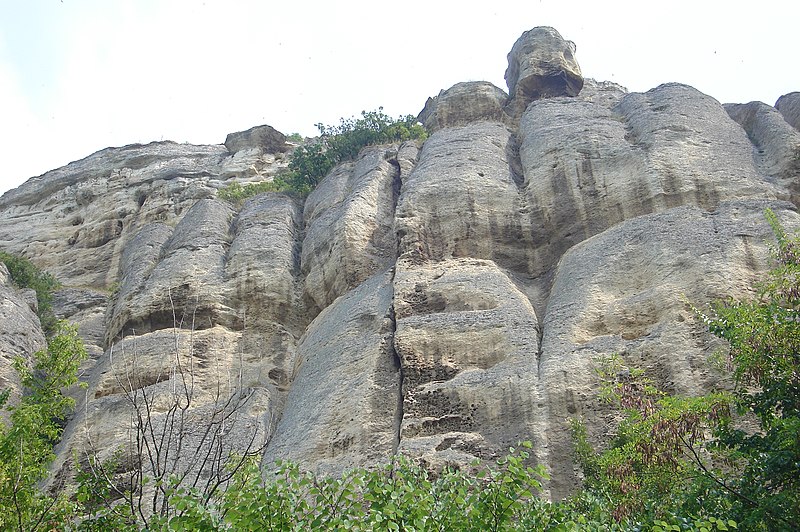

One of the symbols of Bulgaria is considered to be the Madara Horseman, an ancient relief image carved into a rock. The Madara Horseman is the main exhibit of the whole complex dedicated to the history of the Bulgarian people. It has been listed as a World Heritage Site since 1979.
General information
The image of a horseman on a horse has an ambiguous history of appearance. Most archaeologists agree that the monument appeared on the rock in the 8th-9th century AD.:
- Some claim that the Bulgarian khan Tervel appears as a horseman, defeating a lion (perhaps the lion symbolizes some other enemy).
- There is also an opinion that the Thracian god is on horseback, and the image itself is the work of the Thracians.
- Others believe that the image of the Slavic god Svyatovit or, in another opinion, St. George the Victorious was imprinted on the rock.
Anyway, the Madara Horseman is the only historical monument in Europe carved on a rock that has survived to this day.
The Horseman is the main exhibit of the Madara Historical and Archaeological Reserve. In ancient times, people lived in these places. This is evidenced by the household items found here and numerous caves, they were used not only as dwellings, but also as sanctuaries. In one of the caves, water flows down the wall, it is considered healing. In another cave, right on the wall, there is an image of the icon of St. Peter the Great. Panteleimon, the faithful are still putting candles here and praying to the saint. On the territory of the reserve, not only numerous monuments of ancient culture are protected, but also local nature and animals living in the vicinity.
The Horseman
It is noteworthy that the image of the rider is located at a height of about 23 meters. At the same time, it is made in full size and occupies an area of 3 by 2.5 meters. You can see and photograph it from a special platform, which is reached by a steep stone staircase of 400 steps.
In one hand, the Madara horseman holds the reins, and in the other a spear, the tip of which pierces the lion. The rider is wearing a helmet and clothes. On a horse, the rider's saddle and legs are inserted into the stirrups. This small detail suggests that the rider was a representative of the Bulgarian nomads, as the tribes living here did not use stirrups. The rider is accompanied by a dog - dogs were sacred and revered by the ancient Bulgarians.
Next to the image of the Madarian horseman, there are several rock carvings in Greek, which describe some of the events that took place in the Bulgarian state at that time. The inscriptions are of a later origin, and may have been added at different times.
Visiting the reserve is an opportunity to see a unique monument of ancient culture, and to get acquainted with other interesting objects. Unfortunately, time and natural factors tend to destroy ancient artifacts, but scientists are doing their best to preserve them for future generations.
Gallery