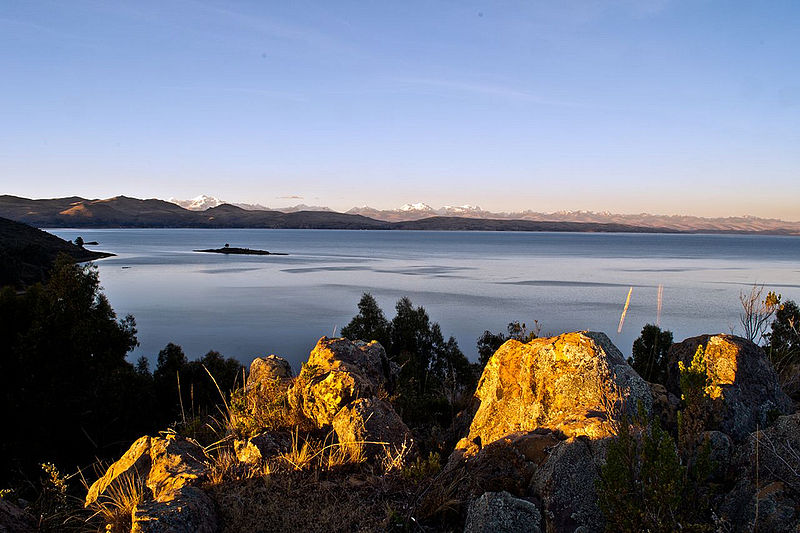
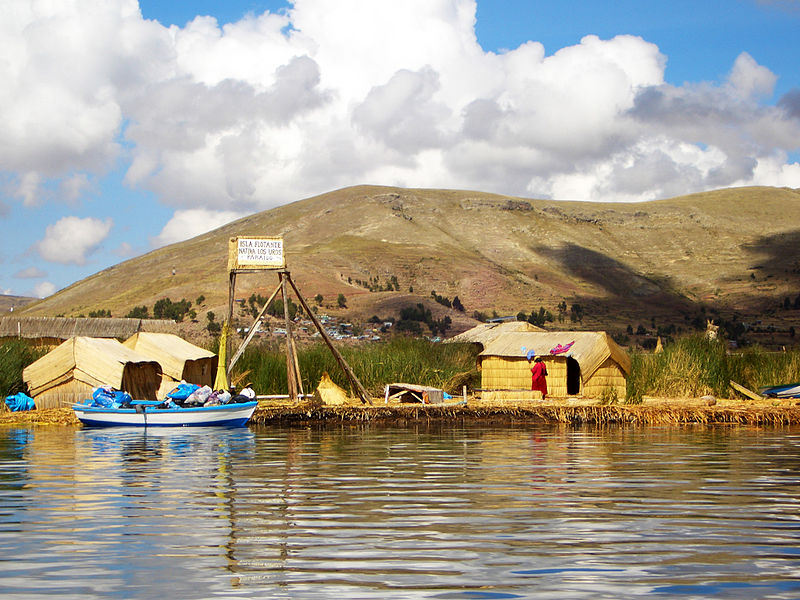
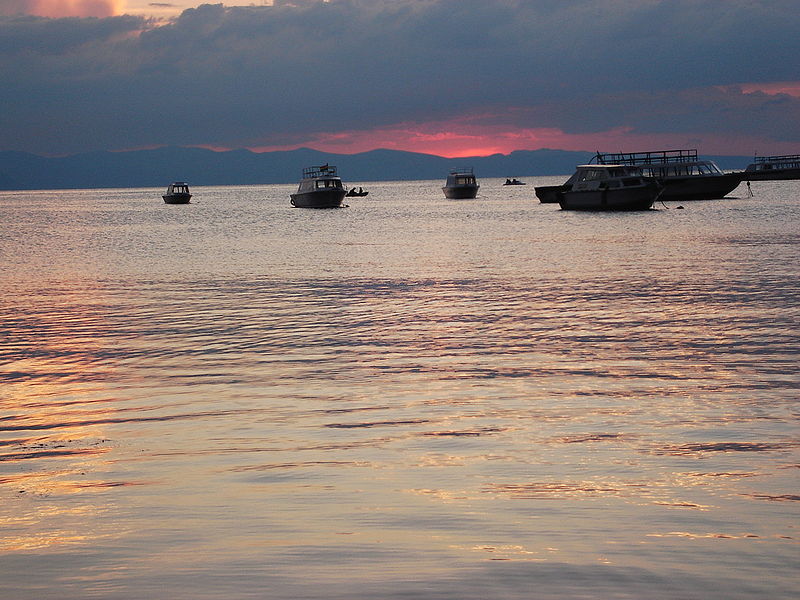
Lake Titicaca is a high-altitude lake in the Andes, shared by Bolivia and Peru and lying about 3,810 metres above sea level. Surrounded by mountain ranges, dry plateaus and Indigenous communities, it is known for deep-blue water, scattered islands, traditional totora-reed boats and views of the snow-covered Cordillera Real. The lake is one of Bolivia's most distinctive natural and cultural landscapes.
Geography and Natural Features
The lake lies on the Altiplano plateau and covers roughly 8,300 square kilometres. It extends for about 190 kilometres and is divided by the narrow Tiquina Strait into a larger northern basin and a smaller southern basin. Its altitude brings thin air, strong sunlight, cool temperatures and weather that can change quickly.
Copacabana on the Bolivian Shore
Copacabana is the main visitor centre on the Bolivian side. Boats depart from here for nearby islands, while the waterfront and surrounding viewpoints look across bays and mountains. The town is known for the Basilica of Our Lady of Copacabana, local markets and a blend of Catholic and older Andean traditions.
Isla del Sol - the Island of the Sun
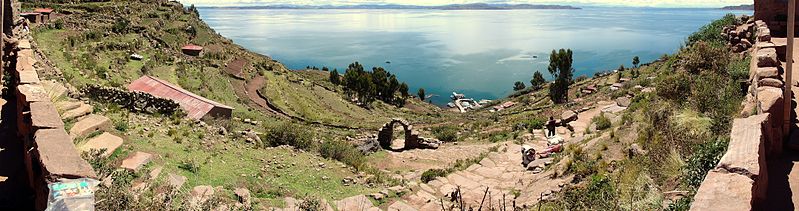
Isla del Sol is closely associated with Inca origin stories and the sacred geography of the Andes. Archaeological remains include stone stairways, terraces and the Chincana complex. Today, visitors come for walking trails, panoramic lake views and encounters with traditional island communities. Services can be limited, so routes and boat schedules should be planned in advance.
Isla de la Luna and Ancient Civilisations
Isla de la Luna, also called Coati, is associated with Inca legends and contains the archaeological site of Iñak Uyu. Near the southern shore lies Tiwanaku, the ceremonial and political centre of an influential pre-Columbian culture. Its monumental stone structures and Gateway of the Sun testify to the region's long history; Tiwanaku became a UNESCO World Heritage Site in 2000.
Aymara Culture and Traditional Life
Aymara-speaking communities around the Bolivian shore preserve weaving, fishing, farming, livestock raising, music and traditional festivals. Ancient terraces and agricultural systems show how people adapted to the cold high-altitude environment. For many local residents, Titicaca is not merely a lake but a sacred place and a central part of cultural memory.
Wildlife and Environmental Importance
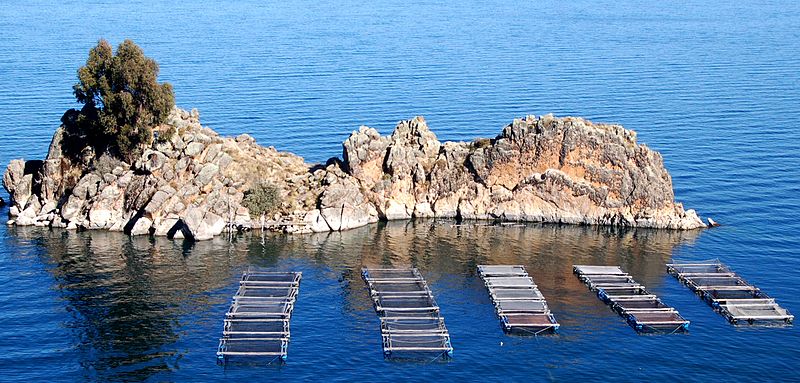
The lake and its wetlands support waterbirds, fish, amphibians and endemic species such as the Titicaca water frog. The ecosystem is internationally important, but it faces pressures from pollution, untreated wastewater, habitat loss and introduced species. Protecting the lake requires cooperation between Bolivia and Peru.
Underwater Archaeology
Archaeological work beneath the water has revealed ancient objects and evidence of ritual activity. Changes in the lake level may have submerged former shoreline sites. Finds include pottery, metal objects and offerings that help researchers understand religious practices and cultural exchange across the Andes.
When to Visit and What to Do
The drier season generally runs from May to October, while the rainy season is usually from November to March. Popular activities include boat trips, visits to the islands, walks around Copacabana and exploring nearby archaeological sites. Because the lake is high above sea level, visitors should allow time to acclimatise, walk at a comfortable pace and bring warm layers, sun protection and water.
Bolivia's Natural and Cultural Heritage
The Bolivian side of Titicaca combines dramatic highland scenery, ancient sacred sites and living Aymara traditions. Although the lake is shared with Peru, Copacabana, Isla del Sol and nearby archaeological places offer a rich introduction to Bolivia's history, culture and landscapes.
Gallery