St. Stephen's Cathedral (Stephansdom) is Vienna's principal Catholic church and one of Austria's best-known architectural landmarks. It stands on Stephansplatz in the heart of the historic city and has remained an important religious, cultural, and civic symbol of the capital for centuries. The cathedral forms part of Vienna's Historic Centre, which is inscribed on the UNESCO World Heritage List.
History of St. Stephen's Cathedral
The cathedral's history dates back to the 12th century, when Vienna was developing into an important trading and administrative centre. In 1137, an agreement to build a church was made with the involvement of Margrave Leopold IV and Reginmar, Bishop of Passau. The Romanesque church was consecrated in 1147. As the city grew, the building was expanded, and after a fire in 1258 another church was erected on the site.
A major Gothic reconstruction began in the 14th century. In 1359, Duke Rudolf IV initiated a new phase of construction, aiming to make the church a magnificent symbol of Vienna. The work continued over several generations. The South Tower was completed in 1433, while construction of the North Tower, begun later, was halted, leaving it considerably shorter. The medieval sections of the building preserve traces of different construction periods.
Architecture and the famous roof
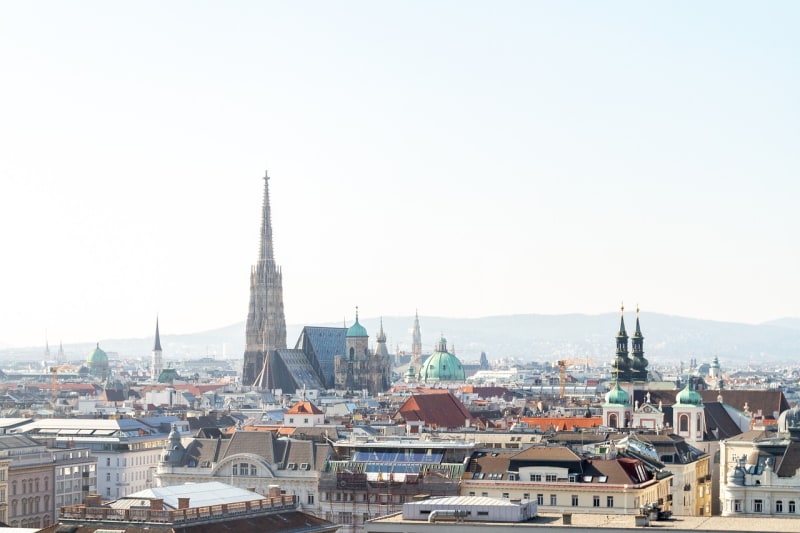
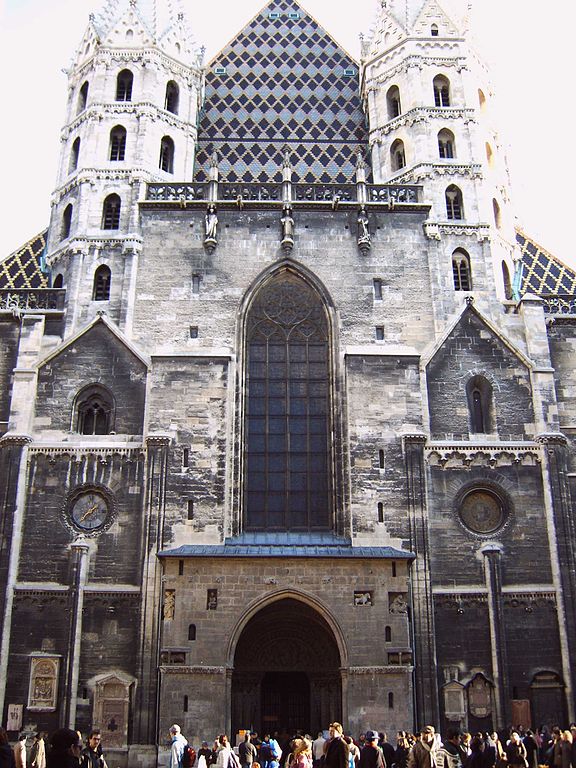
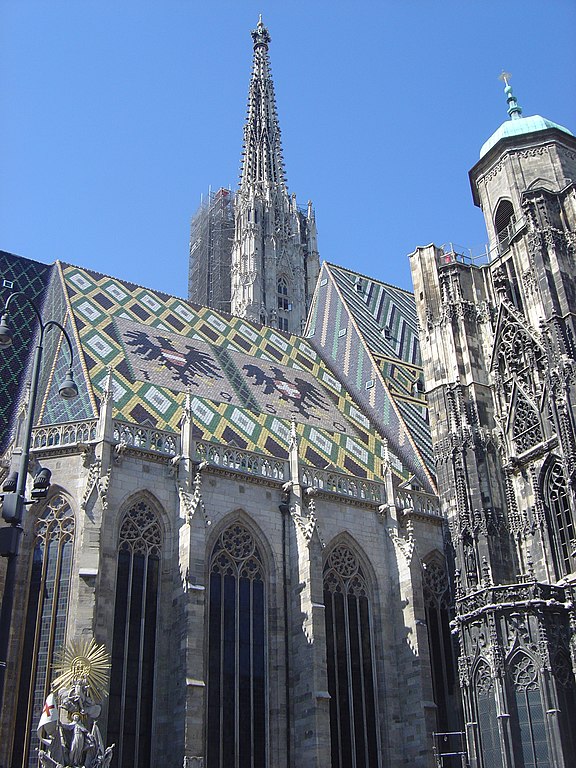
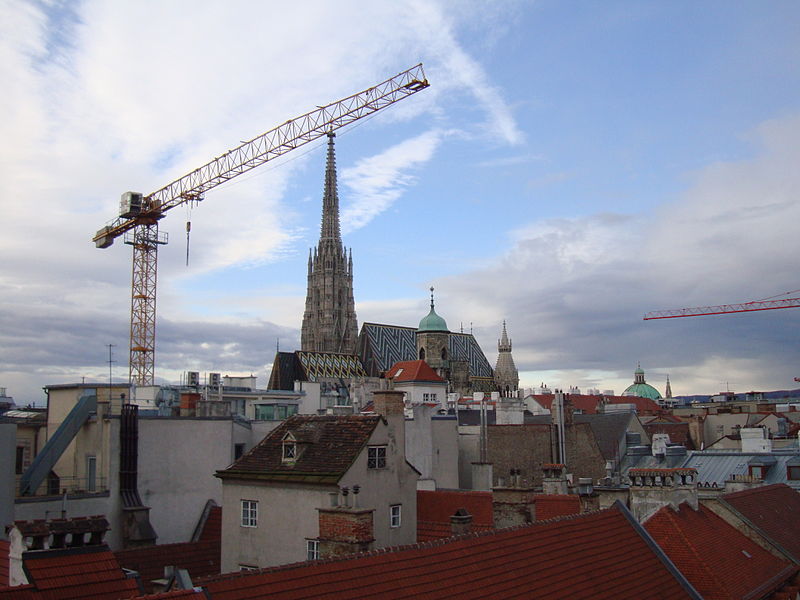
The cathedral combines Romanesque features in its western section with striking Gothic architecture. Its best-known details include the monumental Giant's Doorway, the two towers on the western façade, tall pointed arches, and intricate stone carving. The South Tower rises to about 136 metres and forms one of the defining vertical features of Vienna's skyline. It is affectionately known as the Steffl.
The roof is particularly striking, covered with more than 200,000 colourful glazed tiles. They form geometric patterns, the coats of arms of Vienna and Austria, and an image of the double-headed eagle associated with the history of the Habsburg monarchy. The vivid roof can be seen from viewpoints throughout the city centre.
Interior and artistic highlights
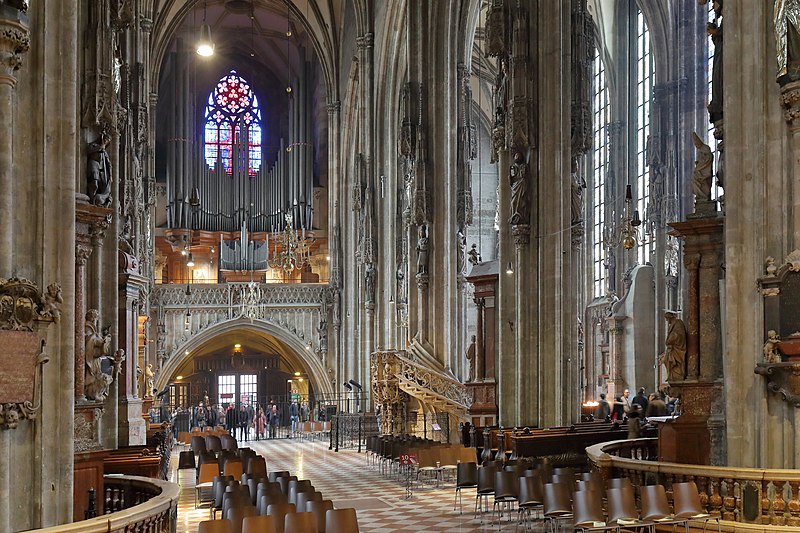
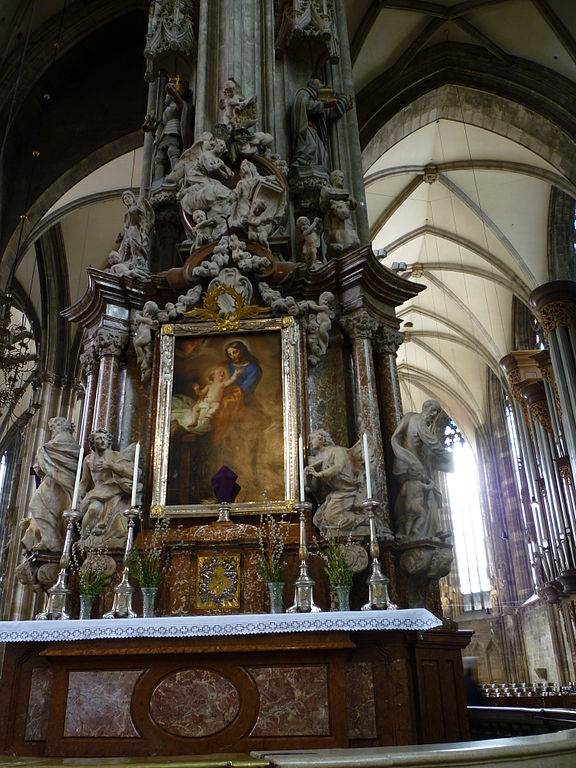
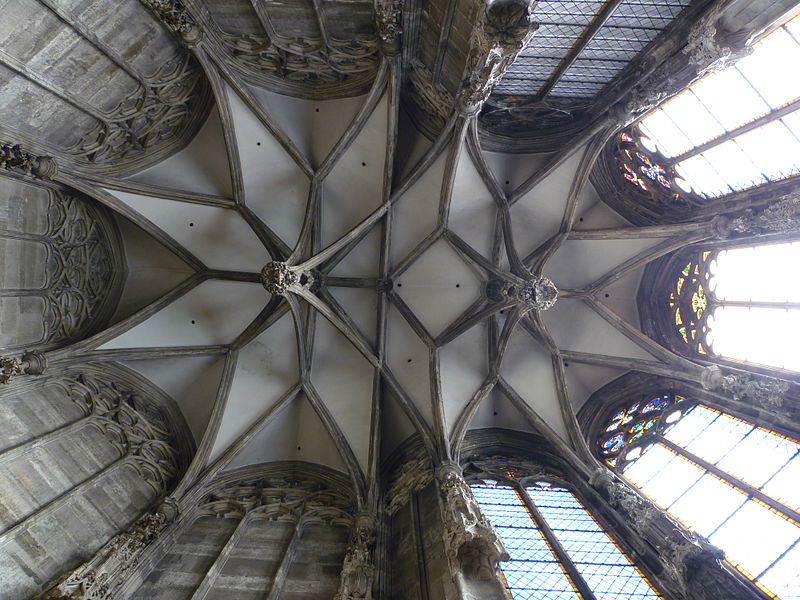
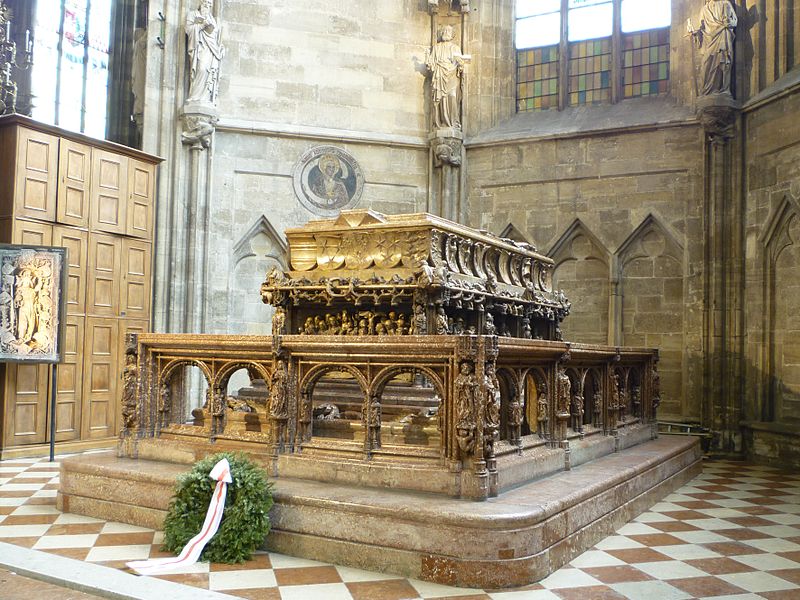
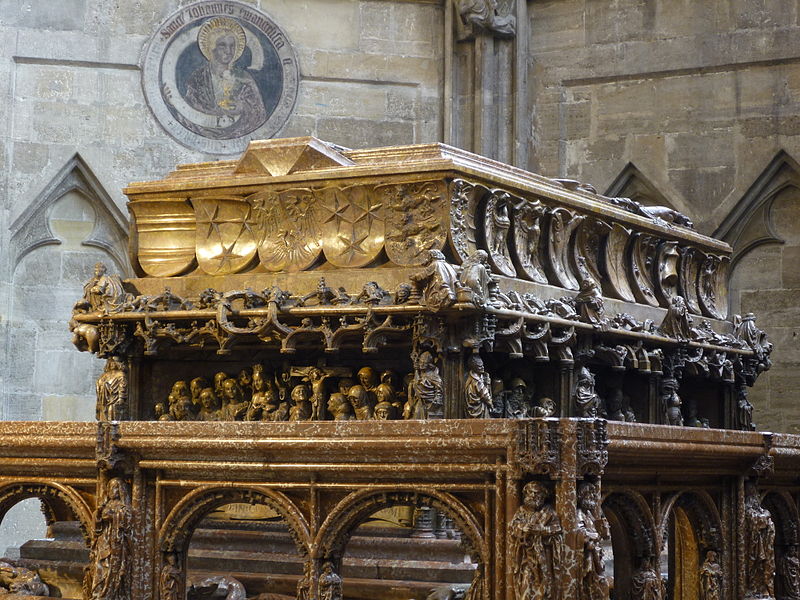
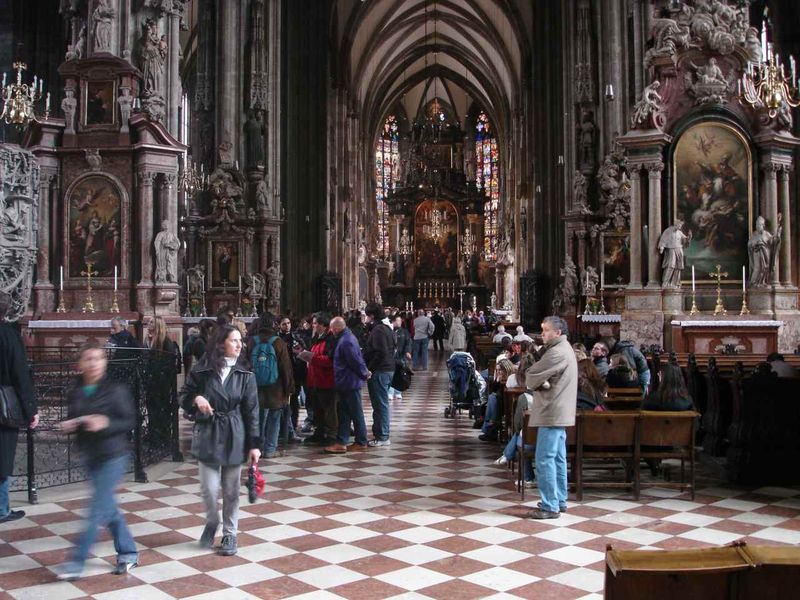
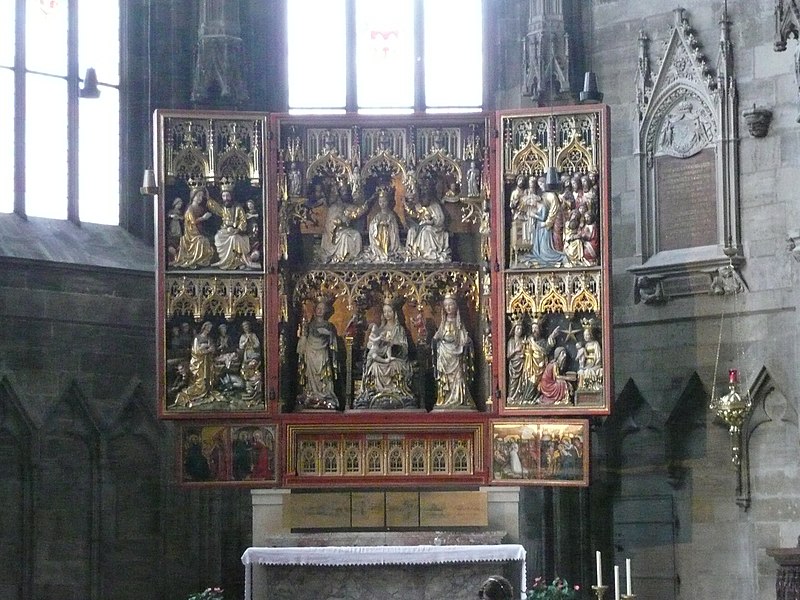
Inside the cathedral, visitors can see Gothic vaults, sculptures, altars, chapels, and works of religious art from different periods. One of the best-known interior features is the pulpit, decorated with elaborate stone carving. The building's interior changed over the centuries, bringing medieval details together with later Baroque decoration.
The cathedral is also connected with Vienna's musical history. Wolfgang Amadeus Mozart married Constanze Weber here in 1782, and a memorial service for the composer was held in 1791. Catholic services continue to take place in the cathedral, which remains both an architectural monument and an active religious centre.
The fire of 1945 and restoration
In the final days of the Second World War, the cathedral was severely damaged by a fire that spread from burning neighbouring buildings. The roof collapsed, and the flames damaged the interior and historic features. Extensive restoration began after the war: the structure was reinforced, the roof and stained-glass windows were restored, and the interior was repaired. By 1952, the cathedral had returned to full use for services and gradually became a symbol of Vienna's post-war recovery.
Towers, bells, and views of Vienna
The South Tower is known for its viewing platform, which offers views over the historic centre and the rooftops of the old town. Reaching it involves climbing 343 steps, so visitors should consider the effort required. The North Tower houses the famous Pummerin, one of Europe's largest church bells. Access to the towers and some sections of the cathedral may require a ticket, and visiting arrangements depend on the schedule and events taking place.
How to get to the cathedral
St. Stephen's Cathedral is located on Stephansplatz in Vienna's first district. The easiest way to reach it is by metro to Stephansplatz station, served by lines U1 and U3. From the Vienna State Opera, it is about a 10–15-minute walk along Kärntner Straße. Its central location makes it easy to combine a visit with a walk through the historic streets, a stop at the Hofburg, and other sights in the old town.
Before visiting, check the current schedule on the cathedral's official website. Tourist visiting hours may differ from service times, and access to the towers, catacombs, and guided tours may be arranged separately. The cathedral remains an essential stop for anyone interested in Vienna's history, architecture, and cultural heritage.
Gallery