Vienna State Opera
Every opera lover, once in Austria, aspires to visit the Vienna State Opera, listen to the works of Mozart and Haydn, Beethoven and Gluck. But it's also worth visiting here for those who don't like classical music at all. After all, the construction of the architectural structure was accompanied by many tragic and scandalous events.
History of appearance
Since the 17th century, the Austrian possessions were a huge empire, which at various times included the lands of the Czech Republic, Hungary, Italy and other states. For some time, the state was called the Holy Roman Empire. However, the appearance of Vienna, the capital of the state, did not match the imperial ambitions in any way. Therefore, the young emperor from the Habsburg dynasty, Franz Joseph I, decided to carry out a general restructuring of the center of the capital. And to build new grandiose buildings on the site of the ruins of the old bastion. The projects of the buildings and the candidacies of the architects were chosen by an authoritative jury on a competitive basis, which is amazing in an autocratic state.
Opera singing in Vienna has been developing rapidly since the middle of the 17th century. However, for more than two hundred years, there simply was no special place to show opera performances. Great composers, conductors and singers were forced to wander around other people's theaters to present their achievements to the fans. That's why we started with the opera house first. The initiator was Emperor Franz Joseph. The new theater was obliged to confirm Vienna's reputation as a musical capital, a city where Mozart and Gluck, Beethoven and Haydn performed. The size and luxury of the decoration of the building was supposed to emphasize the greatness of the Habsburg Empire.
The Sunken Chest
The architectural design competition was won by architects Eduard van der Null and August von Sicardsburg, who have already erected many beautiful buildings. There was no reason to doubt the success even now. However, a number of unpleasant surprises awaited them during the construction. Multi-storey residential buildings grew rapidly near the construction site, as a result of which the architectural proportions shifted significantly.
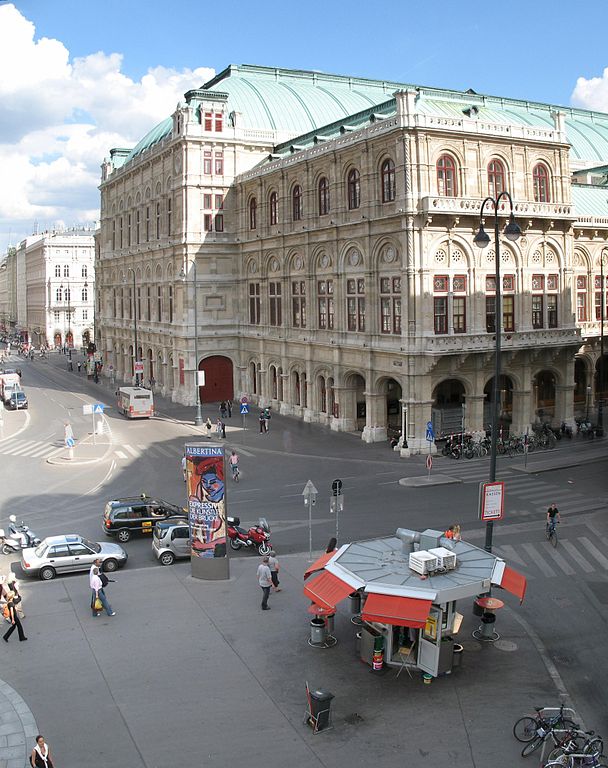
When the building was already built, it turned out that the level of the roadway was located above the base of the theater. As a result, the theater, which does not have a high foundation or steps, and turned out to be too squat, was nicknamed the "sunken chest" by the townspeople. Thus, they hinted not only at the unsightly appearance, but also at the high cost of the project.
The Emperor's frankness
Unfair criticism has weighed heavily on the architects' souls. Sicardsburg was ill at the time, and van der Null had to find out the emperor's opinion alone. And Franz Joseph was extremely frank. He stated that he agrees with the opinion of the people. And the costs are high. And the theater looks, if not like a chest, then like a train station. The day after this conversation, Null hanged himself. A month after his friend's death, Sicardsburg died of lung disease.
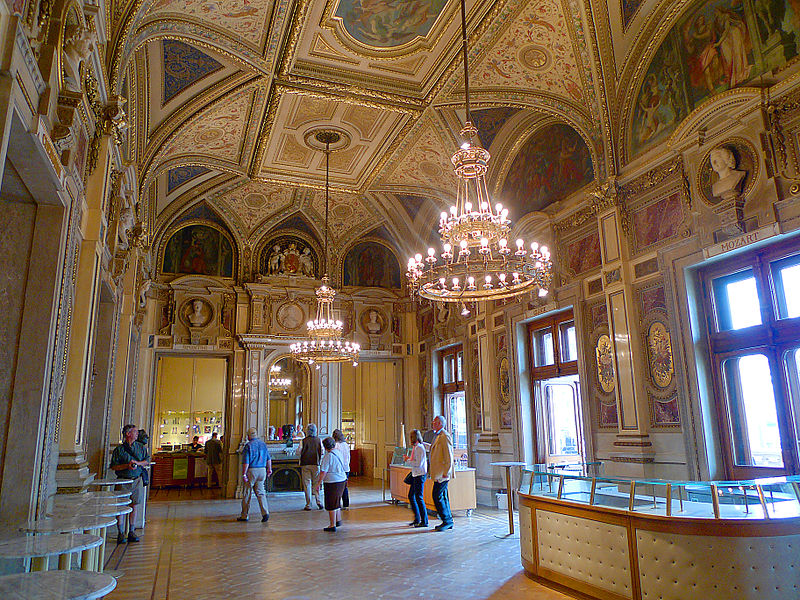
It is said that after that, Emperor Franz Joseph promised himself never to criticize creative people. In memory of the architects, he ordered a marble medallion with their profiles to be made and placed in the theater building. On a cold May day in 1869, the Vienna Opera building was finally opened, but it has not survived to this day. During the Second World War, it was bombed by the Americans. The Vienna Opera of our time is a very successful and almost accurate reconstruction of the old one, which looks quite elegant and refined against the background of modern buildings.