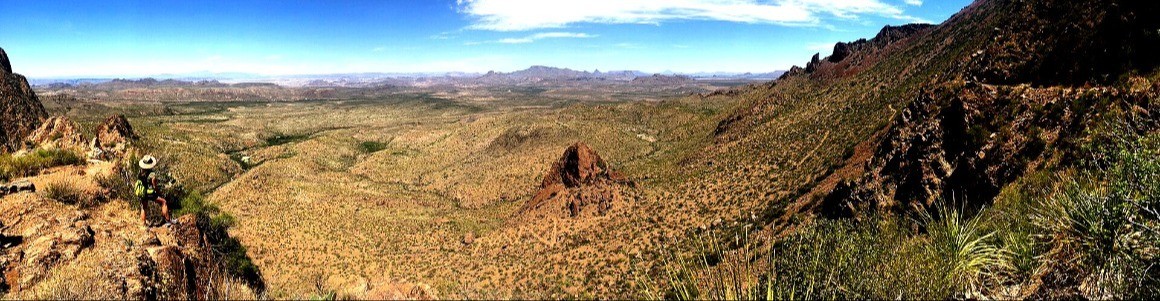
Big Bend National Park lies in southwestern Texas, along the Rio Grande, which forms part of the border between the United States and Mexico. This vast protected area brings together desert plains, mountain ranges, deep river canyons, and greener river valleys. Its remote location, far from major cities, makes the park renowned for its wilderness, dramatic scenery, and exceptionally dark night skies.
History of the National Park
The name Big Bend refers to the great curve of the Rio Grande. In the early twentieth century, ranchers, miners, and farmers lived in the region and adapted their livelihoods to the dry climate. Texas began developing a protected area here in 1933, and on June 12, 1944, Big Bend officially became a national park. In 1976, the region was designated an international biosphere reserve by UNESCO.
The Chihuahuan Desert
A large part of the park belongs to the Chihuahuan Desert, one of the major desert regions of North America. Its landscapes include rocky plains, dry washes, low mountains, and areas covered with cacti and drought-resistant shrubs. Despite the harsh conditions, the region supports a rich ecosystem. More than 1,200 plant species have been recorded in the park, including many cacti, agaves, and other plants adapted to storing or conserving moisture.
The Chisos Mountains
The Chisos Mountains are among the most distinctive features of Big Bend's landscape. Their peaks rise above the surrounding desert, while changes in elevation create cooler and wetter conditions than those found on the lowlands. The park's highest point is Emory Peak, which reaches approximately 2,387 meters above sea level. Popular hiking routes begin around Chisos Basin and lead to viewpoints, mountain ridges, and sweeping panoramas over the desert.
The Canyons of the Rio Grande
The Rio Grande is essential to the region's ecology and forms the park's southern boundary for about 190 kilometers. Over time, the river carved several impressive canyons into the rock. One of the best known is Santa Elena Canyon, where tall stone walls rise closely on either side of the water. Mariscal and Boquillas canyons also reveal the area's varied geological formations and the scale of natural processes that have shaped the landscape over millions of years.
Wildlife and Plant Life
The variety of desert, mountain, and river habitats supports a wide range of animals. Big Bend is home to deer, coyotes, mountain lions, bobcats, hares, numerous rodents, and bats. The park is particularly rewarding for birdwatchers, with more than 400 recorded bird species, including birds of prey and species associated with river valleys. Reptiles, insects, and amphibians are also important parts of the ecosystem. Wildlife is often easier to observe in the early morning and late afternoon, when temperatures are lower.
Hiking and Outdoor Activities
Big Bend offers trails of varying difficulty, from short walks through the desert to demanding mountain hikes. Trails around Chisos Basin introduce visitors to the mountain scenery, while the route to Santa Elena Canyon offers close views of towering cliffs and the river. Visitors also come for camping, birdwatching, river trips, scenic drives, and exploration of the park's remote backcountry.
The Night Sky of Big Bend
The park's distance from major cities and its low levels of artificial light make it an outstanding destination for stargazing in the United States. On a clear night, visitors may see the Milky Way, countless stars, and bright planets above the desert. For many travelers, the night sky is as memorable as the mountains and canyons.
When to Visit
Spring and autumn are generally the most comfortable seasons to visit Big Bend. Summer temperatures in the desert can become extremely high, especially in May and June, while the mountains are cooler. Winters are usually mild, although cold spells and snow at higher elevations are possible. Before hiking, check the forecast, carry plenty of water, protect yourself from the sun, and account for the long distances between park attractions. Some unpaved roads require a suitable vehicle and careful driving.
Nature Conservation
Big Bend protects important natural and historical resources along the international border. Archaeological discoveries show that people have lived in the area for thousands of years, while old buildings preserve traces of ranching and mining communities. Visitors should stay on permitted trails, leave plants and rocks undisturbed, avoid disturbing wildlife, and carry out all rubbish. Responsible travel helps preserve the desert's fragile ecosystems for future generations.
Gallery