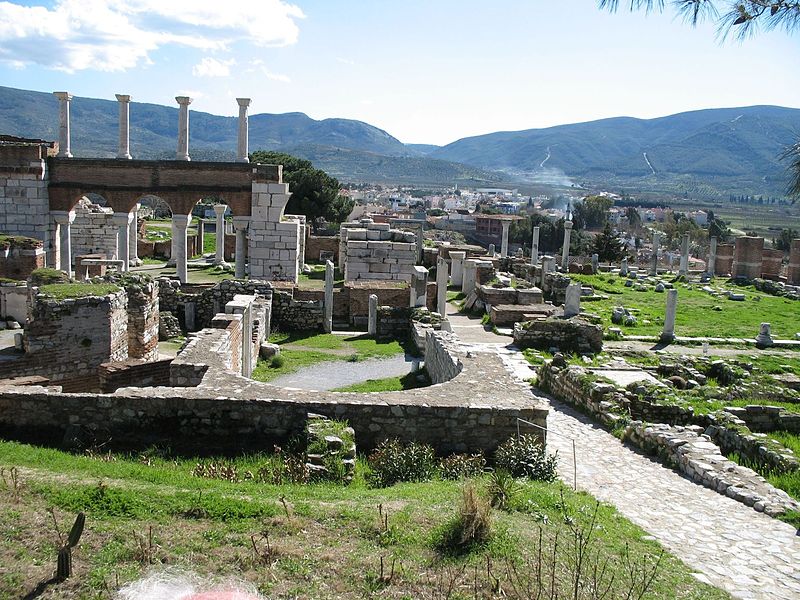
Ephesus is one of the best-known ancient cities of the Mediterranean, located in western Türkiye near the modern town of Selçuk. Its ruins reveal a major Greek and Roman city filled with temples, libraries, theatres, marketplaces and residential districts. The most famous monuments include the Library of Celsus, the Great Theatre, Curetes Street and the remains of the Temple of Artemis, once counted among the Seven Wonders of the Ancient World.
In antiquity, Ephesus was an important commercial, political, cultural and religious centre of Asia Minor. Its location near the Aegean coast supported trade and prosperity. Over time, sediment carried by the Kaystros River gradually filled the harbour, the shoreline shifted and maritime access became more difficult. In 2015, Ephesus was inscribed on the UNESCO World Heritage List.
History of Ephesus
The region was inhabited long before the classical Greek city developed. Ephesus later became one of the leading cities of Ionia and was famous for the sanctuary of Artemis, which attracted pilgrims from across the Mediterranean. In the 4th century BCE, Lysimachus, one of Alexander the Great’s generals, established a new urban centre closer to a protected harbour.
In 133 BCE, Ephesus came under Roman rule and became the capital of the province of Asia. During the Roman Empire, monumental public buildings, roads, water systems and comfortable private homes were constructed. The city later became an important centre of early Christianity. Harbour silting, earthquakes and political changes contributed to its gradual decline.
The Library of Celsus
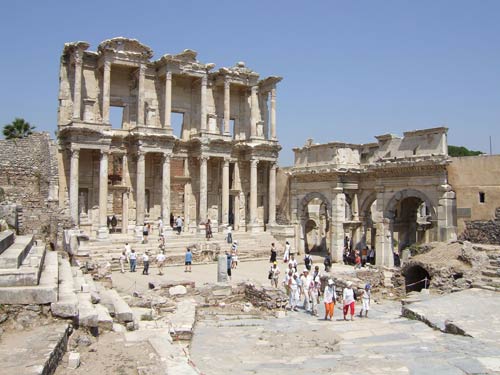
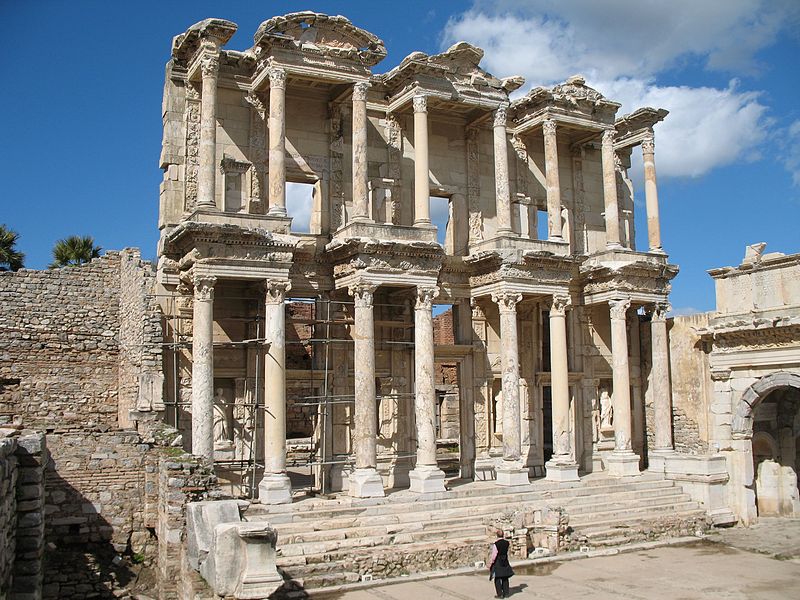
The Library of Celsus is Ephesus’s most recognisable monument and one of the finest examples of Roman architecture in Asia Minor. Built in the early 2nd century CE, it commemorated Tiberius Julius Celsus Polemaeanus, a prominent Roman official. Its monumental two-storey façade features columns, niches, decorative details and statues associated with wisdom, knowledge, intelligence and virtue.
The library housed scrolls and served as a public cultural institution. Much of the building was damaged in later antiquity, but its façade was reconstructed in the 20th century using original architectural blocks. Today, it is the defining image of Ephesus.
The Great Theatre
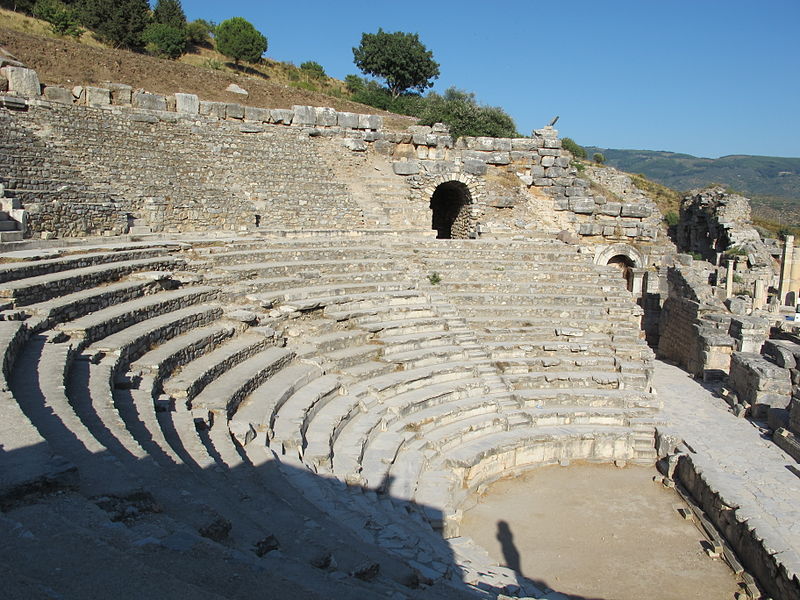
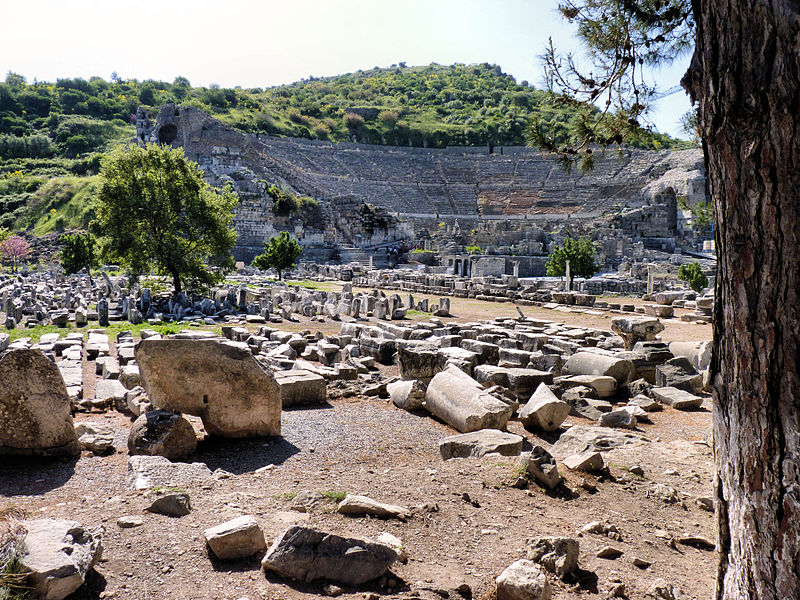
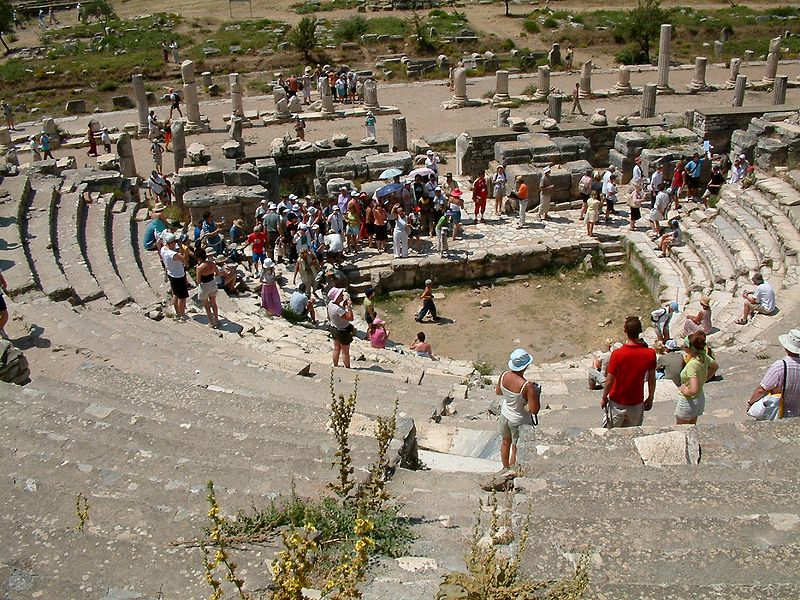
The Great Theatre stands on a hillside. Construction began in the Hellenistic period, and the Romans later enlarged it considerably. It could accommodate approximately 24,000 to 25,000 spectators. Performances, musical events, public gatherings and other large events took place here.
The theatre is also associated with early Christian history. The New Testament account of Paul’s activities in Ephesus describes a dispute involving craftsmen whose income depended on objects associated with the cult of Artemis. A gathering of townspeople took place in the theatre. Today, visitors can climb the stone seating and appreciate the scale of the structure.
Curetes Street and the Terrace Houses
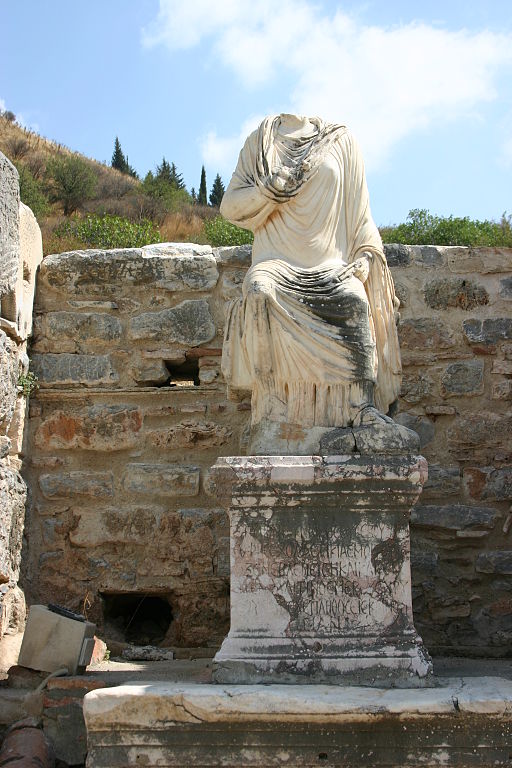
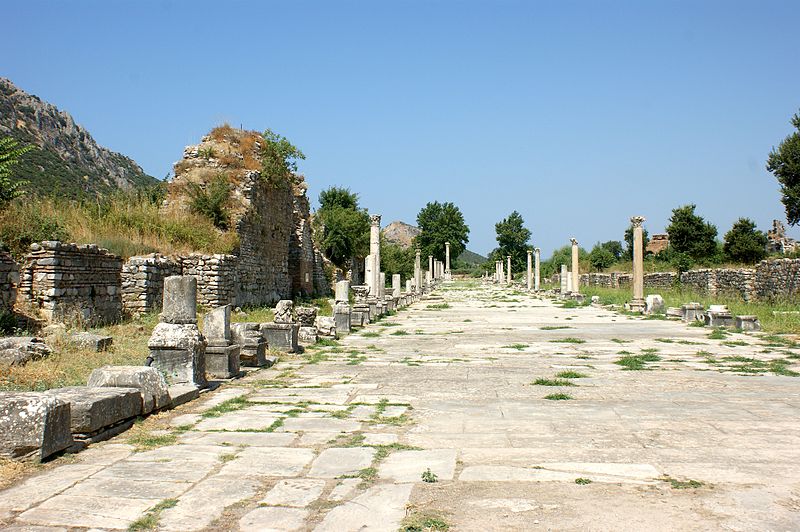
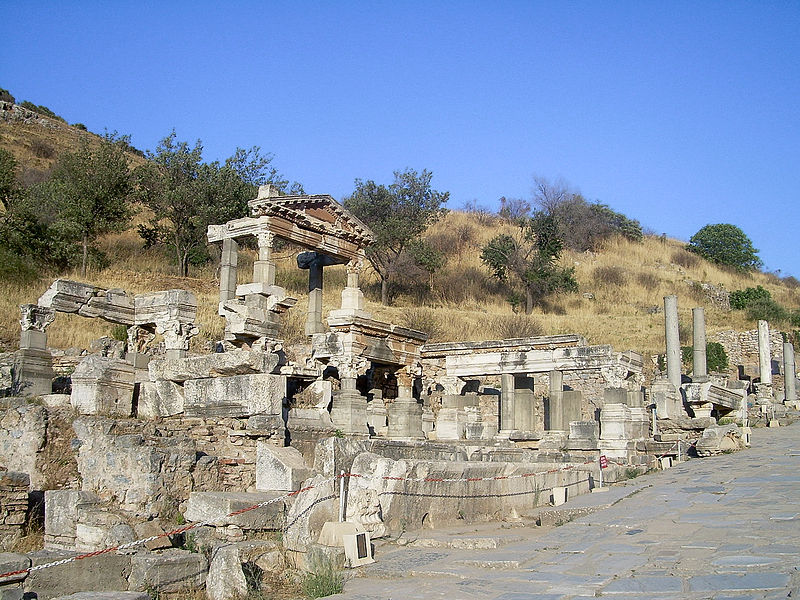
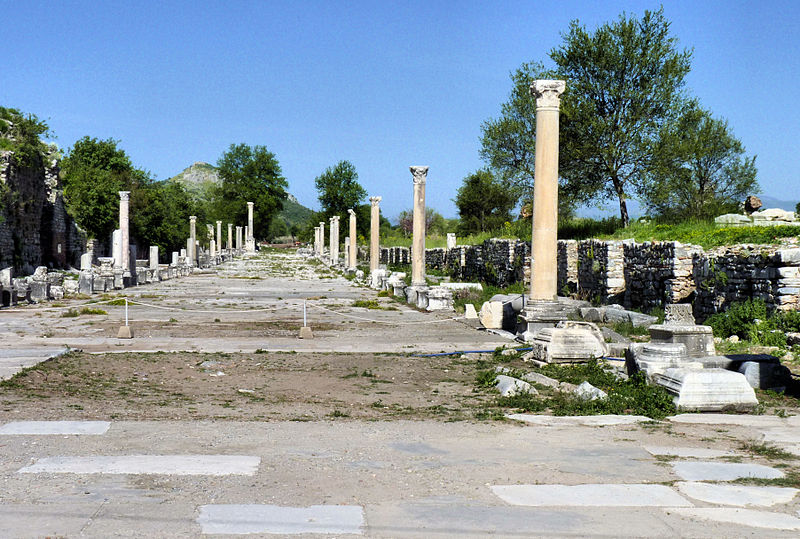
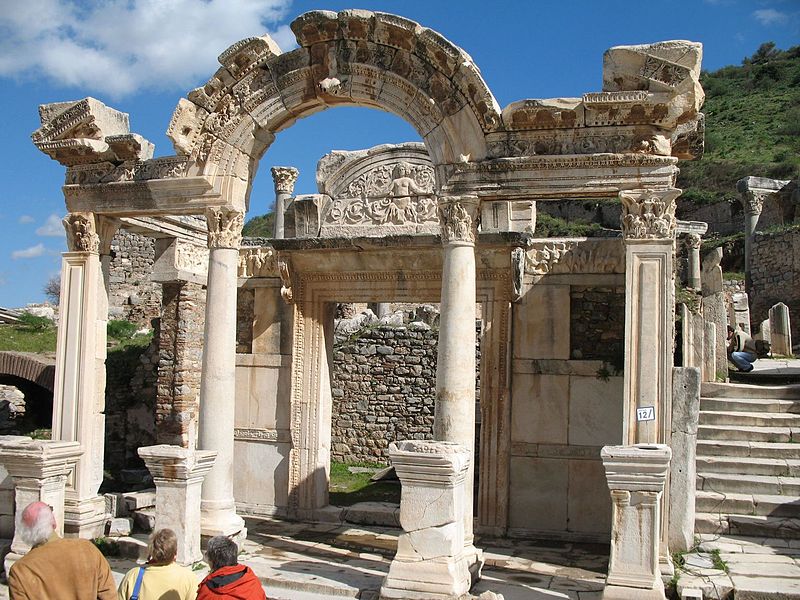
Curetes Street linked the upper city with the area around the Library of Celsus. Temples, fountains, public buildings and homes once lined the route. Remains of columns, façades and the Temple of Hadrian can still be seen.
The Terrace Houses on the hillside belonged to wealthy residents. Excavations have uncovered mosaics, wall paintings, marble decoration and traces of heating systems. These homes offer a rare glimpse into the daily life of the Roman urban elite. Access may require a separate ticket.
The Temple of Artemis
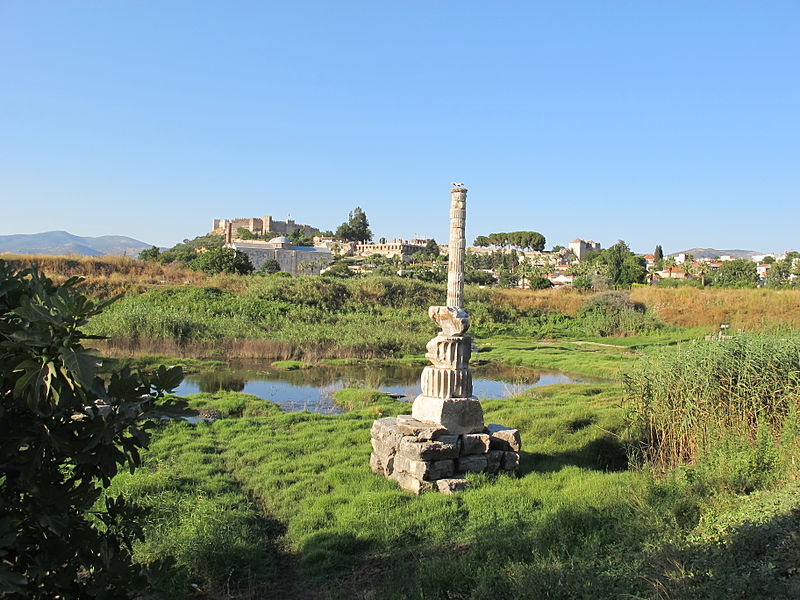
The Temple of Artemis was one of the Seven Wonders of the Ancient World. It stood outside the main archaeological route, near modern Selçuk. Rebuilt several times, the sanctuary became famous for its impressive size and marble columns and attracted pilgrims from across the Mediterranean.
Very little of the temple survives today. Visitors can see archaeological remains and a reconstructed column. Even so, the site remains essential to understanding the religious and cultural history of Ephesus.
Other monuments and early Christianity
The Temple of Hadrian, public baths, fountains, agoras and water-system remains demonstrate the sophistication of the ancient city. The Temple of Serapis reflects cultural contacts among the Greek, Roman and Egyptian worlds.
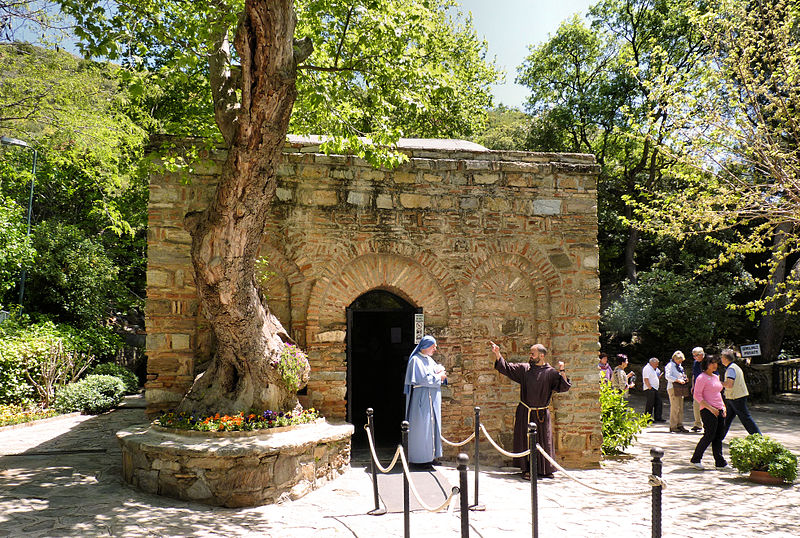
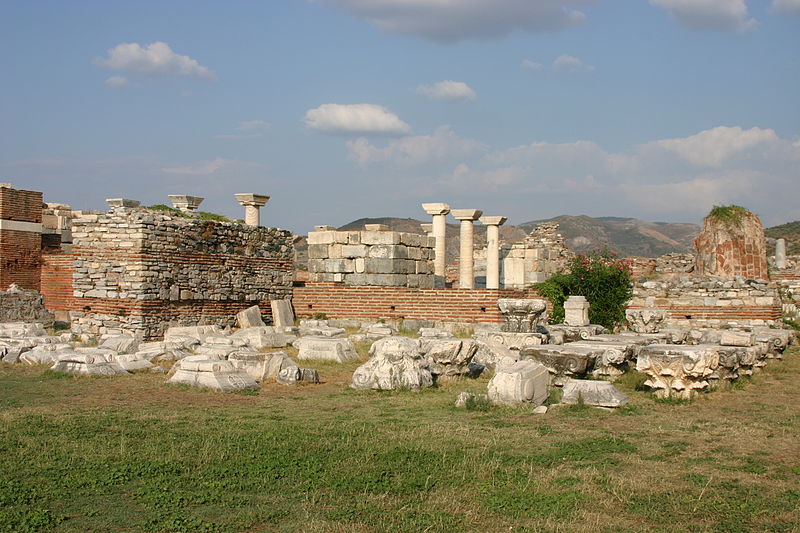
Ephesus played a major role in the spread of Christianity in Asia Minor. Important church councils were held here in the 5th century, including the Council of Ephesus in 431. Nearby are the Basilica of St John and the House of the Virgin Mary, both important pilgrimage destinations.
Why the harbour disappeared
In antiquity, Ephesus was a port connected to the Aegean Sea. The Kaystros River carried sediment that gradually accumulated at its mouth. The shoreline moved away from the city, and access for ships became increasingly difficult. This weakened trade and contributed to the city’s decline.
Ephesus and UNESCO
Ephesus joined the UNESCO World Heritage List in 2015. Its importance lies in the exceptional evidence it preserves of Hellenistic, Roman and early Christian cultures. The protected property includes the ancient city and related archaeological and religious sites associated with its history.
When to visit Ephesus
Spring and autumn are generally the most comfortable seasons for exploring the ruins. Summer can be extremely hot, as much of the site is exposed to the sun, so an early-morning visit is advisable. Bring water, a hat, sun protection and comfortable shoes for uneven stone paths.
How to get there
The nearest town is Selçuk, which can be reached from İzmir by train or car. The nearest major airport is in İzmir. Excursions to Ephesus are also available from Kuşadası and other resorts along the Aegean coast.
Practical travel tips
Allow at least three hours for the main archaeological site, or half a day if you plan to visit the Terrace Houses as well. Check current opening hours, ticket prices and access restrictions before travelling. Stay on marked routes and avoid touching fragile ancient structures.
Why visit Ephesus
Ephesus is more than a collection of ruins: it is an ancient city with traces of trade, religion, public life and domestic culture. The Library of Celsus impresses with its architecture, the Great Theatre with its scale, and the Terrace Houses with their insight into wealthy Roman life. The site brings together Anatolian heritage, Greek culture, Roman engineering and early Christianity.
Gallery