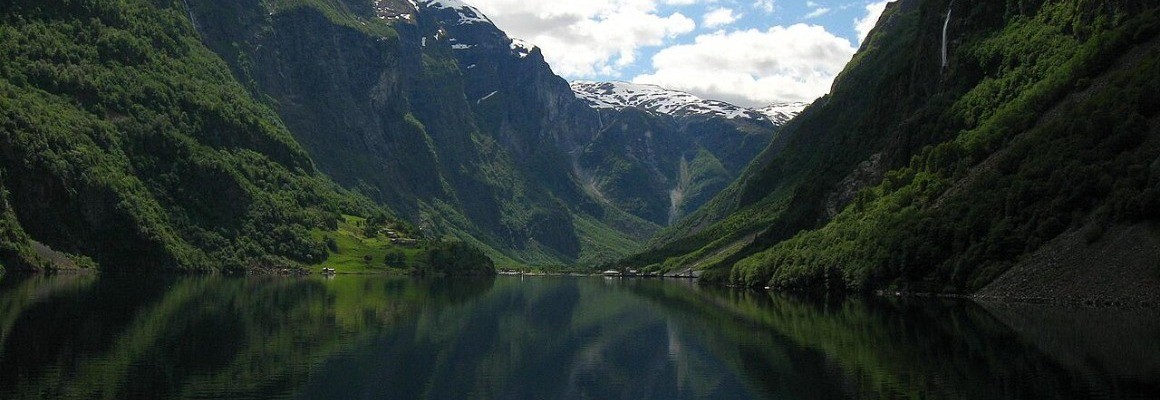
Sognefjord is one of Norway's most impressive natural landmarks and the country's longest and deepest fjord. Located on the west coast in Vestland, it extends approximately 204–205 kilometres inland from the Atlantic coast. Its immense scale and dramatic scenery have earned it the nickname King of the Fjords.
The fjord is bordered by towering mountains, steep slopes, wooded valleys and cliffs that rise more than a thousand metres above the water in places. Small settlements, orchards, historic churches and scenic roads lie between the mountain ranges. Sognefjord attracts travellers interested in classic Norwegian landscapes, boat cruises, glaciers and mountain trails.
How Sognefjord was formed
The fjord's present shape is the result of a long geological history and repeated glacial movement. During ice ages, enormous masses of ice slowly moved through the valleys, eroding and deepening the bedrock. After the glaciers retreated, seawater flooded these deep valleys, creating a long inlet with steep sides.
Sognefjord reaches a maximum depth of approximately 1,300 metres. Its inner sections are surrounded by high mountains, while numerous branches extend into valleys and towards glaciers. Differences in elevation create many waterfalls on the mountain slopes, especially in spring and early summer when snow melts.
The branches of Sognefjord
Sognefjord is a network of branching waterways, each with its own scenery and attractions.
Nærøyfjord. One of the best-known branches, famous for its narrow passages, sheer slopes, waterfalls and small farms clinging to the mountainsides. In some places it is only about 250 metres wide. Nærøyfjord forms part of the UNESCO World Heritage property West Norwegian Fjords, together with Geirangerfjord.
Aurlandsfjord. A scenic branch with quiet bays, mountain panoramas and small settlements. The village of Flåm lies nearby and is known for the Flåm Railway and fjord cruises.
Lustrafjord. This inner branch is surrounded by high mountains and valleys. It provides access to Jostedalsbreen Glacier, national parks and historic wooden churches.
Fjærlandsfjord. This branch leads to Fjærland, a village known for its glacial scenery, bookshops and the Norwegian Glacier Museum.
Attractions around the fjord
The Flåm Railway. The Flåmsbana railway connects Flåm with the mountain station of Myrdal. The train passes through deep valleys, tunnels, mountain slopes and waterfalls. It is one of Norway's best-known scenic railway journeys.
Stegastein viewpoint. This architectural platform projects from a mountainside and offers panoramic views of Aurlandsfjord and the surrounding peaks. It can be reached by mountain road from the Aurland area.
Jostedalsbreen Glacier. The largest glacier on mainland Europe lies in the national park of the same name near the fjord. Individual glacier tongues extend from the ice cap, and guided excursions are available to selected areas.
Urnes Stave Church. This 12th-century wooden church on the shore of Lustrafjord is a UNESCO World Heritage Site. It is renowned for its medieval timber architecture and carved decoration combining Scandinavian artistic traditions with Christian motifs.
Borgund Stave Church. One of Norway's best-preserved medieval wooden churches. Its tiered structure, steep roofs and decorative details illustrate the religious architecture of the Middle Ages.
Old Lærdalsøyri. This historic quarter features traditional wooden houses, narrow streets and the atmosphere of an old trading settlement. It offers a glimpse into the everyday life of communities that developed along the fjords.
Villages and life by the water
The shores of Sognefjord have been inhabited for many centuries. In the past, the waterway connected remote settlements and served as an important transport route for trade, fishing and moving goods. Where mountains made overland travel difficult, boats and ferries helped communities stay connected.
Today, visitors can explore Sogndal, Balestrand, Flåm, Fjærland, Lærdal, Gudvangen and smaller villages along the shores. Balestrand retains historic buildings and traces of the artistic traditions of the 19th century. Fjærland is known as a book village, while the area around Gudvangen offers insight into Viking history and culture.
The region also has strong agricultural traditions. Apples and other fruit grow on sunny slopes, and local producers make juice and cider. Regional cuisine includes fish, meat, berries and cheese. Small settlements offer cafés, farms and family-run guesthouses.
Things to do at Sognefjord
A cruise is one of the best ways to experience the fjord. From the water, visitors can appreciate the height of the mountain walls, waterfalls and small farms on the slopes. Cruises on Nærøyfjord and Aurlandsfjord are particularly popular. Sightseeing vessels operate on selected routes, with schedules varying by season.
Active travellers can go kayaking, hiking, cycling and driving along mountain roads. Guided glacier excursions are available, as is rafting on selected mountain rivers. Independent hikers should consider elevation changes, trail conditions and rapidly changing weather.
Travelling by car makes it easy to stop in small villages, visit viewpoints and explore valleys. Some routes include ferry crossings, while certain mountain roads are seasonal. Check road conditions and transport schedules before setting out.
When to visit
From late spring to early autumn, the region is especially convenient for travel. In May and June, waterfalls are often at their fullest because of melting snow, and the slopes gradually turn green. July and August are ideal for cruises, walks, cycling and mountain viewpoints, although this is the busiest tourist period.
In autumn, the valleys take on golden and red colours and visitor numbers generally decrease. In winter, snow-covered peaks give the fjord a dramatic appearance. However, daylight hours are shorter, some mountain roads close, and certain excursions operate on limited schedules.
How to reach Sognefjord
Bergen is one of the main starting points for trips to the region. From there, travellers can continue by car or bus, or use combined itineraries involving rail services and transfers. Driving from Bergen generally takes several hours, depending on the destination and ferry connections.
Flåm is convenient for visitors who want to combine a fjord cruise with a journey on the Flåm Railway. Sogndal is an important regional centre, while Lærdal and Balestrand are good bases for exploring historic settlements and nearby valleys. Additional sightseeing routes operate in the warmer months, but advance booking is recommended for popular cruises and railway tickets.
Travel tips
Weather on Norway's western coast can change quickly, so bring a waterproof jacket, warm layers and comfortable footwear even in summer. Wind protection is useful on cruises, while hikers should carry water, a map and enough time for their route. Never approach glacier edges or walk onto ice without qualified guidance.
To appreciate the region, allow several days to spend time on the water, drive mountain roads, visit wooden churches and stay in a small village. Sognefjord is remarkable not only for its grand scenery but also for the combination of glacial landscapes, cultural heritage and traditional Norwegian village life.
Gallery