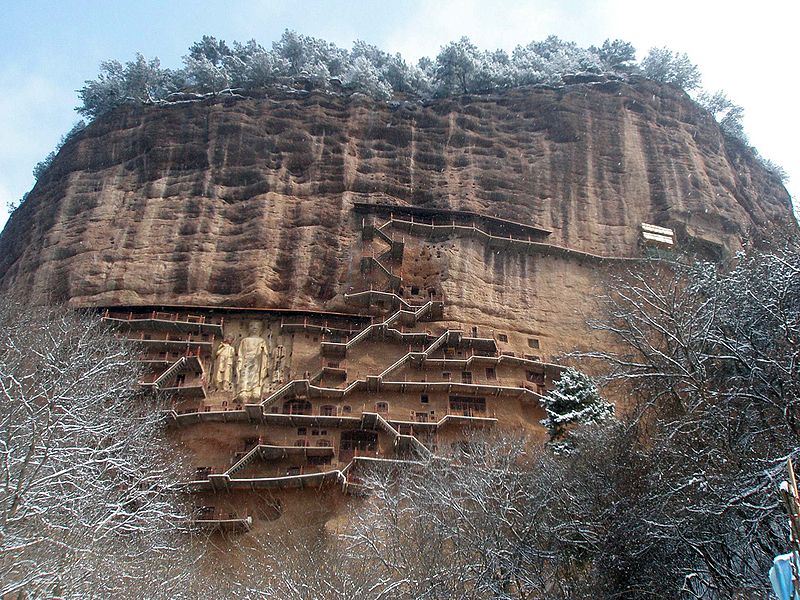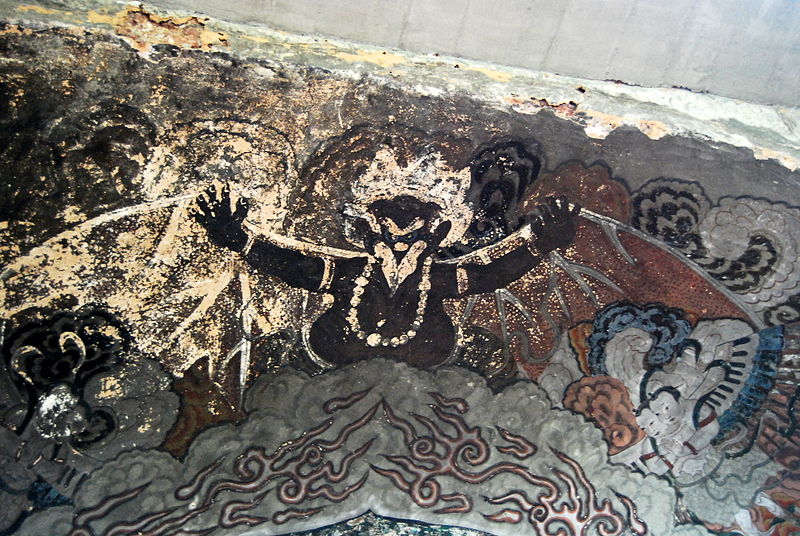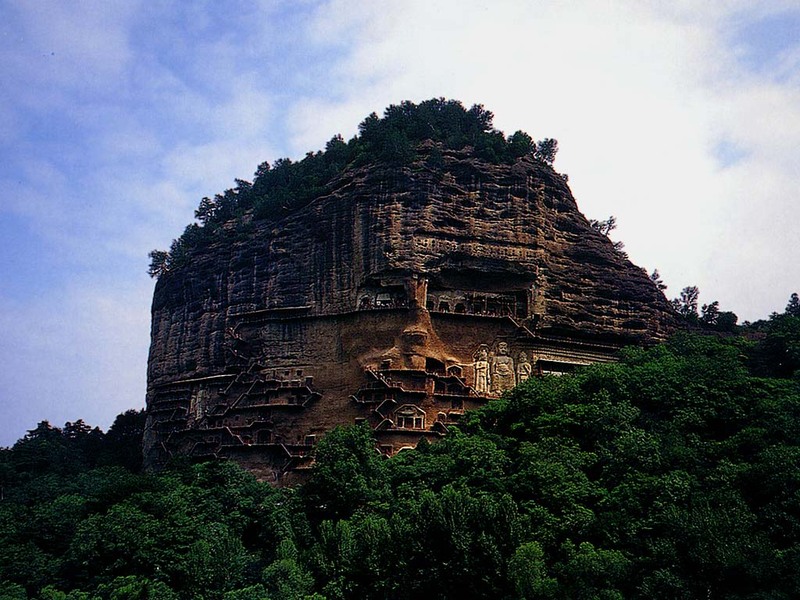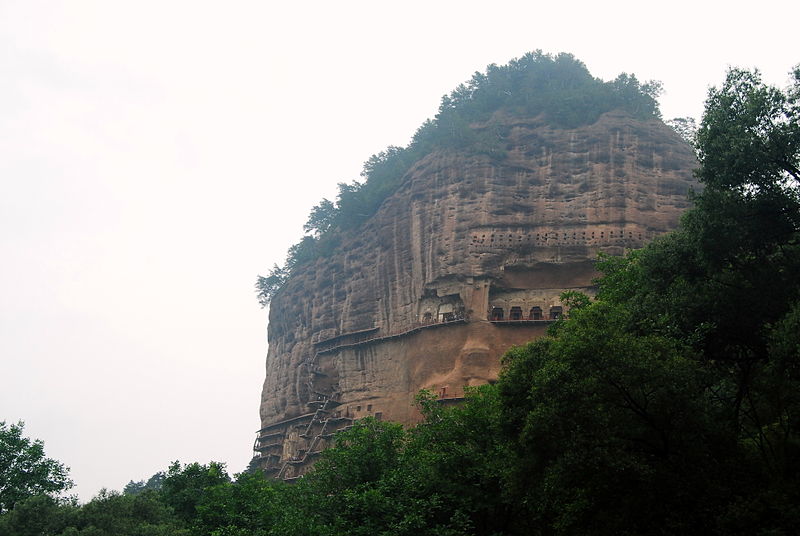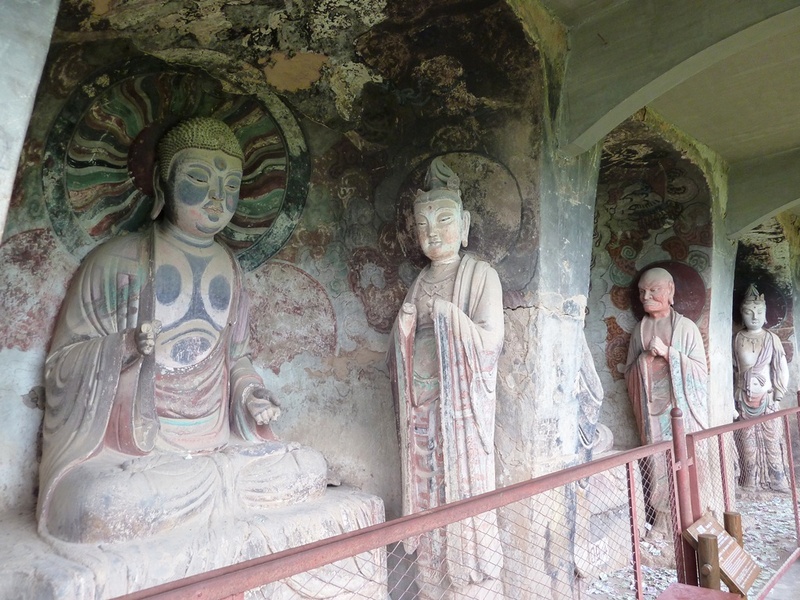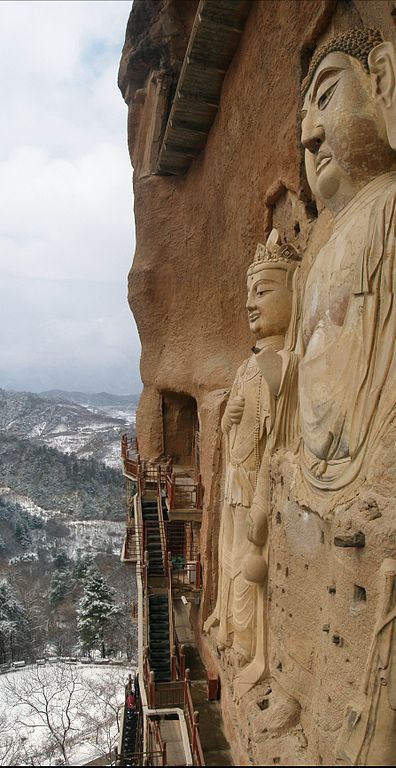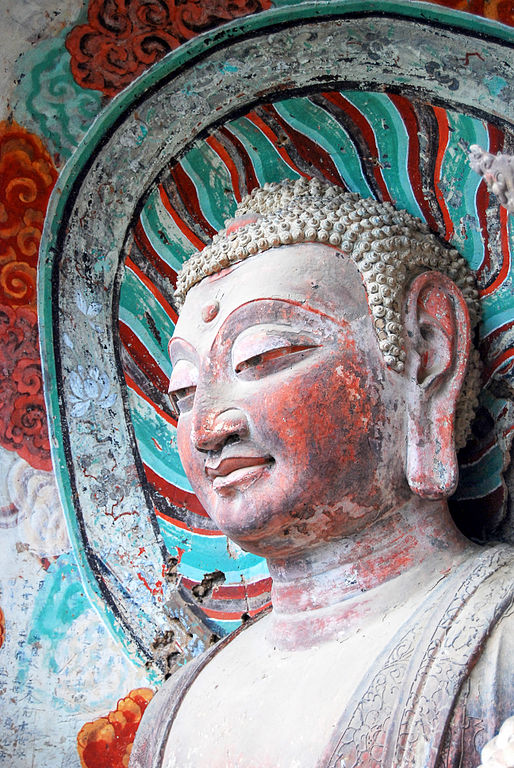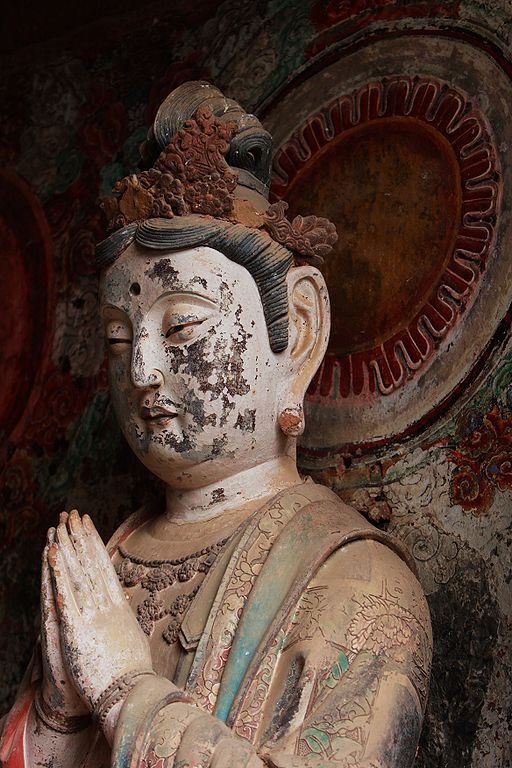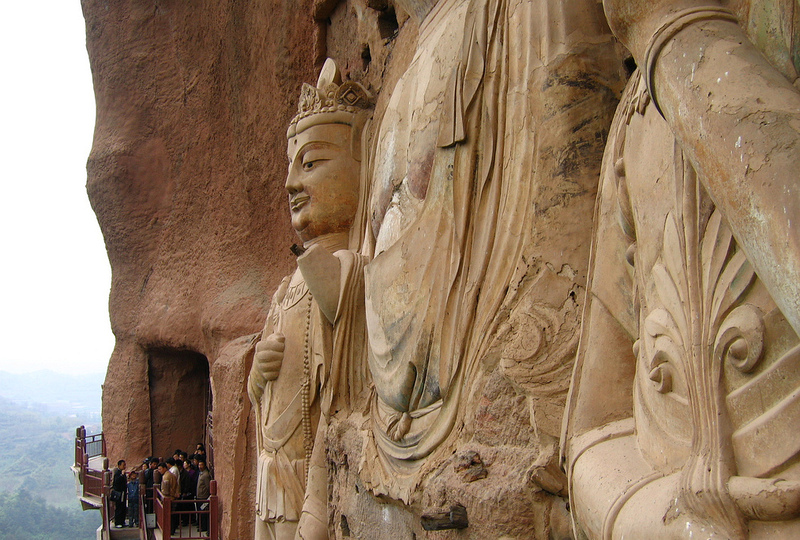

Maijishan is an amazing cave complex in China in Gansu province, 45 km from the city of Tianshui. The complex is famous for the fact that there are over 7,200 sculptures in 194 caves, as well as about 1,300 km2 of various frescoes.
The name of the mountain translates as "Wheat Mountain", and the first caves in it began to appear during the reign of the Late Qin Dynasty (384-417 years). Maijishan lies at a crossroads: there is a road connecting Xi'an with Dunhuang, Xi'an with Chengdu, and there is also a road leading to India. Therefore, some sculptures in caves made around the 6th century look like sculptures from Indian temples. Before that, the decoration was influenced by the culture of northwest China. During the reign of the Song and Ming dynasties, the caves were repaired and restored, and since then the influence of the eastern and central parts of China has been clearly visible.
Presumably, the caves used to serve as shrines for worshipping various deities, but with the advent of Buddhism in China, the caves became part of the religious architecture of China (for example, like Ajanta in India). In this part of China, Buddhism spread with the support of Northern Liang (397-439), one of the 16 barbarian states that existed in 304-439. In general, 12 dynasties influenced the construction and restoration of caves.: Late Qin, Northern Wei, Western Wei, Northern Zhou, Sui, Tang, the period of the Five Dynasties, Song, Yuan, Ming and Qing.
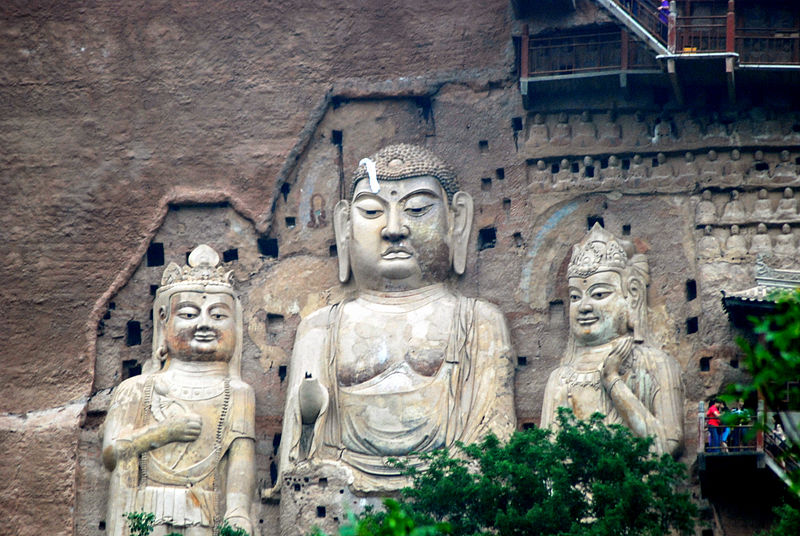
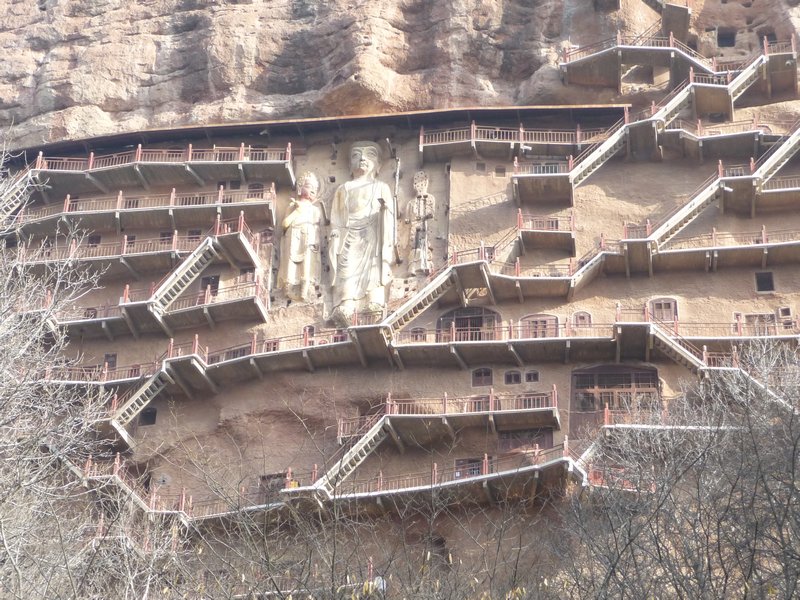
Buddha Amitabha, who was especially revered by the Pure Land Buddhist School, is found most often in the caves of Maijishan. This Buddha accepted anyone who sincerely appealed to him, regardless of their background and position. The Buddha is accompanied by his assistants, the Bodhisattvas Avalokiteshvara and Mahasthamaprapta. There are also statues of Buddha Shakyamuni, Bodhisattva Maitreya, depicted in a sitting position with their legs crossed.
Almost all the sculptures in the Maijishan grottoes are made of clay with the addition of a binding agent to help preserve the sculpture. In caves 117, 127, 133 and 135, the sculptures are usually made of sandstone, and many of them are exquisite. They are not made of local stone and it is still unknown where they were brought from.
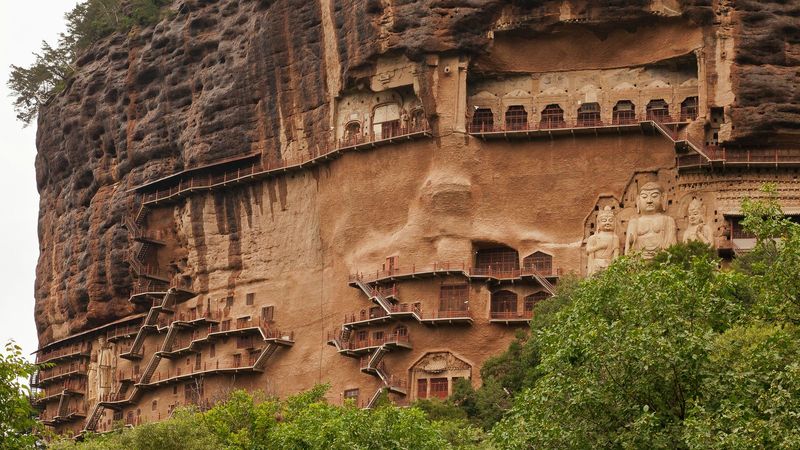
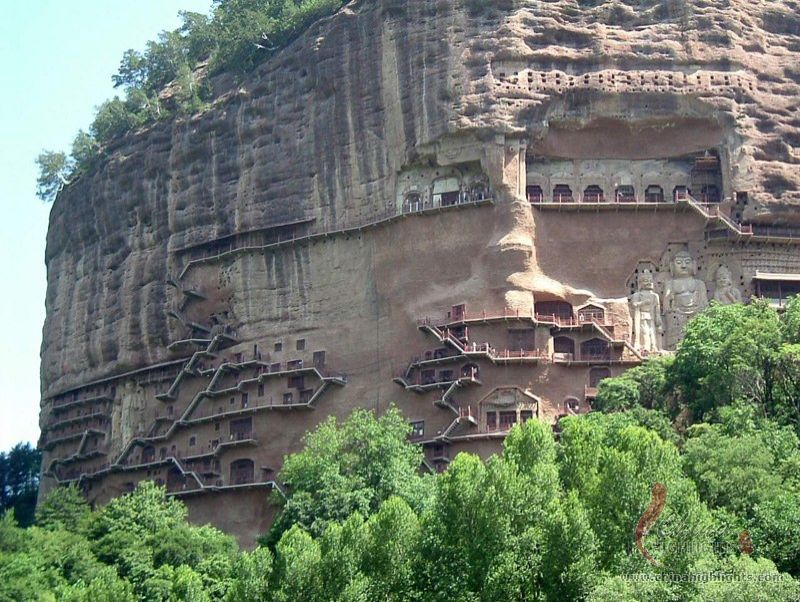
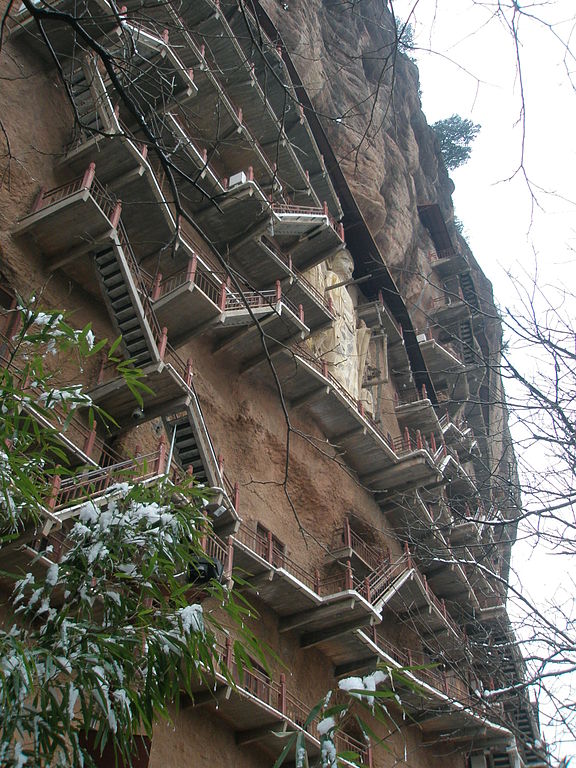
Although the region has been the victim of many earthquakes and other natural and man-made disasters, 194 caves have survived to this day, 7,200 sculptures can be seen in them, with the height of the tallest sculpture reaching 16 meters. All the caves were excavated at an altitude of 30 to 80 meters above the ground, 54 caves are located on the east side, 140 on the west. In addition to sculptures, over 2,000 ceramic, bronze, and iron objects were found here, as well as paintings, antique books, documents, and works by calligraphers. The caves are connected only by a wooden path on the cliff. Nowadays, Maijishan is a museum, and access to most of the caves is closed to visitors.
Gallery