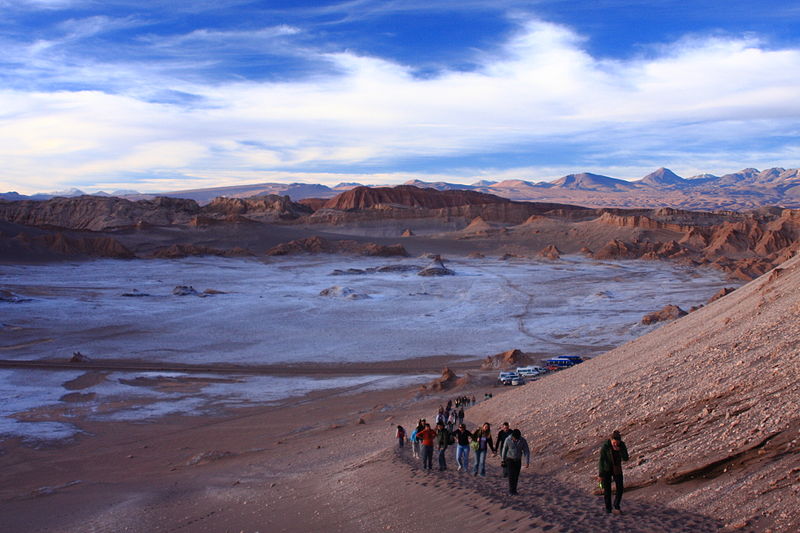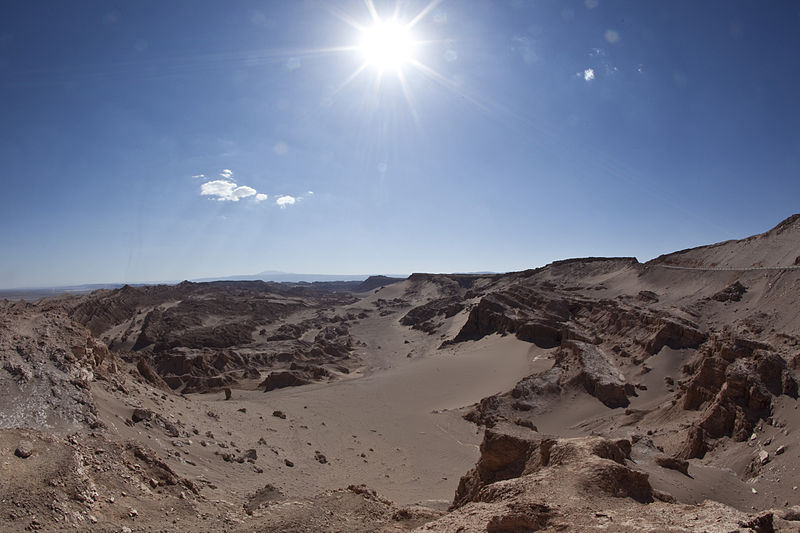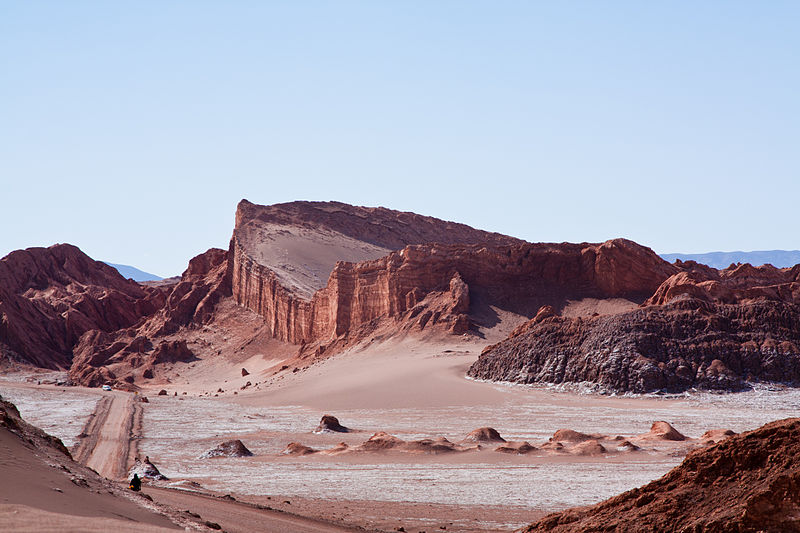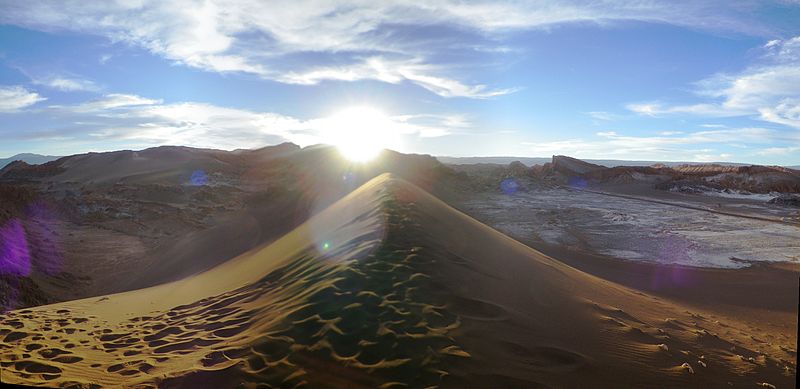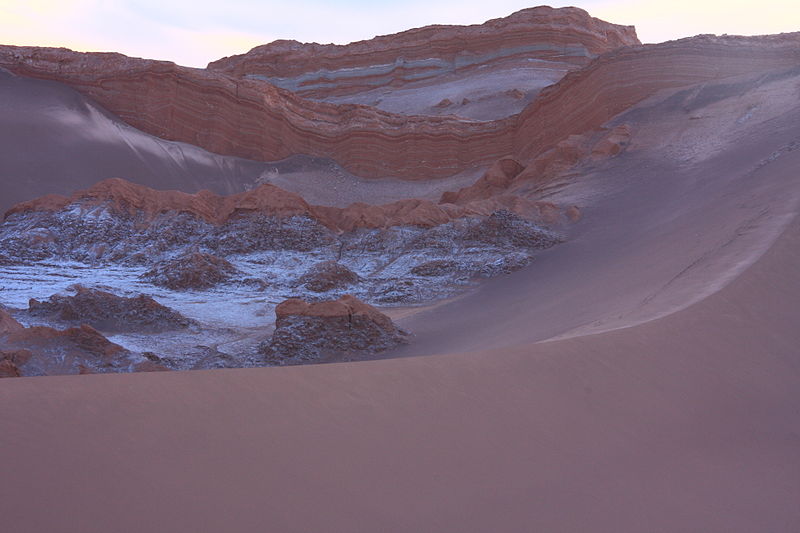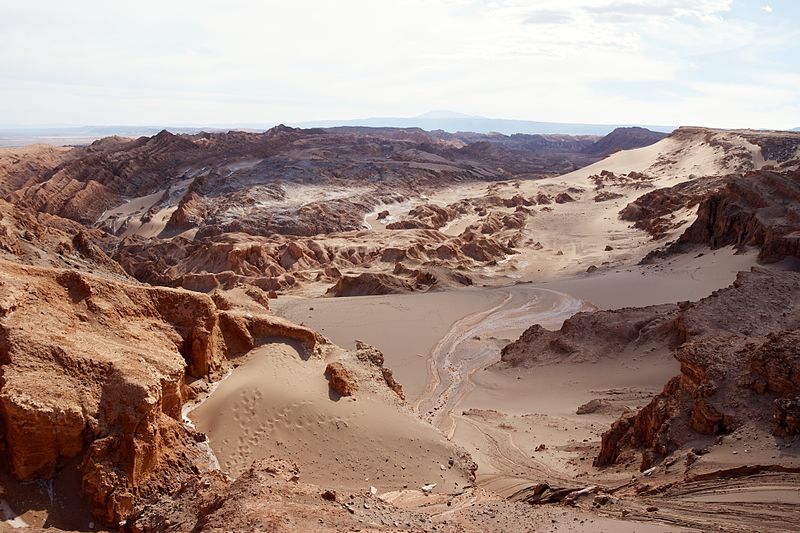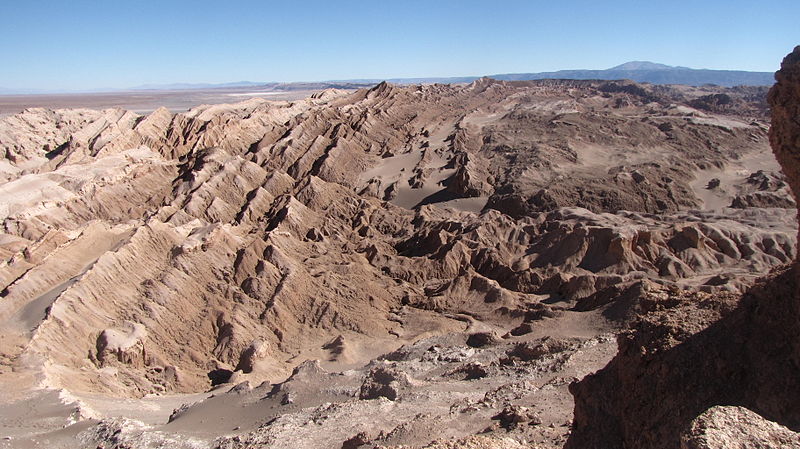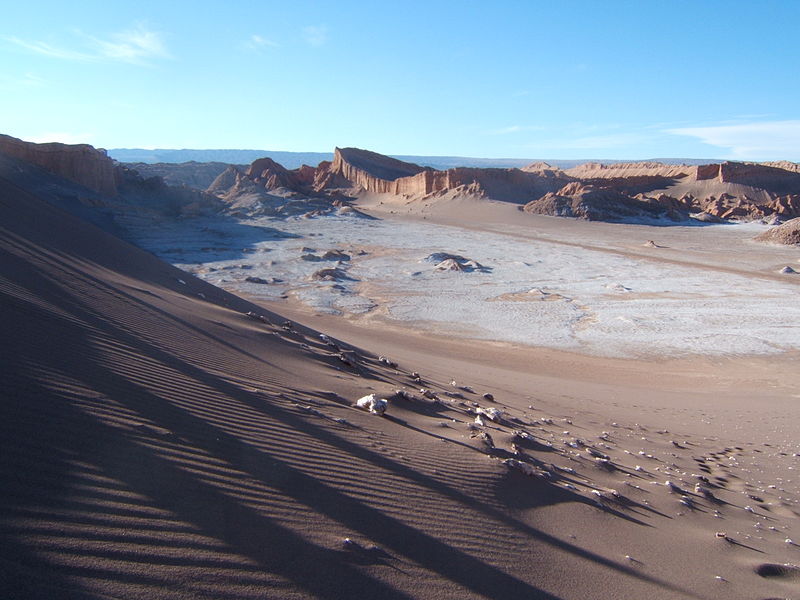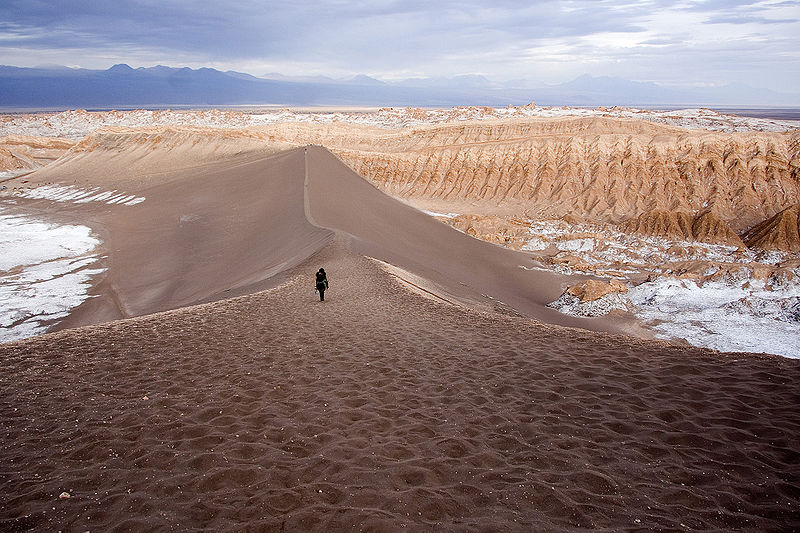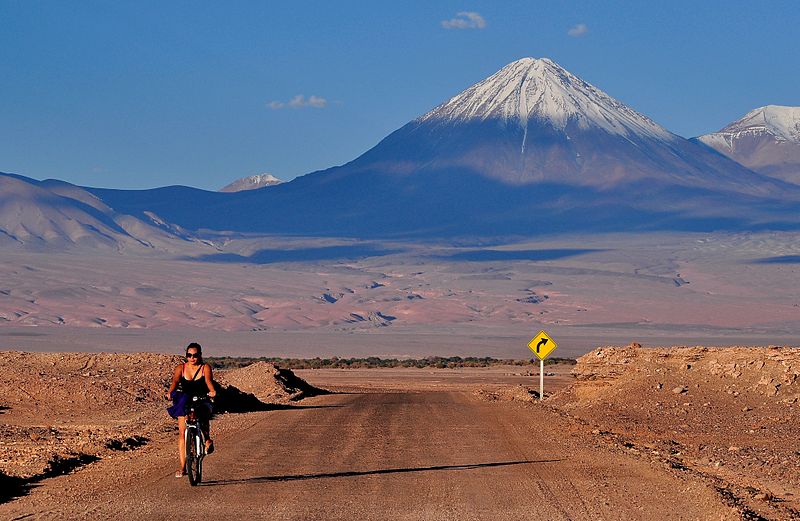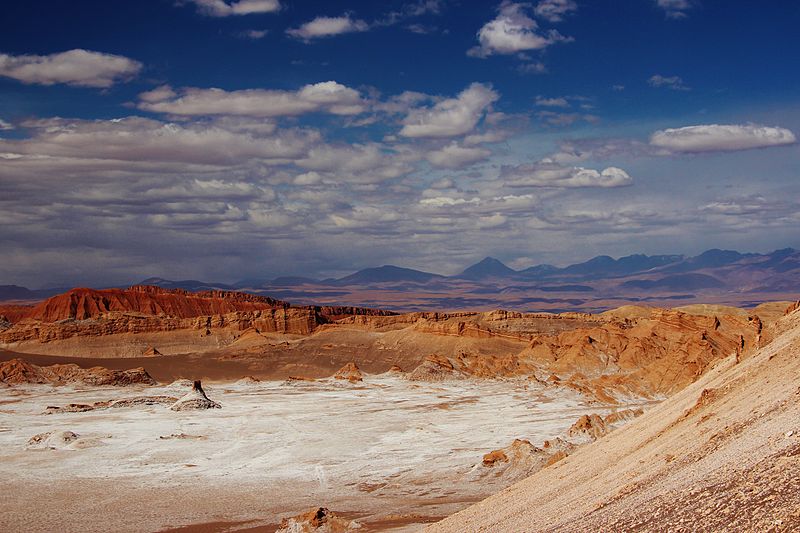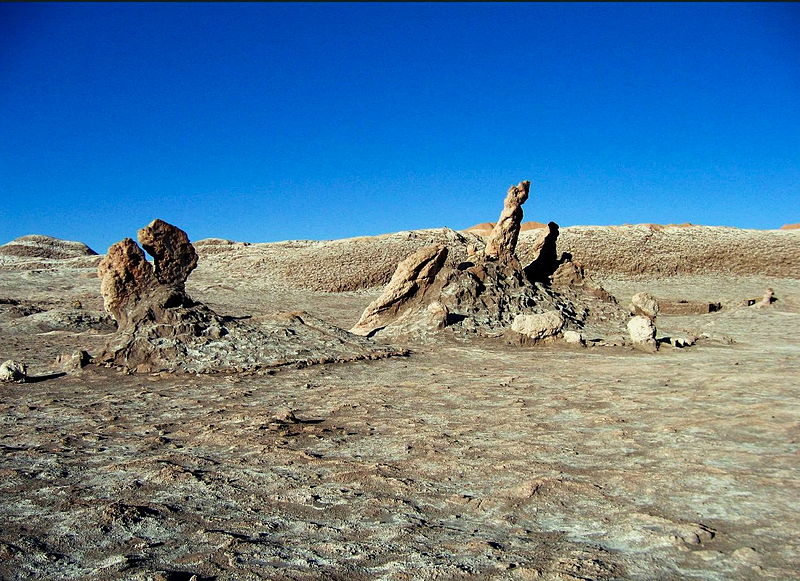

Valle de la Luna is an unusual area in the Atacama Desert in northern Chile, 15 kilometers from the town of San Pedro de Atacama. The valley is known for its huge salt plateau, in which amazing figures have formed under the influence of erosion.
The name of the area translates as "Moon Valley", and this is no coincidence. The area is very arid and not friendly. In the valley, scientists even tested the operation of rovers in difficult rocky-salt terrain. Rains in the Valle de la Luna are very rare and if they happen, then once a year. It is a great success to get here during the rains, because during the rainy season the lifeless dunes are covered with many beautiful flowers.
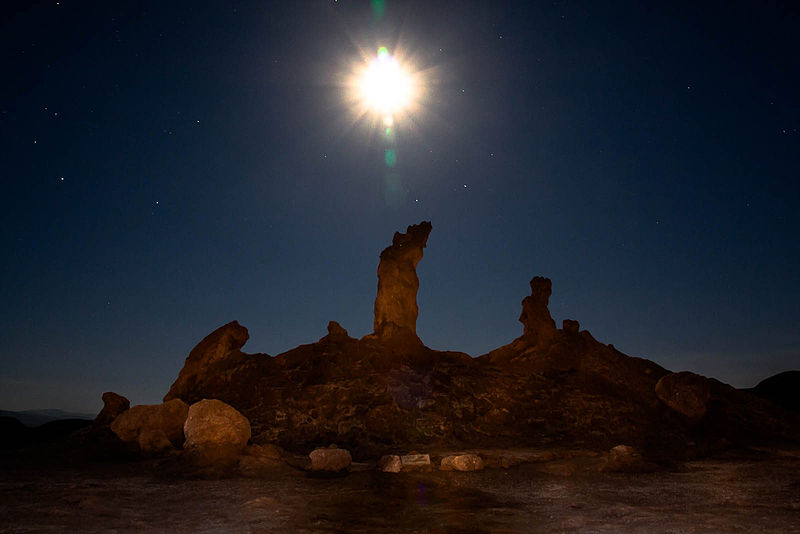
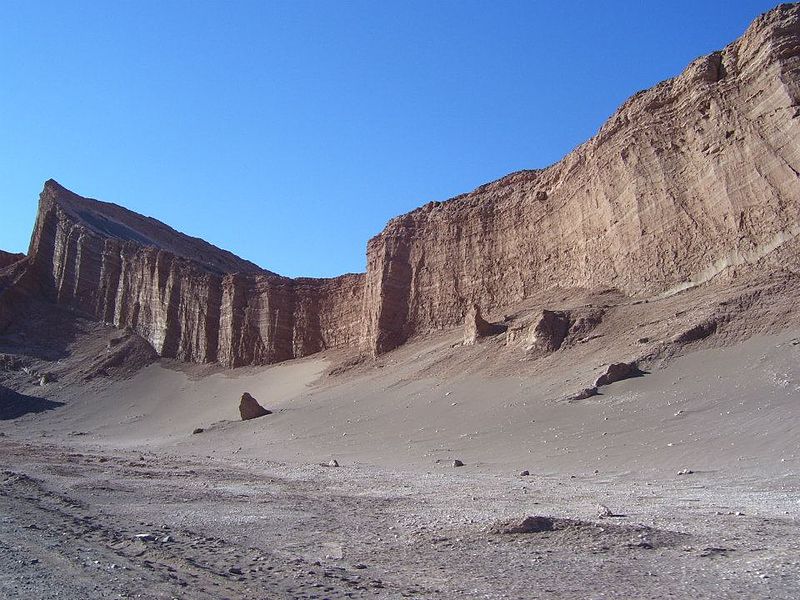
The valley is surrounded by hills almost half a kilometer high. The base itself is located on a plateau of salts and carbonates several tens of meters thick, with a small layer of gravel and sand on top of the salt. Unusual stone sculptures are formed under the influence of water erosion and winds. Each sculpture has a name and a legend associated with it. The indigenous people of the Atacama Desert believe that sculptures are guides for the souls of deceased people. They also help shamans in their rituals when traveling to the ancestral world.
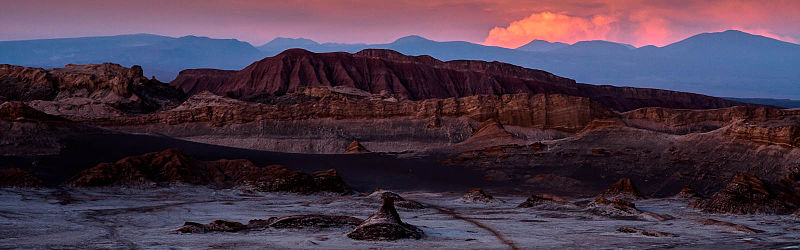
In addition to the sculptures, numerous white salt lakes can be seen in the valley, changing colors depending on the time of day. Caves, depressions, amazing stone giants with their shadows only add to the mystery. The Valle de la Luna is best visited at sunset, when you can see the beauty of the landscape.
The Valle de la Luna was incorporated into the Los Flamencos Nature Reserve in 1982.
Gallery