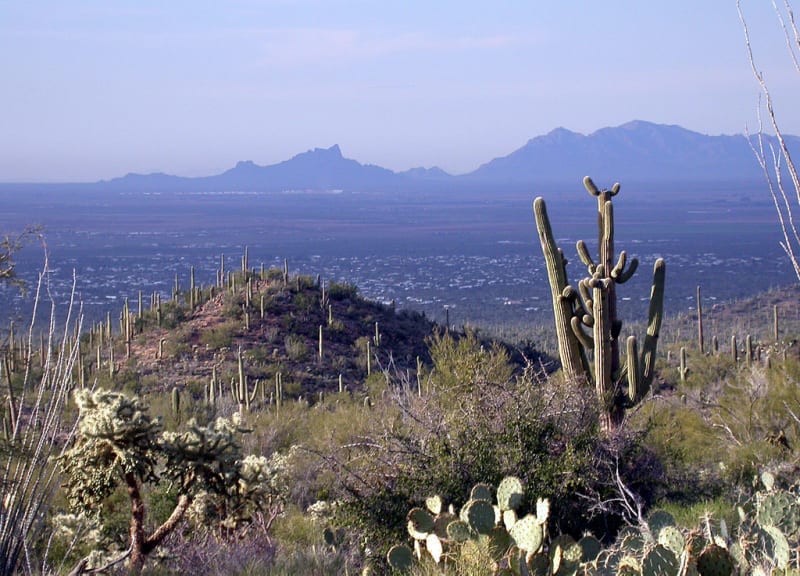
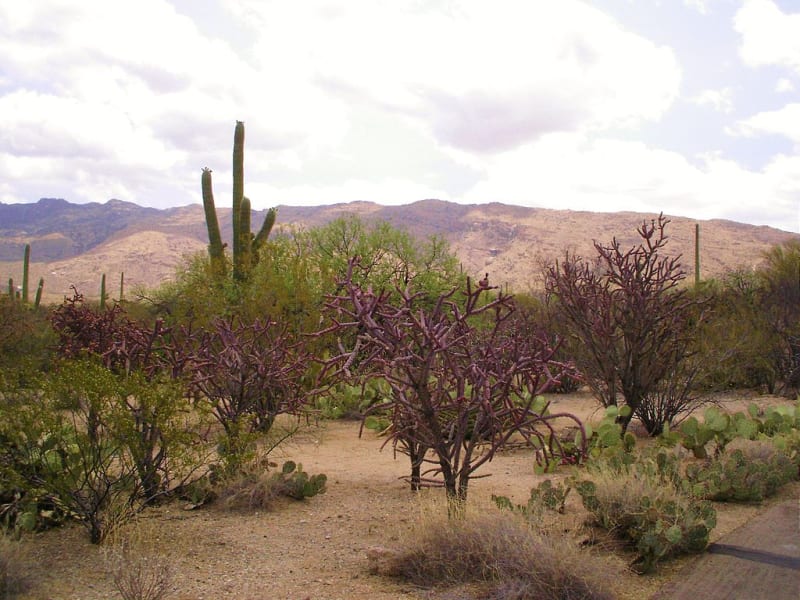
Saguaro National Park is a distinctive natural area in southern Arizona, near the city of Tucson. It is famous for its enormous saguaro cacti, which have become one of the defining symbols of the Sonoran Desert and the American Southwest. Their tall, column-like trunks and upward-reaching arms create a striking landscape against mountain slopes, rocky valleys and the vast desert sky.
The park consists of two separate districts on opposite sides of Tucson: the western Tucson Mountain District and the eastern Rincon Mountain District. Together, they protect cactus forests, mountain slopes, valleys and habitats spanning different elevations. The park covers approximately 370 square kilometres. It became a national park in 1994, after parts of the area had previously been protected as a national monument.
Saguaro cacti: the symbol of the park
The saguaro is a large tree-like cactus known scientifically as Carnegiea gigantea. It grows naturally mainly in the Sonoran Desert, and Saguaro National Park is one of the best places to see it in its native habitat. Mature plants can grow more than 12 metres tall, and some live for approximately 150 to 200 years.
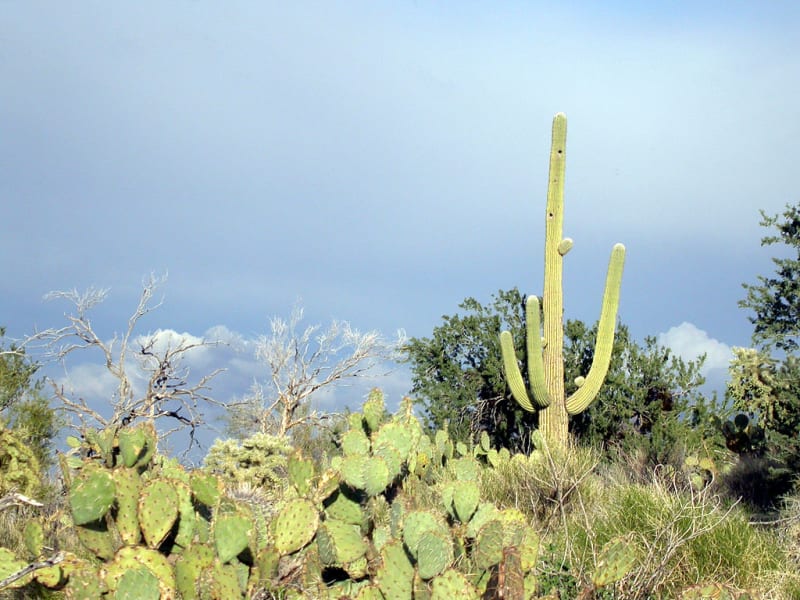
Saguaros grow very slowly. During their early years, young cacti can be almost hidden among grasses and rocks. Their characteristic side arms may not appear until many decades have passed. The tall, branching plants seen throughout the park are therefore the result of long periods of growth. Some have a single upright trunk, while others resemble candelabras with several arms pointing skyward.
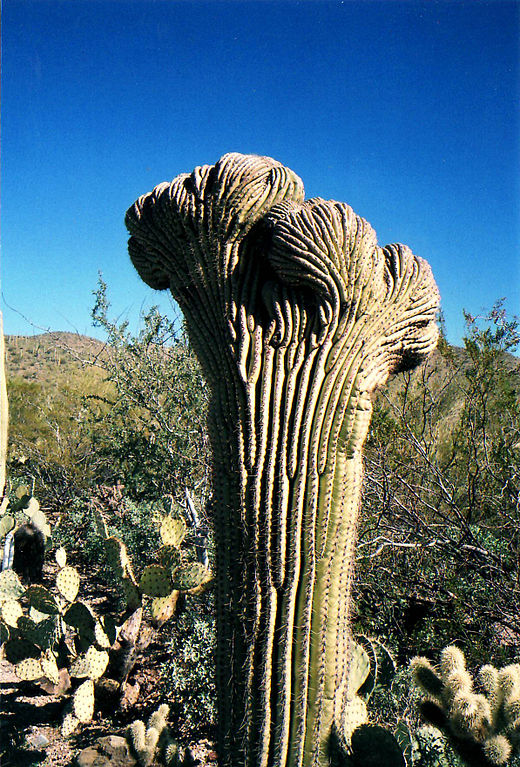
The ribbed surface of a saguaro trunk allows it to expand as it stores water after rainfall. Strong internal woody structures support its tall stem. Spines help protect the plant from animals, while its flowers and fruits provide food for many desert species.
Saguaro flowers and fruit
Saguaros usually flower in late spring and early summer. Their large white blossoms open mainly at night and may remain open into the following day. Nectar and pollen attract bats, birds and insects that pollinate the plants. This makes saguaros an important part of the desert ecosystem.
After flowering, the cacti produce fruits with red flesh and numerous seeds. The fruits ripen in early summer and provide food for birds and other animals. They also have cultural significance for the Tohono O'odham people, who traditionally harvest and use them as food.
The Sonoran Desert and its natural features
The park lies in the Sonoran Desert, one of the most biologically diverse arid regions in North America. Unlike deserts dominated by bare sand, this region includes mountains, rocky plains, shrubland and areas of sparse vegetation. After rainfall, the desert can change quickly: fresh shoots emerge, plants bloom and temporary waterways may fill with water.
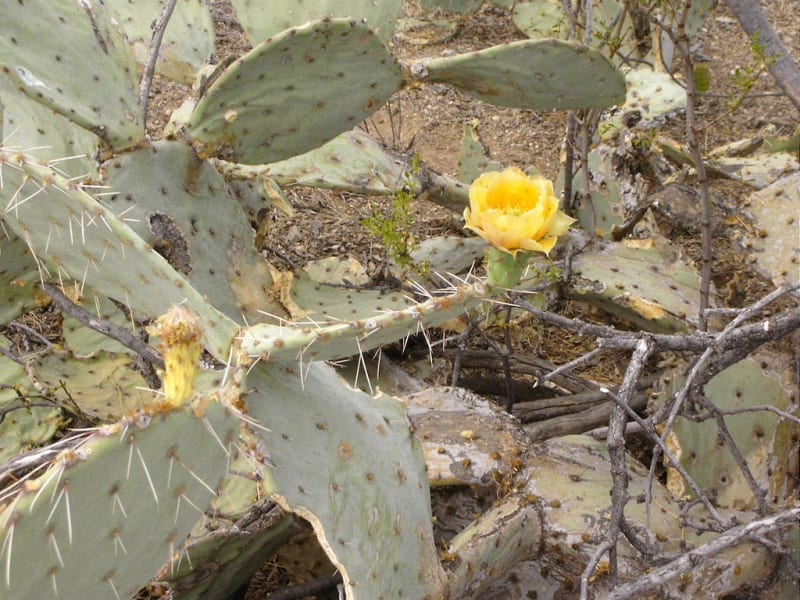
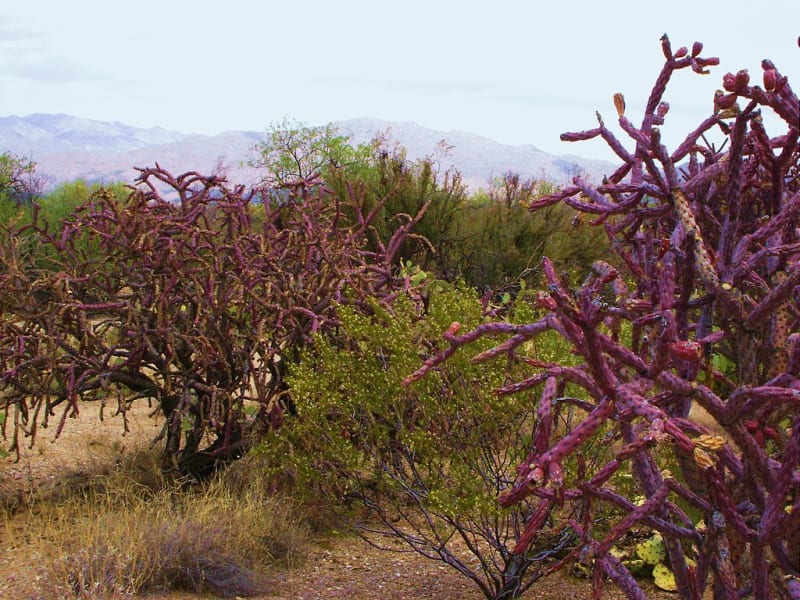
Along with saguaros, the park contains chollas, prickly pears, other cacti, creosote bushes, mesquite trees and many desert grasses. Conditions become cooler at higher elevations, so plant communities change gradually as the terrain rises. This range of habitats supports a wide variety of wildlife.
Mountains and landscapes
The western Tucson Mountain District is known for broad slopes, rocky valleys and abundant saguaros. It is an excellent place to experience the classic Sonoran Desert landscape and take short walks near scenic viewpoints. In the evening, low sunlight gives the mountains and cactus trunks golden, orange and reddish tones.
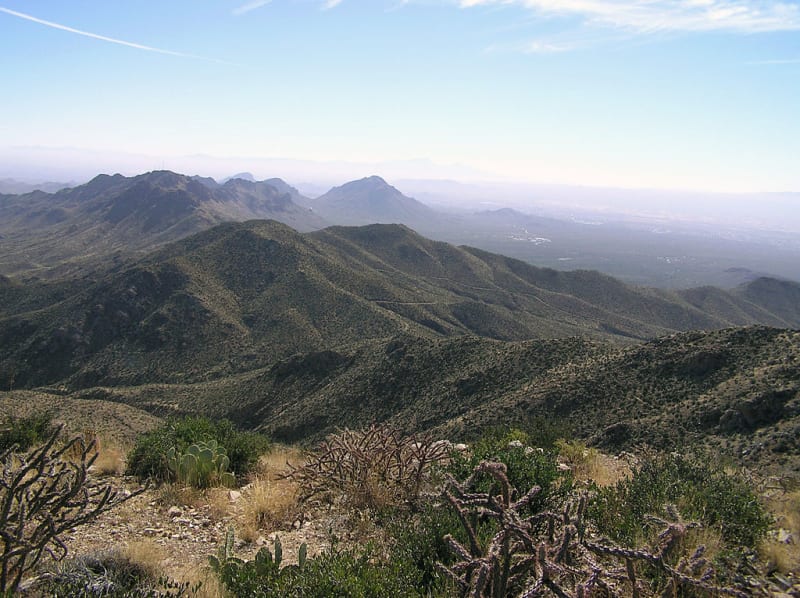
The eastern Rincon Mountain District includes higher elevations of the Rincon Mountains. As visitors climb, temperature, moisture and vegetation change, and desert scrub gradually gives way to other plant communities. This district is particularly appealing to hikers planning longer routes and those interested in observing natural habitats.
The two districts complement one another but lie on opposite sides of Tucson. Travellers who want to visit both should plan for the drive between them. Each district has its own roads, trails and viewpoints.
Wildlife in the national park
Despite its hot, dry climate, the Sonoran Desert supports many kinds of wildlife. Coyotes, rabbits, squirrels, desert rodents, lizards and snakes live here. Birds include quail, roadrunners, owls, woodpeckers and birds of prey. Many animals are most active in the early morning, evening or at night, when temperatures are lower.
Saguaros provide food and shelter for numerous species. Woodpeckers excavate cavities in cactus trunks, and other birds may use these hollows later. Flowers and fruits attract pollinators and animals that feed on seeds and pulp. The saguaro is therefore much more than a visual symbol: it is an important part of the wider ecosystem.
Larger animals, including mountain lions and hoofed mammals, may also occur in the park. They are not always easy to see because they avoid people and range across large areas. Visitors should keep their distance, never feed wildlife and avoid approaching animals for photographs.
Hiking trails and walks
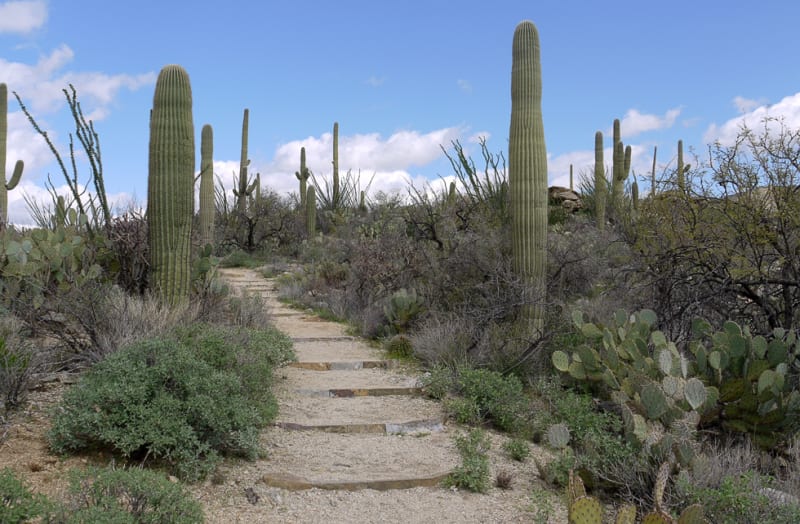
The park offers routes of varying lengths and difficulty. Some trails are suitable for short walks among the cacti, while others cross hills and mountain terrain with views over desert valleys and Tucson. Along the way, visitors can see saguaros of different ages, flowering plants and changes in vegetation with elevation.
The western district has popular short walks and trails leading to panoramic viewpoints. The eastern district offers longer hikes, including routes with substantial elevation gain. Before setting out, check the route length, trail conditions and your own level of fitness.
Desert heat can be dangerous even when the air initially feels comfortable. Start early, carry plenty of water, use sun protection and do not assume that water will be available along the trail. Long hikes during the middle of hot days can be unsafe.
When to visit
Late autumn through early spring is generally the most comfortable period to explore the park. Daytime temperatures are often more suitable for hiking, although nights can be cold. Winter can bring clear skies and good conditions for exploring trails at a relaxed pace.
Spring is especially appealing because desert plants begin to flower. The timing and abundance of blooms depend on rainfall and weather. Saguaros usually flower in late spring and early summer, when birds and insects also become more noticeable.
Summers in Tucson are extremely hot, and daytime desert temperatures can become dangerous. The summer monsoon season may bring heavy rain, sudden flash floods and thunderstorms. Check the weather forecast and park alerts before visiting.
History and protection
The desert lands around Tucson have long been used by Indigenous peoples, including the Tohono O'odham and the Hohokam. These communities developed knowledge of local plants, seasonal water sources and ways of living in an arid environment. Saguaros have played an important role in traditional food gathering and cultural practices.
In 1933, the western area received national monument status. The protected area was expanded later, including the eastern mountain district, and in 1994 Saguaro became a national park. Today, its purpose is to conserve the desert ecosystem, natural saguaro populations and the many other plants and animals found here.
Visitor guidelines and conservation
The desert ecosystem is sensitive to human disturbance. Saguaros grow slowly, so damaging even one mature plant can have long-lasting consequences. Visitors must not break branches, dig up plants, pick flowers or remove natural objects from the park.
Stay on marked trails, pack out rubbish and respect wildlife. Avoid touching saguaros with long spines, which can cause painful injuries. Be careful around snakes and other animals that may be concealed among rocks and shrubs.
Why visit Saguaro National Park
Saguaro National Park offers a chance to experience one of the most recognisable landscapes of the American West. Giant cacti, mountain silhouettes, colourful sunsets and a remarkable desert ecosystem make it an appealing destination for nature lovers, photographers and hikers.
The park is more diverse than the familiar image of a desert might suggest. Alongside cacti and rocks, it contains abundant wildlife, seasonal wildflowers and varied mountain scenery. To make the most of a visit, explore both districts if time allows, choose a few trails and leave time to observe the desert at a slower pace.
Gallery