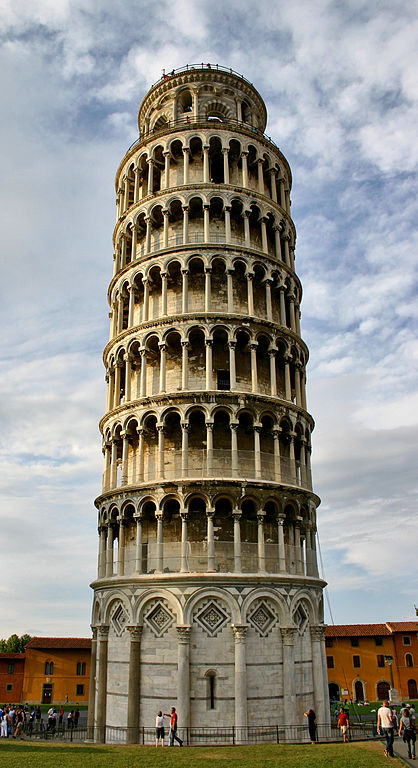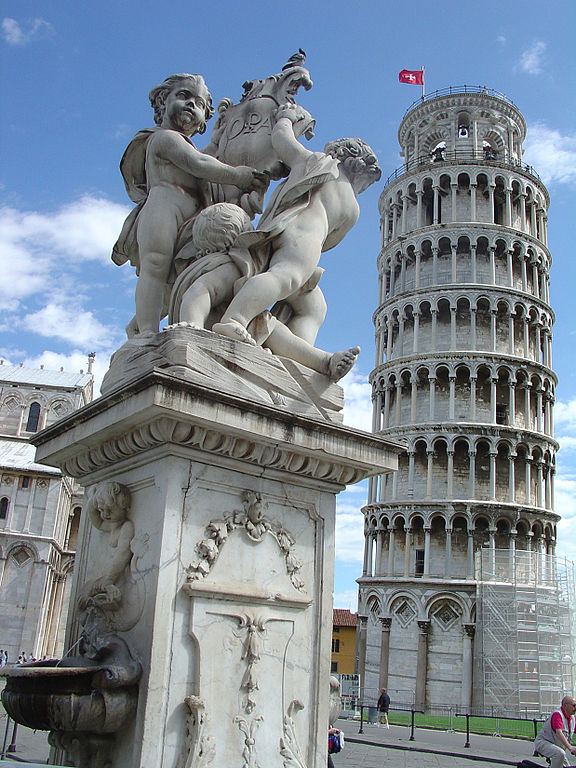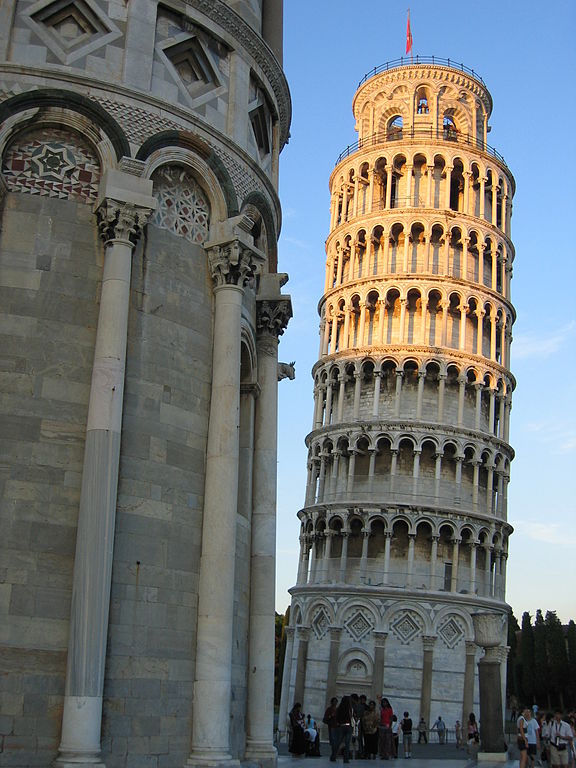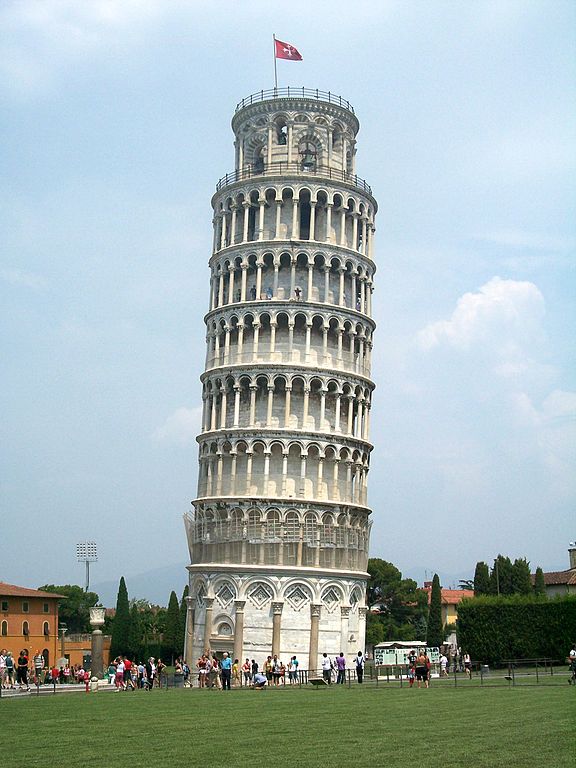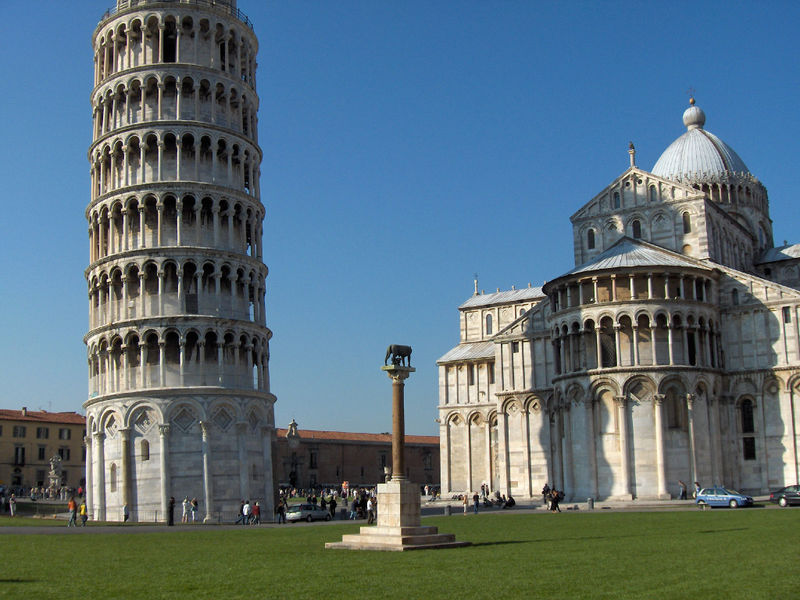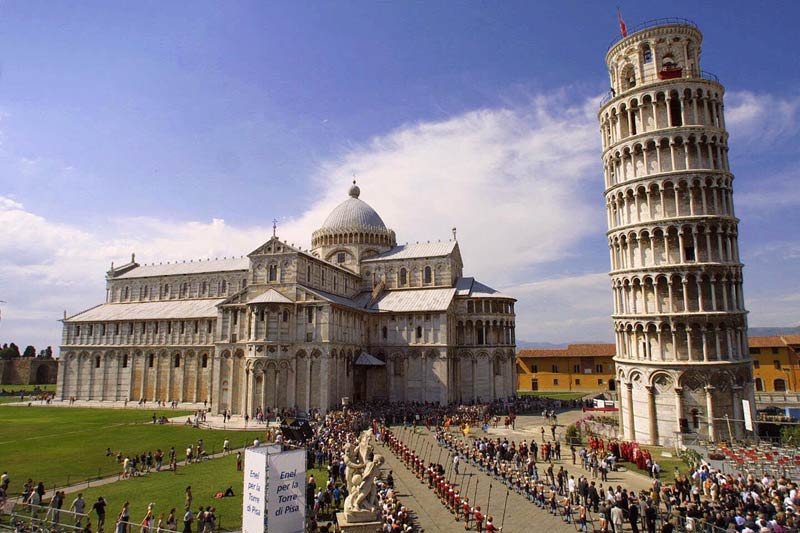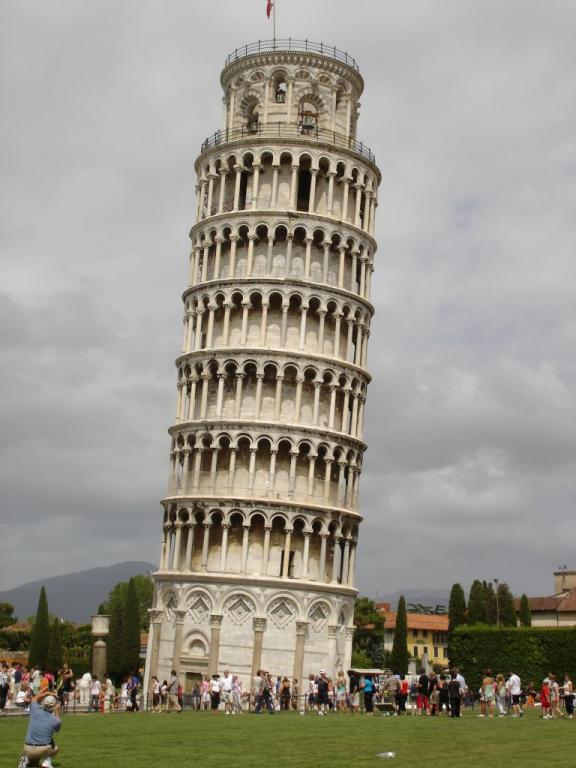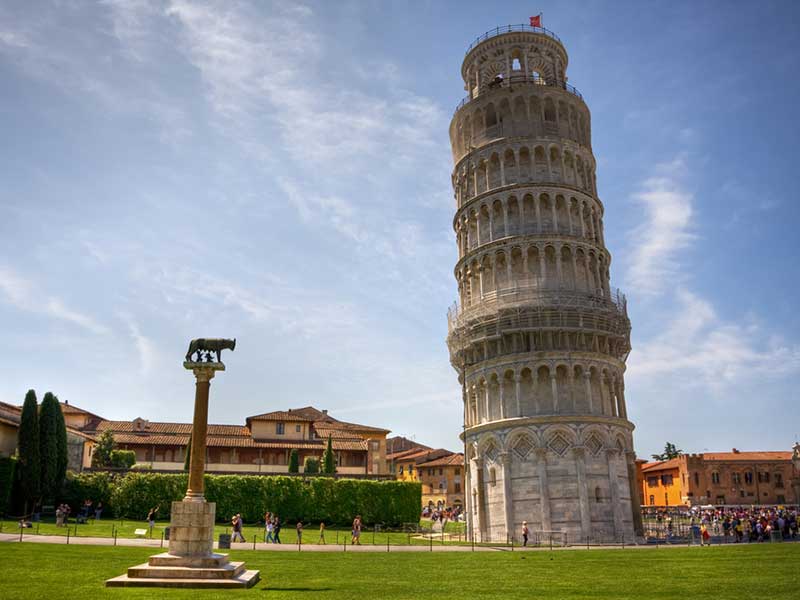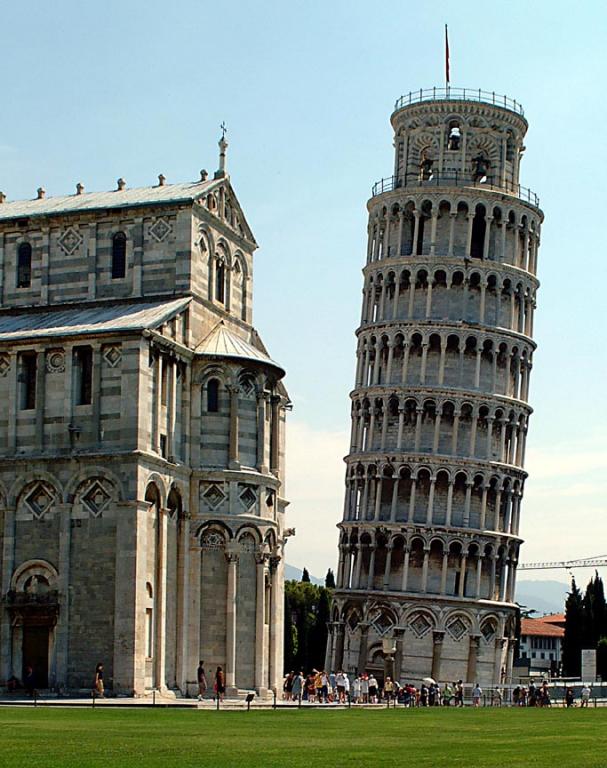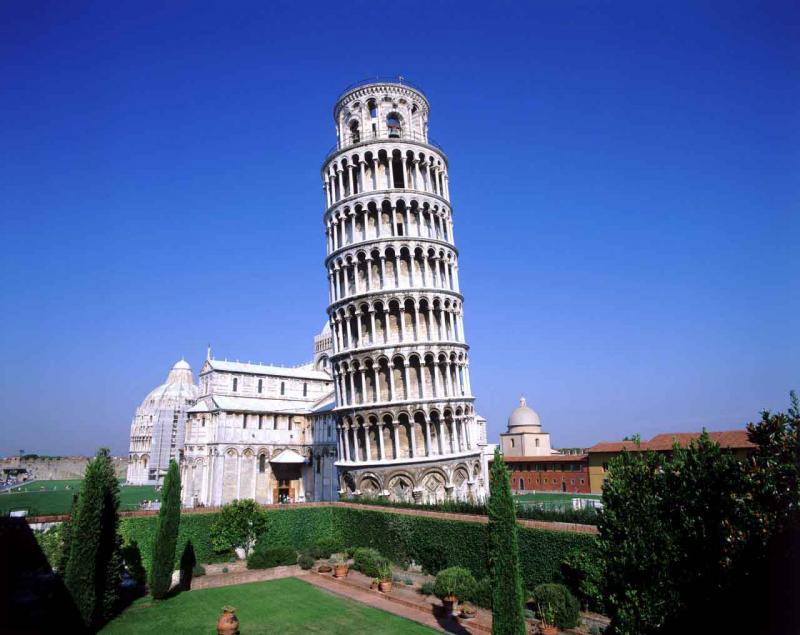

The Leaning Tower of Pisa is one of Italy’s most recognisable landmarks. It stands in the Tuscan city of Pisa and is famous for its unusual tilt. Built from light-coloured stone and marble, with tiers of open arcades, it rises above the Square of Miracles and has become a symbol of the city.
The tower was not designed to lean. It was built as the bell tower of the Cathedral of Santa Maria Assunta. Its inclination began during construction because of the soft ground and shallow foundations. Over time, this construction problem became the monument’s defining feature.
History of construction
Construction began in 1173, when Pisa was a wealthy maritime republic and an important Mediterranean trading centre. The bell tower was intended to complement the cathedral and demonstrate the city’s prestige. Its circular design, with open arcades, reflects the Romanesque architecture of Tuscany.
After the first levels were built, workers noticed that the tower was moving away from the vertical. Construction was interrupted several times, partly because of wars and political events. These pauses gave the ground time to settle under the building’s weight and allowed builders to adjust the structure. In later stages, they tried to compensate for the tilt by altering the height of the masonry on different sides.
The tower was built over several generations, with the main work completed in the fourteenth century. Its design combines a substantial base, tiers of open arcades and an upper bell chamber. The pale stone and repeated columns give the structure an elegant appearance despite its obvious lean.
Why does the tower lean?
The main cause is the ground beneath the foundation. Soft clay and sand layers, together with water-bearing deposits, could not support the heavy stone structure evenly. The foundation was too shallow, so one side began to sink more than the other.
The tilt developed gradually as the tower grew taller. Builders tried to compensate by slightly adjusting the geometry of the upper levels, leaving the structure with subtle curves as well as its overall inclination. Over the centuries, the lean increased and raised concerns about the tower’s stability.
In 1990, the tower was closed to visitors because of safety concerns. Engineers carried out major stabilisation work, using temporary counterweights and carefully removing small amounts of soil from beneath the northern side of the foundation. The tower reopened in 2001. The work reduced the risk of further collapse while preserving its distinctive tilt.
Architecture and dimensions
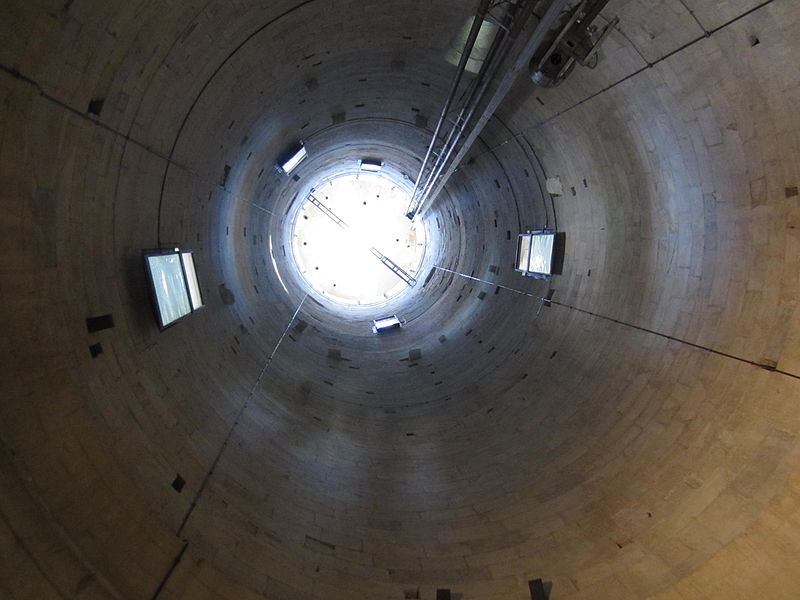
The tower is built in the Romanesque style, mainly from light stone and marble. Its circular plan differs from the square shape of many bell towers. Rows of arches, columns and open galleries create a rhythmic exterior, while the broad lower section gives the composition visual weight.
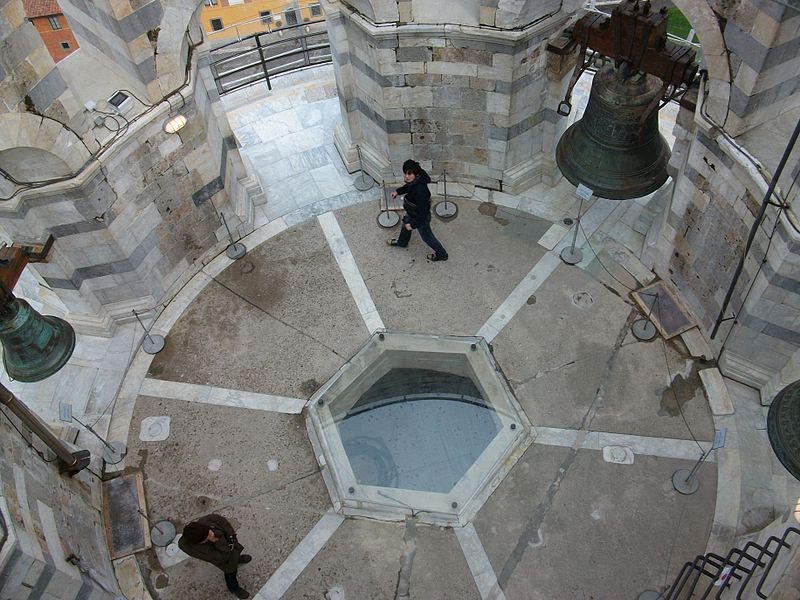
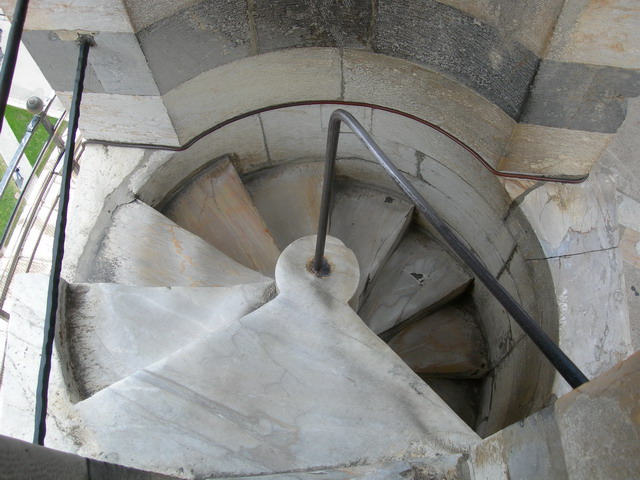
The tower is about 58 metres high, depending on the measurement method and the side being measured. Inside, a spiral staircase of 273 steps leads to the upper bell chamber. The tower has seven bells, one for each note of the musical scale. The largest was cast in the seventeenth century and weighs several tonnes.
The building was never intended as a defensive tower. Its function was to house the cathedral bells, which marked time and accompanied religious services. This explains why it stands beside the cathedral as part of a larger religious complex.
The Square of Miracles
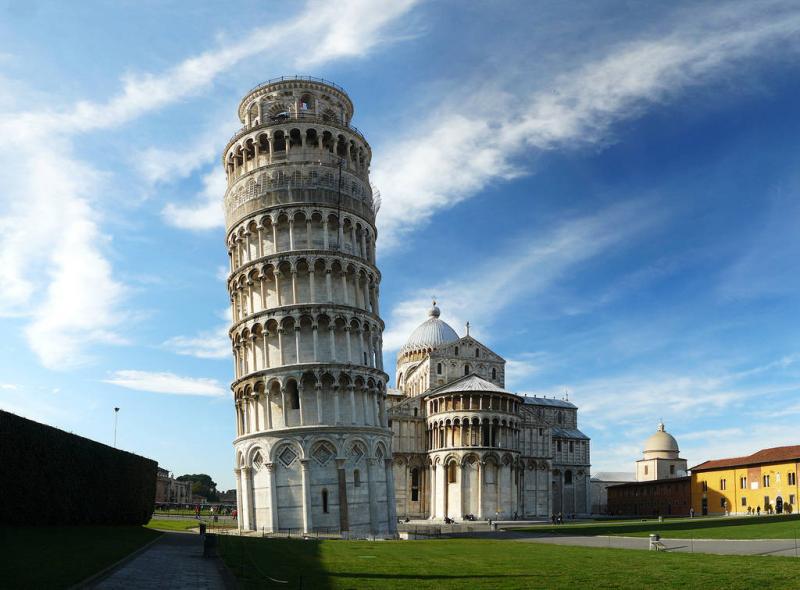
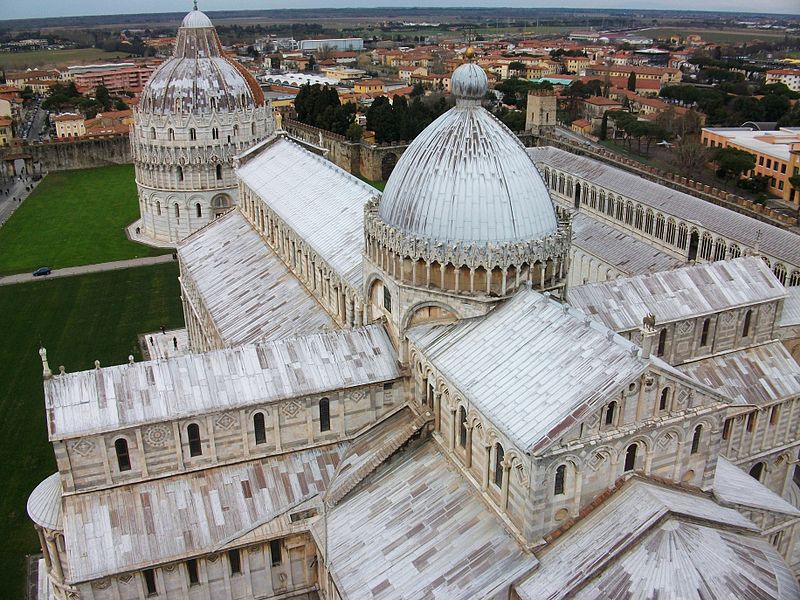
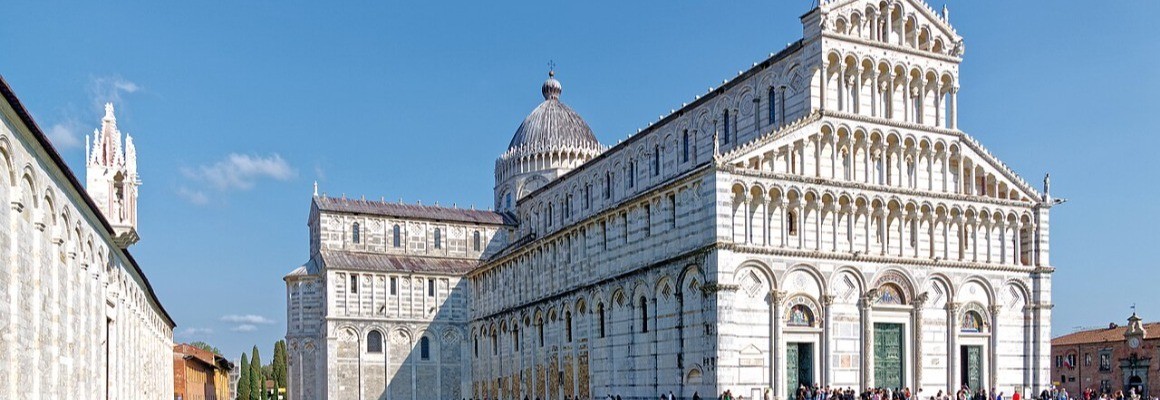
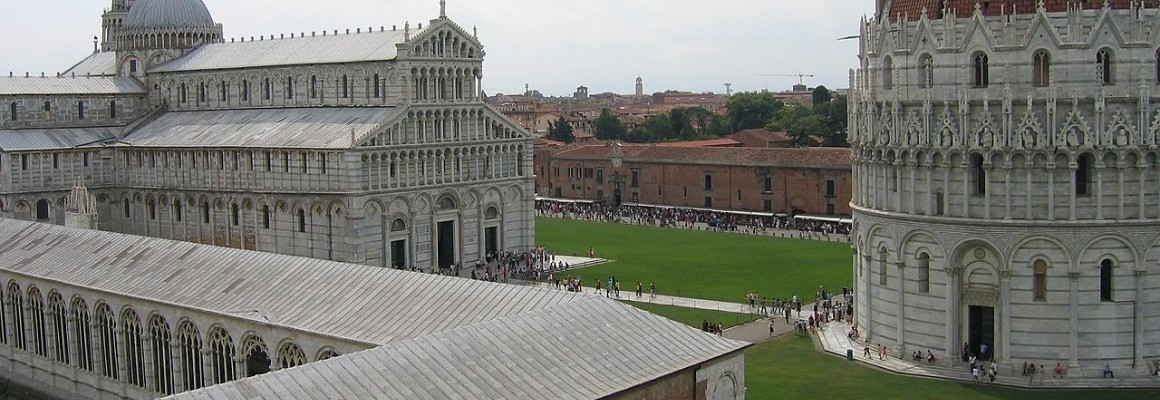
The tower stands in Piazza del Duomo, commonly known as the Square of Miracles. It is one of the most important medieval architectural ensembles in Europe. Alongside the tower are the Cathedral of Santa Maria Assunta, the Baptistery and the monumental cemetery known as Camposanto. Built at different times during the Middle Ages, the monuments form a harmonious group.
Construction of the cathedral began in 1064. Its architecture combines Romanesque forms, decorative arcades, marble elements and artworks from different periods. The nearby Baptistery is known for combining Romanesque and Gothic features and for its unusual acoustics. Camposanto contains a courtyard and historic frescoes.
In 1987, Piazza del Duomo was added to the UNESCO World Heritage List. The designation covers the entire monumental complex, not just the leaning tower. Its significance lies in its outstanding medieval architecture, artistic treasures and influence on the development of art in Italy and beyond.
The tower and Galileo Galilei
The tower is often associated with Galileo Galilei, the renowned scientist born in Pisa in 1564. According to a famous story, Galileo dropped objects of different weights from the tower to investigate how they fall. This episode became part of the popular story of the origins of modern mechanics.
However, there is no conclusive evidence that the famous experiment took place on the tower itself. Galileo’s connection with Pisa is certain, and his studies of motion and falling bodies were crucial to the development of physics. The story is best treated as a well-known legend rather than a fully verified event.
Climbing the tower
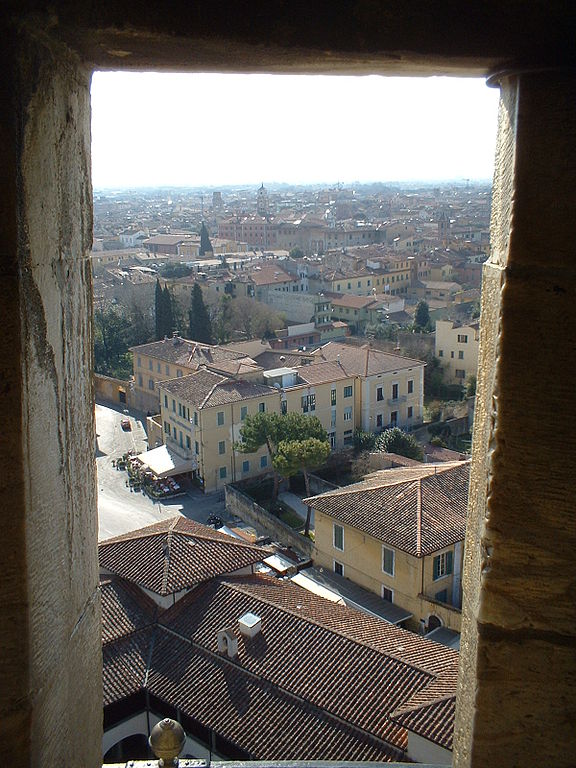
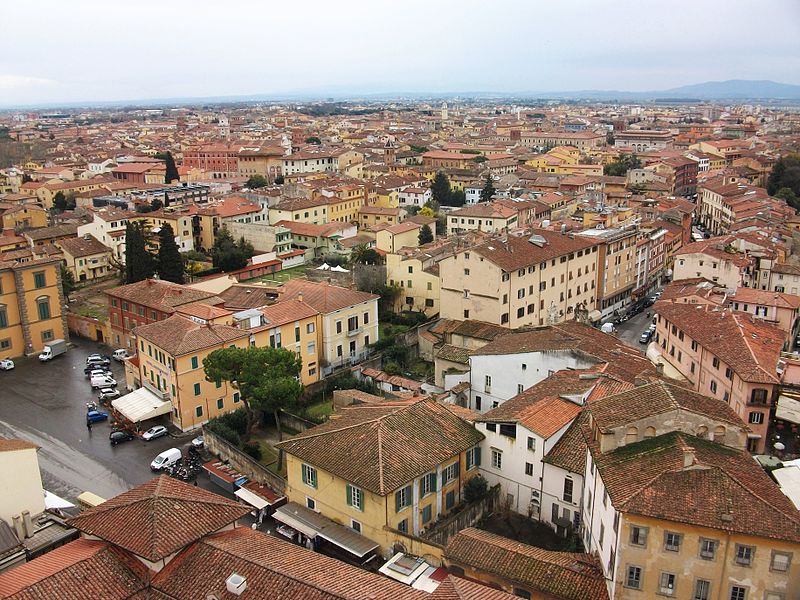
Visitors can climb the internal spiral staircase to the upper section when access is available on their chosen date. The changing angle of the steps makes the climb unusual. From the top, visitors can look across the Square of Miracles, the cathedral, Pisa’s rooftops and the surrounding Tuscan plain.
The climb requires physical stamina: the staircase is narrow, there are many steps, and the tilt may affect one’s sense of balance. Access may be restricted for young children and some visitors with health or mobility conditions. Tickets are often timed, so booking in advance can help avoid disappointment.
Best time to visit
Pisa can be visited throughout the year. Spring and autumn are usually comfortable for walking around the square, while summer can be hot and crowded. In winter there are generally fewer visitors, although the weather can be cool and rainy.
Morning is often a good time for a quieter visit and photographs before the main tour groups arrive. In the evening, the white marble takes on warmer tones. Check opening hours, visitor rules and tower access before travelling, as arrangements can change.
How to get there
Pisa is in Tuscany, western Italy. Trains connect the city with Florence and other major towns in the region. From the railway station, visitors can walk to the Square of Miracles or use public transport. Pisa also has an airport with connections to other European destinations.
The square is slightly away from the main shopping streets, so a visit can easily be combined with a walk through the historic centre. Allow time for the cathedral, Baptistery and Camposanto if you want to explore the whole ensemble rather than just the tower.
Interesting facts
The Leaning Tower is part of a religious complex, not a separate structure built to look unusual. Its tilt was accidental, but it eventually became its defining feature. Construction lasted nearly two centuries, and the history of stabilising the monument became an important chapter in engineering.
Other leaning bell towers exist around the world, but Pisa’s is by far the most famous. Its appeal comes not only from the tilt but also from its elegant architecture, pale marble and setting among the monuments of the Square of Miracles.
Why visit the Leaning Tower of Pisa?
The tower brings together architectural beauty, medieval Italian history and an unusual engineering story. Visitors can learn how a foundation problem became a world-famous landmark, discover how historic structures are preserved and explore one of Tuscany’s most important monumental ensembles. Even without climbing, a walk around the Square of Miracles offers a chance to appreciate the tower alongside the cathedral, Baptistery and Camposanto.
Gallery