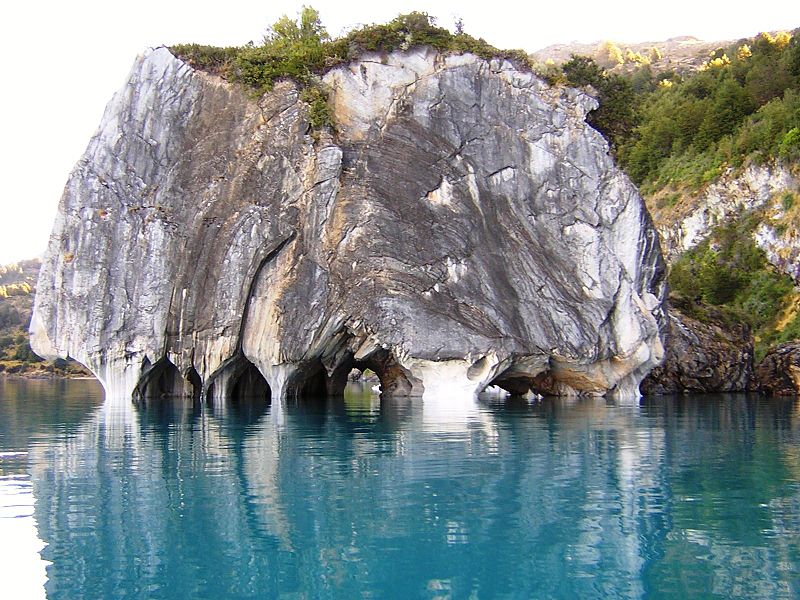
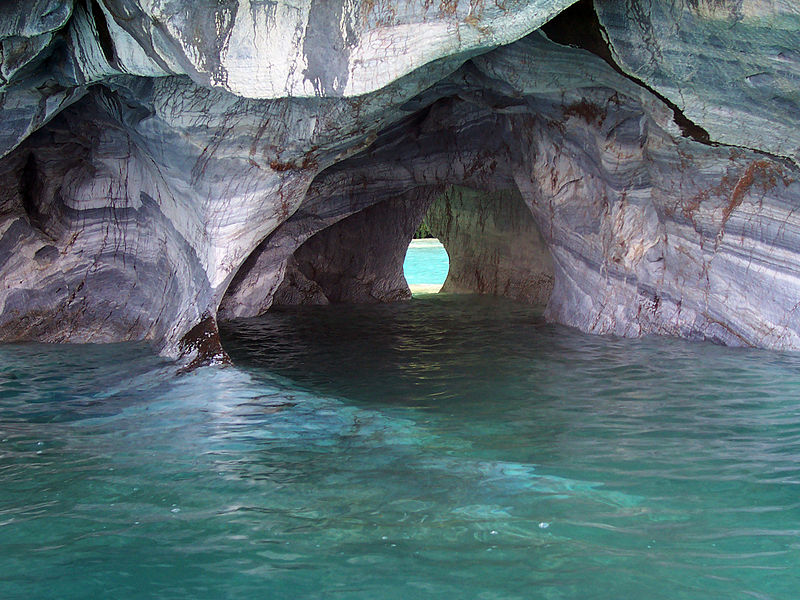
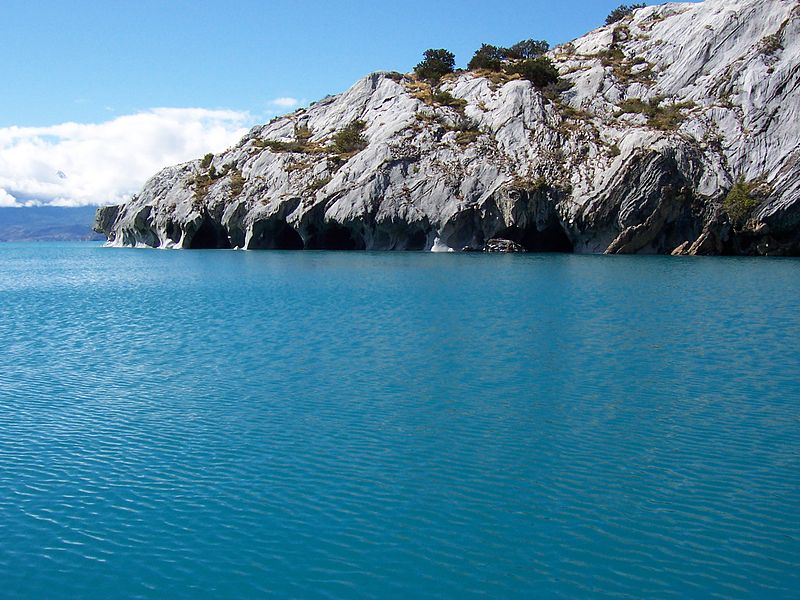
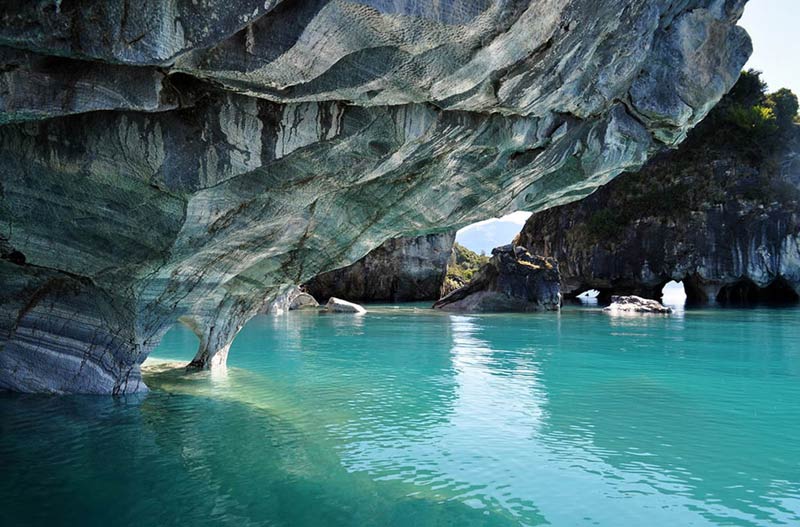
The Marble Caves are an extraordinary natural complex on General Carrera Lake in Chilean Patagonia. White, grey and occasionally pinkish rock forms arches, columns, grottoes and tunnels washed by clear blue water. The contrast between the marble walls and the turquoise lake has made this place one of the best-known natural attractions in southern Chile.
The site is known in Spanish as Capillas de Mármol, or “Marble Chapels.” Its best-known formations include the Marble Chapel, Marble Cathedral and Marble Caves. They lie along the lakeshore and around small rocky islands. The formations are best viewed from the water: a boat or kayak reveals curved rock surfaces, hidden hollows and reflections inside the grottoes.
Where the Marble Caves are located
The attraction is in the Aysén Region of southern Chile, on General Carrera Lake. This large glacial lake lies in the Andes along the Chile–Argentina border. On the Argentine side it is known as Lake Buenos Aires. The Chilean shore is surrounded by mountains, valleys and the rugged landscapes of Patagonia.
The nearest settlement and main departure point for excursions is Puerto Río Tranquilo. Boat trips and kayak tours leave from here for the marble formations. The lake crossing is part of the experience, with views of mountain slopes and water whose colour changes with the light and weather.
How the marble grottoes formed
The cliffs are made of marble, a metamorphic rock formed when limestone is transformed by heat and pressure within the Earth's crust. The rock contains white areas, grey veins and, less commonly, bluish or pinkish tones. These colour differences are related to mineral composition and impurities.
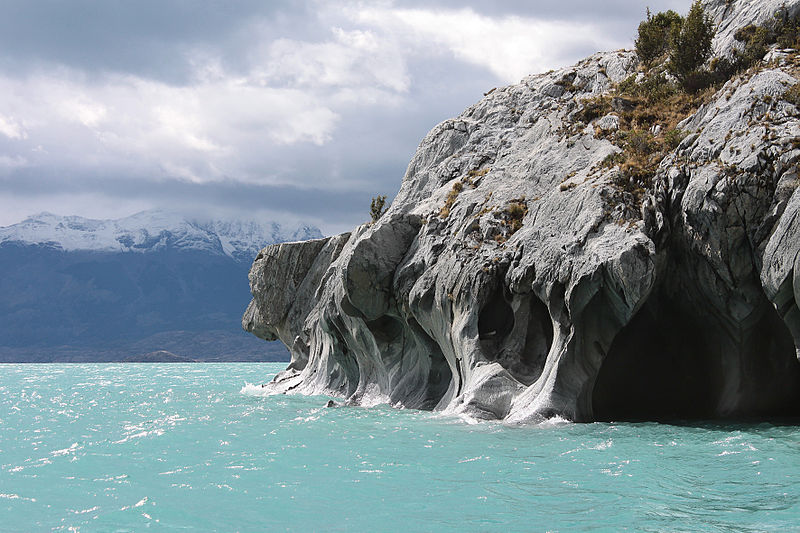
Over thousands of years, the lake's water has shaped the shoreline. Waves gradually wore away more vulnerable parts of the rock, widened cracks and formed cavities. The result is a series of curved walls, arches and small caves that visitors can see on an excursion. These shapes were not created by people; they are the result of long-term natural erosion.
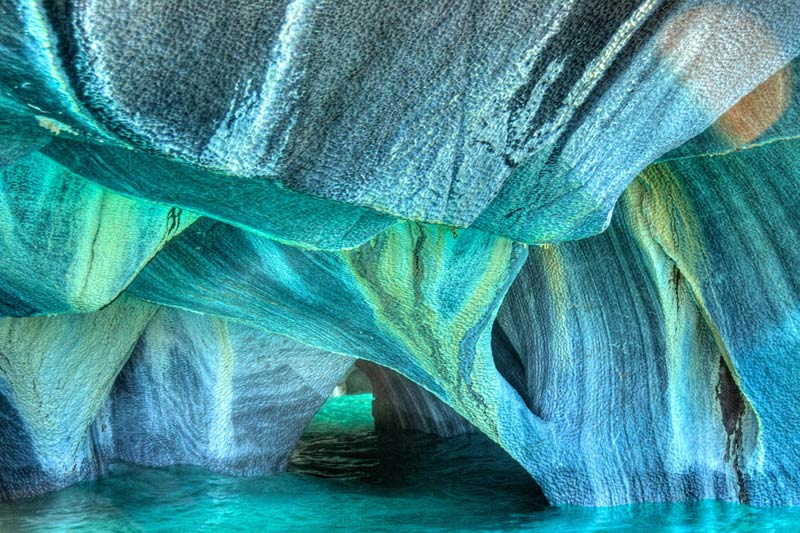
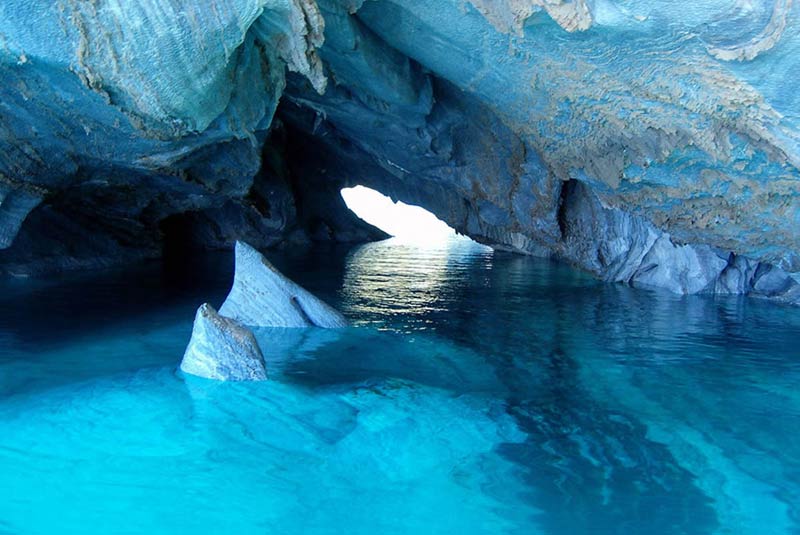
The cliffs are particularly striking where water has cut deeply into the rock. The inner surfaces of the grottoes have smooth contours, while light reflects off the damp marble and lake surface. As a result, the walls may appear blue, turquoise, silvery or almost white depending on the time of day and weather.
The Marble Chapel and Marble Cathedral
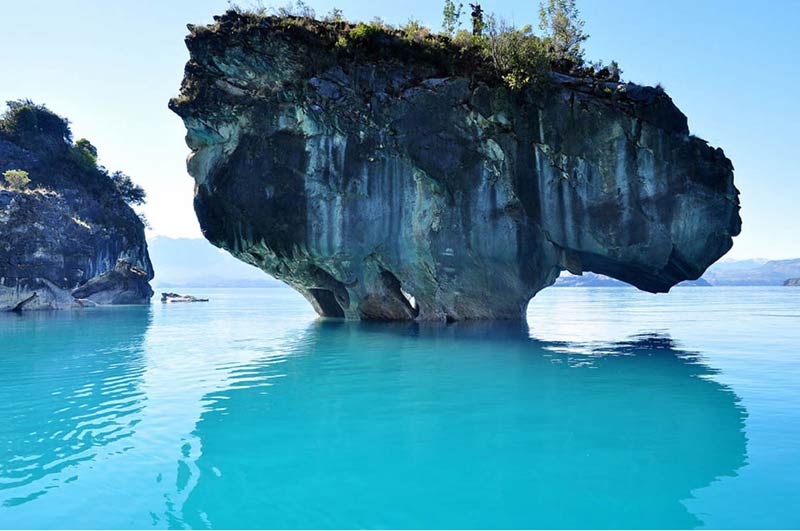
The complex takes its name from rock shapes that resemble the architecture of religious buildings. The Marble Chapel is one of the best-known formations: its arches and columns create the impression of a small stone hall above the water. It looks different from each angle, so a boat trip can reveal details that are difficult to see from shore.
The Marble Cathedral is a larger rock formation with prominent walls and cavities. Its silhouette resembles cathedral vaults sculpted by nature. Other grottoes and rocky outcrops nearby form a broader natural ensemble. Names used for individual formations can vary between travel descriptions, but they all belong to the Capillas de Mármol complex.
Why the water looks turquoise
One of the Marble Caves' defining features is the contrast between pale rock and the water of General Carrera Lake. The colour depends on sunlight, cloud cover, depth and the amount of fine material carried into the lake by glacial water. In clear weather, the surface may look vivid blue or turquoise; under cloudier skies, it can appear darker.
Inside the grottoes, reflected light intensifies the effect. Blue highlights fall across the marble walls, accentuating the veins and smooth lines of the rock. Photographs of the same place can therefore look very different depending on the season, time of day and water conditions.
How to get to the Marble Caves
The main starting point is Puerto Río Tranquilo, a village on the lakeshore. From the regional centre of Coyhaique, the southern section of the Carretera Austral, also known as Route 7, leads to the village. The distance is approximately 220–240 kilometres, and the drive usually takes about five hours depending on road conditions and stops. Some sections may be gravel, so check the latest road information before travelling.
Travellers arriving by air may find Balmaceda Airport near Coyhaique convenient. From there, continue overland to Puerto Río Tranquilo. Because the region is remote, it is wise to plan transport, accommodation and travel time in advance.
Boat excursions to the caves depart from Puerto Río Tranquilo. Kayak tours are also available and may allow visitors to approach some narrow passages when water levels and weather permit. Trip duration depends on the route and operator.
When to visit the Marble Caves
The complex can be visited in different months, but the busiest period is spring and summer in the Southern Hemisphere, roughly November to March. Days are longer then, and conditions for lake excursions are often more favourable. During summer, the water may take on a particularly vivid turquoise colour.
If your main goal is to see inside the grottoes, consider spring or autumn. The lake level changes throughout the year, and some cavities may be more accessible when the water is lower. Entry cannot be guaranteed, however: it depends on water levels, waves, wind and safety requirements. Check with local operators before travelling.
Morning excursions are often convenient for photography, as the light helps reveal the marble patterns and water colour. Patagonian weather can change quickly, so allow some flexibility in your itinerary.
Boat and kayak excursions
A boat trip is the easiest way to see the complex's main formations. Visitors can view the Marble Chapel, Marble Cathedral and other grottoes from the water. This option suits travellers who want to explore the area without strenuous physical activity.
Kayaking brings visitors closer to the cliffs and gives a stronger sense of their scale. Some routes pass through narrow passages or near low ceilings, but access depends on lake conditions. Follow the guide's instructions, wear a life jacket and be prepared for cold water and changeable weather.
Nature protection
The Marble Chapel and the surrounding marble formations have been protected as a Chilean Natural Monument since 1994. The area is valued for its geological features and landscape. The rock formations took a very long time to develop, so visitors must treat them carefully.
Do not scratch or chip the rock, leave rubbish or go beyond authorised routes. Follow local guides' instructions and never attempt to enter grottoes in rough water or when the lake level is unsuitable. Responsible tourism helps preserve this unique corner of Patagonia for future visitors.
What to know before your trip
The Marble Caves are a remote natural attraction, so plan your visit ahead. Book an excursion during busy periods, check the weather forecast and road conditions, and bring warm clothing and a waterproof, windproof jacket. The lake can be chilly and windy even on a sunny day.
If time allows, spend more than one day in Puerto Río Tranquilo. This gives you flexibility to choose suitable conditions for an excursion and explore the Aysén Region. The Marble Caves are especially appealing to travellers interested in unusual geological formations, water-based adventures and landscapes combining mountains, a clear lake and pale marble.
Gallery