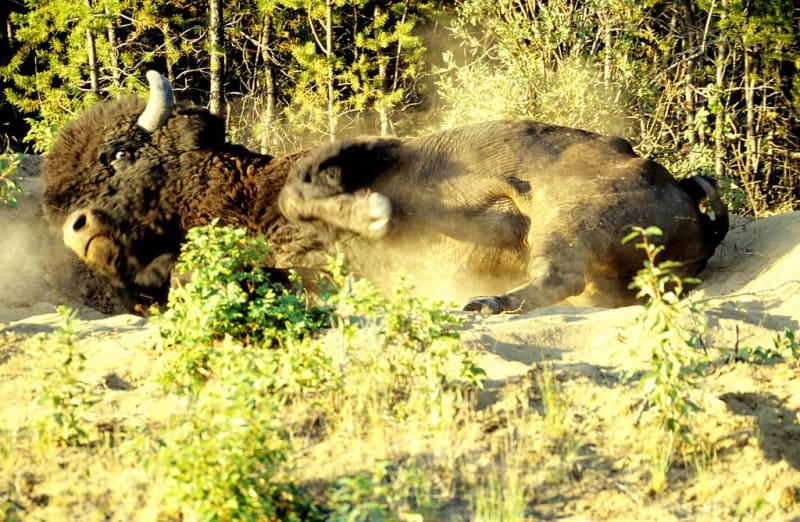
Wood Buffalo National Park lies in northern Canada, across Alberta and the Northwest Territories. Covering approximately 45,561 km², it is Canada's largest national park. Its forests, wetlands, rivers, lakes and grasslands protect distinctive ecosystems of northern North America.
The park is known for its large free-roaming bison herds, rare birds and unusual landscapes. It contains the Peace–Athabasca Delta, salt plains and gypsum karst formations. In 1983, it was designated a UNESCO World Heritage Site for its exceptional natural value.
History of the national park
Wood Buffalo National Park was established in 1922 to protect the remaining herds of wood bison. During the late nineteenth century, bison populations across North America declined dramatically because of mass hunting and settlement. The creation of a protected area helped conserve these animals and their habitat.
The park's importance for other species became clear over time. In 1954, nesting grounds of the endangered whooping crane were discovered in its remote northern region. In 1983, Wood Buffalo became a UNESCO World Heritage Site.
Wood bison
One of the park's defining features is its herds of wood bison, the largest land mammals in North America. These powerful animals are adapted to northern forests, open grasslands and wetlands. Wood Buffalo protects one of the world's largest free-roaming populations of wood bison.
Bison may be seen in clearings, near roads and on grassy plains. They must be observed carefully: even an apparently calm animal can charge without warning. Never approach a herd, feed the animals or leave your vehicle to take photographs.
Whooping cranes
Wood Buffalo plays an exceptional role in the conservation of the whooping crane, a tall white bird with a distinctive red marking on its head. The species is endangered, and the park contains the nesting grounds of the last remaining naturally occurring migratory flock.
The birds breed in remote wetlands, shallow lakes and marshy plains. In autumn, they migrate south to the Gulf Coast of Texas and return to Canada in spring. Their nesting grounds are strictly protected and closed to ordinary visitors, so sightings are not guaranteed.
The Peace–Athabasca Delta
The Peace–Athabasca Delta is one of the world's largest inland freshwater deltas. It lies where the Peace and Athabasca river systems flow into Lake Athabasca. Its channels, shallow waters, islands and wetlands create diverse habitats for plants, fish and birds.
The delta is especially important for migratory waterfowl. Ducks, geese, swans, loons and other species stop here during spring and autumn migrations. These wetlands also support local ecosystems and the traditional activities of Indigenous communities.
The salt plains
Wood Buffalo's salt plains are a rare natural feature in Canada. In some places, white salt deposits cover the ground. They form through the area's geology and the movement of groundwater: water dissolves minerals in underlying rocks, and evaporation leaves salts behind.
Against the surrounding northern forests and wetlands, these pale open spaces create a striking landscape. Salt-tolerant plants grow here, and animal tracks can sometimes be seen on the surface. Designated viewpoints and routes offer access when conditions permit.
Karst formations
Another distinctive feature is the park's gypsum karst. Water gradually dissolves gypsum rock, creating depressions, sinkholes, underground streams and small lakes. These geological processes produce unusual landforms within the northern forest landscape.
Karst areas are of interest to geologists and nature enthusiasts, but they require caution. Some depressions may be hidden by vegetation, and trail conditions can change. Stay on marked routes and keep away from unstable edges.
Wildlife and vegetation
In addition to bison and whooping cranes, the park supports black bears, wolves, moose, lynx, foxes, beavers and many bird species. Fish live in the rivers and lakes, while wetlands provide breeding and resting habitat for waterfowl.
Boreal forests of spruce, pine, fir, aspen and poplar cover much of the area. Between the forests are wetlands, meadows and open plains. Natural wildfires are part of the ecology of northern forests, although their effects require ongoing monitoring and management.
Things to do in the park
Wood Buffalo is suited to visitors interested in wilderness, remote landscapes and wildlife. Activities include walking on maintained trails, visiting viewpoints, photographing scenery and watching birds. Water-based excursions and lakeside recreation are possible in some areas.
Places of interest include the salt plains, the Salt River area, Pine Lake and the surroundings of the Peace–Athabasca Delta. Choose routes according to the season, road conditions and official restrictions. Much of the park is remote wilderness that requires careful preparation.
When to visit
Summer is generally the most convenient season for exploring the park. Many hiking routes are accessible, and long daylight hours allow more time outdoors. Visitors can explore forest trails, visit viewpoints and watch wildlife, although insects and changing weather should be expected.
Spring and autumn offer opportunities to observe seasonal bird movements and changing landscapes. Winter conditions are harsher, and road access may change significantly. Before travelling, check official information about weather, wildfires, road conditions and closures.
How to get to Wood Buffalo National Park
Because of the park's size and remote location, a visit requires advance planning. Fort Smith in the Northwest Territories is one of the main access points. Depending on the route and season, visitors can reach the area by road or other available transport.
Before departure, confirm which entrances, trails and recreation areas are open. Wildfires and other natural hazards can lead to restrictions. Do not assume that mobile coverage, fuel or services will be available throughout the park.
Travel tips
- Check current Parks Canada notices about closures, wildfires and trail conditions.
- Carry sufficient fuel, water, food and navigation equipment for remote travel.
- Observe bison, bears and wolves only from a safe distance.
- Bring insect repellent, weather-appropriate clothing and sturdy footwear.
- Stay on permitted routes around salt plains and karst formations.
- Respect Indigenous cultural traditions and conservation rules.
Wood Buffalo National Park is one of Canada's most important natural areas. It protects vast northern wilderness, rare wildlife, distinctive wetlands and unusual geological formations, offering a glimpse of a less-visited side of the country.
Gallery